
A German Prince Built His Own Artificial Volcano
It was harmless

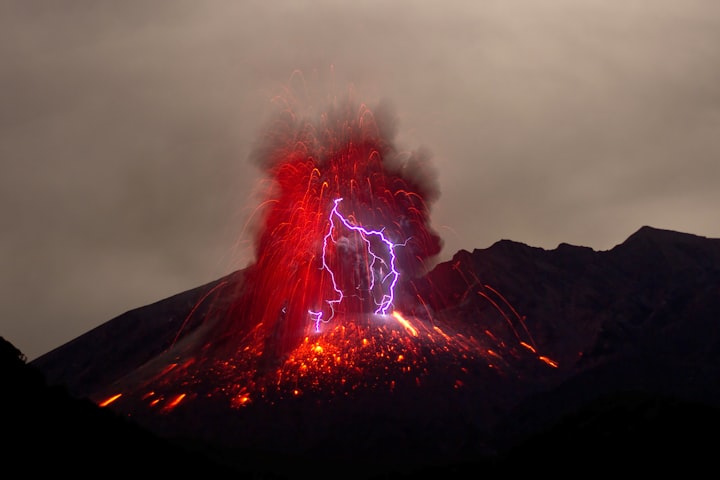
For a lot of readers in the US and maybe abroad, fake volcanoes make you think of one thing right? Science projects.
You probably did it at home for fun. Not even in science class.
The idea of public spaces where people can mingle and have a good time has been around for quite a long time. But the idea of a resort with amusement facilities, more along the lines of a theme park or waterpark didn’t start to show up in Europe until the Renaissance. That’s why it was called the Renaissance — when they had all the cool new ideas. The ones in England in particular were referred to as pleasure gardens. They were massively popular from around 1550 to around 1700 in this form.
In London, 1661, a huge pleasure garden opened up called Vauxhall gardens. It measured 12 acres and full admission is free. There’s pretty high-quality entertainment, and an eight-year-old Mozart performed there in 1764. This is how the story kind of begins, we see the beginning of an industry, and the gardens and their attractions begin to be kind of a cultural expression of this desire for what we could call vicarious danger or safety danger.
They presented this kind of natural world that might appear wild and untamed but it’s the kind of thing you can take your kids to, and everyone will be safe and fine. So they were unthreatening.
Things like tsunamis, heavy storms on the high seas, things romanticized by shipwrecks and pirates type behavior, and acts of derring-do thunderstorms in the mountains. And of course, the opening of hell, that is a volcano that’s just belching fire and liquid rock and black smoke into the sky. It’s something that got some of the creative types behind these, the Imagineers of their time. There was a real fascination with recreating some of these natural, horrifying phenomena that would be like a real draw for thrill-seekers or pleasure seekers. At the same time, we saw a lot of gardeners becoming more picturesque using theatrical effects.
While all this was happening, people that had the means were traveling to England and were seeing these sights and enjoying them.
Leopold III Friedrich Franz, prince and duke of Anhalt-Dessau, and his friend and counselor, Friedrich Wilhelm von Erdmannsdorff, went to England. They saw the study of landscape, and gardening, and pink dress spectacles. And they also saw ancient buildings in Italy, on their European tour and wanted to take everything back to Germany. Leopold III Friedrich Franz travels on this tour of Europe in his mid-20s. That’s something a lot of the members of the noble class do. So he goes to London, Paris, Marseille, Rome, Venice, Naples, and he sees Mount Vesuvius. He and his friend Friedrich are trying to get to the volcano, but they noticed the volcano was active again. They get to the edge of the crater. And then right when they’re at the edge, they experienced low rumbling. This growing sound of vibration turns into the most terrible roar accompanied by a thick cloud of smoke. Shortly afterward, an ejection of stones, which the mountains spat out with effort, and they watched the eruption in awe.
So when he returned home, the prince, Friedrich Wilhelm, and a landscape architect named Johann Friedrich start working towards creating this insane, ludicrous, ostentatious display.
You know, they’ve taken all these different elements, Chinese pagodas, synagogues, modeled after the temple of Hercules Victor in Rome, a miniature Pantheon, all this stuff, and they’ve put it together in one enormous estate or backyard or garden. And it takes decades to complete. But in the end, what they have is this sort of thematically unified tribute or monument to the Enlightenment view of art and nature, beauty, the meaning of life. At this point, it’s fair to say if Douglas Adams had been publishing at the time, they would have had a giant marble 42, up there right next to the pagoda.
As soon as it was ready, Leopold opened the park to the public. He wanted everybody to see what wonders they had wrought. There is one part of this park that is particularly amazing. It is a furnace-fed fake volcano. Prince Leopold had a pet Mount Vesuvius built, and he could make it erupt on command. It took six years to make. It was done in 1794. This was like his big science project.
This was an incredible feat for engineering and architecture. They had to build an inner building that was five stories high, and then cover it with what’s described as local boulders because they needed this to be authentic. At the top, there was a hollow cone that contained a high ceiling chamber containing three fireplaces. The roof had a crater that could be filled with water to create all of that steam when the fire went off. Frederich also built an amphitheater with a little Villa, where he could hang out. He also flooded part of the estate to create a false kind of lake surrounding the volcano, which is referred to as a stone Island. And then, of course, he invited his friends to a very special garden party, where they watched the volcano erupt, which is just amazing.
Leopold passed away in 1820 and the eruption stopped. Most of his garden realm, as it was called, was preserved after his death. But the volcano fell into neglect over the next century and a half. Luckily, the garden overall survived World War II with very minor damage. After World War Two, it became part of East Germany. The volcano was further neglected, and according to Heiko pills, one of the graduate assistants at the time at the Brayton Burg Technical University, the very last eruptions of the fake volcano were just burning tires. It was overgrown with weeds and falling apart. And after part of it collapsed and killed someone in 1983. Authorities in East Germany condemned it, which is a shame.
A five-year restoration project fixed all this and deemed the volcano to be safe, but yet silent. It was not restored to its full glory until 2004 when the World Heritage Sites management looked to a gentleman by the name of Wolfgang Spira, who was a chemistry professor from the Brandenburg Technical University. he had a particular penchant for historical pyrotechnics. Let’s add that to the list of weird specializations right like underwater explosions and Historical pyrotechnics and he wanted to bring the volcano roaring back to life. Because, according to Spira, ‘a volcano that can’t explode is a very sad volcano indeed’. So he spent a decade as the head of Berlin’s criminology lab.
He starts doing his detective work which we mentioned earlier. And eventually, he gets the volcano working again. Brayton Burg Technical University students are watching the displays. They’re wearing gas masks, they run from fireplace to fireplace in the secret chamber below. And they’re squirting lighter fluid all over these fires and tossing in this special powder to make the smoke have a bright color. They get to see in a very real way, a snapshot of history from centuries before which is incredible
It’s not Christmas if it’s every day. So technically, folks, if you are in the area, you can visit this volcano which is still in play since it rumbled back to life in 2005. About once a year, they fire their pet Vesuvius up.
I’ve seen some real volcanoes before but I haven’t been to the edge of one during an eruption yet this seems like the next best thing. So for everybody working on a science project now, I wanted to give you a glimpse of how far you can go with a fake volcano.
******** **************** **********************
Like what you read? Send me a gift below to help contribute to my next adventure!
You can also sign up for my mailing list here: https://bit.ly/3el7KKa
About the Creator
Blessing Akpan
I am a photographer of thoughts, let me capture your soul.
Keep reading
More stories from Blessing Akpan and writers in FYI and other communities.
Babies in Incubators Were Once a Sideshow
It’s a story that may be unfamiliar to a lot of people. Unless of course, you’re a fan of sideshows. I’d like to introduce you to a new type of sideshow exhibit that might surprise you. it turned out for a time at the beginning of the 20th century, babies became stars of sideshows for a very weird reason.
By Blessing Akpan5 years ago in FYI
A Failed Artist, A Disillusioned Poet, An Underpaid Game Show Host
I took my son and niece to Gori, a small town in Georgia where Joseph Stalin was born. They talked me into visiting the Stalin's Museum, the largest in the post-Soviet space. I had resisted going there because I just can't stand the monster and know enough about him, or so I thought.
By Lana V Lynxabout a month ago in FYI



Comments
There are no comments for this story
Be the first to respond and start the conversation.