
Finally, I Understand Curling in the Winter Olympics
Curling is the Olympic sport that looks confusing but makes perfect sense when you know the rules.

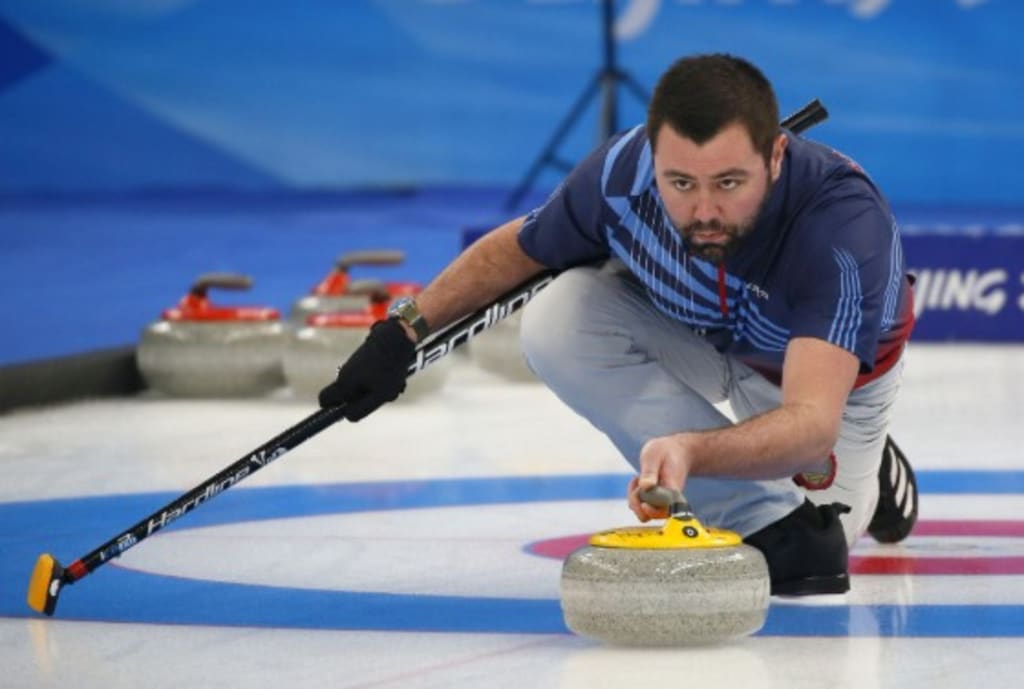
If you’ve ever watched the Winter Olympics and found yourself staring at curling with a mix of curiosity and confusion, you’re not alone. Every four years, millions of viewers tune in, see stones sliding across the ice, hear sweepers shouting, “Hard! Hard!” and wonder what on earth is going on.
The good news is that curling is far easier to understand than it looks. Once you get the basics, it becomes one of the most strategic, addictive sports in the Winter Games.
What Is Curling?
Curling is a team sport played on ice where players slide heavy granite stones toward a circular target area called the “house.” The house itself is just a visual guide. The rings don’t award points — they simply help players and officials judge which stones are closest to the center, known as the “button.”
The goal is to get your team’s stones closer to the center than your opponent’s.
It’s often compared to shuffleboard or bocce — but played on ice, with a strategy that rivals chess.
Curling has been part of the Winter Olympics since 1988. Today, powerhouse teams from countries like Canada, Sweden, Switzerland, Great Britain, and Japan compete fiercely for gold.
A Simple Guide to Understanding Olympic Curling
Every four years during the Winter Olympics, millions of viewers suddenly become fascinated by a sport that looks confusing. There’s ice. There are granite stones. There’s intense sweeping. And there’s a lot of yelling.
Curling is one of the most strategic and misunderstood events of the Winter Games. It is simple in theory, but intense in practice.
The Basics: Teams and Equipment
Each team has four players. Every player throws two stones per round (called an “end”), making eight stones per team per end.
The stones are polished granite and weigh about 44 pounds. Players slide them down a long sheet of ice toward the house — a set of concentric circles painted at the far end.
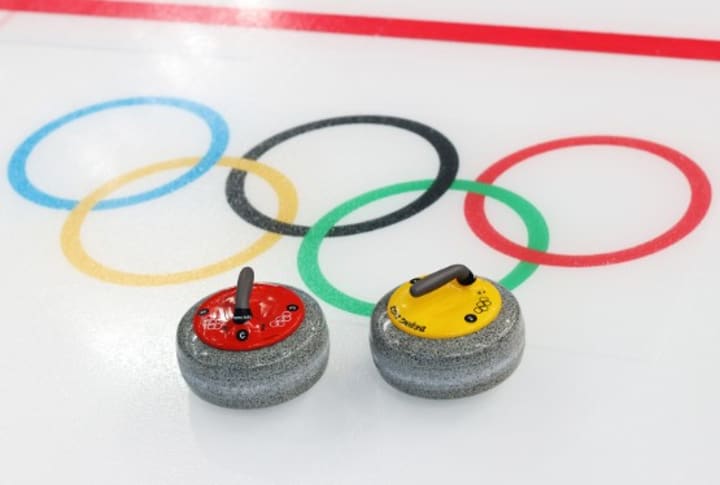
Sliding the stone is only half the action. That’s where the sweeping comes in.
Why Do They Sweep?
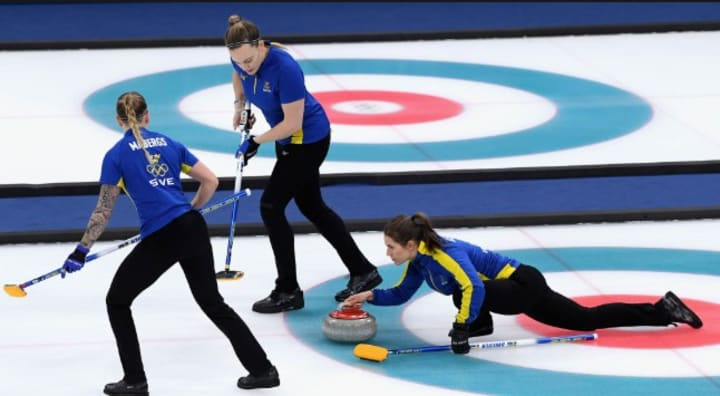
Sweeping is the most visually dramatic part of curling — and it’s not just for show. When teammates sweep the ice in front of a moving stone, they:
- Slightly melt the ice surface
- Reduce friction
- Help the stone travel farther
- Influence how much it “curls” (curves). Yes, the stone actually curves as it slows down. That’s where the sport gets its name.
Sweeping gives teams control over distance and direction — which is crucial when they’re aiming for millimeter precision.
How Do They Score?
Scoring happens at the end of each round.
Only one team scores per end. The team with the stone closest to the center of the house earns points — one point for each stone that is closer to the center than the opponent’s nearest stone.
So if Team A has two stones closer to the center than Team B’s best stone, Team A earns two points for that end.
An Olympic curling match typically lasts 10 ends. There’s also a unique tradition called “the hammer,” which simply means the last shot of the end.
Strategy: The “Chess on Ice” Factor
Curling isn’t about brute strength. It's about positioning and planning ahead.
Teams can:
- Knock opponents’ stones out of play
- Place “guards” in front of their own stones
- Set up combinations for future shots
Each team’s captain, called the “skip,” directs strategy and calls shots. You’ll often see the skip crouched near the house, signaling instructions while teammates sweep furiously down the ice.
It’s calm calculation mixed with split-second decisions. One well-placed stone can completely change the score.
The Different Olympic Events
At the Winter Olympics, there are three curling events:
- Men’s team
- Women’s team
- Mixed doubles (two players per team — one man and one woman) .
Why Curling Is More Exciting Than It Looks
At first glance, curling seems slow. Once you understand what’s happening, every shot becomes suspenseful.
- Will the stone stop in time?
- Will it curve enough?
- Will it knock out the opponent’s rock?
- Did they sweep too much?
Matches often come down to the final stone of the final end, with gold medals decided by inches.
The Real Magic of Curling
Curling is a rare sport where precision beats power, teamwork beats ego, and strategy beats speed. It’s a game of patience, nerve, geometry and grit.
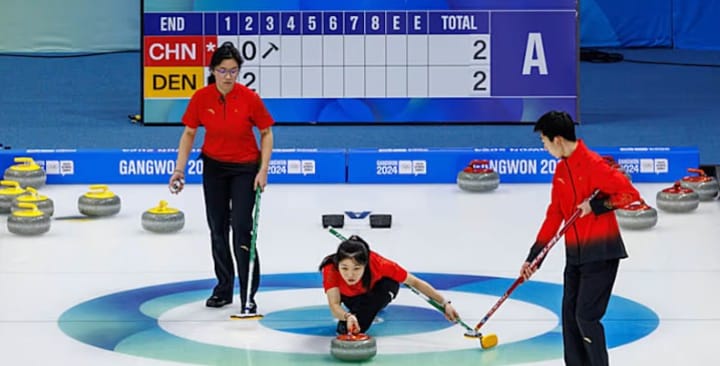
So the next time you see athletes sliding 44-pound stones and frantically sweeping the ice, you’ll know you’re not watching random chaos. And suddenly, it all makes perfect sense to you. You will see that curling isn’t just a quirky Olympic sport. It's a masterclass in patience, precision, and teamwork.
About the Creator
Margaret Minnicks
Margaret Minnicks has a bachelor's degree in English. She is an ordained minister with two master's degrees in theology and Christian education. She has been an online writer for over 15 years. Thanks for reading and sending TIPS her way.
Keep reading
More stories from Margaret Minnicks and writers in FYI and other communities.
How Advanced Machining Supports Aircraft Reliability
Aircraft reliability begins long before takeoff. It starts in the manufacturing facility, where raw materials are transformed into highly engineered components. In aerospace production, advanced machining plays a central role in ensuring that every part meets strict dimensional and structural requirements.
By Beckett Dowhan6 days ago in FYI



Comments
There are no comments for this story
Be the first to respond and start the conversation.