
Mayday Over the Mediterranean
A Passenger’s Account of the Flight That Never Reached Its Destination

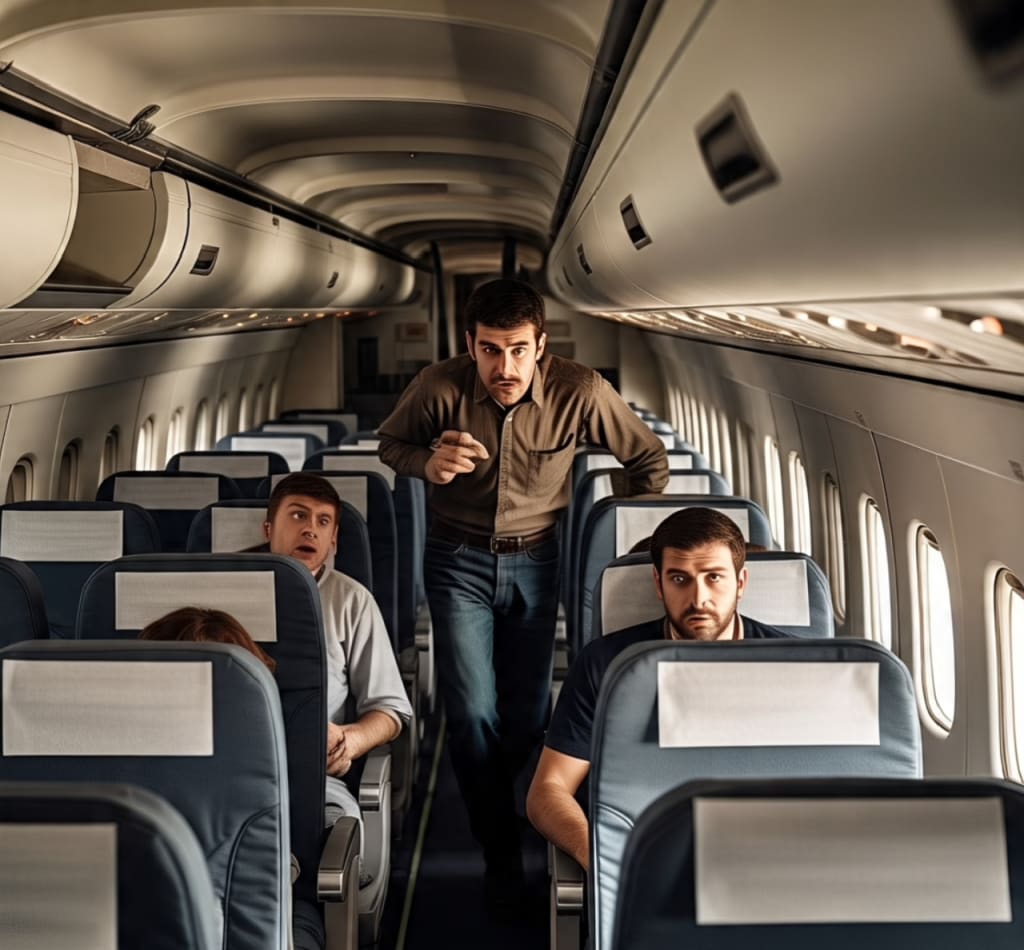
It was supposed to be just another connecting flight. Athens to Rome. A short trip over the turquoise waves of the Mediterranean. I was returning home from a business conference in Greece, carrying nothing but a briefcase, my laptop, and a head full of deadlines.
The plane took off at 10:42 a.m. The sky was clear. Flight attendants smiled, offering orange juice or coffee. We were just leveling off above 30,000 feet when I noticed them: two men in heavy jackets, sweating nervously despite the cool air conditioning.
Ten minutes later, chaos shattered the calm.
One of the men stood up, yelled in broken English, and held up something small but unmistakable—a grenade.
Panic erupted.
The other man ran toward the cockpit, shoving a steward aside. Screams echoed, babies cried, and within seconds, the hijackers took control. One claimed to have a bomb strapped to his chest. The intercom buzzed. The captain's voice, trembling, translated the demand:
“We have been hijacked. We are being diverted to Beirut.”
My hands were shaking. I had read about hijacks. I just never thought I’d be inside one.
The Hours That Followed
For the next six hours, we were prisoners in a steel box flying over nations we couldn't see. We landed once—somewhere in Cyprus, I think—for fuel. Negotiators tried to talk over radio. The hijackers shouted in Arabic, argued with the crew, and slapped a passenger who tried to stand.
They claimed political motives. “We want the world to know we exist!” one shouted. We didn’t understand. We didn’t care. We just wanted to survive.
A young flight attendant, barely 22, whispered prayers in Greek. I watched an old woman hold hands with a man she didn’t know. Strangers became family in those narrow seats.
One passenger had a heart condition. The hijackers wouldn’t let him access his medication. A quiet protest formed. An elderly man offered his own pills. A teenager gave up her bottle of water. Humanity found its way through terror.
One woman kept a journal the entire time, writing in tiny cursive letters, recording everything—our fears, our prayers, our attempts to stay calm. Later, I learned her entries would become key evidence in an international investigation.
The Escape We Didn’t Expect
The plane took off again. This time, we headed for Libya.
But something went wrong.
An F-16 fighter jet appeared on our left. Then another on the right. A standoff began in the sky. Through the tiny windows, I saw them—armed, fast, circling us like hawks.
Then came the moment I’ll never forget:
The pilot faked an engine failure.
He announced in Arabic and English, “One engine failed. Emergency landing!” and guided us toward Malta.
The hijackers panicked. One tried to force open the cockpit. The other grabbed a woman from the front row and used her as a shield.
But the pilot was calm. He landed the plane hard and fast. Airport police surrounded us in seconds. Hours passed with no food, no bathroom breaks. And then…
Gunfire.
A single shot cracked through the air. Then a flash. Smoke. Confusion.
Special forces stormed the plane.
The fight was fast, loud, and brutal. I ducked behind a seat. Screams blended with gunfire. When it was over, one hijacker lay dead, the other bleeding.
What Came After
We were escorted off in silence. Some wept, others laughed nervously, unable to process the trauma.
I remember the sun setting as I stepped onto the tarmac. I looked up, feeling the air again. Alive. That was the word.
Later, I would find out this was one of the most underreported hijacks in European air history. Some say it was a failed terrorist attack. Others say it was a message.
I only know it changed how I saw life.
I call my parents more often now. I say “I love you” without shame. And I never board a plane without silently thanking the pilot, the crew, and every brave soul who stood up in the face of fear.
Aftermath and Reflection
Weeks passed before I returned to normal. If you can call it that. Nightmares visited me often—being trapped, hearing that click of a grenade pin, the suffocating smell of fear.
The airline offered therapy. I accepted. We were also called to testify. The surviving hijacker was eventually sentenced. But justice never truly balances the scale.
I kept in touch with some passengers. The teenager who gave her water became a paramedic. The old woman who held a stranger’s hand now writes letters to that man monthly.
As for me, I write.
Because stories like these shouldn’t be forgotten.
Because sometimes, survival itself is the loudest story we can tell.
About the Creator
Muhammad Usama
Welcome 😊
Keep reading
More stories from Muhammad Usama and writers in FYI and other communities.
When the Sky Turned Orange
In the summer of 2023, residents of New York City woke up to a sight that seemed straight out of a dystopian film. The sky had turned a hazy, unnatural orange. It wasn’t a cinematic filter or a social media hoax. It was real—and terrifying. The cause? Smoke drifting in from unprecedented wildfires raging in Canada.
By Muhammad Usama7 months ago in FYI
The Light Turns
It's Tuesday 7:13 a.m. A cold and clear November morning awaits Ray on his morning commute. Ray rubs his hands together in the front seat of his Subaru. He turns the air temperature up, but keeps the air on low until the air warms up. He looks at the backup camera screen and reverses the Subaru out of his driveway onto Trimble Road.
By John R. Godwin5 days ago in Fiction


Comments
There are no comments for this story
Be the first to respond and start the conversation.