
Romania’s “Living Stones”: The Growing, Moving Rocks That Scientists Still Can’t Explain
They don’t have hearts. They don’t breathe. But somehow… these stones seem alive.

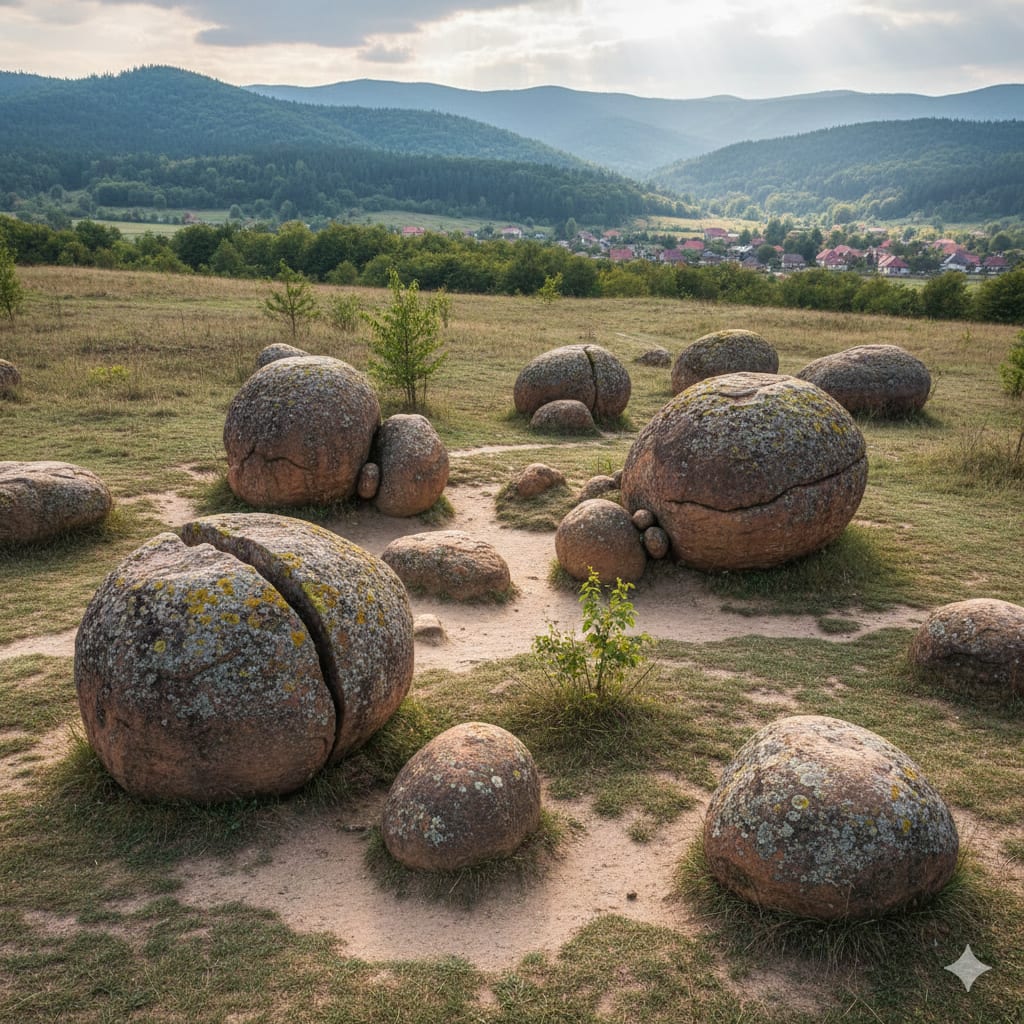
We’re diving into one of the strangest natural mysteries on Earth, and no, it’s not vampires this time.
When people hear Romania, they most immediately think of Dracula, castles, and spooky folklore. But tucked away in the Romanian countryside is something arguably even more unsettling: rocks that appear to grow, move, and even “reproduce.”
Welcome to the world of the Trovants, also known as Romania’s “living stones.”
What Are Trovants?
In southern Romania, near the village of Costești, there’s a protected area called the Trovants Museum Natural Reserve. This open-air geological site has been preserving these bizarre formations since 2004, and it houses some of the largest travertines in the world.
So what exactly are they?
Scientifically, trovants are believed to be sandstone concretions, natural rock formations created when minerals bind sand together. But that dry explanation barely scratches the surface, because these stones don’t behave like normal rocks at all.
They are known for their:
- Smooth, rounded shapes
- Spherical, cylindrical, or nodular forms
- Sizes ranging from a few grams to several tons
- Potential to grow up to several meters across
And that’s where things start getting weird.
Yes, These Stones Appear to GROW
One of the most shocking claims about trovants is that they increase in size over time.
Locals have reported that stones once small enough to hold have grown noticeably larger over the years. Scientists estimate their growth rate to be roughly:
4-5 centimeters every 1,000 years
That’s slow, but for a rock, that’s practically a growth spurt.
Researchers believe heavy rainfall may trigger a chemical reaction inside the stone. When water seeps in, mineral-rich material builds pressure, causing the rock to expand from the inside outward.
Even stranger? Smaller trovants may grow faster than larger ones, kind of like kids compared to adults.
They Have “Rings” Like Tree Trunks
When cut open, some trunks reveal elliptical and circular rings inside them, similar to the rings you see in a tree trunk.
These layers suggest the stones formed in stages, but it also adds to their almost organic appearance. It’s one of the reasons people sometimes describe them as an inorganic form of life.
Not alive… but not exactly lifeless either.
Do Trovants Actually MOVE?
This is where skepticism kicks in.
In one observation, researchers monitored a trovant for about two weeks and found it had shifted roughly 2.5 millimeters. That’s tiny, but still measurable.
Some compare this to the “sailing stones” of Death Valley, which move due to natural conditions.
Most scientists argue that trovant movement likely happens because of:
- Soil expansion and contraction
- Temperature changes
- Moisture in the ground
In other words, outside forces, not the stones “walking” on their own. Still, the idea of rocks slowly changing position over time is undeniably eerie.
The Creepiest Part: They Might “Reproduce”
This is the detail that pushes trovants from interesting geology into full mystery territory.
After heavy rain, some stones develop a swelling or bump on their surface. Over time, that bump can:
- Grow larger
- Detach
- Become a new, smaller trovant
This process resembles budding, a type of reproduction seen in plants and simple organisms.
The “offspring” often has a structure similar to the “parent” stone, almost like a geological family tree.
Where Did They Come From?
No one agrees.
Theories include:
- Water infiltration in ancient sand deposits
- Wind erosion and temperature variation
- Seismic activity millions of years ago
- Or simply unusual mineral cementation
Some geologists even argue that trovants are “pseudo-concretions,” meaning they may not fit neatly into existing rock categories at all.
Tests presented at the International Geological Congress (2008) showed no major mineral difference between trovants and surrounding sand, which only deepens the mystery.
Locals Once Used Them, Now They’re Protected
Before their rarity was recognized, people used trovants as:
- Building materials
- Tombstones
Today, they’re protected as geological treasures, and the reserve helps preserve them for scientific study and tourism.
Science vs. Imagination
Of course, not everyone sticks to geology.
Some wild (but fun) ideas suggest trovants could be:
- Ancient life-like mineral structures
- Meteorite-related formations
- Something we simply don’t have the science to understand yet
No serious evidence supports alien rock eggs, but admit it, the thought is both hilarious and slightly terrifying.
So… Are They Alive?
Scientifically: No.
Behavior-wise? They blur the line just enough to make you uncomfortable.
They grow, they change, they sometimes shift, and they can even appear to “reproduce.” For something classified as stone, that’s pretty unsettling.
And that’s exactly why trovants remain one of Earth’s most fascinating natural mysteries.
What do YOU think these “living stones” really are, strange geology, misunderstood science, or something we haven’t discovered yet?
.
.
.
.
.
.
.
.
.
.
Romania living stones, trovants Romania, moving rocks mystery, growing stones, strange rock formations, geological mysteries, Costești Trovants Museum, rocks that grow, weird natural phenomena.
About the Creator
Areeba Umair
Writing stories that blend fiction and history, exploring the past with a touch of imagination.
Keep reading
More stories from Areeba Umair and writers in FYI and other communities.
The Man Who Wouldn’t Die: The Strange Legend of the Count of Saint Germain
Is it possible for a man to live forever? Most of us would laugh at that question. Aging and death are part of being human… right? But history has handed us a few figures who make that certainty wobble, and none is more mysterious than The Count of Saint Germain.
By Areeba Umair5 days ago in FYI
Friday the 13th has ties to the Bible and Christianity
Friday the 13th: The origin The origin of Friday the 13th is not really known. Stories about bad luck on this date come from different cultures. In 2026, the 13th of three different months falls on a Friday. They are February, March, and November.
By Cheryl E Preston3 days ago in FYI




Comments
There are no comments for this story
Be the first to respond and start the conversation.