
The "loneliest" island on Earth, carrying a strange mystery that has remained unsolved for many years
Despite its remote location, this island also contains a strange secret that is still a subject of debate among scientists and netizens.

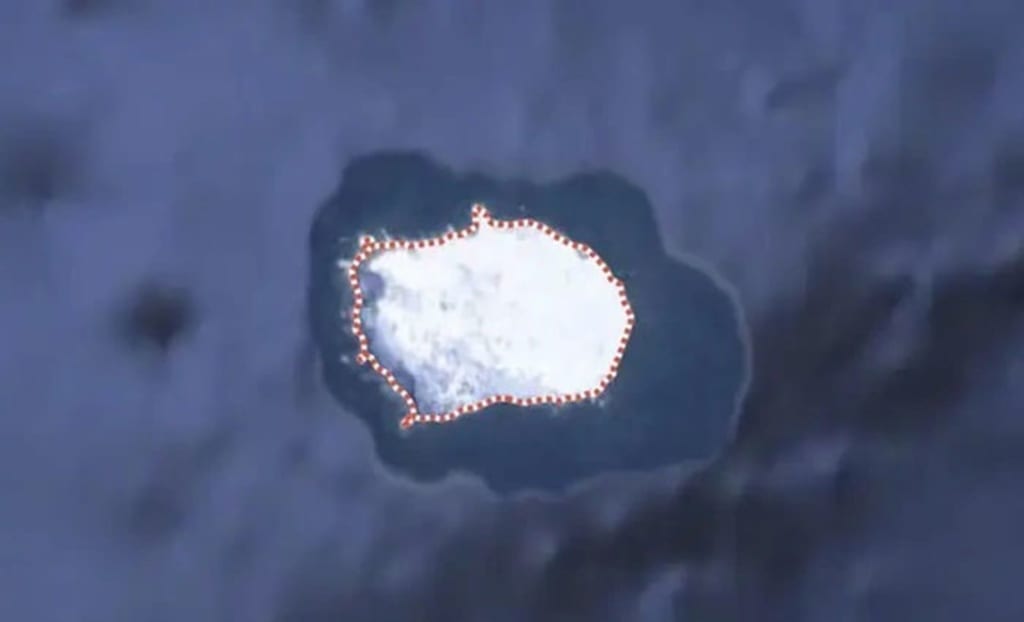
Despite its remote location, this island also contains a strange secret that is still a subject of debate among scientists and netizens.
In the middle of the Atlantic Ocean, near Antarctica, there is an uninhabited volcanic island. It is perhaps the most remote and isolated island on Earth. So much so that within a distance of more than 8.1 million km 2 , there is no land and certainly no human presence. People call it Bouvet Island .
The "loneliest" island in the world
According to Unilad , Bouvet Island is located in the sea between Argentina, South Africa and Antarctica . The island has been claimed by Norway. The country considers it a protected nature reserve, is uninhabited and remains deserted, almost completely covered in ice. So it cannot be a tourist destination, even for the adventurous.
Bouvet was first discovered by French military commander Jean-Baptiste Charles Bouvet de Lozier in 1739. The island is also named after this general.
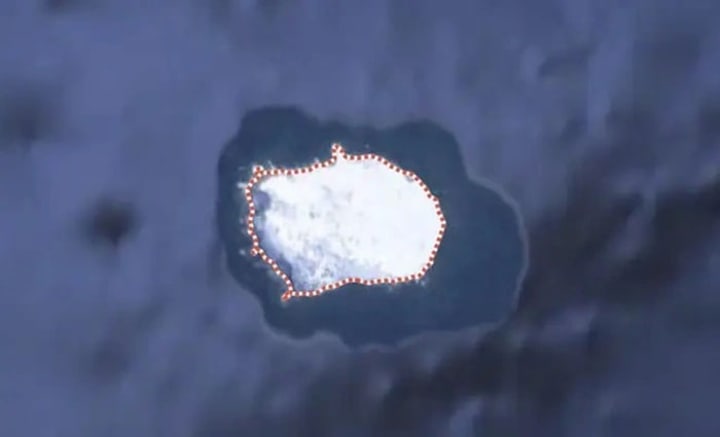
Bouvet Island is the most remote island on Earth.
However, Mr. Bouvet did not locate the island accurately, but was off by 8 degrees to the East. He is said to have not completely circled the island, so he did not know whether it was an island or part of the continent.
In 1772, Captain James Cook set out from South Africa to search for the island following the coordinates marked by Bouvet, which were 54°S, 11°E. He found nothing and assumed that Bouvet had mistaken an ice cap for the island, so he gave up the search.
It was not until 1808 that the English whaler James Lindsay rediscovered the island. He was the first to accurately mark its location.
The closest settlement to Bouvet is Tristan da Cunha. But this place is also extremely sparsely populated, with only 271 people. Meanwhile, the distance from Bouvet to Tristan da Cunha is more than 2,200km. That is why people also call Bouvet the "loneliest island" in the world.
The "ghost" boat
After Bouvet was officially mapped, another expedition was made in 1964 by researcher Allan Crawford and a team of scientists. The group set out on the Royal Navy Antarctic ice ship HMS Protector to investigate the volcanic island after a lava eruption that had occurred 10 years earlier.
They used a helicopter to move from the ship to the mainland on the island, but suddenly, researcher Allan Crawford discovered a lifeboat lying alone in a lagoon.
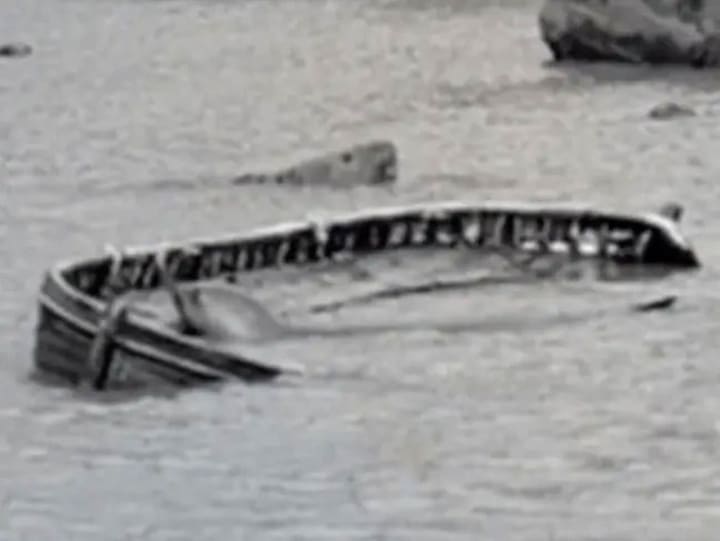
The lifeboat was lying alone in a lagoon.
It was unclear how long the boat had been there, and there was no indication of where it had come from or who owned it. There was no engine or sail. However, Crawford did find oars on the beach, along with a brass barrel and another wooden barrel.
Examination of the island found no trace of human life, although the position of the boat suggested that whoever was in it could easily have reached Bouvet Island.
A few years later, the mystery became even stranger when another expedition came to the island and the boat disappeared without a trace . Assuming someone had moved it somewhere else, it would not be easy to salvage it. It could also have sunk, but no one could be sure without knowing the depth of the lagoon.
Decades later, the lifeboat’s presence on the deserted island remains a mystery. No missing ships have been reported that could help explain the lifeboat’s whereabouts.
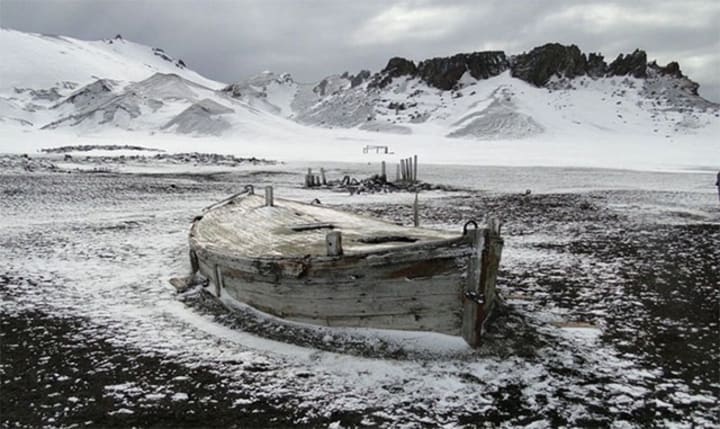
The presence of the boat on that deserted island remains a mystery.
In fact, the natural conditions on Bouvet Island are very harsh. Everywhere is covered with ice and snow and there are active volcanoes.
Mosses and lichens are the only two main types of plants, while seals, seagulls and penguins are the only inhabitants of the island, which is completely uninhabited.
Bouvet is not easy to reach as it is surrounded by huge icebergs. The easiest way to get there is by helicopter.
Due to its rugged terrain, remote location, and harsh soil conditions, this place rarely welcomes visitors and is only used for research purposes.
So it’s hard to find an answer to the boat’s appearance and disappearance. However, one Reddit user was determined to get to the bottom of the incident. He offered a possible explanation.
In a post shared online, the Reddit user said that he consulted the documents and information on page 129 of the book of the Institute of Oceanography and gathered information that a scientific reconnaissance ship named Slava-9 began its journey with the "Slava" whaling fleet in Antarctica on October 22, 1958, just a few years later, Crawford discovered the boat.
A group of sailors were said to have landed on Bouvet Island, but were stranded there due to deteriorating weather conditions.
The book describes how people stayed on the island for about 3 days before being rescued by helicopter. That may be why a boat was left behind.
However, it seems we will never know for sure whether this was the real reason why the boat appeared on the island. It is even more difficult to know how it disappeared. This is a question that will probably take a lot of time and effort from scientists.
About the Creator
Ken Daklak
Telling stories my heart needs to tell <3 life is a journey, not a competition
If you like what you read, feel free to leave a tip,I would love some feedback
https://s.shopee.vn/VwwLTGLe9
Keep reading
More stories from Ken Daklak and writers in FYI and other communities.


Comments (1)
Wow, so interesting!