
The West Florida Republic
The Original Lone Star Republic

To understand the West Florida Revolution, one must first understand its establishment as a colony by the French. At the time of the West Florida Revolution in 1810, the boundaries of West Florida stretched from the Mississippi River east to the Perdido River and from the 31st parallel south to the Gulf of Mexico. Originally this area had been controlled by the French as a part of their Orleans Territory from 1717-1763 and extended north to the 32nd parallel but all other dimensions were the same. In 1763, the French lost the Seven Years War against Britain and had to cede West Florida to the British and the Louisiana Territory to Spain. Then in 1783 after the successful American Revolution as a part of the Treaty of Paris, the British had to cede West Florida to the Spanish. The U.S. and Spanish set the northernmost border at the 31st parallel during the Treaty of San Lorenzo 1795.
Then in 1800 Spain sold the Louisiana Territory back to France and left the borders of West Florida vague. Three years later in 1803, the U.S. purchased the Louisiana Territory from France under the impression that West Florida was included, as it was under French control prior to 1763. Then Spain rejected this claim stating that under Spanish control West Florida and the Louisiana Territory were two separate colonies and therefore West Florida was not a part of the Louisiana Purchase. The 1810 border, outlined above, was the area where the West Florida Controversy would center. The West Florida Controversy included the U.S. Government’s attempt to acquire West Florida through futile negotiations as well as the role’s local territorial governors, which included Holmes of Mississippi and William C.C. Claiborne of the Louisiana Territory.
Although it was a haven for loyalists during the American Revolution, many cared only about surviving on the frontier. Financial success and loyalty to any particular nation came second. Citizens of West Florida felt similarly leading up to and during the West Florida Controversy and Revolution as many moved to West Florida with hopes of financial gain. While Spain’s hold on West Florida was tenuous, the local British territorial government had assemblies to sufficiently handle any grievances that arose and kept a large military garrison in the area.
These were two things that the Spanish were lacking at the time of the West Florida Revolution. The Spanish had an inefficient government and a very small military presence. Some of the main grievances by the inhabitants of West Florida had to do with an indecisive and corrupt government that could not protect them and their future financial success. In 1783 the British ceded the Floridas back to Spain and many of the British inhabitants then fled west and would settle in the areas that would later become the heart of the West Florida Revolution. During the American Revolution, bandits and American raiders stole and destroyed the property of West Floridians, and with the change of government, many questioned if their land grants would be upheld.
Great Britain refused to pay for lost property, as did the fledgling United States. Therefore, the inhabitants of West Florida turned to their new rulers, the Spanish, who upheld their grants, and subsequently, their support would go with them. With United States expansion, Spanish officials feared that Americans would encroach on Spanish West Florida and raid it. To keep this fear from becoming a reality Spain implemented a very lax and generous land grant policy that encouraged Anglo settlers to inhabit the area. In addition, land grant applicants had to improve the land they were living on over four years and after four years if the land was improved they were then allowed to sell it or apply for more land grants. Residents had to swear allegiance to the King of Spain and convert to Catholicism, although the latter was hardly enforced.
From 1785-1800 the population of West Florida grew dramatically and its large plantations grew a widely diverse crop range that helped to support this burgeoning population. In 1800, the Spanish secretly sold the Louisiana Territory back to the French giving little description of its borders. Although Spain had sold Louisiana back to France it still administered the area. Napoleon’s wars in Europe required all of his attention and all the money France could get a hold of to feed his insatiable appetite for conquest. St. Domingue’s Revolution also prompted France into a hasty sale of Louisiana to the U.S.
The Spanish recognized the U.S. control over Louisiana threatened Florida by the inevitable expansion of Americans into those areas. Nevertheless, since Spain had sold Louisiana back to France there was nothing they could really do to stop the United States from taking control over the large majority of the Louisiana Territory. They could contest the borders and claim West Florida wasn’t included in the purchase at most. At the end of the day, New Orleans and the rest of the Louisiana Territory was, still under American control.
The next major development in the West Florida Controversy would come in 1809 when the once-beloved governor Carlos De Grand-Pre was recalled to Havana and replaced by Charles De Hault Delassus. According to West Floridians Delassus was an indecisive and largely helpless commandant that brought with him an even worse official Raphael Crocker. Delassus was despised by the local population as he brought with him a tenure characterized by bribery, increased taxes, and open corruption. Things came to a boiling point on September 23, 1810, at four in the morning.
Under orders from the West Florida convention, Philemon Thomas and his troops seized the dilapidated fort in Baton Rouge. The next move by the convention was to secure the easternmost provinces of West Florida, primarily Mobile, which were too far to partake in the convention. The convention sent Reuben Kemper and a detachment of militia to take Mobile. In October of 1810, Kemper came to find no aid from the U.S., and his attempts at capturing Mobile were thwarted by the Spanish.
The failed capture of Mobile didn’t deter the West Florida convention as they enacted a new constitution on the 24th of October and on the 27th Madison issued a proclamation claiming West Florida as a part of the United States. That same day President Madison ordered Claiborne and Holmes to take control of West Florida. Soon after Claiborne began making preparations and by the time Claiborne was in Natchez Holmes had made all the troops Claiborne requested ready and in addition to infantry he had gunboats coming up from New Orleans. Claiborne and Holmes decided to distribute the President’s proclamation to the citizens of West Florida before their arrival in hopes that it would deter any military action. In case this did turn violent Holmes had a detachment of troops follow them and the main force nearby to be called upon at a moment's notice.
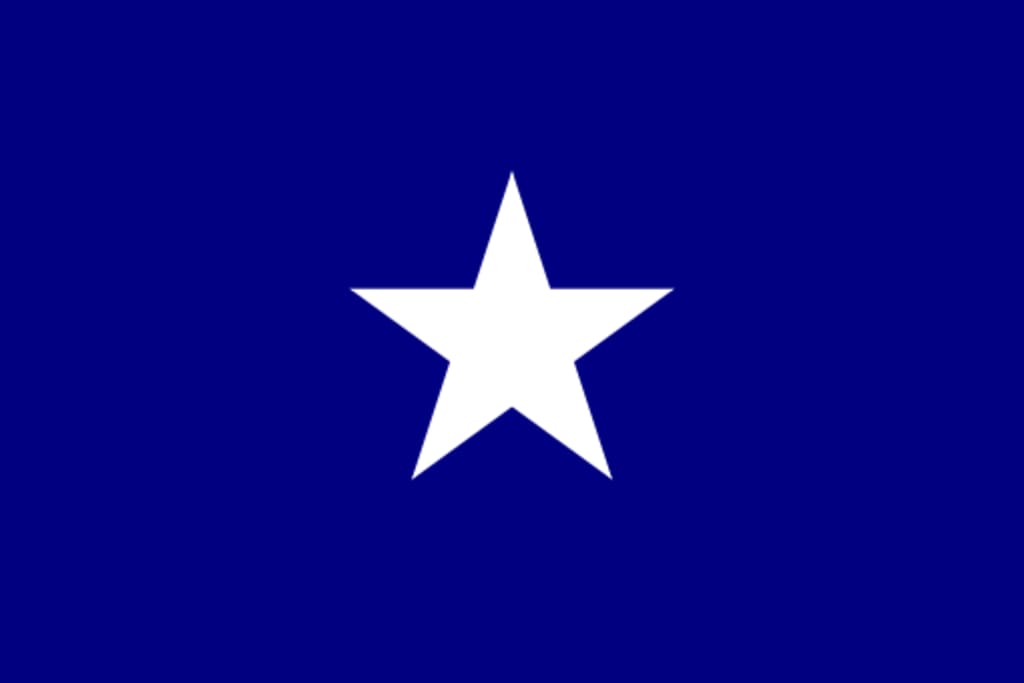
On December 5th, the newly elected President of West Florida, Fulwar Skipwith, wrote to Madison that the majority of the citizens were pro-independence but they still welcomed the discussion and negotiating of terms of annexation by the United States. When the president’s proclamation began to circulate, it claimed that the U.S. had owned West Florida and did not actually acknowledge the legitimacy of the West Florida government, Skipwith became enraged. Just north of Baton Rouge in the West Florida Capitol of St. Francisville Claiborne and Holmes were welcomed with cheers as the West Florida Flag was lowered and the U.S. flag was raised instead. Almost the same event occurred inside the fort at Baton Rouge where Skipwith claimed, “…surround the Flag Staff and die in defense of the Lone Star flag.” With this, the West Florida Republic ended on December 7th 1810 after having existed just seventy-eight short days.
About the Creator
Keep reading
More stories from Zach Cruthirds and writers in FYI and other communities.
Finders Keepers! Right?
Notions of sunken shipwrecks and buried treasure have long plagued the human imagination. But "does finders keepers" really apply? Who actually owns shipwrecks once they're found? Consider the case of Northeast Research, L.L.C. v. One Shipwrecked Vessel.
By Zach Cruthirds5 years ago in FYI



Comments
There are no comments for this story
Be the first to respond and start the conversation.