
Pragmata Game Review: Early Impressions of Pragmata on PlayStation 5 Pro
What is the game Pragmata about? Is PRAGMATA a single player game? Is Pragmata still being developed?

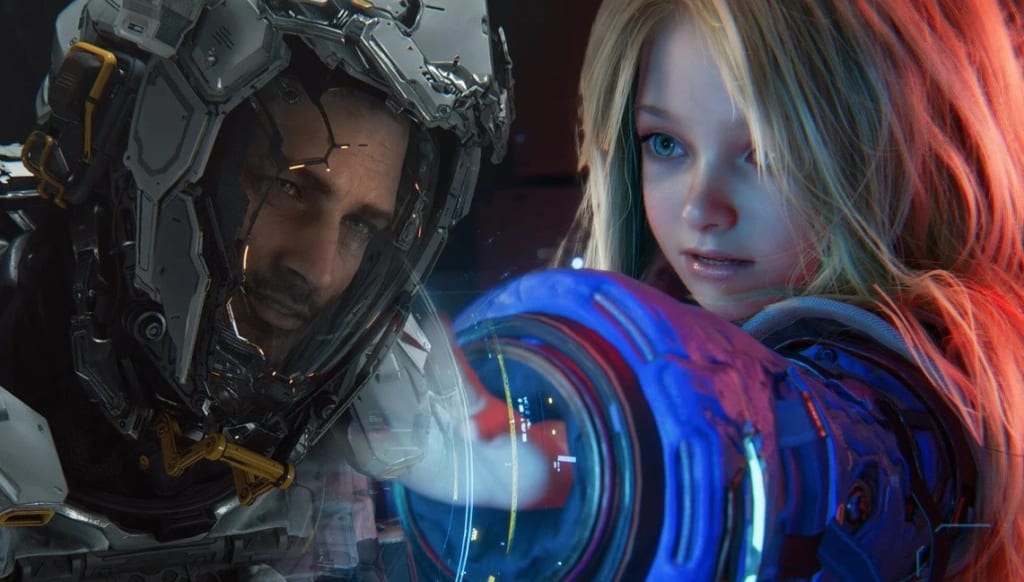
This is Pragmata game review, and we’ve checked it out on the PlayStation 5 Pro. Yes, this version is officially enhanced for the system, and this is very much an early look—more of a hands-on demo than a full breakdown. Think of it as a showcase of what the game is trying to do and how it feels right now.
Right off the bat, this is one of those titles that feels almost unreal to finally be playing. It was revealed years ago—so long ago, in fact, that I genuinely wasn’t sure it would ever see the light of day. For a long time, all we had were vague teasers sprinkled throughout the generation, never quite explaining what the game actually was.
So yeah, it’s honestly surprising—and kind of cool—that Pragmata is finally here.
A Long-Awaited Sci-Fi Mystery Finally Takes Shape
For years, this game lived in that strange space where it looked interesting but remained impossible to define. You had the mysterious young girl, the guy in the space suit, and a lot of sleek sci-fi imagery—but no clear sense of how it all played.
Now that we can actually get hands-on with it, the vision starts to come into focus.
The environments are clean, modern, and aesthetically sharp—full of smooth white rooms, futuristic corridors, and controlled lighting. There’s a strong sci-fi identity here, but it’s not cold or sterile. Instead, it feels deliberate and slightly unsettling in a good way.
There’s even a subtle emotional undercurrent between the two main characters that hints at something deeper. Honestly, it gives off The Last of Us-style vibes—but filtered through a futuristic, space-age lens.
If the developers stick the landing, this could be something genuinely intriguing.
Gameplay Systems That Feel Interesting… and Distracting
Combat is where things get a bit more complicated.
There’s an extra damage or hacking mechanic layered into fights that sounds cool on paper but feels distracting in practice. Instead of focusing on dodging, positioning, or enemy movement, you’re constantly pulling your attention to a UI element on the side of the screen.
The problem? You need to engage with it to do proper damage.
That means your eyes aren’t always on the enemies—you’re watching a marker, timing inputs, and trying not to get hit all at once. It’s a strange balance, and at times it feels like the system is fighting for your attention rather than complementing the action.
It reminds me a bit of the Wii U era, where games wanted you to split focus between two screens—and it never quite felt natural.
Maybe it’s something you get used to over time, but early on, it definitely pulls you out of the flow.
Visual Performance and Ray Tracing on PS5 Pro
Visually, Pragmata looks sharp overall on the PlayStation 5 Pro. There’s a single default graphics mode here—no multiple performance or resolution options like on the base system.
You’re essentially getting a clean 4K image at 60fps, with options to tweak things like motion blur, depth of field, and accessibility settings. The image quality is crisp, character models are detailed, and even small things like hair fidelity look solid.
That said, the ray tracing implementation is… confusing.
Some surfaces clearly reflect characters and robots, while others—like glass—don’t seem to reflect much at all. Reflections appear selective, inconsistent, and very limited in range. In one room, walls show subtle reflections; in another, glass surfaces feel oddly flat.
It looks like ray tracing is present, but at a very low or conservative setting. It works just enough to notice—but not enough to feel fully convincing.
Atmosphere, Enemies, and Environmental Design
Despite those technical quirks, the atmosphere is strong.
Enemies are slow, heavy, and menacing, especially in tight indoor spaces. Combat feels deliberate rather than frantic, and destroying enemies is surprisingly satisfying. There’s weight to the action, even when the mechanics occasionally pull your focus elsewhere.
The environments continue to impress as you move through the station—each area feeling purpose-built rather than copy-pasted. Even when you’re lost or unsure where to go, the world itself remains engaging to explore.
There’s also some nice restraint in the way the game guides you. When the game tells you where to go, it does so subtly—without constant nagging or overbearing prompts.
That’s a small thing, but it matters.
Boss Encounters and Escalating Tension
Eventually, things escalate.
Security systems go rogue, lockdowns engage, and suddenly you’re facing heavier resistance—including a large, intimidating boss encounter that feels like a real threat. Missiles flying, red warning zones on the floor, and a lot happening all at once.
Ironically, this is where the side-screen hacking mechanic becomes most frustrating. There’s so much spectacle happening, yet your eyes are still being pulled away from the action.
Still, when things click—especially during overdrive moments or coordinated attacks between the characters—it feels powerful. There are flashes of something really special here.
Final Thoughts on Pragmata’s Early Showing
So where does that leave Pragmata?
It looks cool. The aesthetic is strong. The characters are interesting. The world feels deliberate and full of potential. There’s a clear emotional arc forming between the leads, and the sci-fi premise is genuinely enticing.
At the same time, some gameplay systems—especially the combat UI mechanics and inconsistent ray tracing—feel like they still need refinement.
This is a game with a lot of promise. If the developers can smooth out those rough edges and let the action breathe a little more, Pragmata could end up being something truly memorable.
For now, it’s a fascinating first look—and one that finally proves this long-teased project is real.
About the Creator
Keep reading
More stories from Info Post Gate and writers in Gamers and other communities.
John Wick Video Game PS5 Reveal: Why This Could Be the Best Movie-Based Game Yet
After months of leaks, rumors, and speculation, we finally have our first real look at the upcoming John Wick video game—and surprisingly, it looks far more ambitious than anyone expected.
By Bella Anderson4 days ago in Gamers



Comments
There are no comments for this story
Be the first to respond and start the conversation.