
The 50-something Gamer's Dilemma
Middle aged strategy trumps action-adventure, alas


There's a moment in middle age when you realize you're actually, truly, undeniably middle-aged.
Surprisingly, it doesn't come when you hit 40. It doesn't come when you hit 50, even more surprisingly.
It comes at the moment you realize you're closer to 60 than you are to 50. That's when.
Time reveals its true nature when you reach your mid-50s.
No longer is time the abstract concept we carried through our 20s and 30s, but something tangible, finite, and suddenly precious.
For me, that revelation has hit at age 55. The mathematics have become undeniable. I am closer to retirement than to youth.
My gaming habits have shifted accordingly. Younger people tend to be surprised - perhaps a little disturbed? - at the idea of people my age being into gaming.
They forget (or just never realized) that the first great wave of gaming - arcade cabinets of the 1970s, then Ataris, then the home computing boom of the 1980s - broke over the heads of my generation when we were children and teenagers.
Many of us, no doubt, have indeed "grown out of it". Many of us have not.
But there's a problem...
The sprawling open worlds that once captivated me now feel like monuments to wasted hours. I look at the newly remastered Oblivion with jealous envy. Yes, jealous envy. It's a thing.
Why? Because I know I'll never be able to play Oblivion or its like again. Those beloved action-adventure games with their intricate maps dotted with question marks and side quests stretching into infinity? They've become exercises in frustration rather than entertainment.
When your evening gaming window has shrunk to an hour or two, the last thing you want is to spend thirty minutes wandering through a forest or town looking for collectibles.
This is where strategy games shine for the middle-aged gamer.

Sid Meier to the rescue
Civilization V is my current game. (I am still on Civ V. I believe I will catch up to VI, and possibly even VII, at some point before I die.)
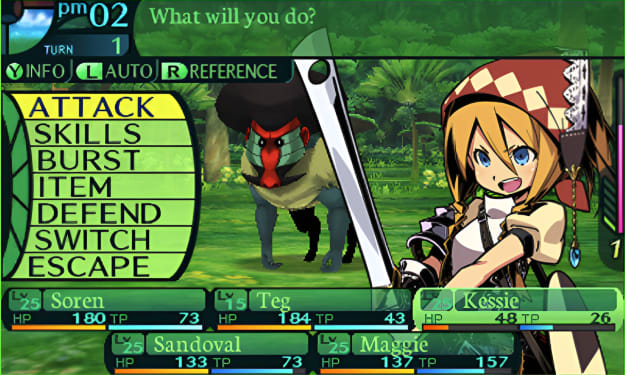
The Civ games offer that perfect blend of complexity and contained sessions. Each turn feels meaningful, each decision builds toward something concrete. There's no wandering, no getting lost in poorly marked objectives.
Even Polytopia, that rare mobile game worth mentioning, delivers strategy in bite-sized chunks perfect for a commute or a quick session before bed.
Football Manager and Pro Evolution Soccer (or EA FC, I'll grudgingly admit) scratch a different itch entirely.
These games respect the middle-aged mind's need for systems and patterns. There's comfort in the familiar rhythm of transfer windows and tactical adjustments. The learning curve isn't about memorizing complex control schemes anymore. It's about understanding deeper layers of strategy.
Linearity has become my gaming salvation. Give me a clear objective, a defined path, and measurable progress. The freedom to explore everywhere and do anything sounds wonderful in theory, but in practice, it's paralysis.
When you're acutely aware that your gaming hours (and years) are numbered, every session needs to feel worthwhile.
This is not silver-haired nostalgia, or resistance to change. It's an adaptation.
Middle-aged gaming represents an evolution of taste, refined by the understanding that time is our most precious resource.
The games that survive this filter are those that respect both our intelligence and our constraints.
The irony isn't lost on me that as my real-world responsibilities have multiplied, my gaming preferences have simplified.
But perhaps that's the point. In a life filled with complexity, our entertainment should offer clarity.
Strategy games provide that clarity wrapped in engaging challenge, making every turn, every decision, every victory feel earned rather than stumbled upon.
The controller may feel different in aging hands, but the mind behind it has never been sharper about what truly matters in gaming.
About the Creator
Jack McNamara
I feel that I'm just hitting my middle-aged stride.
Very late developer in coding (pun intended).
Been writing for decades, mostly fiction, now starting with non-fiction.
Keep reading
More stories from Jack McNamara and writers in Gamers and other communities.
Bulls Trade Former Arizona Wing Dalen Terry to Knicks in Deadline Deal
In a significant move that shakes up the rotation for two historic Eastern Conference franchises, the Chicago Bulls have traded former Arizona Wildcats wing Dalen Terry to the New York Knicks. The deal, reported by ESPN’s Shams Charania on Wednesday night, offers the young guard a much-needed career reset in the Big Apple while the Bulls acquire forward Guerschon Yabusele in return. CHECK HERE:>>>>>
By Ann D. Burcha day ago in Gamers
U4gm ARC Raiders’ Trophy Display Project: Big Rewards, Small Confusion
ARC Raiders is keeping players on their toes with the latest Headwinds update, and the community can’t stop talking about the Trophy Display Project. Packed with loot and high-stakes missions, this new feature promises some of the game’s most coveted rewards.
By Dangyc Ding2 days ago in Gamers



Comments
There are no comments for this story
Be the first to respond and start the conversation.