
100 Years of 'Winnie The Pooh': 10 Real Life Facts About This Beloved Bear
Pooh Bear turns 100.

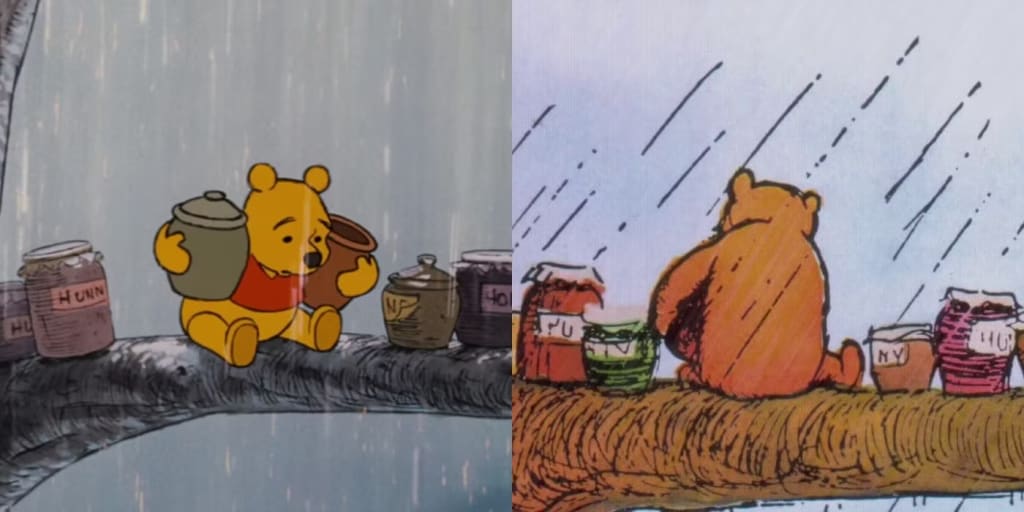
2026 is a double anniversary for the classic character Winnie the Pooh, marking 100 years since the release of A.A Milne's first Pooh book, Winnie-the-Pooh, in 1926, and 60 years since the first appearence of Disney's Winnie the Pooh, in the 1966 featurette Winnie The Pooh and The Honey Tree.
In celebration of these anniversaries, let's look at a few fun facts about the bear with very little brain.
1. Winnie the Pooh's name was partially inspired by a real-life American Black Bear
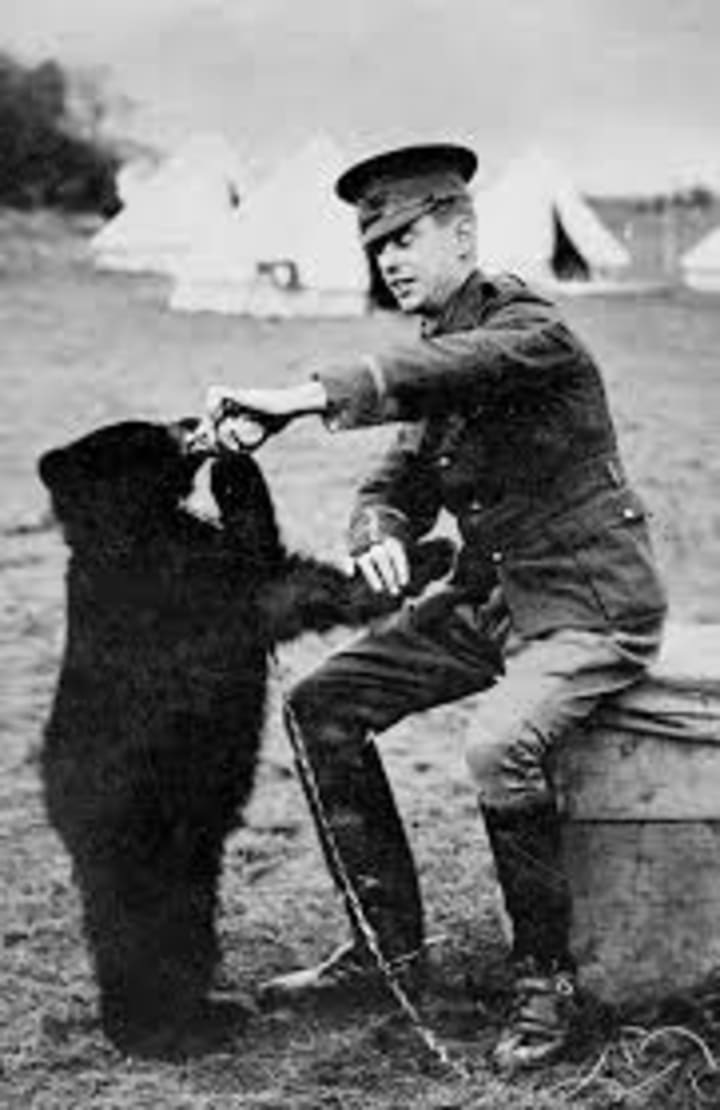
Most people are aware that A.A Milne's tories were inspired by his son, Christopher Robin Milne, and his teddy bear. A slightly lesser known story is that of the real life Black Bear that inspired this teddy's name.
In August, 1914, at a train stop midway through his journey to Quebec to report for duty as part of the Canadian Army Veterinary Corps in WWI, Lt. Harry Colebourn purchased an orphaned American Black Bear cub from a Hunter/Furrier. He named the cub Winnipeg, Winnie for short, after his hometown. Winnie travelled with Colebourn all the way to England, ecoming a beloved pet and mascot to the CAVC. Before leaving to the battlefront in France, Colebourn left Winnie at the London Zoo.
Colebourn innitially intended to relocate Winnie to a Zoo in Winnipeg once the war was over, but seeing how Winnie, famously social, thrived under the attention of visiting children, allowed her to remain in London. Sometime after this, A.A Milne began regularly visiting the zoo with his son. Winnie became a favourite with Christopher Robin, who was inspired to rename his teddy bear, Edward, Winnie. 'The Pooh' came later, added in tribute to a friend's pet swan.
The real Winnie's story is told in a few children's books, and the TV film A Bear Named Winnie, starring a young Michael Fassbender as Harry Colebourn.
2. Most of the characters in 'Winnie-The-Pooh' are based on Christopher Robin Milne's real-life toys.. and these toys still exist
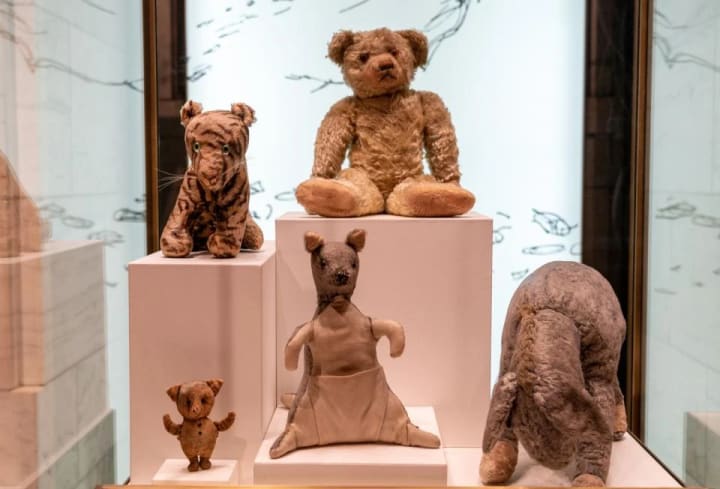
The characters in A.A Milne's Winnie-the-Pooh stories are almost all inspired by the soft toy collection of his son, Christopher Robin. Quite miraculously, given the fact that they predate the book and are therefore over 100 years old, some of these toys still exist, in relatively good condition.
While Roo was lost sometime in the 1930s, as an adult, Christopher Robin donated the surviving toys -Pooh, Piglet, Eeyore, Tigger, and Kanga- to A.A Milne's U.S publisher, who in turn donated them to the New York Public Library. They have remained on constant display in the library since their donation.
3. The books' Rabbit and Owl are portrayed as real animals
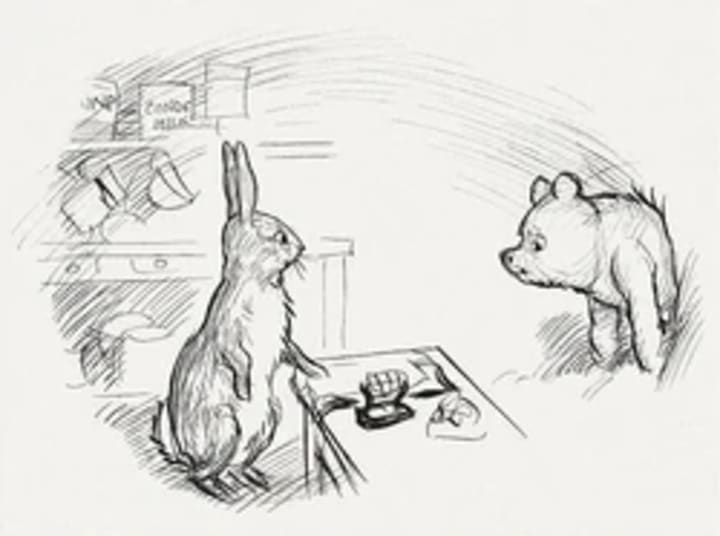
Some fans who visit the original toys are often surprised by the absence of Rabbit and Owl. The obvious initial assumption is that they, like Roo, were lost. This is not in fact the case.
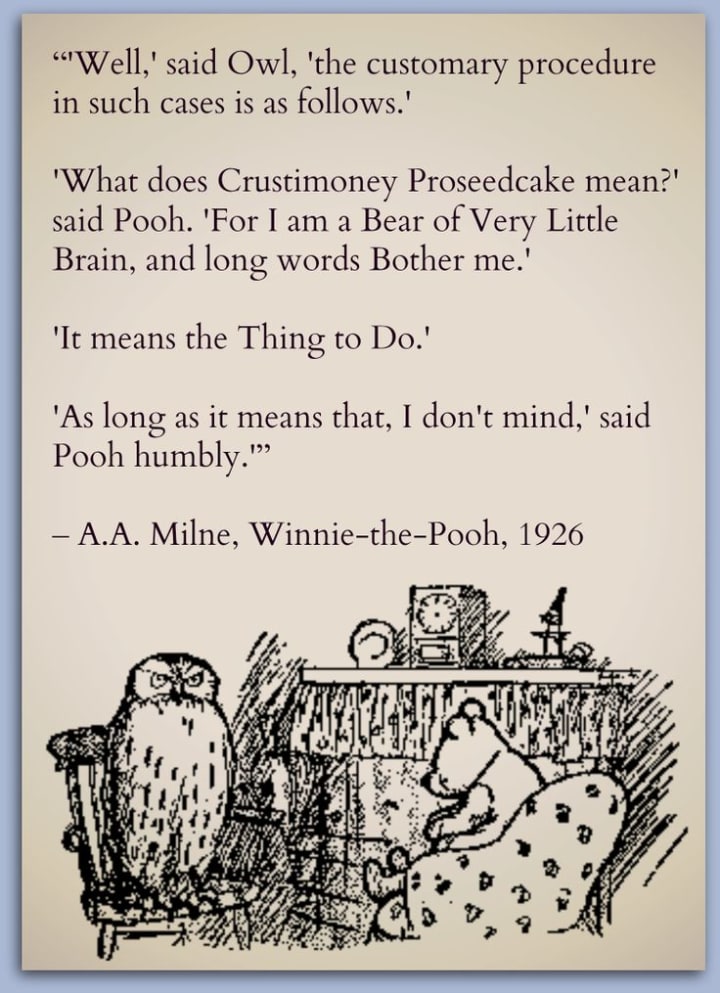
Rabbit and Owl are actually the only characters in Milne's book that were not inspired by toys. Rather, they are based on real animals. This is referenced in the second book, The House at Pooh Corner, via a conversation between Rabbit and Owl:
“Owl," said Rabbit shortly, "you and I have brains. The others have fluff. If there is any thinking to be done in this Forest--and when I say thinking I mean thinking--you and I must do it."
Rabbit is also not the only rabbit in the Hundred-Acre Wood, with occasional mentions and background appearances from other wild rabbits referred to as Rabbit's friends and relations.
In Disney's Pooh-verse, While Owl appears to be a real animal, Rabbit's status varies. Though the animated shorts and films are unclear, The New Adventures of Winnie The Pooh series heavily implies Disney's Rabbit is a toy, particularly in the episode 'How Much is that Rabbit in the Window?', in which Rabbit is accidentally picked up by a Thrift Shop owner, and his friends must recover him before he is sold.
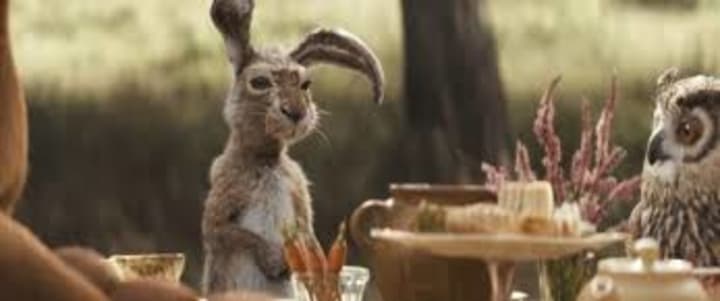
However, in the 2018 live-action film Christopher Robin, conceived as a sequel to the animated Disney Pooh films, Rabbit appears as a live, albeit now elderly, animal.
4. The Hundred-Acre Wood is inspired by a real forest

The majority of A.A Milne's Pooh stories, and Disney's adaptations, take place within the Hundred-Acre Wood. The fictional Wood was inspired by the real life Ashdown Forest in East Sussex, England. A.A Milne purchased Cotchford Farm, a piece of land in the area complete with holiday cottage, and would often take his son on walks through Ashdown, inspiring some of his stories.
Disney uses this piece of the real-life story in Christopher Robin, with the adult Christopher sending his wife and daughter to the cottage while he completes a work project.
5. Ashdown Forest is a popular tourist destination.. Particularly Poohsticks Bridge
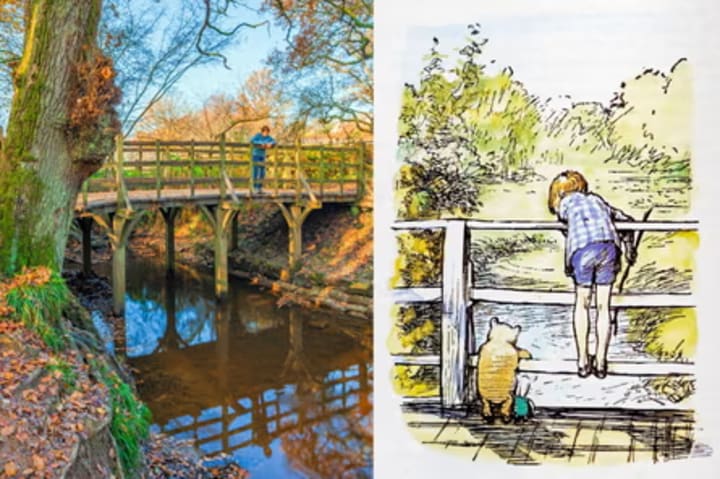
Thanks to it's connection to Pooh, Ashdown Forest is now a protected area, and common tourist destination. One of the most popular areas within the forest is a bridge above a river, known as Poohsticks Bridge, for the game Pooh and Christopher Robin invented there in The House at Pooh Corner. The game involves two or more players dropping a stick into the river, and seeing which emerges on the other side of the bridge first.
Tourists visit Poohsticks Bridge to play the game. For safety reasons, the bridge is regularly closed for restoration, and on at least one occasion, was removed and rebuilt entirely.
6. Tigger is absent from the first book
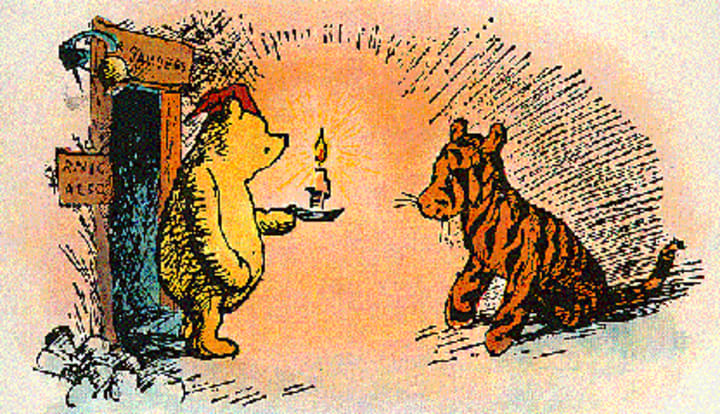
Though one of the real-life surviving toys, andone of the most popular characters, Tigger did not appear in Milne's first book, Winnie-the-Pooh. He makes his debut in chapter two of the second book, The House at Pooh Corner, in which Pooh and co struggle to find something the newly arrived Tigger will eat. Tigger eventually moves in with Kanga and Roo, as he shares Roo's favourite food, Extract of Malt.
While Tigger lives alone in Disney's Pooh-verse, his status as a big brother figure to Roo remains intact.
7. A.A Milne wrote four books including Pooh
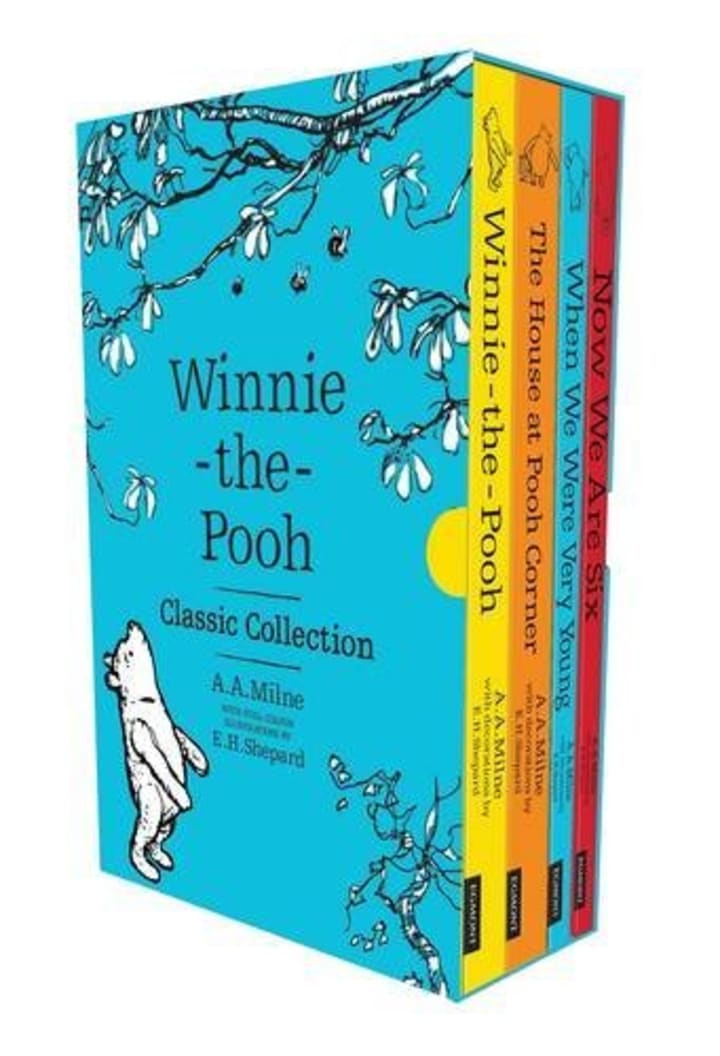
Of these four books, two, Winnie-the-Pooh and The House at Pooh Corner, tell full-length stories. The other two, When We Were Very Young and Now We Are Six, are poetry collections, each with a few pieces featuring Pooh characters.
Milne chose to stop writing Pooh after The House at Pooh Corner, as Christopher Robin had outgrown the stories.
8. Winnie-The-Pooh shared a Birth Year with Queen Elizabeth II
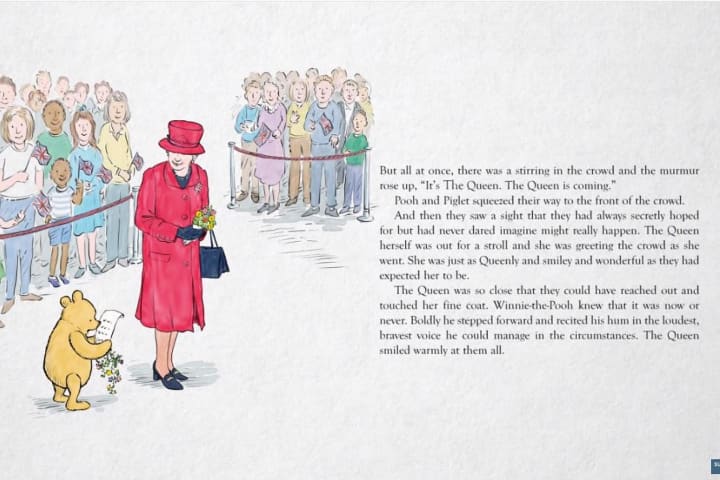
A.A Milne's Winnie-the-Pooh was published in 1926. This happens to be the same year that the future Queen Elizabeth II was born. In fact, Milne dedicated an poem starring Pooh to the newborn Then-Princess Elizabeth.
In 2016, the book's 90th anniversary, the Milne Estate took advantage of this synchronicity by authorising a special book, Winnie-the-Pooh Meets the Queen. In a story celebrating both milestones, the book sees Pooh and his friends taking a trip to London to see the Queen on her 90th Birthday. A sequel, Winnie-The-Pooh Meets The King, has the Hundred-Acre Wood gang panicking when they lose Eeyore in London during King Charles III's Coronation.
9. Walt Disney was inspired to purchase Pooh's film rights by his daughter
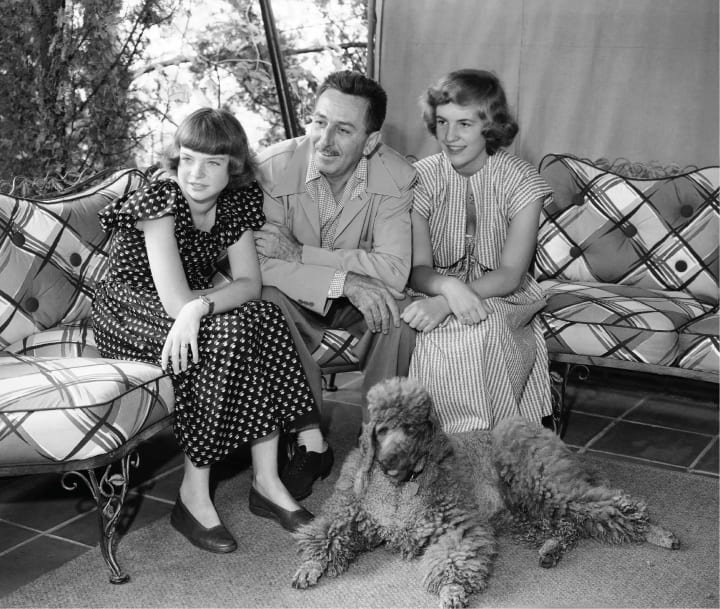
As the story goes, Walt Disney heard his daughter, Diane, laughing alone in her room, and decided to investigate. He discovered her reading one of A.A Milne's books.
Disney purchased the film rights to the Winnie-the-Pooh books soon after. Encouraged by his daughter's fondness for the character, he had big plans for Pooh
10. 'Winnie The Pooh and The Honey Tree' was one of the last Disney Animation Projects released in Walt Disney's lifetime
Walt initially planned to produce a full-length Winnie The Pooh film right away, until it became clear that the characters were not nearly as well-known in the U.S as they were in A.A Milne's native England. So, he instead planned to produce featurettes to introduce American audiences to Pooh before committing to a full-length film starring the character.
The first short, Winnie The Pooh and the Honey Tree, was adapted from "In Which We Are Introduced to Winnie the Pooh and Some Bees and the Stories Begin" and "In Which Pooh Goes Visiting and Gets into a Tight Place" the first two chapters of Milne's first book. Released in February, 1966 as a pre-feature to Disney's live-action film The Ugly Daschund, Winnie The Pooh and the Honey Tree quickly charmed audiences, and Walt greenlit production on a second featurette, Winnie The Pooh and the Blustery Day, along with tentative plans for what would eventually become the third featurette, Winnie The Pooh and Tigger Too.
Unfortunately, Walt Disney fell ill later that year, diagnosed with Lung Cancer in November before passing away in December, 1966, never realising his wish for a a full-length Pooh feature. While the three featurettes were released as a package film, The Many Adventures of Winnie The Pooh, in 1977, a true full length movie did not eventuate until the direct-to-video release of Pooh's Grand Adventure: The Search for Christopher Robin in 1997, with no full-length theatrical release until The Tigger Movie in 2000. Thankfully for fans, The Tigger Movie's success revived Pooh as atheatrical franchise throughout the 2000s.
Happy 100th Birthday, Winnie the Pooh. Here's to 100 more!
About the Creator
Kristy Anderson
Passionate About all things Entertainment!
Keep reading
More stories from Kristy Anderson and writers in Geeks and other communities.
6 Best Unlikely Duos In The MCU
Despite many fans admitting to low expectations due to limited marketing and the full series dropping at once, Marvel's Wonder Man has proven a surprise hit. Wonder Man's success has largely been credited to the chemistry between the leads, Yahya Abdul-Mateen as Simon Williams and Ben Kingsley as Trevor Slattery. Much of the series chronicles the unlikely friendship that builds between the two as they seek roles in the next big Hollywood film.
By Kristy Anderson6 days ago in Geeks
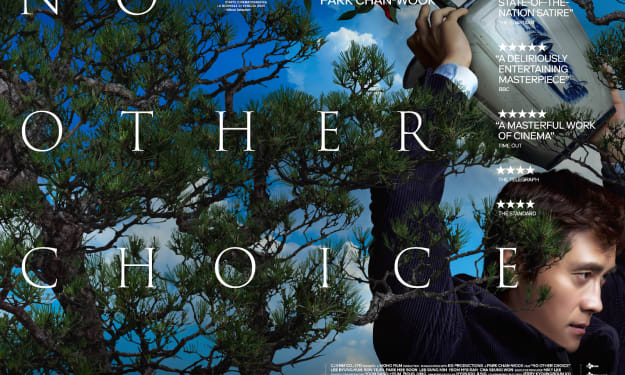
No Other Choice (2025)
It is only February, so other films may well surpass “No Other Choice”, but I think this is the best film I’ve seen so far this year. And that surprises me, because, it is a subtitled film and while I am pretentious enough to choose to watch foreign-language films, I was also very tired and that was an extra commitment from me. But more importantly, let me warn you, this film is gruesome and violent. There were times I had to turn away from the screen to avoid the worst of it (including some self-inflicted dentistry).
By Rachel Robbins6 days ago in Geeks
Britney Spears’s Back-Catalogue Sale Signals a Music Industry Turning Inward
The recent sale of Britney Spears’s back catalogue has become more than just another high-profile financial transaction. It stands as a revealing symbol of a music industry increasingly focused on recycling its past rather than building its future. As one of pop music’s most influential artists of the last three decades, Spears’s decision to sell the rights to her recorded music and publishing assets underscores a broader shift in how value is created and preserved in the modern entertainment economy. Catalog sales have surged in recent years, driven by investment firms eager to acquire reliable revenue streams from established hits. For companies facing uncertainty in touring income and volatile streaming payouts, owning proven music assets offers financial security. Spears’s catalogue, which includes global anthems such as …Baby One More Time and Toxic, represents a stable and predictable source of income through streaming platforms, advertising, and licensing deals. Yet the sheer scale of these transactions highlights an industry that appears increasingly dependent on yesterday’s successes. The move comes at a time when the music business is grappling with structural challenges. Streaming has transformed consumption habits but has also concentrated profits among a small group of top artists and rights holders. While platforms boast billions of users, the average musician earns little from digital plays alone. This imbalance has led to an environment where legacy catalogs—already famous and algorithm-friendly—are far more attractive to investors than untested new music. Spears’s sale also reflects changing priorities for artists themselves. After years of legal battles over control of her career and finances, monetizing her catalogue provides both financial independence and emotional closure. For performers who endured intense public scrutiny and rigid contracts in earlier eras, selling rights can be seen as reclaiming agency in an industry that historically favored record labels over creators. However, critics argue that the growing obsession with back catalogues is a sign of creative stagnation. Instead of funding emerging talent or experimenting with new sounds, corporations are pouring billions into music that has already proven profitable. This inward collapse risks narrowing the cultural space for innovation, as marketing budgets and radio exposure continue to prioritize familiar songs over fresh voices. There is also a cultural cost. Music has long functioned as a mirror of social change, reflecting new identities, struggles, and movements. When investment strategies dominate artistic strategy, music risks becoming a financial instrument first and an expressive medium second. The industry’s fixation on nostalgia may provide short-term returns but could weaken its long-term relevance to younger audiences seeking authenticity and originality. At the same time, the phenomenon reveals how music has become a financial asset class. Songs are now treated like real estate or stock portfolios, valued for their ability to generate recurring revenue rather than emotional connection alone. Spears’s catalogue sale joins a growing list of similar deals by iconic artists, reinforcing the idea that pop history is being consolidated into corporate ownership. Yet the implications go beyond business. For fans, these transactions can feel unsettling, as the emotional legacy of an artist becomes controlled by anonymous investment groups. Decisions about licensing, remixes, and branding are increasingly driven by profitability rather than artistic intent. The risk is that music once shaped by personal struggle and creative vision may be repackaged endlessly to suit advertising campaigns and film soundtracks. Britney Spears’s catalogue sale is therefore not just a financial headline—it is a cultural signal. It reveals an industry seeking safety in its own archive, wary of risk and uncertain about the future. Whether this trend represents a temporary phase or a lasting transformation will depend on whether record labels and investors eventually rediscover the value of nurturing new talent alongside preserving old hits. For now, the deal stands as a powerful reminder: the music industry may be moving forward technologically, but economically and creatively, it appears to be turning inward—relying on the past to secure its future.
By Fiaz Ahmed 5 days ago in Geeks
The Cave Part 6
If you have ever heard a tale about yourself that you cannot remember and doubtless think is made up, you will know how I felt when Tharkin related all that the eagle had seen of me before my memories were scattered. Of far distances and traveling companions that I did not recall, camping out under the stars and making our way to the mountains with deliberate purpose. The great bird had lost contact with my party once we entered the forests, and the seven other members were not seen again by him or his brethren since.
By Jamye Sharp3 days ago in Chapters

Comments
There are no comments for this story
Be the first to respond and start the conversation.