
AI Agents Are Taking Over (But Is That Actually Okay ?)
Autonomous helpers, creative co-pilots & what it means to live in the age of machine “assistants”

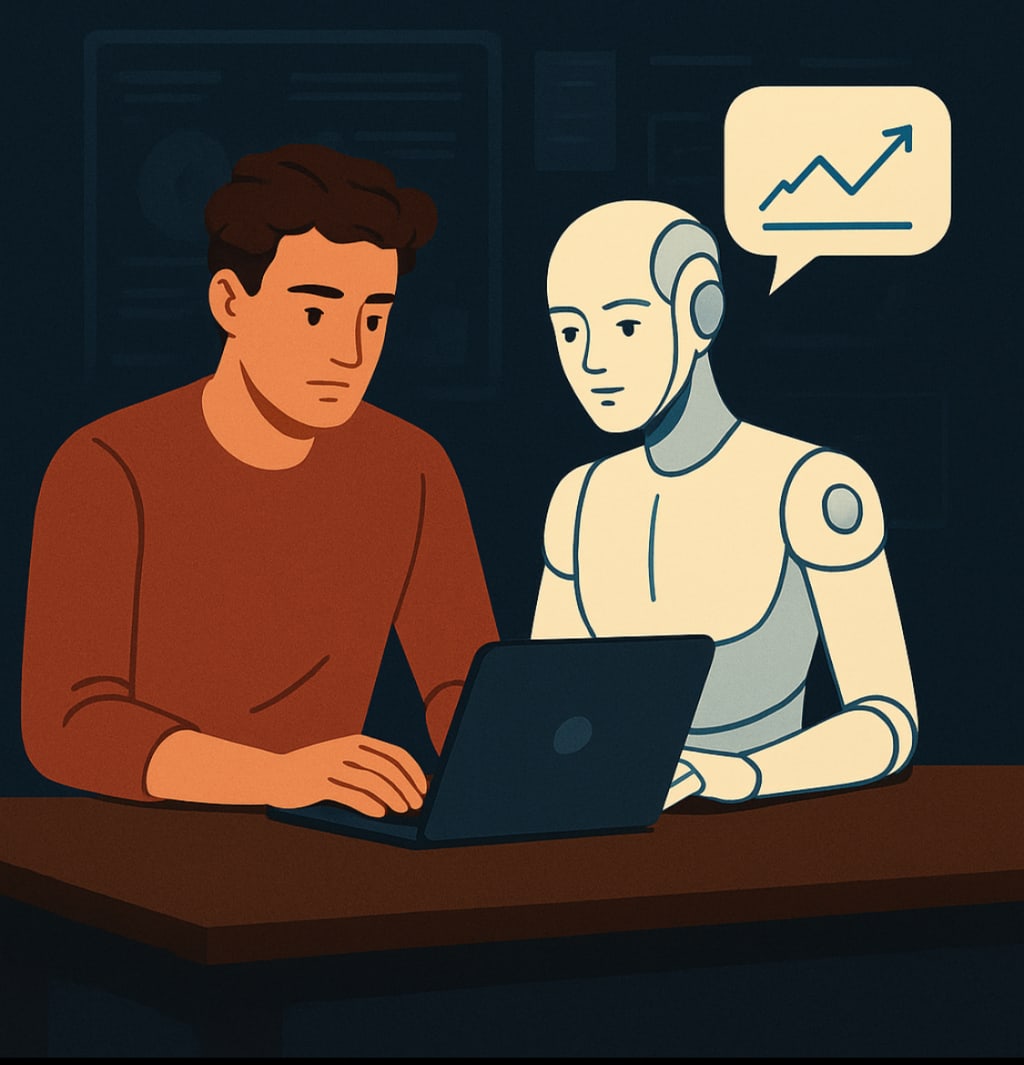
Not long ago, AI felt like a futuristic idea — something from sci-fi movies or late-night tech debates. But in 2025, it’s no longer about “someday.” It’s here, woven into how we work, create, and even live. And the latest buzzword floating everywhere? AI agents.
These aren’t your average chatbots. They don’t just sit around waiting for you to type a prompt. They act on your behalf. They learn your routines, manage your tasks, and even anticipate what you need before you ask. In other words, they’re becoming the “invisible teammates” of our everyday lives.
⸻
So, what exactly is an AI agent?
Think of it as more than a tool. It’s like a digital intern or assistant — only one that doesn’t take weekends off. Unlike traditional apps, which wait for your command, AI agents work in the background. They can monitor your inbox, reschedule meetings when conflicts pop up, sort your files, flag urgent updates, or even summarize a mountain of information before you wake up.
The difference is proactivity. They’re not just responding; they’re anticipating.
⸻
Where they’re already showing up
If you think this is still experimental, take another look at your daily routine. Chances are, you’ve already brushed shoulders with an AI agent.
• In workspaces, they’re drafting emails, filtering Slack messages, and auto-generating meeting notes.
• In creative industries, they’re editing video highlights, designing slide decks, and brainstorming content ideas.
• In finance, they’re automating trades, monitoring expenses, and nudging you about late bills.
• In personal life, they’re making shopping lists, recommending workouts, or nudging you when it’s time to hydrate.
We’re not moving toward AI agents — we’re already living with them.
⸻
Why people are both excited and nervous
The potential is massive. Who wouldn’t want more free time? Who wouldn’t want a digital assistant handling the boring stuff so you can focus on bigger dreams? That’s the optimistic view: AI agents as productivity boosters, stress reducers, creativity partners.
But here’s the catch — excitement always walks hand-in-hand with anxiety.
The upside:
• They free up mental space.
• They boost efficiency.
• They make scaling projects way easier.
The downside:
• They can make us too dependent.
• They raise privacy and data concerns.
• They risk hollowing out skills we should keep sharp.
In other words, they’re like fire: useful if you control it, dangerous if you don’t.
⸻
My own experiments with AI agents
I’ll admit it — I use them. One helps me organize content ideas, another sets reminders for my routines, and one even keeps tabs on my inbox so I don’t drown in unread messages. Sometimes, they’re brilliant. Sometimes, they fail spectacularly, and I end up laughing at how “smart” my so-called assistant really is.
Here’s the lesson I’ve learned: you can’t treat them like masters. You treat them like interns — eager, helpful, but in need of supervision. They lighten the load, but they don’t carry the vision. That’s still mine.
⸻
What this shift really means
AI agents aren’t here to “replace” humans. They’re part of the natural evolution of tools. Think about electricity, the internet, smartphones — all of them reshaped daily life until we couldn’t imagine living without them. Agents are the next layer, sliding quietly into the background until they’re as normal as opening an app.
But here’s the part we can’t forget: tools only take on the values of the people using them. If we let convenience rule, we risk losing touch with the very skills and decisions that make us human. If we keep creativity, empathy, and ethics at the center, agents stay where they belong — as assistants, not replacements.
⸻
The bigger picture: partnership, not panic
Yes, AI agents are taking over the mundane tasks. But that doesn’t mean panic. It means possibility. It means more space for creativity, more time for relationships, more energy for what matters most. The challenge isn’t whether they’ll exist — they’re already here. The challenge is how we use them, how we set boundaries, and how we remind ourselves that technology should serve people, not the other way around.
Because no matter how smart an agent becomes, it can’t replace the spark of your story, your perspective, or your humanity. And that’s the part that will always matter more.
Every story I publish is a mix of my own experience, reflection, and a little AI assistance to refine the details. But the real value comes when it sparks connection. So if this spoke to you — leave a comment, subscribe, or pass it on. Let’s grow together.
About the Creator
The Davids
Master the three pillars of life—Motivation, Health & Money—and unlock your best self. Practical tips, bold ideas, no fluff.
Keep reading
More stories from The Davids and writers in Geeks and other communities.
The Heart’s Echo: How We Miss Each Other in 2025
Isolation, connection & the spaces between — what it means to feel human in a hyperconnected world We live in a time when connection is easier than ever. A tap, a swipe, a notification — and someone, somewhere, has reached us. But here’s the irony: in 2025, loneliness has never felt louder. We scroll endlessly, we text at midnight, we react with emojis instead of real expressions, and yet, the echo of our hearts often comes back empty.
By The Davids4 months ago in Humans
Not Just For Clean Up: A History Of The MCU's Department of Damage Control
Initially an organisation that seemed to exist to help the heroes of the Marvel Cinematic Universe, from Phase Four onwards, the Department of Damage Control has shifted into a more antagonistic role. Most recently seen in the Wonder Man series, the current incarnation of Damage Control seems to target superpowered individuals, regardless of whether that person poses an active or intentional threat.
By Kristy Anderson6 days ago in Geeks
Push the Button
In today’s hyper-connected world, the phrase “Push the Button” has taken on profound implications beyond its literal sense. While it may evoke images of launching rockets or triggering alarms in popular culture, in the modern digital era, it is a metaphor for the immense power that rests at our fingertips. Whether it is sending a crucial email, posting on social media, or activating sophisticated technological systems, pushing a button can set off a chain of events that may be irreversible. As society becomes increasingly reliant on technology, understanding the responsibility behind this simple action is more crucial than ever.
By Ayesha Lasharia day ago in Geeks



Comments
There are no comments for this story
Be the first to respond and start the conversation.