
Are Today's Cartoons Hurting Our Children?
Would it be best to let them watch what we watched as kids instead?


Every generation likes to think that they had the best of everything. The best clothes, the best games, the best toys and yes, the best cartoons. I'm sure that just like me, many of you can fondly recall those old familiar shows we spent our childhoods watching.
Back in my day we had shows like Bear In The Big Blue House, Rollie Pollie Ollie, PB&J Otter and many, many others that I'm sure you can recall as you read this.
Now that you're thinking about it, has it ever crossed your mind that there seems to be a stark difference in what we grew up watching and the cartoons enjoyed by today's kids?
Well, you might be onto something. In fact, there are many who would agree that today's children's behaviour is adversely affected by the cartoons and other kid oriented programs that they have been exposed to.
Lauren, a mother of two from the US, runs a popular social media page where she shares stories about her experiences as a parent. In early April 2024, she triggered widespread discussion when she pointed out a shift in her children's behaviour after exposing them to early 90s cartoons.
Among the many benefits of this switch, Lauren noted that her children are less dependent on screens and devices, require less TV time, are no longer upset when their devices are taken away and can even sleep better at night. Lauren's claims are not baseless as similar findings have been reported in in-depth studies conducted by the The American Academy Of Paediatrics and a number of reputable medical and psychological associations.
But this is Geeks, so rather than continuing to bore you with studies and statistics, let's approach this discussion the best way we know how. From the perspective of a dedicated television audience. That being said, it definitely never hurts to look-up the actual studies when you have time.
Let's explore the differences in today's kids shows and the cartoons from our generation by looking at their respective presentations, content, message and other factors. Perhaps this will shed some light on if today's cartoons really are hurting our children?
Presentation
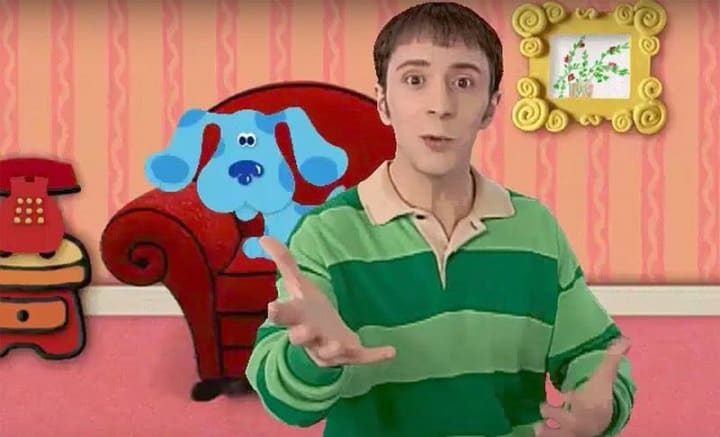
Maybe this is nostalgia talking but I'm certain that those 90s-early 2000s cartoons had a far more friendly and warm vibe to them. The colours seemed more vivid and the characters were more engaging and inviting. I certainly wasn't creeped out by any of the shows I watched when I was 5.
Cartoons from back then also followed quite a simple and more linear structure. Most shows started with a familiar, extended intro sequence to get you settled in, a small opener by the characters to set the scene of the episode, an issue that needed solving and the resolution of said issue through some kind of positive action or lesson. Most episodes would also end with a recap of what had taken place and a soothing goodbye song before the actual credits rolled.
As a kid, this created a comforting sense of familiarity without being overly repetitive at the same time. This formulaic approach also prevented shows from becoming too over stimulating to our younger developing minds. Shows like Blue's Clues and Stanley did a masterful job of following this fixed structure approach and kept many young viewers both engaged and informed.
Cartoon's today noticeably lack these familiar intro sequences and the warm, deep characters from before seemed to have been replaced by rather one dimensional, monotonous sounding protagonists. Episodes tend to not follow a very linear structure but rather a louder, more "in your face", less predictable formula which seems designed to capture the attention of a child but not engage the imagination as well.
Content And Message
While I'm not knocking today's cartoons for not trying to inculcate positive values into kids, I can't help but feel that it no longer seems to be the main goal anymore. Cartoons are indeed still both a source of entertainment and positivity. However, your kid's brain is not going to develop and their horizons are not going to broaden if they spend their whole day in front of a screen.
That goes for both older cartoons and more recent ones.
However, while older cartoons alone cannot help properly develop a child's growing mind, they seem more mindful of this fact. Thus, they tend to contain themes centred around adventure, travel and friendship. From personal experience, it was the shows I watched that encouraged me to go outside, play sports, socialise with people and want to explore the world around me.
While the shows themselves were entertaining and engaging, they made you realise that there were things to do beyond them and more often than not, a child would watch their favourite cartoon simply to discover the next fun activity they can do outside.
Modern kids shows however, appear to focus primarily on holding the attention of a child for as long as it possibly can. Rather than making a child want to play with toys or go outside, they make them want to keep watching to the point that a child will often throw a tantrum when their device is taken away or the TV is shut off.
Whether intentional or not, kids' programs nowadays keeps them more fixated on the screen and overstimulates them to the point that they are no longer curious about the world around them. It seems that shows nowadays focus less on creating meaningful content that engages the mind and encourages curiosity but rather on earworms and jarring visuals that make it difficult for a child to not want to endlessly watch over and over again.
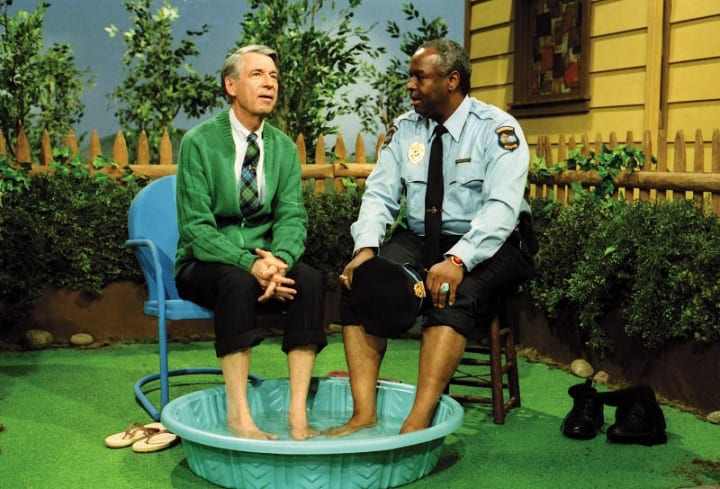
Even live-action kids programs like Sesame Street or Mr. Rogers' Neighbourhood have been overtaken by obnoxious, click-baity YouTubers who are far more focused on views and likes than actually making a positive difference in a child's life.
I guess there is a reason why many of us of a certain age group still hold the morals and lessons from shows such as Care Bears and Dibo The Gift Dragon to heart while newer content such as Johnny Johnny from Billion Surprise Toys have become fodder for memes.
Mode of Consumption

In all fairness, the fault can't lie in the shows alone but also with how accessible they are for today's kids. Back in the day, streaming was non-existent. In fact, it was hard enough to even get a DVD of your favourite cartoon sometimes until long after you've already seen every episode. On top of that, you probably had to share the TV with everyone at home. So, binge-watching was out of the question.
If there was a show I'd like, I would wait for the time slot on which it came on, spend my half hour in front of the TV until the episode ended and naturally find something else to do once it was over, content in the knowledge that a new episode would come the next day. I did not need to be coaxed into watching the show once it started and had no issue walking away from the TV once it finished.
With cartoons today being shown on Netflix, YouTube and other streaming platforms, and whole seasons being released all at once, children today do not need to wait between episodes and could watch their favourite show all day long without feeling the desire to do anything else. Even parents who diligently monitor their children's screen time and device usage will notice how difficult or unpleasurable it is for them to be separated from their device.
Tantrums and meltdowns are far more common nowadays because a child will inevitably find it frustrating that they cannot finish a show that they know is fully laid out for them to watch at any time, anywhere and on any screen. Back in our day however, we knew that there was a set time, place and duration for our favourite show to come on and we knew that no amount of kicking and screaming would make tomorrow come any faster.
These regular intervals gave a feeling of stability and a set routine while the inability to binge watch shows not only helped with our self-control but allowed us to pursue other activities while waiting for our show to come on and after an episode had finished. In many ways, this forced us to exercise our brains and open our minds in search of ways to entertain ourselves or accomplish chores before it was time for our favourite program.
What Would You Do?
Well, to sum up my points, newer cartoons are potentially more harmful to a child's development due to its content and presentation being catered more towards keeping the child glued to the screen as opposed to encouraging them to partake in other positive and enriching activities away from their devices. I have also mentioned that the ease of access to devices, streaming services and entire series all at once have made it difficult for children to manage their time and part from their devices.
Personally, if I had kids of my own, I would do my best to expose them to the exact same shows that I watched growing up and in the same manner that I watched them eg. on a single television at fixed periods of time.
That being said, I'd love to hear your thoughts on this. Am I just being an old fashioned crank who can't move with the times? Or would you also rather today's kids be exposed to those older, less overly stimulating cartoons? You tell me.
About the Creator
Isa Nan
Written accounts of life, death and everything in between
Not Just For Clean Up: A History Of The MCU's Department of Damage Control
Initially an organisation that seemed to exist to help the heroes of the Marvel Cinematic Universe, from Phase Four onwards, the Department of Damage Control has shifted into a more antagonistic role. Most recently seen in the Wonder Man series, the current incarnation of Damage Control seems to target superpowered individuals, regardless of whether that person poses an active or intentional threat.
By Kristy Andersona day ago in Geeks
The Big Book Review: "Thinking, Fast and Slow" by Daniel Kahneman (Pt.1)
This book is split into parts but honestly, the parts themselves have so many ideas that I have no idea how I could fit everything I wanted to say into ONE review. I know I haven't done this since 'Reliable Essays' by Clive James, but I'd like to try that structure again. Sorry if it's not something you enjoy but I really wanted to share this...
By Annie Kapur5 days ago in Geeks


Comments
There are no comments for this story
Be the first to respond and start the conversation.