
Cloud Optimization Strategy: Master Costs & Efficiency (2026)
Discover essential cloud optimization strategies for 2026. Learn how to master cloud costs, enhance efficiency, and unlock maximum value from your infrastructure with expert insights. Explore our guide.

The Cloud Optimization Strategy Crisis: Why Your Bill is a Proper Mess
I reckon we have all been there. You open the AWS or Azure dashboard, fixin' to check the monthly spend, and your heart just stops. It is hella more than you expected. Every single time. We were promised that the cloud would be cheaper, but here we are in 2026, and most of us are still burning cash like it is going out of fashion. Real talk: if you do not have a solid cloud optimization strategy, you are basically just handing your lunch money to Big Tech.
The thing is, the cloud has gotten complicated. It is not just about turning off a few idle instances anymore. It is about a culture shift that most companies are too lazy to actually do. I have seen startups with three employees running clusters that could power a small country. It is proper dodgy behavior, mate. We get stoked about "infinite scale" but forget that infinite scale comes with an infinite bill. Let us get into how we actually fix this disaster before your CFO has a literal meltdown.
The Hidden Costs of Over-provisioning
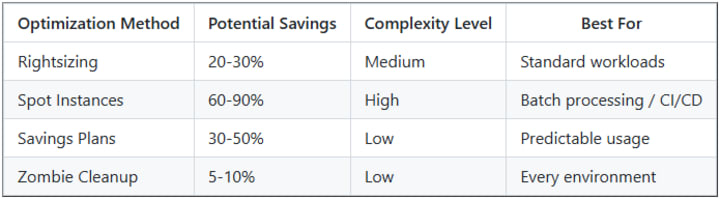
Most engineers are terrified of their app crashing. I get it. Nobody wants that 2 A.M. alert. So, what do they do? They over-provision. They pick the "Extra Large" instance when a "Medium" might could do the job just fine. It is the classic "all hat, no cattle" approach to infrastructure. You are paying for headroom you never, ever use. It is a total waste of resources.
Zombie Resources: The Silence of the Servers
Then you have the zombies. These are the snapshots, unattached storage volumes, and abandoned test environments that just sit there, sucking up pennies that turn into thousands of dollars. It is gnarly how fast these things accumulate when nobody is looking. You might think a few orphaned disks do not matter, but in a multi-cloud environment, that stuff adds up faster than a tab at a Sydney pub on a Friday arvo.
Advanced Cloud Optimization Strategy Tactics for 2026
If you want to survive 2026 without going broke, you have to move past basic cost-cutting. We are talkin' about sophisticated moves. A modern cloud optimization strategy requires you to look at your architecture with a cynical eye. Are you using serverless where it makes sense, or are you just sticking to what you know because you are too knackered to learn something new? The tech is there, but the strategy is usually lacking.
One of the biggest shifts this year is the move toward autonomous systems. We are finally letting the machines do the heavy lifting when it comes to rightsizing. Humans are too slow and too emotional about their servers. AI does not care about your "favorite" instance type. It only cares about the telemetry data. Speaking of which, smart teams are also looking at how they build their actual products. A good example of this is mobile app development ohio where efficiency is baked into the code from day one, not just as an afterthought in the cloud console.
"The shift from reactive cost-cutting to proactive value realization is the defining trait of 2026 cloud strategies. If you aren't optimizing at the architectural level, you're just moving deck chairs on the Titanic." — J.R. Storment, Executive Director of the FinOps Foundation, FinOps Foundation News
Autonomous Rightsizing: Letting the AI Take the Wheel
In 2026, we are seeing tools that don't just suggest changes—they execute them. Autonomous rightsizing uses machine learning to predict traffic spikes and dial your resources up or down in milliseconds. It is hella more efficient than manual scaling. If you are still doing this by hand, you are living in the past. It is time to get sorted and trust the algorithms to save you some serious coin.
Spot Instances: High Risk, High Reward?
Spot instances are great, until they aren't. They are basically the cloud version of a fire sale. You get a massive discount, but the provider can snatch them back with two minutes' notice. In the past, this was too risky for most. But now, with better orchestration, we can run even stateful workloads on spot capacity. It takes some proper engineering, but the savings are fair dinkum massive.
FinOps 2.0: Culture Over Calculators
You can have all the fancy tools in the world, but if your devs do not care about the bill, you are doomed. FinOps is not just a department; it is a mindset. Or at least, it should be. Most companies just hire one "FinOps guy" and expect him to perform miracles. It does not work like that. You need everyone from the intern to the CEO to understand that every line of code has a price tag.
Real talk: it is about accountability. When a team sees exactly how much their dodgy code is costing the company, they tend to fix it pretty quick. It is amazing how much better people get at their jobs when there is a dashboard showing their "waste score" in the breakroom. It is a bit cynical, sure, but it gets the job done. No worries about being the bad guy if the data speaks for itself.
💡 Corey Quinn (@quinnypig): "Cloud bills aren't complex because the tech is hard; they're complex because the pricing is designed by people who enjoy seeing you suffer." — Last Week in AWS
Breaking Down the Silos
The biggest hurdle to a successful cloud optimization strategy is the wall between Finance and Engineering. Finance wants a fixed budget; Engineering wants to build cool stuff. They speak different languages. In 2026, the best companies are forcing these groups to sit together. It is proper brilliant when they actually start communicating. You stop getting those "surprise" bills that ruin everyone's weekend.
Incentivizing Lean Engineering
Why not reward engineers for saving money? We reward them for shipping features on time, but rarely for making those features cost-effective. Some of the most successful firms I have seen lately are giving bonuses based on cloud efficiency metrics. It turns optimization into a game. Suddenly, everyone is stoked to find ways to trim the fat from the infrastructure.
"Sustainability is now a core metric of cloud optimization, not just a line item in an ESG report. Efficiency in the cloud directly correlates to a lower carbon footprint." — Dr. Holly Cummins, Senior Principal Software Engineer, Holly Cummins Blog
Future Trends: Beyond Just Saving a Buck
Looking ahead to late 2026 and 2027, the focus is shifting toward "GreenOps." It is not just about the money anymore; it is about the carbon. Governments are fixin' to start taxing cloud emissions, and the big providers are already showing carbon footprints in their billing consoles. Your cloud optimization strategy will soon need to account for which data center has the best renewable energy mix at 3 P.M. on a Tuesday. It is getting that specific. We are also seeing "Multi-Cloud Arbitrage" where AI-driven brokers move workloads between AWS, Azure, and GCP in real-time based on fluctuating spot prices and energy availability. The market is evolving toward a truly fluid utility model where the cloud is a commodity, not a destination.
💡 Sarah Wang (@sarah_wang): "The future of cloud isn't just about spending less; it's about getting more value out of every single CPU cycle you rent." — Andreessen Horowitz Insights
Multi-Cloud Arbitrage: The New Frontier
The idea of being locked into one provider is becoming hella unpopular. Companies want the freedom to move. While it sounds like a dream, the egress fees are still proper dodgy. However, as regulations like the EU Data Act start to bite, those walls are coming down. We are starting to see the rise of the "Mega-Cloud" where your abstractions sit so high that you do not even know which provider is actually running your containers.
The Rise of Purpose-Built Silicon
We are also moving away from generic CPUs. Whether it is AWS Graviton4 or custom Azure chips, using the right silicon for the right job is a massive part of a modern cloud optimization strategy. If you are still running everything on x86 because you are too scared to recompile your code, you are leaving 40% savings on the table. It is not 2015 anymore; the compilers do most of the work for you. Don't be a luddite.
Conclusion: Keep It Lean or Go Home
At the end of the day, a cloud optimization strategy is just about common sense. Don't buy what you don't need, and don't leave the lights on when you leave the room. It sounds simple, but in the chaotic world of modern software, it is easy to lose track. Stay cynical about your cloud bill, keep your engineers accountable, and don't be afraid to let the AI take over the boring parts. If you do that, you might could actually see some of that "cloud savings" everyone has been talking about for the last decade. Stay sharp, watch your spend, and don't let the big providers take you for a ride.
About the Creator
Keep reading
More stories from Samantha Blake and writers in Geeks and other communities.
How Demand Forecasters Integrate ERP & Planning Tools (2026)
The Messy Reality of Spreadsheet Hell Reckon we have all been there. You are staring at a massive Excel sheet that’s fixin’ to crash your laptop while trying to guess how many units you will sell next Tuesday. It is a nightmare, plain and simple.
By Samantha Blake2 days ago in Geeks
Goodbye, Mr. Duvall
It is turning out to be an interesting year. I was in the middle of teaching a class when a pop-up appeared on the screen announcing the death of Mr. Robert Seldon Duvall (yes, that was his full name). I was in the middle of a discussion on the obsession we have with winning when it comes to sports (the Winter Olympics was a theme), and I felt as though things were coming full circle. We had already lost Gene Hackman last year, and along with that titan, it feels though one particular golden age has closed off to be replaced by...?
By Kendall Defoe 2 days ago in Geeks




Comments
There are no comments for this story
Be the first to respond and start the conversation.