
From Paris to Wakanda
How The Hunchback of Notre Dame Shaped Disney’s Darkest Stories and Cultural Heroes.

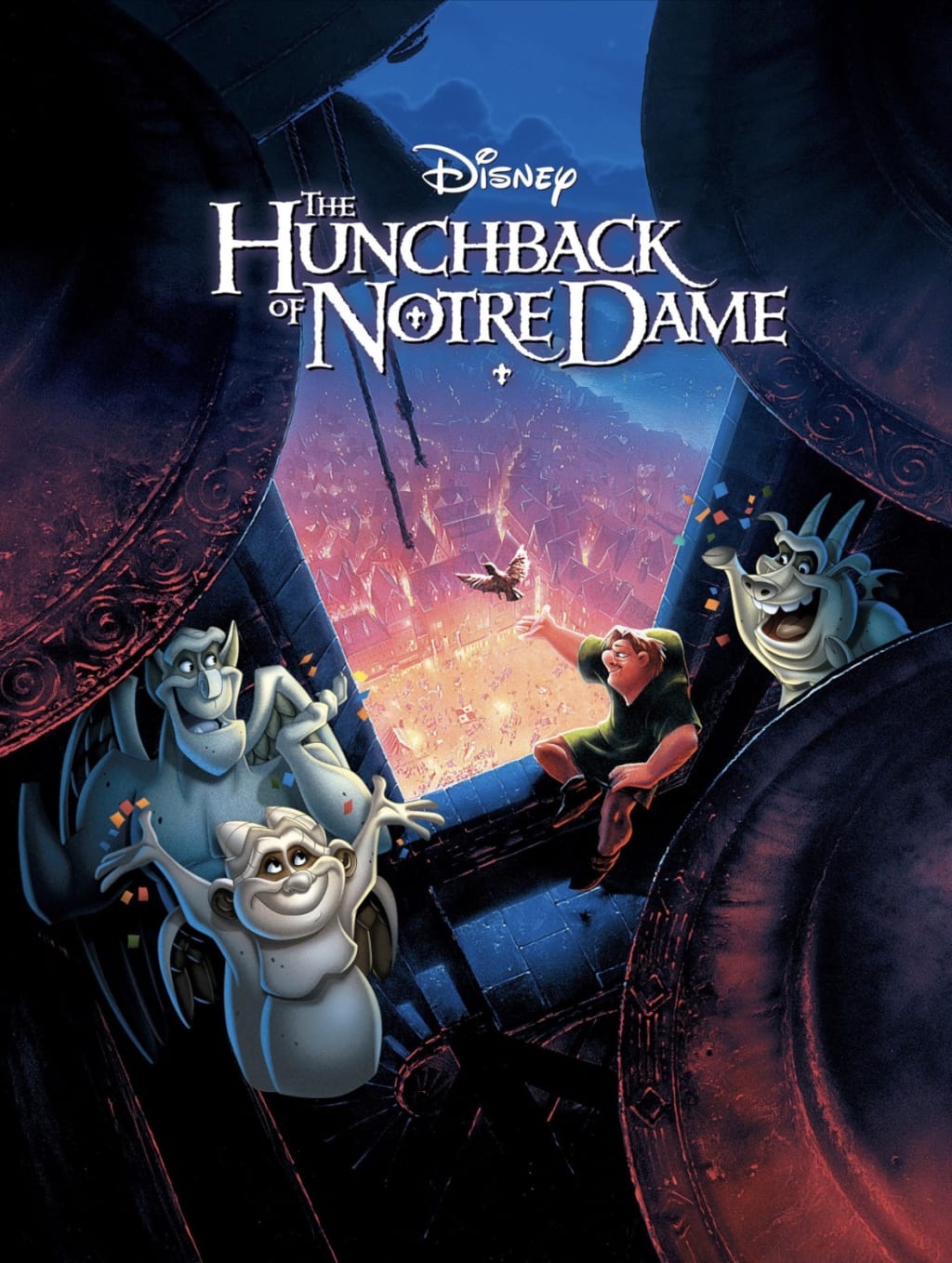
Trigger warning: This article discusses violence, genocide, sexual obsession, systemic racism, and child endangerment in media.
When many recall Disney’s “darkest” animated film, The Hunchback of Notre Dame (1996) often comes to mind. Its mature themes, religious hypocrisy, sexual obsession, systemic oppression, and abuse of power stand in stark contrast to the studio’s usual fairy-tale fare. Yet, across Disney’s expansive canon, Hunchback is far from the sole exploration of darkness.
Modern works from X-Men '97 to Star Wars: Rebels, The Bad Batch, and MCU films like Captain America: Civil War and Black Panther carry forward similar themes of moral complexity, systemic oppression, and sustained violence, but on a larger scale
Darkness Across Disney’s Animated and Live-Action Canon
Hunchback opens with a grim, unforgettable sequence. Judge Claude Frollo murders Quasimodo’s birth parents and nearly kills the infant, motivated by racial prejudice and a baseless accusation of theft. Later, Frollo attempts to execute Esmeralda publicly, only to be thwarted by Quasimodo. For a Disney animated film in 1996, these moments were unusually violent and emotionally jarring, though they remain episodic rather than sustained, punctuating the story with shock and tension.
Later Disney works, however, integrate violence as an ongoing narrative force. Mulan depicts the brutal realities of war-the chaos of battlefields, civilian casualties, and psychological trauma–creating a pervasive atmosphere of threat. Captain America: Civil War escalates violence in both personal and systemic terms: Bucky Barnes’ coerced murder of Tony Stark’s parents is not only shocking but pivotal, fracturing the Avengers and driving ideological conflict to its climax. Disney’s franchises embedded violence deeply into their narratives, allowing loss, trauma, and moral compromise to shape character arcs in ways Hunchback only hints at.
Animated Star Wars series such as Rebels and The Bad Batch push this even further. These shows depict war as an ongoing condition, emphasizing child soldiers, genocide, and moral erosion under authoritarian rule. Yet, Hunchback keeps a unique intensity through moments like “Hellfire”, which immerses the audience in Frollo’s obsessive, morally corrupt mind. Unlike the large-scale violence of modern series, this darkness is intimate and psychological: it forces viewers to confront how personal obsession, bigotry, and repression can corrupt human morality.
X-Men ‘97 represents the next evolution of Disney’s animation’s daritsss: Its themes are overtly and unapologetically political and contrast: state-sanctioned genocide, coercion, and ideological extremism shape the narrative structure itself. Violence and oppression are not episodic; they define the world and the stakes for every character. In these modern examples, darkness has become structural, shaping both narrative and ethical landscapes in ways Hunchback started but never fully realized.
Judge Frollo: Disney’s Template for Complex Villainy
At the heart of Hunchback’s darkness is Judge Claude Frollo, arguably one of Disney’s most psychologically complex and chilling villains. Frollo’s evil is disturbingly human: it emerges from racial hatred, religious hypocrisy, obsessive desire, and the abuse of institutional power. He isolates and manipulates Quasimodo, scapegoats the Romani people, and weaponizes moral absolutism to justify cruelty.
Frollo’s legacy is clear in later Disney and Disney-adjacent villains. Hades, Syndrome, Ultron, Thanos, Thrawn, Kylo Ren, Bastion (X-Men ‘97), Darth Maul (in Disney’s official canon), Moff Gideon, the High Evolutionary, Mother Gothel, and Loki all inherit elements of his psychological or ideological makeup. Whether through narcissism, systemic cruelty, or moral extremism, these characters show how Frollo proved audiences could engage with antagonists whose evil is both plausible and morally layered.
Disney’s later stories scale his blueprint–villainy becomes cosmic, political, or deeply personal–but its philosophical DNA often traces back to an animated film set in 1482 Paris.
Esmeralda: Resistance, Identity, and Early Representation
If Frollo embodies systemic cruelty, Esmeralda embodies moral courage and resilience. Her narrative revolves around systemic racism and persecution: harassment, surveillance, and false accusations, including being labeled a “witch” for practicing her culture. Esmeralda survives not by assimilation, but through active resistance–protecting her community and challenging oppressive authority.
Esmeralda foreshadows Disney’s modern socially conscious heroes and heroines alike. Sabine Wren in Star Wars: Rebels uses graffiti art to defy Imperial control; Kamala Khan embraces her Muslim faith as Ms.Marvel; Sam Wilson assumes his newfound mantle of Captain America while confronting racial prejudice; and Kida in Atlantis: The Lost Empire protects her people and civilization from foreign exploitation. Like Esmeralda, their heroism is rooted in identity, cultural survival, and moral courage rather than individualistic conquest.
Her influence is visible in Lucasfilm’s expansion of Mon Mothma. Once a minor character in Return of the Jedi and cut from Revenge of the Sith, Mon Mothma gains prominence in Andor and Rebels. She exposes genocide on Ghorman, resigns from the Senate, and leads the Rebellion. Her trajectory mirrors Esmeralda’s: moral courage confronting systemic oppression, scaled from a city to a galaxy.
Disney and Marvel: The Continuation of Cultural Stewardship
Esmeralda’s narrative legacy extends into the MCU, notably in King T’Challa and Princess Shuri. T’Challa unites Wakanda during crises, balancing internal governance with global threats, while Shuri inherits the Black Panther mantle, safeguarding her people’s cultural and technological legacy. Their heroism, like Esmeralda’s, emerges from responsibility, accountability, and protecting the community, not mere spectacle.
Disney also missed opportunities to extend Romani representation. In the comics, Wanda and Pietro Maximoff are half Romani and half Jewish, but the MCU omits their Romani heritage. Maintaining it could have provided additional cultural context, highlighting themes of marginalization, resilience, and identity–continuing the lineage of socially aware heroes that began with Esmeralda.
From Darkness to Legacy
The Hunchback of Notre Dame occupies a singular position in Disney’s canon. While later works surpass it in scope, systemic integration, and narrative violence, Hunchback pioneered darkness grounded in psychology, ideology, and social critique. Frollo established the model for morally complex villains, while Esmeralda showed that marginalized characters could carry narratives of resistance and justice.
These narrative legacies resonate across Disney’s canon–from Mon Mothma and Sabine Wren to Kamala Khan, T’Challa, and Shuri–showing that Disney storytelling has grown to foreground characters whose heroism is inseparable from moral courage, cultural identity, and resistance to systemic oppression. Hunchback was not the end of Disney’s darkest storytelling–it was the foundation, demonstrating that darkness can be psychological, political, and morally urgent, and that heroes and villains alike are defined not only by their actions, but by the social and ethical contexts in which they operate.
About the Creator
Jenna Deedy
Just a New England Mando passionate about wildlife, nerd stuff & cosplay! 🐾✨🎭 Get 20% off @davidsonsteas (https://www.davidsonstea.com/) with code JENNA20-Based in Nashua, NH.
Instagram: @jennacostadeedy
Keep reading
More stories from Jenna Deedy and writers in Geeks and other communities.
Not Just For Clean Up: A History Of The MCU's Department of Damage Control
Initially an organisation that seemed to exist to help the heroes of the Marvel Cinematic Universe, from Phase Four onwards, the Department of Damage Control has shifted into a more antagonistic role. Most recently seen in the Wonder Man series, the current incarnation of Damage Control seems to target superpowered individuals, regardless of whether that person poses an active or intentional threat.
By Kristy Andersonabout 15 hours ago in Geeks
One Unchecked Box
"Republished" because it was the only way to add the embed for the newly recorded audio version of this story due to the Top Story badge. Plus it serves as a nice, informal announcement of the podcast's revival for another season (go subscribe!):
By Stephen A. Roddewig5 days ago in Fiction


Comments
There are no comments for this story
Be the first to respond and start the conversation.