
Historic Swings Batter Gold and Silver, but Analysts Say the Bull Case Is Intact
Despite record volatility, analysts say inflation fears and global uncertainty continue to support gold and silver.

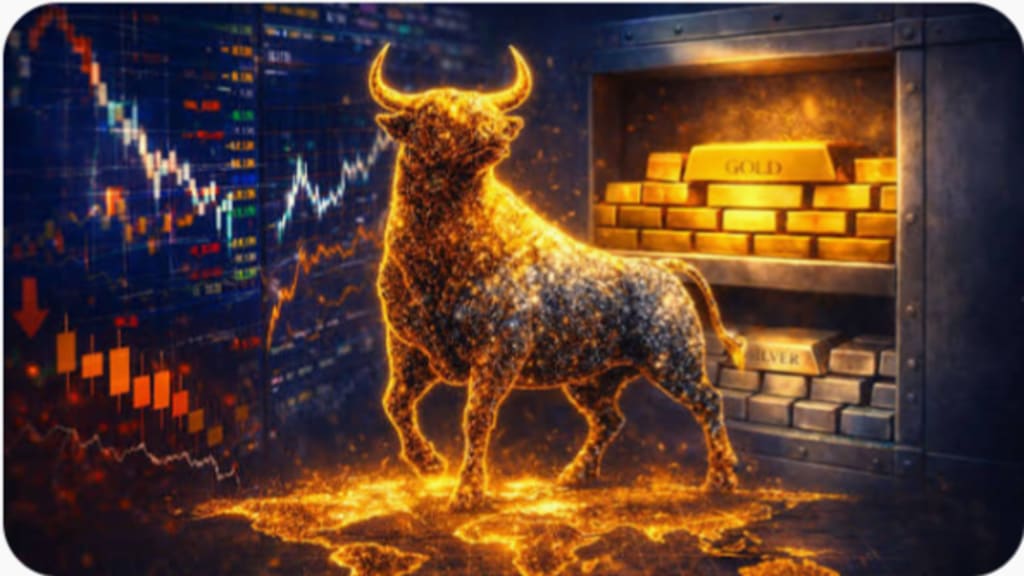
Gold and silver markets have been rocked by some of the most dramatic price swings in recent history. In a matter of weeks, both metals surged to multi-year highs before pulling back sharply, leaving investors uncertain and cautious. These violent fluctuations have sparked fears of a broader breakdown in precious metals momentum.
Yet despite the turbulence, analysts remain largely optimistic. Many believe the long-term fundamentals that support gold and silver remain strong, arguing that the current volatility represents a correction rather than the end of a bull market.
A Period of Extreme Market Turbulence
Over the past year, gold and silver prices have experienced historic highs followed by sudden downturns. Gold briefly crossed record levels before retreating, while silver’s movements were even more dramatic due to its smaller and more speculative market.
This volatility has been driven by a complex mix of economic forces, including shifting interest rate expectations, inflation uncertainty, currency fluctuations, and geopolitical instability. Traders have reacted quickly to every new data release, whether it involves employment numbers, central bank speeches, or global conflict developments.
Unlike previous cycles where precious metals moved gradually, today’s markets are highly sensitive to news and investor psychology. Automated trading systems and high-frequency transactions have amplified price swings, making even minor changes in sentiment appear explosive on price charts.
Interest Rates and Inflation at the Core
The primary driver behind recent swings has been uncertainty around interest rates. Precious metals traditionally benefit when interest rates are low because they do not yield interest or dividends. When rates are expected to rise, gold and silver often come under pressure as investors shift toward higher-yielding assets like bonds.
Inflation expectations have added another layer of complexity. While inflation has cooled in some regions, it remains elevated compared to historical averages. Investors continue to look to gold as a hedge against declining purchasing power, even as central banks attempt to stabilize their economies.
Analysts point out that this tug-of-war between inflation fears and rate policy uncertainty is likely to continue for months. This environment naturally creates volatility, but it does not necessarily undermine the long-term case for precious metals.
Silver’s Unique Position in the Market
Silver has experienced even more violent swings than gold, largely due to its dual role as both a precious metal and an industrial commodity. Unlike gold, which is mostly held for investment and jewelry, silver is heavily used in electronics, solar panels, medical equipment, and electric vehicles.
As global demand for renewable energy and advanced technology grows, silver’s industrial value has increased. However, concerns about slowing economic growth have sometimes pressured silver prices, as investors worry about reduced manufacturing demand.
This conflicting role makes silver particularly sensitive to economic data. When growth prospects look strong, silver often outperforms gold. When recession fears rise, silver can fall harder. Analysts say this explains why silver’s recent price movements have appeared more chaotic than gold’s.
Safe Haven Demand Remains Strong
Despite the recent pullbacks, demand for gold as a safe-haven asset remains resilient. Central banks across the world continue to accumulate gold reserves at a record pace, signaling long-term confidence in the metal’s role as a store of value.
Geopolitical tensions, including ongoing conflicts and trade disputes, have reinforced gold’s appeal as protection against instability. In times of uncertainty, investors traditionally turn to assets that have preserved wealth for centuries.
Institutional investors are also maintaining exposure to precious metals through exchange-traded funds and diversified portfolios. While some short-term traders have exited positions due to volatility, long-term holders appear largely unfazed.
Analysts Maintain the Bull Case
Market analysts argue that the recent downturns should be viewed as healthy corrections rather than structural failures. Bull markets rarely move in straight lines, and periods of consolidation are often necessary after sharp rallies.
Several key factors continue to support a bullish outlook:
Persistent inflation risks
High levels of global debt
Ongoing geopolitical uncertainty
Strong central bank demand
Weakening confidence in fiat currencies
Together, these elements create an environment in which gold and silver remain attractive as long-term hedges.
Analysts also note that physical demand for precious metals remains solid, particularly in Asia and the Middle East, where gold is deeply embedded in cultural and financial traditions.
Investor Psychology and Market Fear
Much of the recent price action can be explained by fear-driven trading. When prices fall quickly, panic selling often follows, pushing values lower than fundamentals would justify. When prices rebound, fear of missing out pulls investors back in.
This emotional cycle has been intensified by social media and online trading platforms, where rumors and speculation can spread rapidly. While this can exaggerate short-term moves, it does not necessarily change the long-term trajectory of the market.
Experienced investors understand that volatility is part of precious metals investing. Many use price dips as opportunities to accumulate rather than reasons to exit.
What Lies Ahead
Looking forward, analysts expect continued volatility in gold and silver markets. Economic data, interest rate policy, and geopolitical events will remain key drivers. Short-term fluctuations are likely unavoidable, but the broader trend still points toward sustained relevance for precious metals.
If inflation reaccelerates or central banks move toward looser monetary policies, gold and silver could regain momentum quickly. Even in a stable economic environment, demand for diversification and risk protection is expected to keep precious metals in investor portfolios.
Conclusion
Historic swings have battered gold and silver markets, shaking confidence and creating uncertainty among investors. However, analysts remain firm in their belief that the bull case for precious metals is intact. The forces that traditionally support gold and silver—economic uncertainty, inflation risk, and global instability—have not disappeared.
While short-term turbulence may continue, the long-term outlook remains anchored in fundamentals that have endured for centuries. For many investors, gold and silver are not just commodities but financial safeguards in an unpredictable world.
In a time when markets are defined by speed and speculation, precious metals continue to serve as symbols of stability. The recent storm may have tested their resilience, but according to analysts, the underlying foundation of the bull market still stands strong.
About the Creator
Sajida Sikandar
Hi, I’m Sajida Sikandar, a passionate blogger with 3 years of experience in crafting engaging and insightful content. Join me as I share my thoughts, stories, and ideas on a variety of topics that matter to you.
Keep reading
More stories from Sajida Sikandar and writers in Geeks and other communities.
Tony Caunter: The Quiet Legend of British Television
When we talk about legendary figures in British television, we often think of loud, headline-making stars. But some actors leave their mark in quieter, more powerful ways. Tony Caunter is one of those rare talents. Best known for his role as Roy Evans in EastEnders, Caunter built a career defined by authenticity, consistency, and timeless performances.
By Sajida Sikandar4 months ago in Geeks
No Other Choice (2025)
It is only February, so other films may well surpass “No Other Choice”, but I think this is the best film I’ve seen so far this year. And that surprises me, because, it is a subtitled film and while I am pretentious enough to choose to watch foreign-language films, I was also very tired and that was an extra commitment from me. But more importantly, let me warn you, this film is gruesome and violent. There were times I had to turn away from the screen to avoid the worst of it (including some self-inflicted dentistry).
By Rachel Robbins5 days ago in Geeks
Michael Conner Humphreys portrayed Young Forrest Gump
What happened to Michael Conner Humphreys? Tom Hanks portrayed Forrest Gump in the 1993 film of the same name and went on to a stellar career. Michael Conner Humphreys gave a memorable performance as young Forrest and was chosen because he looked like a young Tom Hanks.
By Cheryl E Preston5 days ago in Geeks



Comments
There are no comments for this story
Be the first to respond and start the conversation.