
How to Make a Killing Review: Glen Powell’s Dark Comedy About Wealth, Murder, and American Resentment
How to Make a Killing review: Glen Powell delivers a magnetic performance in John Patton Ford’s dark comedy about wealth, murder, and resentment—but the film lacks the nerve to fully embrace its most dangerous ideas.

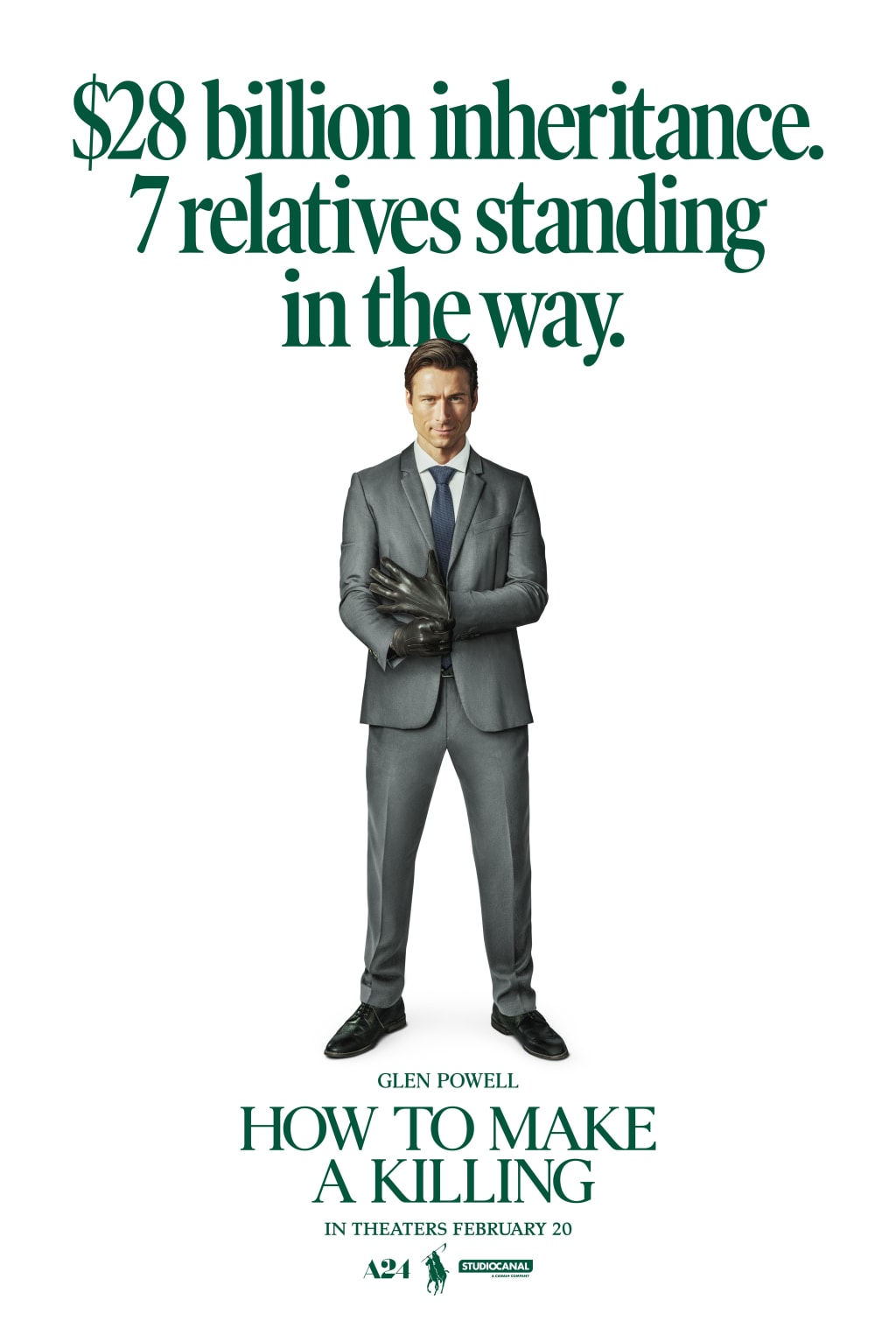
Star Rating: ★★★☆☆ (3 out of 5)
How to Make a Killing
• Director: John Patton Ford
• Writer: John Patton Ford
• Starring: Glen Powell, Margaret Qualley, Jessica Henwick
• Release Date: February 20, 2026
• Genre: Dark Comedy, Crime, Drama
⸻
A Charming Killer Tells His Story
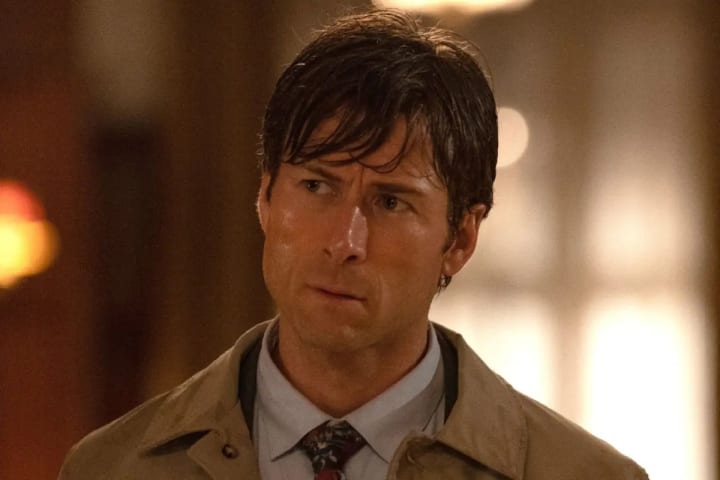
A man sits behind bars while being visited by a priest, his last meal in front of him, hours before his execution. And yet, this man could not be more calm, composed, or even charming. Over the course of the next few hours, he lays out a remarkable story dating back to his birth and bringing us to this moment through a series of bizarre and dark twists.
The man confessing his sins ahead of the gas chamber is Beckett Redfellow (Glen Powell), an impossibly handsome, chisel-jawed hunk hiding his attractiveness beneath a deliberately ugly haircut. Make no mistake, Beckett is a murderer. But his victims were not exactly sympathetic innocents.
Indeed, the members of the Redfellow family appear less like people and more like embodiments of the seven deadly sins walking the earth in tailored suits.
Losing any one of them would not be considered a great loss to humanity.
The Redfellows have spent over a century accumulating wealth by any means necessary while asserting an unearned moral superiority that makes them impossible to sympathize with. But murder is still a crime, and punishment is seemingly about to be delivered.
And yet, Beckett’s relaxed candor suggests he knows something we do not. That tension becomes the narrative engine of How to Make a Killing, as Beckett unfolds a life story that slowly transforms into a darkly comic Faustian bargain. He will get everything he wants—but the cost will not be one he wants to pay.
⸻
Glen Powell Anchors a Sharp but Hesitant Dark Comedy
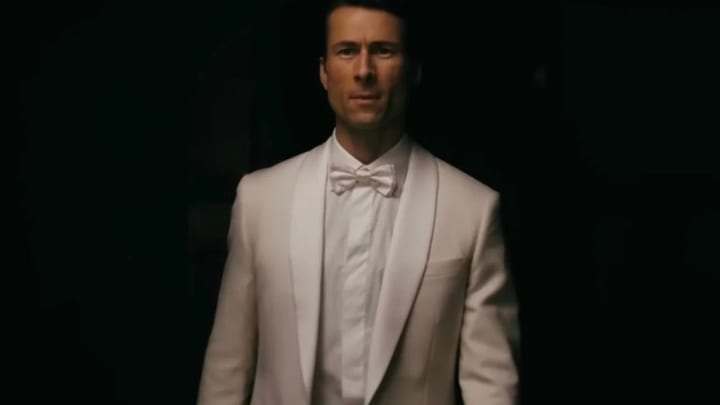
Glen Powell continues his remarkable ascent as one of Hollywood’s most compelling modern movie stars. Powell understands something essential about Beckett: charm is not simply a personality trait, it is a weapon.
He makes Beckett likable without ever asking us to forgive him.
Powell allows flashes of bitterness and quiet rage to break through Beckett’s carefully constructed persona, suggesting a lifetime of emotional wounds hidden beneath an easy smile. It is a layered, intelligent performance that gives the film weight even when the script pulls its punches.
John Patton Ford directs the film with competence and clarity. The story moves efficiently, and Ford demonstrates a strong grasp of tone, balancing dark humor with genuine emotional stakes. But competence is not the same thing as conviction.
Too often, the film feels like it is circling its most dangerous ideas without fully committing to them.
⸻
Margaret Qualley and a Cast of Corrupt Aristocrats
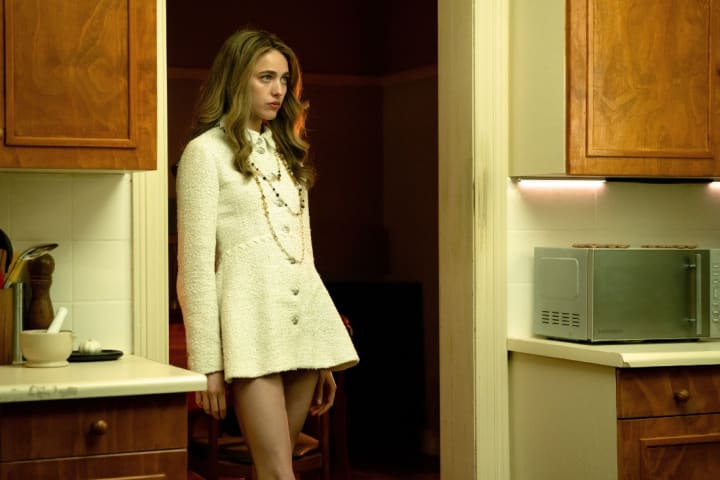
Margaret Qualley throws a wonderful spanner into the machinery of the narrative as Julia Steinway, Beckett’s childhood crush and ideological mirror. You expect her to exist as a conventional love interest, but Qualley plays her as something far more complicated—a character fueled by ambition, resentment, and a desire for control.
Julia is not simply someone Beckett might fall for. She is someone who understands him.
Jessica Henwick, meanwhile, plays Ruth, the film’s emotional center and Beckett’s moral counterweight. Henwick brings warmth and sincerity to the role, but the character is ultimately overshadowed by the more colorful and morally ambiguous figures surrounding her.
The Redfellow family itself is brought to life by an exceptional supporting cast, including Topher Grace, Zach Woods, Bill Camp, and Ed Harris.
Bill Camp, in particular, stands out. His Warren Redfellow is greedy, yes, but not entirely devoid of humanity. Camp allows flickers of genuine affection toward Beckett to emerge, complicating what could have been a one-note caricature. It is a reminder that even within corruption, there are degrees.
⸻
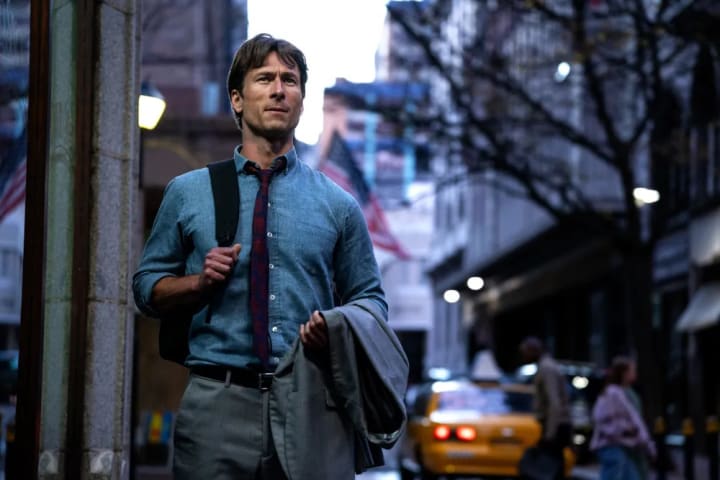
A Dark Comedy Afraid of Its Own Darkness
Despite its strong cast and compelling premise, How to Make a Killing ultimately lacks the nerve to become the truly savage dark comedy it wants to be.
The film gestures toward a deeper critique of wealth, privilege, and inherited power, but it never fully commits to dismantling those systems. It wants the catharsis of righteous anger without accepting the narrative consequences that anger demands.
Beckett is allowed to remain too sympathetic, too safe.
The film seems unwilling to risk alienating the audience by allowing Beckett to become something uglier, more morally ambiguous, or more honest.
That hesitation defines the movie.
⸻
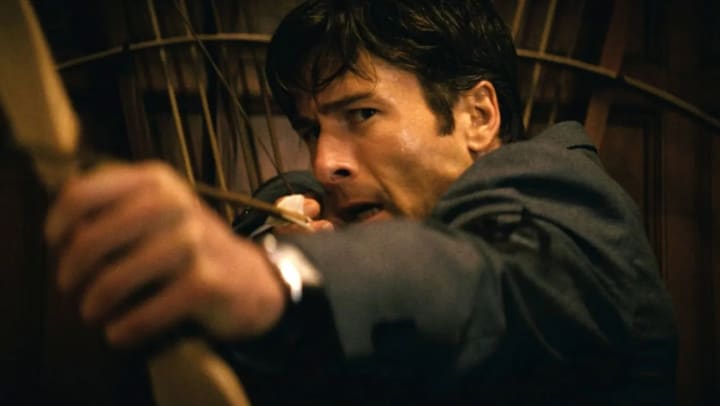
The Pitchforks Are Coming — And the Film Knows It
We may not want to talk about it, but the cultural atmosphere that How to Make a Killing exists within is impossible to ignore.
There is a distinct air of “Let Them Eat Cake” energy in America right now.
The wealth gap has grown so vast that sympathy for the ultra-wealthy has eroded to the point of extinction. For many, the suffering of the billionaire class no longer registers as tragedy but as inevitability.
That is dark. It is uncomfortable. And it is completely understandable.
There is a simmering resentment in the culture that feels like it could boil over at any moment, with pitchforks and guillotines waiting just beneath the surface. How to Make a Killing understands this. It recognizes the moment.
But it stops short of fully embracing it.
It nods toward revolution when it should have stared directly into its eyes.
And that hesitation ultimately prevents the film from achieving greatness.
⸻
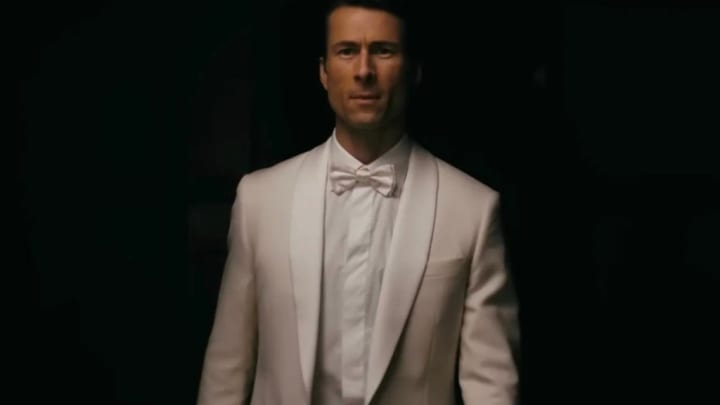
Final Verdict: A Smart, Entertaining Film That Plays It Too Safe
How to Make a Killing is an intelligent, well-acted dark comedy anchored by one of Glen Powell’s strongest performances. It is entertaining, thoughtful, and frequently compelling.
But it is also a film that hesitates when it should have lunged.
It understands the anger of the moment but lacks the courage to fully unleash it.
In the end, How to Make a Killing is a sharp knife that never quite draws blood.
⸻

Tags:
How to Make a Killing review, Glen Powell, Margaret Qualley, Jessica Henwick, John Patton Ford, dark comedy movies 2026, crime movie reviews, Vocal movie reviews, wealth inequality movies, new movie reviews 2026, dark comedy film analysis, movies about rich families, crime drama films, Glen Powell movies ranked
About the Creator
Sean Patrick
Hello, my name is Sean Patrick He/Him, and I am a film critic and podcast host for the I Hate Critics Movie Review Podcast I am a voting member of the Critics Choice Association, the group behind the annual Critics Choice Awards.
Keep reading
More stories from Sean Patrick and writers in Geeks and other communities.
Goodbye, Mr. Duvall
It is turning out to be an interesting year. I was in the middle of teaching a class when a pop-up appeared on the screen announcing the death of Mr. Robert Seldon Duvall (yes, that was his full name). I was in the middle of a discussion on the obsession we have with winning when it comes to sports (the Winter Olympics was a theme), and I felt as though things were coming full circle. We had already lost Gene Hackman last year, and along with that titan, it feels though one particular golden age has closed off to be replaced by...?
By Kendall Defoe 4 days ago in Geeks
Emerald Fennell Defends Her Changes to Wuthering Heights: “You’ve Got to Make Those Hard Decisions”
Director and screenwriter Emerald Fennell has defended her creative choices in adapting the literary classic Wuthering Heights, arguing that modern film audiences require bold interpretation rather than strict loyalty to the original text. Fennell, known for her distinctive visual style and emotionally complex storytelling, has faced growing criticism from literary purists after early details emerged about her forthcoming film version of the 1847 novel. Changes to character structure, dialogue, and narrative focus have prompted debate about whether the adaptation strays too far from Emily Brontë’s dark and tragic romance. Speaking in a recent interview, Fennell said that adapting a revered novel comes with inevitable controversy. “You’ve got to make those hard decisions,” she explained. “Film is a different language. What works on the page doesn’t always work on screen, and if you want the story to live again, you have to reimagine it.” A Bold New Interpretation According to production insiders, Fennell’s version of Wuthering Heights places greater emphasis on psychological trauma and power dynamics between the central characters, rather than the traditional gothic romance tone. Some scenes have reportedly been condensed or restructured, and certain minor characters have been removed altogether. The director has also shifted narrative perspective, focusing more closely on the inner world of Catherine Earnshaw rather than relying on the layered storytelling framework of the novel, which uses multiple narrators. Fennell said this decision was essential to connect with contemporary viewers. “The novel is incredibly modern in its emotional violence,” she said. “But the way it’s told is distant and formal. I wanted to bring the audience right inside the characters’ minds — to feel their rage, obsession, and grief in a visceral way.” Critics and Fans Divided Reaction to the changes has been sharply divided. Some literary scholars argue that altering the structure risks losing the unique voice of Emily Brontë’s original work. “This is a novel built on storytelling within storytelling,” said one university literature professor. “Removing that framework may simplify the plot, but it also strips away its moral complexity.” Fans on social media have also voiced concern, particularly over rumors that certain iconic scenes have been modernized or shortened. However, others welcome the director’s willingness to take risks. “Every generation needs its own Wuthering Heights,” wrote one film critic. “If we keep remaking it exactly the same way, it becomes a museum piece instead of a living story.” The Pressure of a Classic Fennell acknowledged that adapting one of the most studied novels in English literature brings enormous pressure. “You’re standing on the shoulders of a giant,” she said. “But you’re also responsible for creating something that stands on its own. Otherwise, why make the film at all?” She compared her approach to past reinterpretations of Shakespeare and Jane Austen, arguing that fidelity to emotional truth matters more than literal accuracy. “The spirit of the book is about obsession, cruelty, and love that destroys people,” she said. “That’s what I’ve protected. The rest is scaffolding.” Casting and Visual Style The production has drawn attention for its unconventional casting choices and stark visual design. Fennell has reportedly chosen a darker, more minimalist aesthetic than previous adaptations, with bleak landscapes and intimate close-ups replacing the sweeping romantic imagery traditionally associated with the story. Sources close to the project say the film will highlight class conflict and emotional isolation, themes Fennell believes resonate strongly in today’s society. “This is a story about outsiders,” she noted. “About what happens when people are denied dignity and belonging. That feels painfully current.” A Broader Debate About Adaptation The controversy reflects a wider debate in the film industry about how much freedom directors should take when adapting literary classics. In recent years, filmmakers have increasingly reworked famous novels to reflect modern values and perspectives, sometimes provoking backlash from traditionalists. Film historian Mark Reynolds said Fennell’s defense highlights the tension between preservation and innovation. “Some viewers want historical authenticity; others want relevance,” he said. “Both are valid. The challenge is finding a balance that honors the original while speaking to a new generation.” Looking Ahead Despite the criticism, studio executives remain confident in the project, pointing to Fennell’s previous successes and her reputation for fearless storytelling. The film is scheduled for release next year and is already expected to spark intense discussion upon its debut at major film festivals. Fennell says she welcomes debate. “If people argue about it, that means they care,” she said. “That’s a good thing. Emily Brontë wrote a story that refuses to be quiet. I hope this film does the same.” As anticipation grows, the director stands firm in her belief that adaptation is an act of interpretation, not imitation. “You can’t please everyone,” she added. “But you can be honest to the story you’re telling. And sometimes that means changing things.” Whether audiences embrace her vision or reject it, Fennell’s Wuthering Heights is already proving that classic literature still has the power to provoke passion nearly two centuries after it was first published.
By Fiaz Ahmed 7 days ago in Geeks


Comments (1)
Oh, I so want to see this film after your review, Sean! But I’m in Tbilisi, Georgia now and doubt they’d show it here in English. Will have to wait when it starts streaming. Also, it’s funny how the movie title fuses with the word “review”: I thought you published a how-to piece on how to write a killing review of a movie.