
Key Considerations When Setting Up a White Label Cryptocurrency Exchange
White Label Cryptocurrency

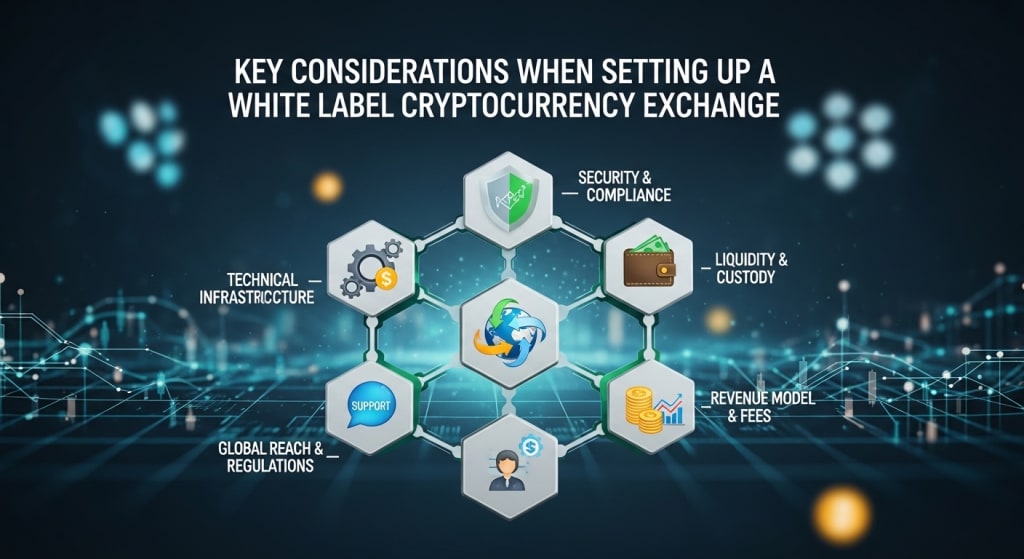
Launching a cryptocurrency exchange has traditionally required significant technical expertise, capital investment, and regulatory preparation. A white label cryptocurrency exchange model reduces some of these barriers by providing a ready-built trading infrastructure that businesses can customize and operate under their own brand. However, while the technology may be pre-developed, setting up a functioning exchange still involves careful planning, compliance preparation, and operational design.
This guide explains how to set up a white label cryptocurrency exchange from a practical and structural perspective. Rather than focusing on promotion or vendor comparisons, the emphasis here is on the processes, decisions, and systems required to bring a platform into operation.
Understanding the White Label Exchange Framework
A white label cryptocurrency exchange is a licensed software solution that includes the core components of a digital asset trading platform. These components typically include an order matching engine, wallet infrastructure, user interface, administrative tools, and security mechanisms. The business launching the exchange applies its branding, configures features, and manages operations, while the technology provider maintains the underlying framework.
This model separates platform infrastructure from business management. The exchange operator focuses on regulatory compliance, liquidity arrangements, customer acquisition, and financial oversight. The provider handles technical maintenance and system updates. Understanding this division of responsibility is essential because it shapes operational planning from the beginning.
Step 1: Define the Exchange’s Purpose and Market Scope
Before selecting software or configuring infrastructure, the exchange’s role within the broader digital asset market must be clearly defined. This includes identifying who the platform is designed to serve and what types of trading activity it will support.
Some exchanges focus on retail users seeking simple trading interfaces and basic asset access. Others target professional traders who require advanced order types, high execution speed, and analytical tools. Regional exchanges may prioritize local currency support and compliance with specific national regulations.
Clarifying market scope influences nearly every technical and operational decision, including:
- Interface complexity and feature design
- Asset listing policies
- Liquidity requirements
- Compliance structure
- Customer support model
Without a defined market position, customization becomes inefficient and may result in unnecessary costs or technical limitations later.
Step 2: Determine Jurisdiction and Regulatory Requirements
Cryptocurrency exchanges operate within legal frameworks that vary widely between regions. Before deployment, the operator must decide where the exchange will be registered and which regulatory standards apply.
This stage often includes:
- Reviewing licensing requirements
- Establishing identity verification procedures
- Implementing anti-money laundering monitoring
- Determining reporting obligations
- Defining geographic access restrictions
Regulatory alignment is not simply an administrative step. It directly affects how user onboarding works, what data must be stored, and how transactions are monitored. In many cases, compliance systems must be integrated into the platform before launch rather than added afterward.
Early legal consultation helps ensure that infrastructure choices support regulatory obligations rather than conflict with them.
Step 3: Select a White Label Technology Provider
Once strategic and regulatory planning is complete, the next stage is selecting the technology provider that will supply the exchange framework. Because the platform will become the operational core of the business, evaluation should focus on stability, security, and adaptability rather than appearance alone.
Key technical considerations include:
- Performance capacity and transaction throughput
- Security architecture and custody design
- Customization flexibility
- Integration capabilities with external services
- Ongoing maintenance and update policies
Equally important is the provider’s support structure. Exchanges operate continuously, and technical interruptions can disrupt trading and user confidence. Reliable support and clearly defined service agreements are essential for operational continuity.
Step 4: Configure Trading Infrastructure and Liquidity Access
A trading platform requires sufficient liquidity to function effectively. Liquidity ensures that buy and sell orders can be executed promptly and at stable prices. Without it, users may experience large price spreads or failed transactions.
New exchanges typically obtain liquidity through one or more of the following methods:
- External liquidity providers
- Market-making partnerships
- Shared order books
- Incentive programs for early trading activity
Liquidity integration must be configured within the trading engine so that pricing data and order flows are synchronized. This process involves both technical setup and financial planning, as liquidity arrangements often involve ongoing costs or contractual agreements.
Step 5: Establish Wallet and Custody Systems
Digital asset storage is one of the most sensitive components of exchange infrastructure. Wallet systems must allow for deposits, withdrawals, and internal transfers while protecting funds from unauthorized access.
Most exchanges use a combination of storage methods:
- Hot wallets for real-time transaction processing
- Cold storage for long-term reserve protection
- Multi-signature authorization controls
- Withdrawal monitoring systems
Beyond technical configuration, custody policies must be defined at the organizational level. These policies determine who controls private keys, how access is granted, and how emergency situations are handled. Clear governance reduces operational risk and supports user trust.
Step 6: Configure User Management and Compliance Processes
User onboarding involves more than account creation. Exchanges must verify identities, monitor transactions, and maintain records according to applicable regulations.
Implementation typically includes:
- Identity verification workflows
- Risk scoring and monitoring tools
- Transaction tracking systems
- Reporting and audit logs
These systems should be configured before public launch so that all user activity is processed according to established compliance procedures from the start.
Step 7: Customize Interface and Administrative Controls
While infrastructure supports functionality, the interface determines how users interact with the platform. Customization usually involves branding, layout configuration, and feature selection.
Administrative dashboards must also be configured to allow operators to:
- Monitor trading activity
- Adjust fee structures
- Manage asset listings
- Review security alerts
- Generate operational reports
Effective administrative control enables ongoing management rather than reactive troubleshooting.
Step 8: Conduct Testing and Security Validation
Before launch, the exchange must undergo extensive testing. Even pre-built systems require validation in their configured environment.
Testing typically covers:
- Transaction processing accuracy
- Load performance under simulated trading volume
- Wallet functionality and withdrawal controls
- Security vulnerability assessment
- Compliance workflow verification
Testing ensures that the customized platform operates reliably under real conditions.
Step 9: Launch and Ongoing Operation
After deployment, the exchange enters continuous operation. Launch does not mark completion but the beginning of active management.
Ongoing responsibilities include:
- Monitoring system performance
- Updating software and security measures
- Managing liquidity relationships
- Reviewing compliance requirements
- Supporting users and resolving operational issues
Because digital asset markets operate continuously, exchange management is an ongoing process rather than a fixed implementation phase.
Conclusion
Setting up a white label cryptocurrency exchange involves far more than acquiring software and applying branding. The process requires strategic planning, regulatory alignment, infrastructure configuration, and continuous operational oversight. While white label solutions reduce development complexity, they do not eliminate the need for structured decision-making and responsible management.
A well-planned exchange integrates technical reliability, regulatory awareness, and operational clarity into a cohesive system. By addressing these elements in sequence from market definition through launch and ongoing governance organizations can establish a platform that functions effectively within the broader digital asset ecosystem.
About the Creator
gabrielmateo
Shaping the future of AI-powered communication tools that empower organizations to deliver smarter, faster, and more personalized experiences.
Keep reading
More stories from gabrielmateo and writers in Geeks and other communities.
AI Agent for Retail and Ecommerce: Boosting Sales, Personalization, and ROI
In today's hypercompetitive digital marketplace, staying ahead means embracing technologies that drive growth, efficiency, and superior customer experience. One such innovation making waves is the AI agent for retail and ecommerce—a digital powerhouse designed to transform how businesses engage, sell, and scale.
By gabrielmateo 9 months ago in 01
No Other Choice (2025)
It is only February, so other films may well surpass “No Other Choice”, but I think this is the best film I’ve seen so far this year. And that surprises me, because, it is a subtitled film and while I am pretentious enough to choose to watch foreign-language films, I was also very tired and that was an extra commitment from me. But more importantly, let me warn you, this film is gruesome and violent. There were times I had to turn away from the screen to avoid the worst of it (including some self-inflicted dentistry).
By Rachel Robbins4 days ago in Geeks
Token Development for RWA: Unlocking Global Investment Opportunities
Token development is revolutionizing the way real-world assets (RWA) are accessed and invested in, creating new opportunities for investors and asset owners alike. By converting tangible assets such as real estate, commodities, and private equity into digital tokens, tokenization introduces liquidity, transparency, and global accessibility that traditional financial systems struggle to provide. This process enables fractional ownership, allowing investors to participate in high-value markets without requiring full asset acquisition, while asset owners gain faster capital access. As blockchain technology integrates further with regulated financial frameworks, token development is opening doors to diversified portfolios, cross-border investments, and secure digital ownership, setting the foundation for a new era in global finance.
By Henry james5 days ago in Geeks
The Pride Flag and the Diversion
For nearly a decade, the LGBTQIA Pride Flag rippled in the wind at Christopher Park, a kaleidoscope of color staked into the soil of America’s first national monument to LGBTQIA+ liberation. That flag came down this week. Federal officials, citing new guidance from the Trump Administration, silently lowered the rainbow flag from its pole across the street from the Stonewall Inn. The birthplace of the modern gay rights movement now flies only the United States flag.
By Tim Carmichael5 days ago in Pride




Comments
There are no comments for this story
Be the first to respond and start the conversation.