
PUBG in 2030: The New Evolution for Humankind
Impacts on Youth

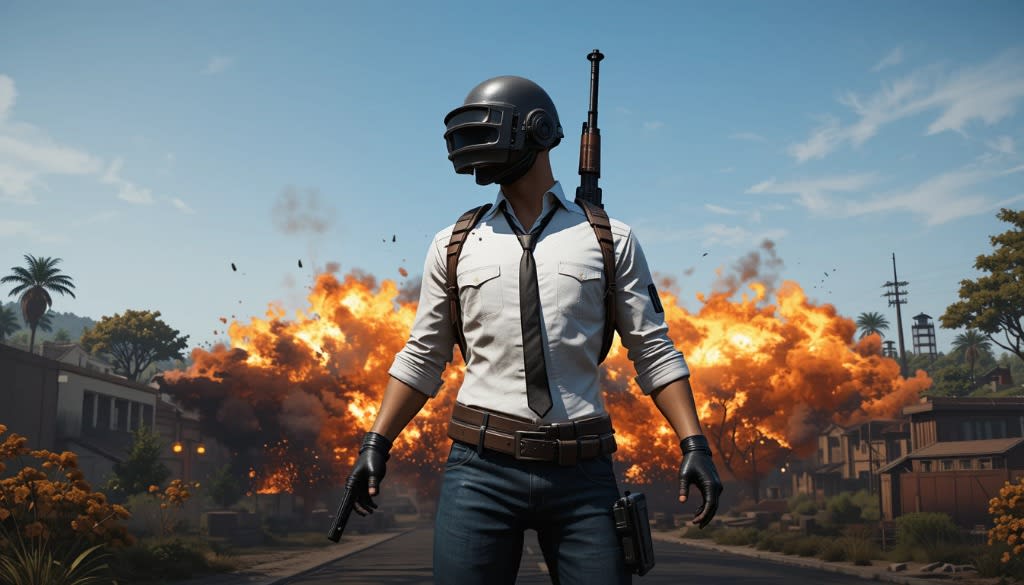
When PUBG (PlayerUnknown’s Battlegrounds) first stormed into the gaming world in 2017, no one imagined it would become a cultural phenomenon. From professional tournaments to casual mobile matches played in remote villages, the game changed how people interacted, competed, and even thought about entertainment. But as technology evolves rapidly, one question stands out: what will PUBG look like in 2030; and how will it impact the youth of that generation?
The Future of PUBG – A Glimpse Into 2030
By 2030, the gaming world will likely be dominated by full virtual reality (VR) and neural connection technology, meaning players might not just control their avatars — they’ll become them. Imagine logging into PUBG through a lightweight VR headset or even a neural link that directly connects to your senses. You wouldn’t just see the battleground; you’d feel it; the recoil of the gun, the wind sweeping across Erangel’s fields, or the heartbeat in a tense 1v1 situation.
Weapons could become customizable with real-time physics. Voice communication might be powered by AI that translates across languages instantly. A player in Japan could strategize with a teammate in Afghanistan without any communication barrier.
But while these features might sound thrilling, they also bring new psychological and social challenges, especially for young people.
The Psychological Pull – Addiction Reimagined
Currently, PUBG already has millions of young players who spend hours daily battling for that “Winner Winner Chicken Dinner.” By 2030, this addiction could become even more severe due to deep immersion and reward-loop systems designed by powerful AI algorithms.
Future versions might read your emotions, adjusting the gameplay to keep you hooked. If you’re getting bored, it might automatically create more action. If you’re losing too often, it could quietly make you win a round — just enough to make you feel capable and stay longer.
That dopamine-driven cycle could lead to stronger addiction than ever before, much like a digital drug. The line between playing a game and living in one could blur completely.
The Social Divide – Real vs. Virtual Identity
In 2030, social identity may shift heavily toward virtual spaces. Many teenagers might value their PUBG ranking, skins, or team reputation more than their real-life achievements. A child who feels ignored in real life might find validation in their online status, leading to emotional dependence on virtual recognition.
This transformation may cause:
Weakened real-world communication skills
Social isolation
Low self-esteem outside of gaming contexts
Already, some youth today introduce themselves by saying, “I’m a Crown player” or “I reached Ace tier last season.” In 2030, when gaming becomes more immersive, this digital identity could completely replace real-world self-perception.
The Economic Side – From Hobby to Profession
Not everything about PUBG’s future is dark. On the positive side, the gaming economy will expand dramatically. Esports will be a legitimate career path, generating billions globally. Players could earn through sponsorships, in-game trading, and live streaming. The 2030 version of PUBG might integrate play-to-earn blockchain systems, where every kill or victory earns cryptocurrency.
For talented and disciplined players, this could mean financial freedom and career success. But for the majority, chasing this dream might result in wasted time and lost opportunities, much like today’s youth hoping to become influencers but never making it. The dream will inspire, but also deceive.
Technology and Control – When Games Start Playing You
One concerning aspect of future gaming is AI behavioral control. PUBG 2030 will probably analyze player data in real time; mood, attention span, reactions, and choices; to optimize “engagement.”
In simple words: the game will know how to keep you playing.
If that power is misused, it could manipulate players psychologically, subtly shaping their emotions, behaviors, and even opinions. Future governments or corporations could easily influence youth through such platforms, hiding propaganda or promoting consumption-based mindsets inside the virtual experience. This isn’t science fiction; it’s a logical continuation of how current apps and games already use algorithmic manipulation to maximize engagement.
The Emotional Impact; Violence and Desensitization
The battlefield of PUBG may be virtual, but the emotions are real. Players experience fear, aggression, pride, and frustration; all without consequence. Over time, this desensitizes young minds to real-life violence.
In 2030, when the game becomes more realistic with VR sensations, the effect could multiply. Shooting, killing, and surviving might start to feel real, tricking the brain into believing such behavior is normal.
Research already shows a link between long-term exposure to violent games and reduced empathy. The youth of 2030 may face even greater emotional numbness, struggling to distinguish between digital courage and real-world compassion.
The Lifestyle Trap; Losing Time, Losing Self
Today’s youth already spend hours daily on PUBG Mobile. Imagine 2030, where the game might be so immersive that players can’t tell how long they’ve been “inside.” With haptic suits, neural sensations, and virtual rewards, players could spend entire days in digital worlds, neglecting studies, health, and family relationships. Physical consequences; poor eyesight, obesity, and sleep disorders; could worsen. Mental issues like anxiety, social withdrawal, and emotional instability might become common, especially among teens and early adults.
A Balanced Future; Not All Hope Is Lost
Despite these challenges, PUBG in 2030 doesn’t have to be harmful. If managed properly, it can also teach valuable skills; strategic thinking, teamwork, decision-making, and digital literacy.
Governments and parents will need to set stronger digital boundaries, and schools might incorporate gaming psychology education to teach children how to balance play and productivity.
Game developers, too, bear responsibility. They could introduce healthy breaks, mental health alerts, and AI monitors that detect signs of addiction or depression among players and recommend rest. If the right balance is achieved, PUBG and similar games could become modern tools of creativity and collaboration, not destruction.
The Battleground of the Mind
By 2030, PUBG will no longer just be a game — it will be a world, one where millions of youth might spend much of their time, emotions, and even identity.
The challenge for humanity will not be in stopping this progress but in guiding it wisely. Technology itself isn’t evil; it’s how we use it that defines its impact. If the youth of tomorrow learn to control the game — instead of letting the game control them — then the battleground of 2030 could become a place of growth, not loss.
But if they fail to balance their digital life with reality, we might witness a generation more connected than ever — yet more disconnected from themselves.
About the Creator
Keramatullah Wardak
I write practical, science-backed content on health, productivity, and self-improvement. Passionate about helping you eat smarter, think clearer, and live better—one article at a time.
Keep reading
More stories from Keramatullah Wardak and writers in Geeks and other communities.
The Traitors: What the New Phase Brings?
If you’ve been following The Traitors on Peacock, you already know it’s not just another reality competition — it’s a deep psychological game that exposes the very essence of human trust, deception, and survival. As the show moves into its next phase, viewers are not only entertained but confronted with one fundamental question: How far would we go to protect ourselves; or betray others; for success?
By Keramatullah Wardak4 months ago in Geeks
Not Just For Clean Up: A History Of The MCU's Department of Damage Control
Initially an organisation that seemed to exist to help the heroes of the Marvel Cinematic Universe, from Phase Four onwards, the Department of Damage Control has shifted into a more antagonistic role. Most recently seen in the Wonder Man series, the current incarnation of Damage Control seems to target superpowered individuals, regardless of whether that person poses an active or intentional threat.
By Kristy Andersona day ago in Geeks
Spongebob Reviews
In this episode "Tea at the Treedome" I will be discussing the third segment of the first episode of Spongebob Squarepants. It aired alongside "Help Wanted" and "Reef Blower" on May 1, 1999. I will not be a separate review on "Reef Blower" as it was two minutes long and it had no real dialogue other than the subtitle "You" coming from Spongebob. The short segment is about Spongebob using a reef blower, which is a sea version of a leaf blower. And this happens because Squidward throws a shell from his lawn onto Spongebob’s. He is understandably not happy at it and gets his reef blower to blow it back onto Squidward’s lawn, which he successfully does after several tries. All it took was the reef blower blowing sand everywhere, the sand being sucked up by the reef blower and the reef blower exploding, causing the sand to fly all over Squidward’s house. Now onto the episode "Tea at the Treedome", as I mentioned before it marks the debut of Sandy Cheeks, voiced by Carolyn Lawrence, also known as the voice of Cindy Vortex from the Jimmy Neutron: Boy Genius franchise. Carolyn Lawrence uses a Southern drawl, which is significant for Sandy as the character is from Texas. It has been long stated that Sandy and Spongebob are meant to be just friends, despite mutual feelings and sometimes attraction, but it goes no further.
By Forest Green5 days ago in Geeks
One Unchecked Box
"Republished" because it was the only way to add the embed for the newly recorded audio version of this story due to the Top Story badge. Plus it serves as a nice, informal announcement of the podcast's revival for another season (go subscribe!):
By Stephen A. Roddewig6 days ago in Fiction



Comments
There are no comments for this story
Be the first to respond and start the conversation.