
State of Fear: Memory, Terror, and the Politics of Truth
A Deep Dive into State of Fear and the Lingering Scars of Political Violence
In a world where political violence often becomes reduced to statistics and headlines, State of Fear stands as a sobering reminder that behind every number is a human life fractured by trauma. This powerful documentary explores the legacy of internal conflict in Peru, examining the devastating effects of terrorism, government retaliation, and systemic injustice on ordinary citizens. More than a historical recounting, the film is an intimate meditation on fear—how it spreads, how it controls, and how it lingers long after the guns fall silent.
Set against the backdrop of Peru’s brutal conflict between government forces and insurgent groups, most notably the Shining Path, State of Fear chronicles the country’s turbulent decades marked by bombings, disappearances, torture, and mass killings. Through interviews with survivors, former officials, and members of the Truth and Reconciliation Commission, the documentary paints a complex and unsettling portrait of a nation torn apart from within.
What makes State of Fear particularly compelling is its refusal to simplify the narrative. Rather than presenting a binary tale of good versus evil, the film exposes the moral ambiguity and institutional failures that allowed violence to flourish. Both insurgents and state actors are held accountable, revealing a tragic pattern: in attempting to eliminate terror, the state itself often became a perpetrator of terror.
The documentary centers heavily on the work of Peru’s Truth and Reconciliation Commission, which was established to investigate the human rights violations committed during the conflict. Through recorded testimonies and archival footage, viewers witness survivors recount unspeakable experiences—families torn apart, communities erased, lives permanently scarred. These testimonies are not sensationalized. Instead, they are presented with quiet gravity, allowing the weight of each story to resonate fully.
The emotional core of State of Fear lies in these personal accounts. An elderly woman describes searching for her disappeared son for decades. A farmer recounts the terror of soldiers arriving in his village under the guise of protection. A former official speaks about the moral compromises made in the name of national security. Each voice contributes to a larger tapestry of grief and accountability.
Visually, the documentary adopts a restrained style. There are no dramatic reenactments or manipulative musical cues designed to amplify emotion. Instead, the filmmakers rely on raw footage, photographs, and interviews. This minimalist approach reinforces the authenticity of the narrative. The horror of what occurred does not need embellishment; it stands stark and undeniable on its own.
One of the most unsettling aspects of State of Fear is its exploration of how fear becomes institutionalized. Fear is not just an emotion experienced by individuals—it becomes a political tool. Governments can exploit fear to justify extraordinary measures. Insurgent groups can weaponize fear to exert control. The documentary shows how, over time, fear erodes democratic institutions and corrodes public trust. Citizens become suspicious of one another. Silence becomes a survival strategy.
The film also raises uncomfortable questions about responsibility. Who is accountable when a state fails to protect its people? When does security become oppression? And perhaps most crucially, how does a society rebuild when the trauma is collective and widespread?
In addressing these questions, State of Fear does not offer easy answers. Instead, it emphasizes the importance of truth as a first step toward healing. The Truth and Reconciliation Commission emerges as a symbol of cautious hope. Its mission—to document crimes, acknowledge victims, and recommend reforms—reflects a belief that confronting the past is necessary for building a more just future.
Yet the film does not romanticize this process. It acknowledges the limitations of such commissions. Truth alone does not guarantee justice. Many perpetrators evade prosecution. Structural inequalities remain entrenched. Survivors continue to grapple with poverty and marginalization. The path toward reconciliation is shown as fragile and incomplete.
One particularly powerful segment examines the disproportionate impact of violence on rural and Indigenous communities. These populations bore the brunt of the conflict, often caught between insurgents and military forces. Their stories challenge the urban-centric narratives that frequently dominate national discourse. By centering marginalized voices, State of Fear underscores the intersection of violence and systemic inequality.
The documentary’s pacing allows viewers time to absorb its revelations. There are moments of silence that feel deliberate, almost sacred. In these pauses, the magnitude of loss becomes palpable. The film trusts its audience to sit with discomfort rather than rushing toward resolution.
While firmly rooted in Peru’s history, State of Fear resonates far beyond its geographical setting. Its themes are universal: the fragility of democracy, the dangers of extremism, and the moral dilemmas faced by governments under threat. In an era where many nations grapple with polarization and authoritarian tendencies, the film serves as a cautionary tale.
Importantly, the documentary also humanizes those who participated in the violence. Interviews with former officials reveal individuals who believed they were acting in the nation’s best interest. This perspective does not absolve them of responsibility, but it complicates the narrative. It forces viewers to confront an uncomfortable truth: ordinary people, under certain conditions, can become complicit in extraordinary harm.
The title itself, State of Fear, operates on multiple levels. It refers to the atmosphere cultivated during the conflict—a climate in which fear dictated daily life. It also suggests the idea of fear as a governing principle, a state sustained through intimidation. The dual meaning encapsulates the film’s central thesis: when fear becomes normalized, justice and humanity are its first casualties.
For audiences unfamiliar with Peru’s history, the documentary provides essential context without overwhelming detail. For those who lived through similar conflicts elsewhere, the film may feel painfully familiar. Its power lies in its specificity and its universality at once.
From a cinematic standpoint, State of Fear exemplifies the potential of documentary filmmaking as a tool for social reflection. It does not rely on spectacle. Instead, it invites contemplation. It demands that viewers bear witness. In doing so, it transforms passive observation into a form of participation.
Watching the film is not an easy experience. The testimonies are heavy, the images stark, the implications profound. Yet it is precisely this discomfort that makes the documentary vital. It challenges audiences to move beyond apathy and consider the cost of silence.
Ultimately, State of Fear is about memory. It is about the courage required to speak after years of enforced quiet. It is about the necessity of confronting painful truths to prevent their repetition. And it is about the resilience of communities that, despite unimaginable suffering, continue to seek justice.
In a media landscape often saturated with fictional thrillers about political intrigue and violence, State of Fear offers something far more impactful: reality. It reminds us that the consequences of fear-driven policies are not confined to the screen. They shape lives, alter histories, and leave scars that endure for generations.
For readers of Vocal Media seeking films that provoke thought and spark meaningful conversation, State of Fear is essential viewing. It is not merely a documentary about the past—it is a warning for the present and a plea for a more accountable future.
About the Creator
Keep reading
More stories from Alex Bloomfield and writers in Geeks and other communities.
How to Watch Hulu in Singapore in 2026
Hulu is one of the most popular streaming services in the U.S., known for hit shows, movies, and original content. However, Hulu isn’t officially available in Singapore due to licensing restrictions. If you’re living in Singapore and want to watch Hulu, this guide explains safe, legal, and effective options for accessing the service in 2026.
By Alex Bloomfieldabout 2 hours ago in Geeks
Goodbye, Mr. Duvall
It is turning out to be an interesting year. I was in the middle of teaching a class when a pop-up appeared on the screen announcing the death of Mr. Robert Seldon Duvall (yes, that was his full name). I was in the middle of a discussion on the obsession we have with winning when it comes to sports (the Winter Olympics was a theme), and I felt as though things were coming full circle. We had already lost Gene Hackman last year, and along with that titan, it feels though one particular golden age has closed off to be replaced by...?
By Kendall Defoe 5 days ago in Geeks
SpongeBob Review
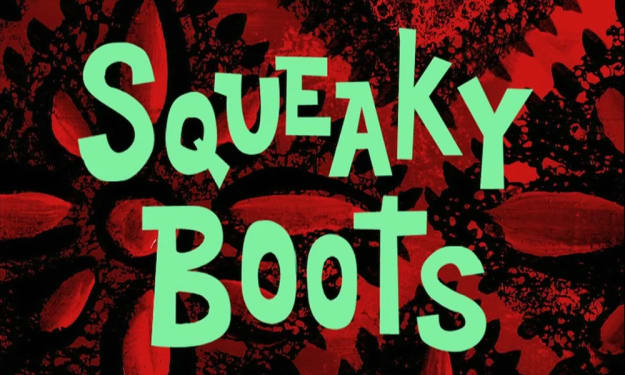
The episode “Squeaky Boots” opens with an unmistakable clatter that reverberates through Bikini Bottom, the sound of SpongeBob’s new, gleaming footwear echoing in perfect, comedic rhythm. The animation is crisp, the vivid aqua backdrop shimmering with the same meticulous attention to detail that has made the series a visual staple for decades; every bubble, every swirl of kelp seems to pulse in sync with the absurdly amplified squeak of the boots. The writers expertly blend slapstick with clever wordplay, as the titular footwear becomes both a literal catalyst for chaos and a symbolic representation of SpongeBob’s relentless enthusiasm, turning an ordinary accessory into an engine of narrative propulsion that drives the episode forward with a contagious, kinetic energy.
By Forest Green2 days ago in Geeks
When Amazon Says You’re a Disappointment
Yesterday, for the first Wednesday in months, I didn’t publish a piece on Vocal. Believe me, I wanted to. I had it all written up and ready to go. I was going to share the news that I had officially become a published author.
By Sandy Gillman3 days ago in Writers



Comments
There are no comments for this story
Be the first to respond and start the conversation.