
The Women of Marvel
A History Of Women's Contribution To The Marvel Universe

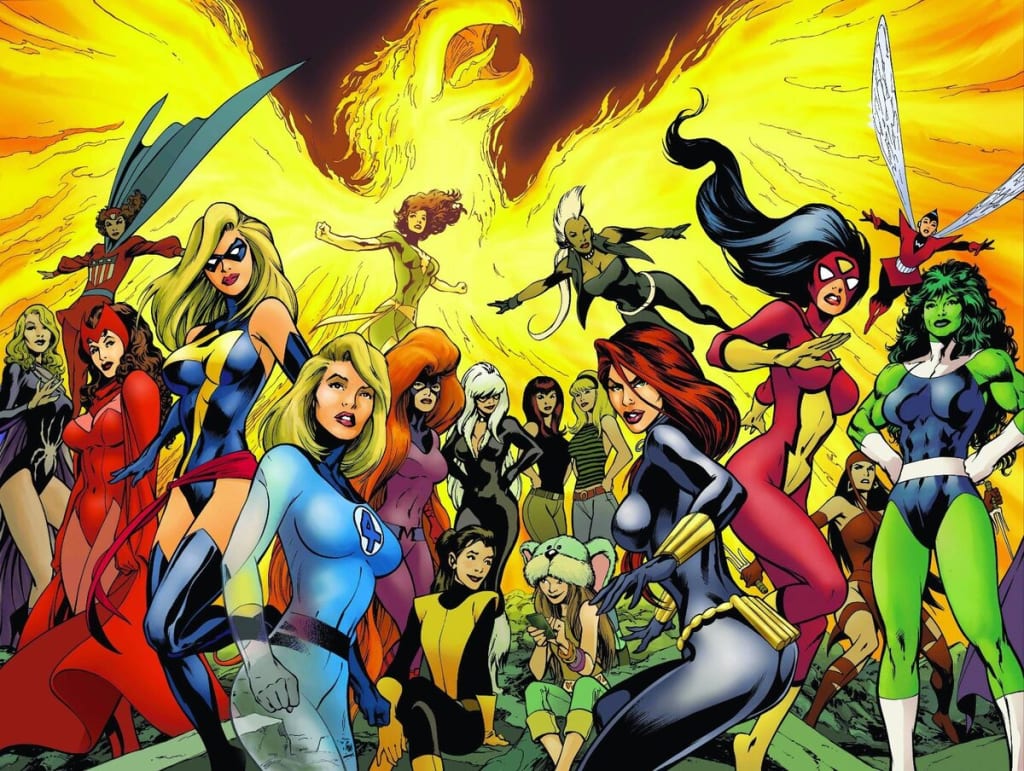
Since its inception in 1939, female artists and writers have played a pivotal role in shaping the Marvel Universe. Despite traditionally being a male-dominated field, these remarkable women have made an indelible mark on the industry. They not only paved the way for future female talents to gain recognition but also contributed to the evolution and maturity of the comic book medium. Our focus in this episode will be on the work of these pioneering artists across Marvel's comics, movies, and shows, shedding light on their successes in crafting and narrating interesting stories that resonate with audiences worldwide.
In the Beginning
Limited opportunities for female artists characterized Marvel's early days. Marie Severin broke this trend in the 1950s when she joined Marvel and worked on several titles, becoming one of the few female artists in mainstream comics.
The 1970s witnessed significant progress for women at Marvel, not only as artists but also as writers. Chris Claremont, a male writer, created iconic female characters like Storm, Jean Grey, and Kitty Pryde, enriching the X-Men universe.
By the 1980s, the comic book industry saw a surge in female writers. Louise Simonson and Ann Nocenti became notable figures during this period. Simonson's work on Power Pack and her contributions to the X-Men universe were noteworthy. Nocenti's writing on Daredevil and her editorial work on several Marvel titles further expanded women in the comic book industry.
During the 2000s and beyond, Marvel witnessed a surge in participation from female writers and artists who contributed to various titles. Among these women, some notable figures include G. Willow Wilson, who introduced Kamala Khan, also known as "Ms. Marvel." Kelly Sue DeConnick gained acclaim for her work on the Captain Marvel series. Ta-Nehisi Coates crafted interesting iterations of the Black Panther comics. Their contributions not only significantly affected the comic book community but also had a profound effect on the Marvel Cinematic Universe.
Moreover, Marvel, owned by Disney, has actively sought to enhance diversity among its artists. Talented female artists like Sara Pichelli and Adriana Melo have gained prominence in the industry, leaving a lasting mark on the visual aesthetic of Marvel comics.
What About The Women of Marvel Studios?
The Marvel Cinematic Universe (MCU) has seen a significant evolution in the involvement of female writers and artists since its inception in 2008. Early MCU projects reflected the male-dominated landscape of the preceding comics, with minimal female presence in creative roles during the first phase. However, recent years have witnessed a notable surge in women's contributions to the MCU's films and TV shows.
In the beginning, from Iron Man to Avengers: Age of Ultron, female characters such as Black Widow and Pepper Potts were introduced. Still, no female writers or directors were involved in shaping their stories. Male directors and writers primarily helmed the early MCU films.
In 2014, Nicole Perlman became the first woman to co-write a Marvel Studios film, Guardians of the Galaxy, alongside James Gunn. Her involvement brought heart and humor to the MCU, helping to establish the distinct style and tone that became the franchise's hallmark in later works.
This marked a turning point, and the push for greater diversity both in front of and behind the camera gained momentum. Taika Waititi's Thor: Ragnarok featured contributions from Jennifer Kaytin Robinson, who co-wrote character dynamics for the bisexual warrior Valkyrie, ensuring a strong focus on female representation.
In collaboration with Anna Boden, Ryan Fleck, and Geneva Robertson-Dworet, Jac Schaeffer co-wrote Captain Marvel. This film marked a significant milestone for women at Marvel, as it not only became the first MCU film to center on a female superhero but also featured Anna Boden as the first female director for Marvel Studios. The box-office success of Captain Marvel showed the viability of female-led comic book films on an international scale.
Concurrently, Christina Hodson contributed to the writing of Black Widow, which entered development around the same time as the MCU's third phase neared its conclusion.
In early 2019, during Phase 4 of the Marvel Cinematic Universe, Marvel Studios started a focused effort to increase diversity and inclusivity in its storytelling by hiring more female writers, directors, and producers. One example of this is Chloe Zhao's Eternals, which not only showcased her Oscar-winning storytelling abilities honed in Nomadland but also highlighted a diverse cast and explored uncharted cosmic elements within the MCU. Furthermore, Zhao brought depth and artistry to the superhero genre, elevating it beyond mere spectacle.
Another notable example is Kate Herron's direction of the Disney+ series Loki, which delved into themes of identity, gender fluidity, and time travel through the perspective of the popular anti-hero. Herron's unique visual style and intricate character development brought a fresh and captivating dimension to the series, resonating deeply with audiences.
Cate Shortlan’s direction of Black Widow helped give the titular Avenger Natasha Romanoff her long-overdue solo that was set shortly before the events of 2018’s Avengers: Infinity War. Her direction of the film helped balance action with deep emotional layers, exploring Natasha’s backstory and giving her a more complex narrative.
During this era, Marvel witnessed a surge of female talent contributing to the scripts of various movies and television shows within the Marvel Cinematic Universe (MCU). Among them was Jan Schaeffer, who significantly influenced Phase 4 as the head writer and executive producer of "WandaVision," Marvel Studio's first live-action series.
"WandaVision" centers on Wanda Maximoff's grief following the events of "Avengers: Endgame." It stands out as one of the MCU's most distinctive projects, skillfully blending sitcom conventions with profound emotional storytelling. Schaeffer's work on this series garnered acclaim for its multifaceted exploration of trauma, love, and loss.
From her contributions to the script of WandaVision, Megan McDonnel progressed to penning The Marvels, continuing the narratives of Monica Rambeau and Captain Marvel while weaving fresh dynamics between the superheroines.
Bisha K. Ali took on the role of a head writer for Ms. Marvel, introducing Iman Vellani as Kamala Khan, the MCU's first Muslim superheroine. Ali's work garnered praise for its authentic portrayal of Pakistani culture, the Muslim faith, and the experiences of teenage superheroes. Vellani ventured into the realm of comics by writing a Ms. Marvel series for Marvel, reimagining the character as a mutant, deviating from her initial portrayal as an inhuman in mainstream comics since 2013.
In She-Hulk: Attorney at Law, Jessica Gao, as head writer and executive producer, introduced Jennifer Walters/She-Hulk to the MCU by blending legal humor with themes of female empowerment in a male-dominated society. Her signature comedic style contributed to the show's unique identity within the MCU.
Meanwhile, Nia DaCosta made history as the first Black woman to direct an MCU film with The Marvels. Beyond directing, she co-wrote the screenplay, providing a vision that built upon the legacy of Captain Marvel while interweaving the narratives of Monica Rambeau and Kamala Khan. By doing so, DaCosta created a diverse, female-led superhero team on screen.
Behind the scenes at Marvel Studios, Victoria Alonso played a crucial role as an executive producer in shaping the Marvel Cinematic Universe (MCU) from its inception. Her significant contributions made her one of the most influential figures in the film and television industry. Notably, Alonso supported diversity in casting and hiring practices, ensuring that women were given more opportunities in leadership roles. Because of her efforts, Marvel Studios made significant strides in promoting women in various behind-the-scenes capacities, including producing, directing, cinematography, and design.
As Marvel Studios looks forward, it prioritizes integrating women into essential creative roles. For instance, Echo, released in 2024, features Maya Lopez, a deaf Choctaw superheroine. The show's development involved female writers who explored her ancient ancestral legacy, ensuring an accurate representation of the Choctaw Nation. Additionally, more female-led projects, like Agatha All Along, which was released in late 2024, are on the horizon, showcasing Marvel's commitment to amplifying diverse voices in its storytelling.
Marvel Studios has grown its approach to diversity and inclusion since 2008. This evolution is clear in the growing number of female writers, directors, and producers who have played vital roles in shaping the Marvel Cinematic Universe (MCU). From early pioneers like Nicole Perlman and Anna Boden to current leaders like Jac Schaeffer, Chole Zhao, and Nia DaCosta, these women have transformed the MCU's storytelling, expanded its representation, and enriched its narratives. Their contributions have not only empowered female characters but have also made the MCU more reflective of its diverse global audience.
In Conclusion
In summary, the impact of female inclusion and representation of the Marvel Universe is evident in both comics and film. The contributions of women, from pioneering artists like Marie Severin to groundbreaking creators such as Jac Schaeffer, Chole Zhao, and Nia DaCosta, have transformed storytelling, artistry, and character development within Marvel. Their work has fostered inclusivity and broader representation, inspiring fans and creators globally. As the Marvel Universe expands, the voices of these remarkable women ensure diverse and compelling stories that reflect a wider range of human experiences. Enriched by their vision, the Marvel Universe exemplifies the importance of empowering diverse voices in the creative process.
About the Creator
Jenna Deedy
Just a New England Mando passionate about wildlife, nerd stuff & cosplay! 🐾✨🎭 Get 20% off @davidsonsteas (https://www.davidsonstea.com/) with code JENNA20-Based in Nashua, NH.
Instagram: @jennacostadeedy
Keep reading
More stories from Jenna Deedy and writers in Geeks and other communities.
Disney's Pocahontas: A Problematic Portrayal
Content Warning: Discussions of racism, cultrual appropriation and genocide against indigenous people. As a child, I was a big fan of Disney's animated films. My sister and I eagerly expected each new release, and our parents would always take us to the theater to see them. We also owned the VHS tapes and would watch them repeatedly. One of our favorites was Pocahontas, the first Disney film to feature an Indigenous princess as the main character. I loved the movie, the toys, and the soundtrack.
By Jenna Deedyabout a year ago in Geeks
Not Just For Clean Up: A History Of The MCU's Department of Damage Control
Initially an organisation that seemed to exist to help the heroes of the Marvel Cinematic Universe, from Phase Four onwards, the Department of Damage Control has shifted into a more antagonistic role. Most recently seen in the Wonder Man series, the current incarnation of Damage Control seems to target superpowered individuals, regardless of whether that person poses an active or intentional threat.
By Kristy Andersona day ago in Geeks
One Unchecked Box
"Republished" because it was the only way to add the embed for the newly recorded audio version of this story due to the Top Story badge. Plus it serves as a nice, informal announcement of the podcast's revival for another season (go subscribe!):
By Stephen A. Roddewig6 days ago in Fiction


Comments
There are no comments for this story
Be the first to respond and start the conversation.