
Three Lives by Gertrude Stein
Why It's a Masterpiece (Week 90)

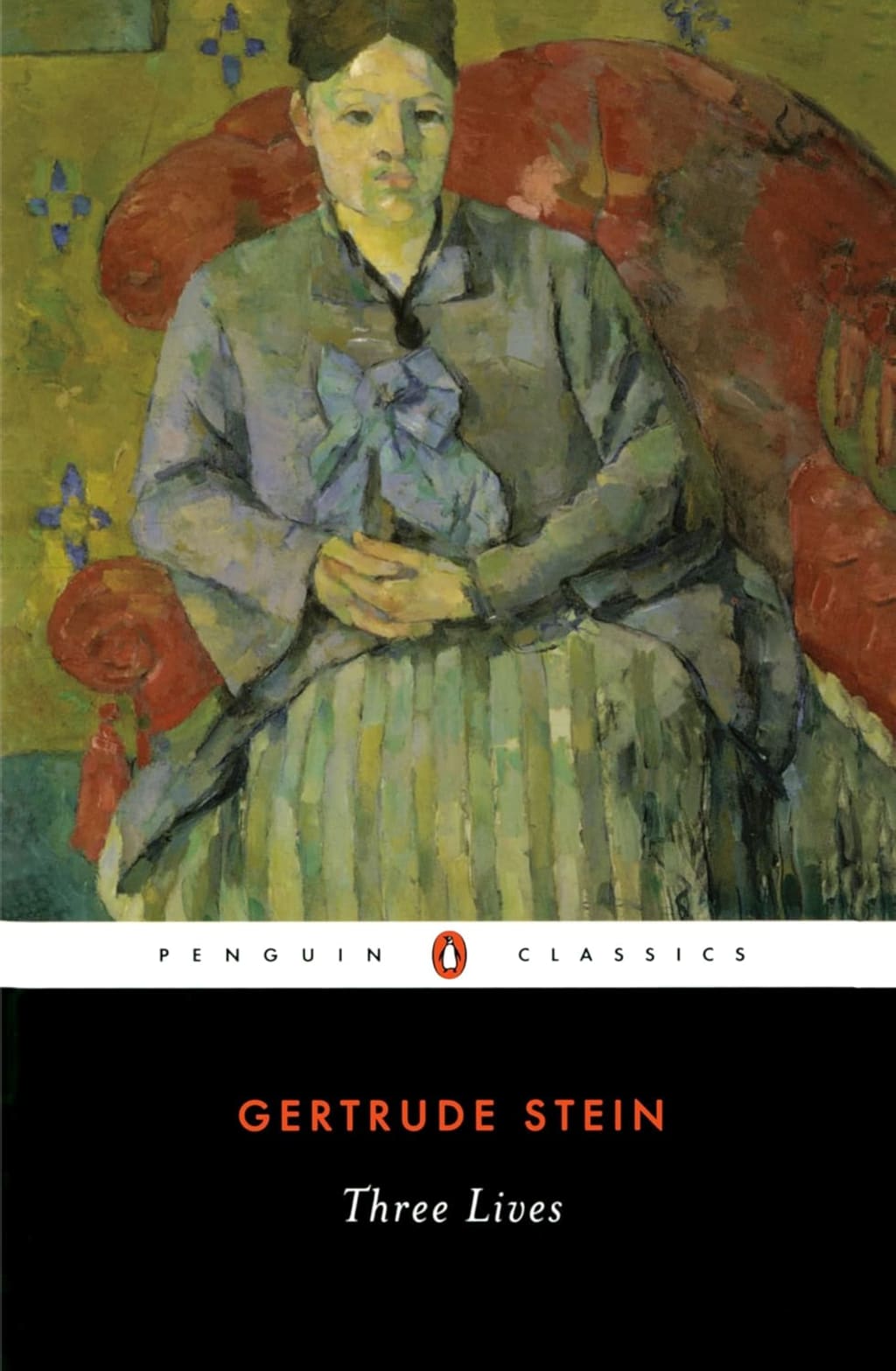
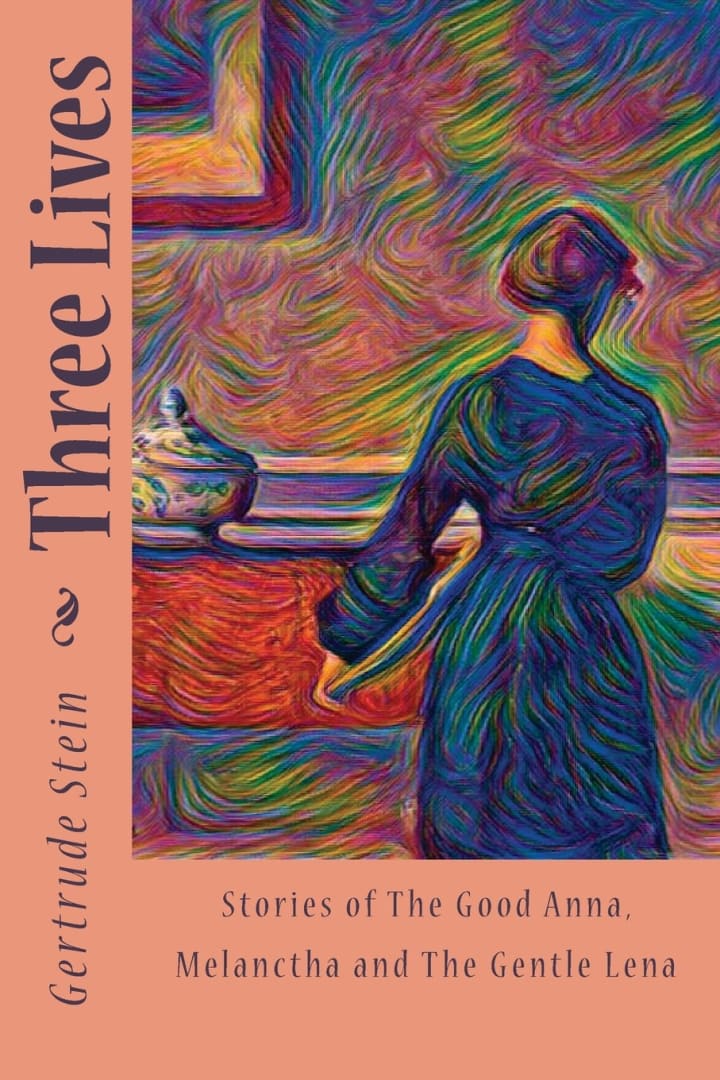
Gertrude Stein’s Three Lives was published in 1909 by the Sunwise Turn publishing house. The novel was Stein’s first major work of prose fiction and represents a move away from traditional narrative structures of the past American literary landscape. Before writing Three Lives, the author had lived in Paris, where she was influenced by Cubism, post-impressionist art, and avant-garde movements. The book reflects her involvement with these movements, mostly through her use of language and form, both of which were quite radical for the time and place in which she lived.
Stein was motivated by a desire to break from more conventional styles of storytelling, focusing instead on mirroring the repetitive rhythms and fragmented perspectives found in visual art. Three Lives is structured around the stories of three working-class women: Melanctha, Anna, and Bertha. Each character is examined with psychological insight, using the medium of visual art as a guiding force for structure and narrative form.
The book’s publication, while initially not a commercial success, cemented Stein into the glue of American modernism. The book was praised for its experimental form and its exploration of the psychology of ordinary people, which was still relatively rare at the time. The narrative is minimalist and avoids overt plot-lines, focusing instead on the emotional and psychological states of the characters.
Stein’s use of repetition and her rejection of conventional plots made Three Lives a precursor to her later works, including the incredible Tender Buttons (1914) and her more famous autobiography and memoir-style writings. Today, Three Lives is considered an important early work of modernist fiction and remains the most notable work for those wanting to understand more experimental modernist styles.
Plot
Three Lives is composed of three novellas, each focusing on a different female protagonist. The stories are interconnected thematically, as they explore the struggles of women in early 20th-century America, sort of reminding us of books like Mrs Dalloway by Virginia Woolf and, later on there would be The Hours by Michael Cunningham.
The first novella, “The Good Anna,” follows the life of Anna, a German immigrant who works as a servant for a bourgeois family. Anna is depicted as hardworking, loyal, and morally upright, yet her life is marked by her inability to connect emotionally with others. She is bound by an internal sense of duty and a deep, almost masochistic, attachment to the family she serves. Her relationship with the family is complicated by her physical and emotional distance from them, and the novella focuses on her personal struggles, self-recrimination, and loneliness.
The second novella, “Melanctha,” presents a more complex and layered character. Melanctha is a young, African-American woman who struggles with her sexual identity, emotional instability, and turbulent relationships with the men around her. She is portrayed as both a victim and a transgressive figure, constantly seeking love and approval but unable to find stability. Throughout the novella, she experiences numerous emotional and sexual entanglements, which lead her to a kind of tragic self-awareness. Almost a sense of constant shame and anxiety.
The final novella, “The Gentle Lena,” tells the story of Lena, a simple, good-natured woman who works as a housekeeper. Unlike Anna and Melanctha, Lena is depicted as having a more content, albeit naïve, approach to life. She marries a man who is a poor fit for her emotionally, and the novella focuses on the challenges she faces in her marriage and motherhood. However, Lena’s lack of intellectual complexity or emotional depth leads her to an existence that is full of small, repetitive actions.
Into the Book
Repetition
One of the most incredible features of Three Lives is Stein’s use of repetition, which serves to illustrate the circularity and absurdity of life. Each of the three novellas employs repetitive phrasing and sentence structures that often mirror the mundane and monotonous routines of the characters’ daily lives. In doing so, Stein emphasises the emotional and psychological stasis of her protagonists. For example, in “The Good Anna,” the narrative is littered with repetitions of simple actions and phrases.
The repetition here underscores Anna’s rigid, predictable existence, where she is trapped in a cycle of work and duty. This endless cycle reflects the absurdity of human existence, suggesting that life itself can feel like a series of meaningless repetitions. The characters’ inability to break out of these patterns illustrates a deeper existential concern: the lack of freedom in their lives, despite their individual desires for change.
Similarly, in “Melanctha,” repetition appears in the character’s emotional and psychological cycles: “She loved him and she didn’t love him, she hated him and she loved him, but nothing changed, nothing changed.”
Stein’s repetition mirrors Melanctha’s internal turmoil and confusion, portraying her as someone caught in an endless emotional loop, unable to break free from her need for affection and validation. In this way, repetition becomes a symbol for the stagnation of desire, showing how characters are often trapped in their own psychological loops, unable to move forward.
“Anna did this work and did it very well. She did it so well that it was a relief to the people around her. She did it again.”
- Three Lives by Gertrude Stein
Psychological Lives of Normal Women
Stein’s exploration of the psychological lives of women is so important to understanding Three Lives. Each novella portrays women who are restricted by the social and economic limitations of their time. Whether it is Anna’s servitude, Melanctha’s unstable sexual identity, or Lena’s naïve submission to marriage and motherhood, the novel portrays women who are shaped by external forces and unable to fully express their desires or identities.
For instance, Melanctha’s story explores the tension between her desire for emotional freedom and sexual autonomy and the constraints placed upon her by her race and gender. Stein’s portrayal of Melanctha’s emotional confusion underscores the tragic limitations that women like her faced in early 20th-century society.
Melanctha’s lack of confrontation and fragmented emotional state are reflective of the struggles women face when they are denied the space and language to articulate their own desires.
In contrast, Lena’s story is one of quiet resignation, where the constraints of marriage and motherhood limit her growth as a person. Her naïve optimism makes her a passive figure, unable to escape the expectations of family and society. Stein portrays Lena’s passivity as a subtle critique of the roles women were often expected to play during this time: “Lena was good, Lena was quiet. She did everything for her family. She did it, and did it again, and did it well.”
Stein critiques the way in which social conditioning forces women into repetitive and unfulfilling roles, where their personal desires are sidelined in favour of family obligations.
“She wanted something, but she did not know what it was. She had a hunger in her, but it was a hunger for something she could not define.”
- Three Lives by Gertrude Stein
Alienation
Stein’s characters experience a sense of alienation that is both psychological and social. The women in Three Lives are often portrayed as disconnected from society, each struggling with a fractured sense of self.
In Anna’s case, her alienation is tied to her role as a servant and her emotional disconnection from those around her. Her loneliness is punctuated by her lack of emotional expression, and her work serves as both an escape and a form of self-punishment. She feels isolated, as if she is invisible to those she serves, and her sense of identity is undermined by her position in society.
Melanctha’s alienation is more internal, stemming from her inability to reconcile her emotional and sexual identity with the world around her. She seeks validation through her relationships but never truly connects with the men in her life, leading to a sense of perpetual emptiness: “She had been with him, and yet she had not been with him. She had wanted him, and yet she did not want him.”
This dissonance between desire and reality leaves her feeling isolated and incapable of forming meaningful connections. In Lena’s case, her alienation is rooted in her resignation to life’s routines, which she follows without question or reflection. Her sense of self is defined by her family roles, and she remains detached from her own personal desires, making her an unquestioning participant in the cycles of domestic life.
“Anna did not know why it was, but she could not feel anything for the people who spoke to her. She could not feel anything at all.”
- Three Lives by Gertrude Stein
Why It's a Masterpiece
The novel’s characters are complex and multi-dimensional, and their struggles with identity, emotional fulfilment, and social constraints resonate across generations. Stein’s exploration of the inner lives of women was groundbreaking, offering a rare glimpse into their psychological complexities, especially in a period when women’s experiences were often overlooked or simplified in literature.
The novel also anticipates many of the themes and techniques that would later become staples of the movement, such as fragmentation, subjectivity, and the rejection of linear storytelling. Stein’s work had a profound influence on later writers who would go on to experiment with stream-of-consciousness and fragmented narratives in their own works.
Conclusion
I hope you have enjoyed my analysis of 'Three Lives' and what it can teach the reader about writing the female psyche at a time when perhaps, women (especially those of the working class) were not seen as full people with agency at all. The nature of confrontation, the elusive way in which Gertrude Stein depicts our characters as 'every-women' and the movement into the modernist literary period we know is coming are all part and parcel to the brilliance of this book.
Next Week: Heart of a Dog by Mikhail Bulgakov
About the Creator
Annie Kapur
I am:
🙋🏽♀️ Annie
📚 Avid Reader
📝 Reviewer and Commentator
🎓 Post-Grad Millennial (M.A)
***
I have:
📖 280K+ reads on Vocal
🫶🏼 Love for reading & research
🦋/X @AnnieWithBooks
***
🏡 UK
Keep reading
More stories from Annie Kapur and writers in Geeks and other communities.
Book Review: "The Knot of Vipers" by François Mauriac
I'm not going to lie, more than often it is a title that draws me to a book and this one was quite intriguing because it didn't give anything away. The only thing I could figure out is that it wasn't going to be a romantic comedy or something along those lines. The Knot of Vipers is François Mauriac's novel written in the style of a confession, about a family falling apart and the members like 'vipers'. They deceive, they are poison to each other, they are hypocritical and selfish. All I can say is that this psychologically twisted novel was not quite what I was expecting but it was amazing nevertheless.
By Annie Kapur3 months ago in Geeks
Push the Button
In today’s hyper-connected world, the phrase “Push the Button” has taken on profound implications beyond its literal sense. While it may evoke images of launching rockets or triggering alarms in popular culture, in the modern digital era, it is a metaphor for the immense power that rests at our fingertips. Whether it is sending a crucial email, posting on social media, or activating sophisticated technological systems, pushing a button can set off a chain of events that may be irreversible. As society becomes increasingly reliant on technology, understanding the responsibility behind this simple action is more crucial than ever.
By Ayesha Lashari3 days ago in Geeks
📢 Raise Your Voice Thread: 02/05/2026
Our “Raise Your Voice Threads” are hosted most alternating Thursdays at 12PM ET to offer creators more avenues to uncover exceptional stories on Vocal. As we are continuously searching for fresh creators and inspiring stories, this thread provides an opportunity to exchange and discuss the stories that have moved and motivated us on Vocal.
By Raise Your Voice by Vocal3 days ago in Resources



Comments
There are no comments for this story
Be the first to respond and start the conversation.