
Why YouTubers Should Leave Brie Larson Alone
A Familiar Story: the Right Actor, Wrong Narrative!

Trigger Warning: This article addresses online harassment, misogyny in fandom culture, and targeted criticism of public figures.
An unwavering commitment marked Brie Larson's entrance into the spotlight during the Captain Marvel press tour to her beliefs. She advocated for inclusion and representation, arguing that pop culture needed to make room for marginalized voices. Instead of being celebrated for this completely valid position, she faced a persistent online campaign of harassment, largely fueled by YouTube commentary channels, organized Twitter attacks, and coordinated review-bombing.
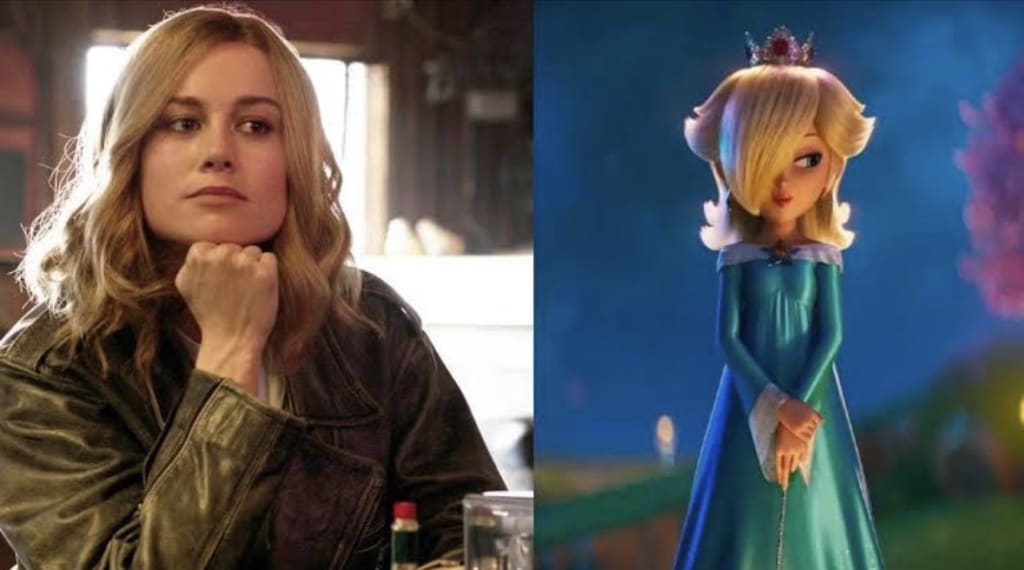
The recent and surprising announcement of her casting as Rosalina in the upcoming Super Mario Galaxy Movie has immediately subjected her to the same level of criticism. This recurrence strongly suggests that the actual focus of the sustained backlash is not her acting ability, but a deeper, underlying issue that needs to be examined.
Rosalina: A Cosmic Guardian Worth Celebrating
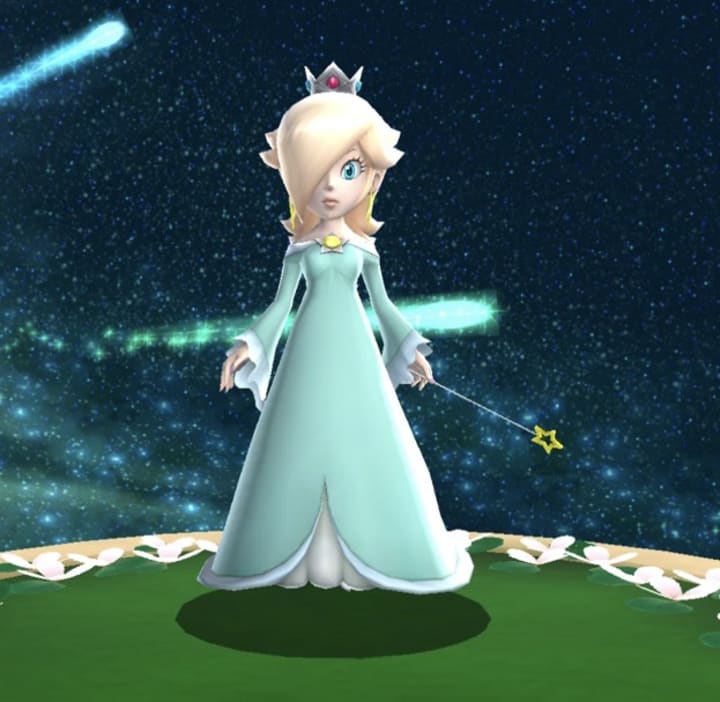
Brie Larson, an Oscar-winning actress and self-professed Nintendo fan, is set to voice Rosalina in the upcoming sequel to the 2023 film The Super Mario Bros. Movie. This announcement is, in fact, a great fit, given Larson's previously expressed affection for Nintendo games and the authentic connection it provides.
Rosalina, who debuted in Super Mario Galaxy in 2007, is a fascinating character. Known as the mysterious "Watcher of the Stars" and the adoptive mother to the star-like Lumas, she resides in the Comet Observatory. Her character moves beyond the typical "princess in distress" cliché; she is instead a guide, a guardian, and an emotionally rich figure with a significant canonical backstory and mythos.
The sequel, slated for an April 2026 release, will center on this intergalactic Mario narrative, with Rosalina's cosmic role being central. Despite these compelling reasons for excitement, the announcement has, unfortunately, led to a predictable surge of online commentary that focuses on Larson herself, largely ignoring her suitability for the role or her potential performance.
The Recycled Hit-Job: When Fandom Becomes Weaponised
Brie Larson's comments during the promotion of Captain Marvel highlighted a lack of diversity in film criticism, noting that in 2017, "64 percent of the reviews for Hollywood’s 100 top-grossing movies... were written by white men.” Her call was for inclusion and a wider range of perspectives, not exclusion.
However, many YouTube creators, organized trolls, and online commentators distorted her statement, framing it as an "anti-white-men," "woke agenda," or "feminist attack on straight men" narrative. This misrepresentation led to the review bombing of Captain Marvel even before its release. Despite this, the film successfully earned over a billion dollars worldwide.
The reaction is telling:
- Larson explicitly advocated for inclusion ("more seats"), not exclusion.
- The online discourse deliberately recasts her position as aggressive and divisive.
- The intense backlash was never truly about her strong acting ability but was focused on her identity, her outspokenness, and her role in a female-led superhero franchise.
- When the film was a commercial success, the harassment simply shifted its focus instead of ending.
This pattern is now repeating with her casting as Rosalina. The same groups that initially targeted her are resurfacing. Their claims of "unfair treatment" are even more baseless now, as Larson is associated with both Nintendo and gaming and is taking on a role many fans desired. Nevertheless, the hostility persists.
Why This is About Gender and Entitlement, not “Bad Casting”.
The backlash against Brie Larson rarely centers on her competence or performance (which is yet to be fully seen). Instead, it reflects a broader pattern: women who enter major roles expect equitable treatment and are subsequently punished within online fandom communities.
The pattern of online harassment typically unfolds as follows:
Initial Comments: A woman in a prominent franchise role speaks about representation, triggering an immediate online backlash often framed as "anti-men" or "special treatment."
Preemptive Attacks: A film starring a female lead is subjected to early "boycott" campaigns and widespread negative reviews.
Success Reframe: Even when the film succeeds commercially, the narrative shifts to claims of "artificial fixing" or suggesting the win was "unfair."
Targeted Continuity: When the same actress takes on another high-profile role (like Rosalina in the Mario universe), the same critics emerge, ignoring her relevant fandom connection and credentials for the part.
The Implicit Threat: The clear message sent to other women is to remain silent, avoid leadership roles, and refrain from challenging the status quo, or face harassment.
Larson does not deserve this treatment. Her credentials, work ethic, career choices, and genuine enthusiasm for gaming and pop culture more than validate her selection for this role. The fact that YouTubers are already preparing to criticize her again speaks volumes about their motives, not about Larson herself.
Why the critics owe her one (and why we should too)
Brie Larson's professional conduct, respect for fans, humility, and genuine enthusiasm suggest that she doesn't actively seek controversy; instead, controversy seeks her. Her stated independence from social media validation, as evidenced by her remark while promoting Marvel—"I have genuinely never needed to look at the internet to explain to me who I am"—indicates a focus on her work and the audience, not outrage.
The very debate over whether she "deserves" a role like Rosalina, despite strong evidence to the contrary, reveals a clear bias. Certain YouTubers and commentators rely on a formulaic, algorithm-friendly approach: they attack a high-profile woman, label her as part of "woke culture," disregard her actual credentials and dedication, and use manufactured outrage to gain views.
We, as both consumers of fandom commentary and content creators, must demand better. Failing to do so normalizes harassment and perpetuates a system that penalizes women for occupying public spaces.
Fan Culture can do better, especially now.
To the fans, gamers, Nintendo lovers, and YouTube watchers: breaking the cycle of unfair criticism requires action.
How to Shift the Conversation:
- Reserve Judgment: Give Brie Larson's performance a chance before deciding on its failure. Prejudgment denies her a fair opportunity.
- Target the Work, Not the Person: Critique a film or role, but recognize that targeting the actor with harassment, especially based on gender, is unacceptable and dangerous.
- Identify the Pattern: Note that the loudest voices attacking Larson now are often the same ones who have attacked her previously without a valid reason.
- Acknowledge Smart Casting: Celebrate this win for the Mario universe. Larson's casting as Rosalina is logical and well-deserved, given her status as a lifelong fan, a voice actor, and a highly recognized performer.
- Demand Accountability: Challenge online commentators who rely on tropes like the "woke agenda" or disparage Larson's role without context. Their reliance on clickbait feeds the cycle of harassment.
Final Word: Respect Earned, Apology Owned
Brie Larson deserves fairness, not preemptive vilification, simply for being visible and ambitious in historically male-dominated spaces. While she doesn't need protection from all critics, the intense negative reaction to her casting as Rosalina has been unfair.
The focus should be on the opportunity for a fresh start with her involvement. Instead of allowing harassment, the fandom—and those who amplify negativity, like some YouTubers and comment channels—owes Larson an apology.
Moving forward, whenever a female actor is attacked over a major role, we must ask: Is this a genuine critique, or is it just recycled sexism disguised as clickbait?
Larson demonstrated her belief in the Mario universe and the Nintendo fandom, bringing her talent and passion without seeking conflict. We should let the movie speak for itself. It's time to let the joy of gaming, not manufactured drama, be the loudest voice.
Sources
- “Brie Larson on Diversity in the Marvel Cinematic Universe,” Variety, April 25, 2019.
- “’Captain Marvel’ star Brie Larson pushes for off-screen inclusion,” Reuters, March 6, 2019.
- “Brie Larson calls for more diverse voices in film criticism,” Entertainment Weekly, June 14, 2018.
- “The Super Mario Galaxy Movie reveals first trailer, Brie Larson playing Rosalina,” NintendoEverything, November 2025.
- “The Super Mario Galaxy Movie – Brie Larson’s Nintendo fandom,” Polygon, November 2025.
- “Rosalina (Mario) – Wikipedia entry”.
- “Brie Larson – Wikipedia entry”.
About the Creator
Jenna Deedy
Just a New England Mando passionate about wildlife, nerd stuff & cosplay! 🐾✨🎭 Get 20% off @davidsonsteas (https://www.davidsonstea.com/) with code JENNA20-Based in Nashua, NH.
Instagram: @jennacostadeedy
Keep reading
More stories from Jenna Deedy and writers in Geeks and other communities.
Becoming Kitty Pryde: My Hero Time Custom Suit Experience
For many X-Men fans, bringing a favorite character to life is a magical experience. For me, that character has always been Kitty Pryde, an intangible, intelligent, and relatable mutant from Marvel's iconic lineup. When I discovered Hero Time could create a custom version of her "modern" uniform from the 2013 All-New X-Men series, I knew I had to try it.
By Jenna Deedy3 months ago in Geeks
Push the Button
In today’s hyper-connected world, the phrase “Push the Button” has taken on profound implications beyond its literal sense. While it may evoke images of launching rockets or triggering alarms in popular culture, in the modern digital era, it is a metaphor for the immense power that rests at our fingertips. Whether it is sending a crucial email, posting on social media, or activating sophisticated technological systems, pushing a button can set off a chain of events that may be irreversible. As society becomes increasingly reliant on technology, understanding the responsibility behind this simple action is more crucial than ever.
By Ayesha Lashari3 days ago in Geeks
📢 Raise Your Voice Thread: 02/05/2026
Our “Raise Your Voice Threads” are hosted most alternating Thursdays at 12PM ET to offer creators more avenues to uncover exceptional stories on Vocal. As we are continuously searching for fresh creators and inspiring stories, this thread provides an opportunity to exchange and discuss the stories that have moved and motivated us on Vocal.
By Raise Your Voice by Vocal4 days ago in Resources


Comments
There are no comments for this story
Be the first to respond and start the conversation.