
You've seen "Call Me By Your Name" and "Portrait of Lady on Fire". So, what now?
Check out these Golden Age Cinema classics and American New Wave classics.

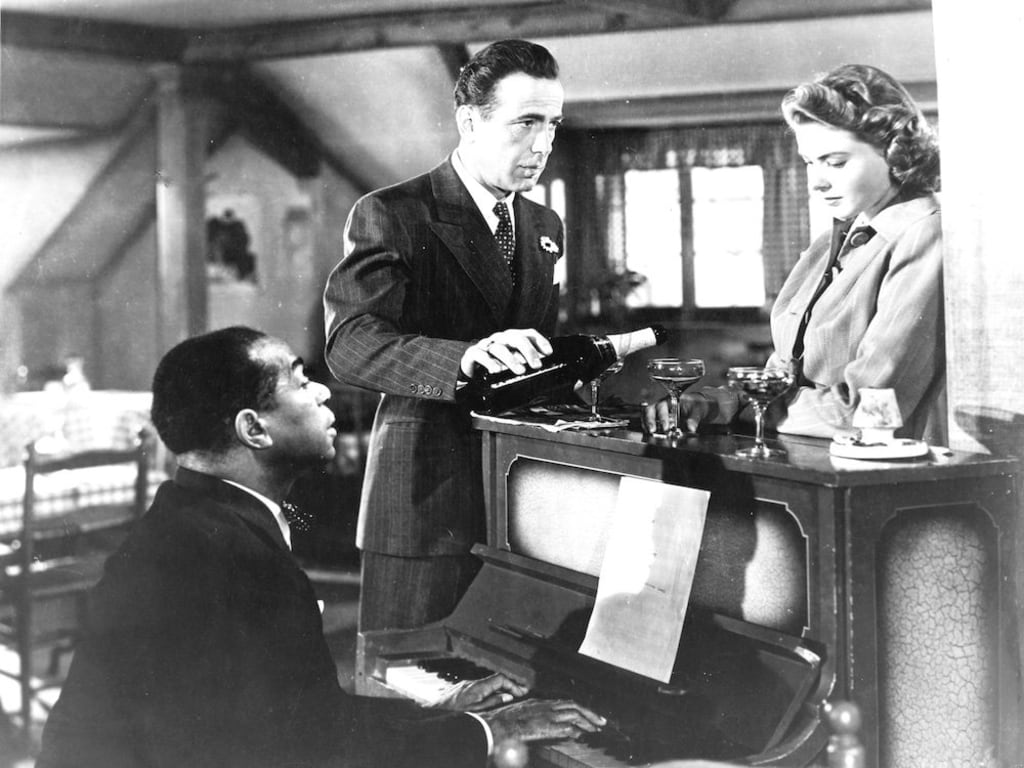
Don't worry I'll get to the film recommendations in a jiffy after giving you a bit of a backstory. Who doesn't love a good ol' backstory? I'm very grateful for the choices that I have made in my life over the past several months as they sprung me into the deep world of filmmaking. I became a hermit which was perfect cause it was cold outside -- and I live in Canada. And no we don't all look like lumberjacks. Since my unemployment (Courtesy of Covid-19) I have finally devoted my time and energy to studying film and acting, in doing so broadened my cinematic knowledge and opened different doors, and honestly, I can never look cinema the same way again. Gone are the days when I would put on a movie just for fun or just to have it as background noise. I've come to truly appreciate the art and its everlasting bittersweet residues.
Films provide us with escape, especially during these times when traveling is unfeasible. I've gotten to know a lot of filmmakers not just from our current time but back to the 1920s. And I thought to myself why the hell not? I should study the craft from the beginning? After all, it is the foundation of cinema that we know today and it's what our beloved contemporary filmmakers studied independently or at school. I watched the early works of Martin Scorsese (duh) when he was a student a NYU Tisch, Alfred Hitchcock (Vertigo, Psycho), Roberto Rossellini (Journey to Italy), Celine Sciamma (POLOF, Water Lilies), Agnes Varda (Vagabond), Billy Wilder (Sunset Boulevard), Michael Curtiz (Casablanca), David Lean (Lawrence of Arabia) and of course, my nightmarish boyfriend, Quentin Tarantino to name some.
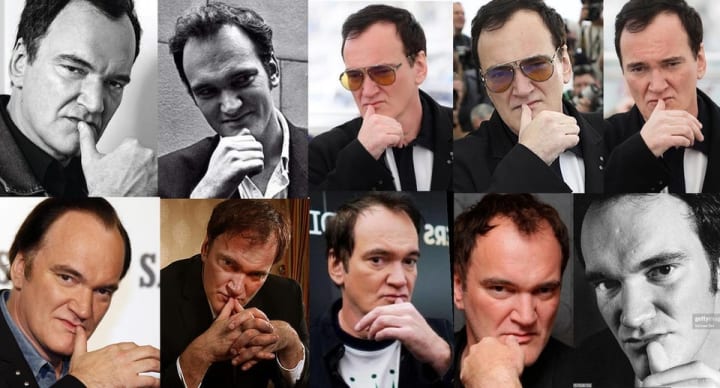
All right, to the juice! I have concocted a list of must-see films for you folks out there. Whether you're simply sick of browsing through your streaming services, getting over a heartbreak, craving a good scare, or romance for the hopeless romantics then there's a film for everyone on this list. A selection that consists of classics from 1990s back to the 1940s.
1) Before Sunrise (1995) directed by Richard Linklater - Starring: Ethan Hawke and Julie Deply
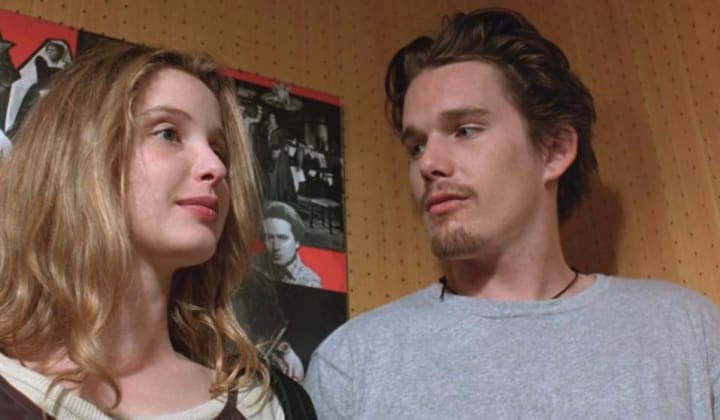
This film taught me the art of conversation. This first installment of Richard Linklater's renowned "Before" Trilogy introduces us to the unmistakable chemistry between these Celine and Jesse. Celine having left Budapest after visiting her grandmother meets Jesse on a train thanks to an argumentative Austrian couple on board.
"I like to feel his eyes on me."
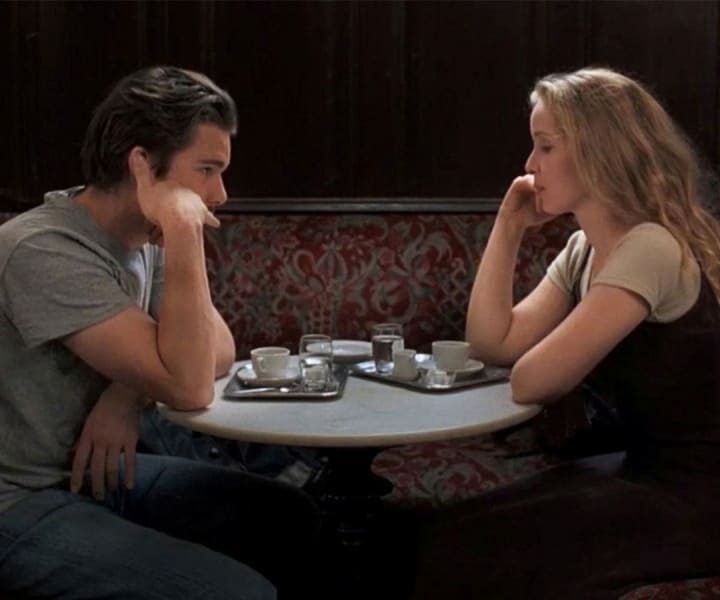
When the second transition is introduced it is all so relatable from there. It brought me back to my first dates and my first loves, that coyness that I had, and also the deepening curiosity for the other. I cried, I laughed and I swooned. It centers around two purely realistic individuals who meet by chance. As audiences, we are witnesses to one of the greatest, realistic love stories of all time. There isn't a real story until we start to get to know our characters, their dialogues are so rich and engaging you won't be able to keep your eyes off of them. While you purchase another box of tissues, two more installments are waiting for you - Oh! And watch out for Kath Bloom's "Come Here."
2) The Philadelphia Story (1942) directed by George Cukor - Starring: Katharine Hepburn, Cary Grant, and James Stewart
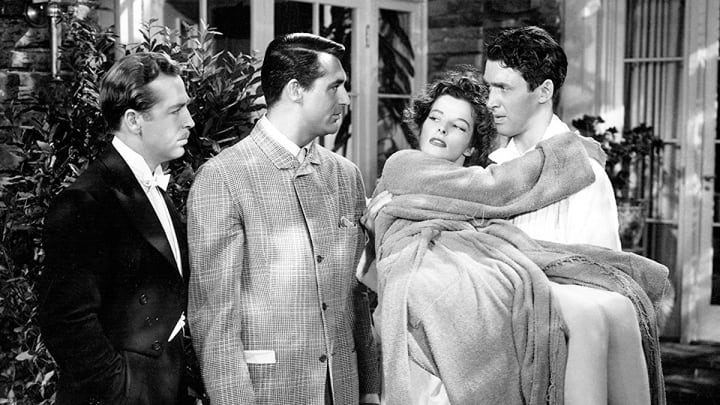
George Cukor was one of the most understated directors of the golden age cinema, mainly because of his sexual orientation which the public didn't take too kindly back in the day. The Philadelphia Story was one of his outstanding collaborations with the Great Katharine Hepburn. He was referred to as "the woman's director" during his time because of his unrelenting focus on female characters. The Philadelphia Story is one of the pinnacles of romantic comedies. It overflows with remarkable dialogue and punchy comebacks that make you appreciate old timely tell-offs that needn't vulgarity.
The story revolves around Tracy Lord (Katharine Hepburn) whose ex-husband (The dapper Cary Grant) and tabloid reporter from Spy Magazine, Mike O'Connor (James Stewart) turning up in her Philadelphia mansion. She then is swept up in a whirlwind of romance and self-realization. So relatable.
"I don't want to be worshipped. I just want to be loved."
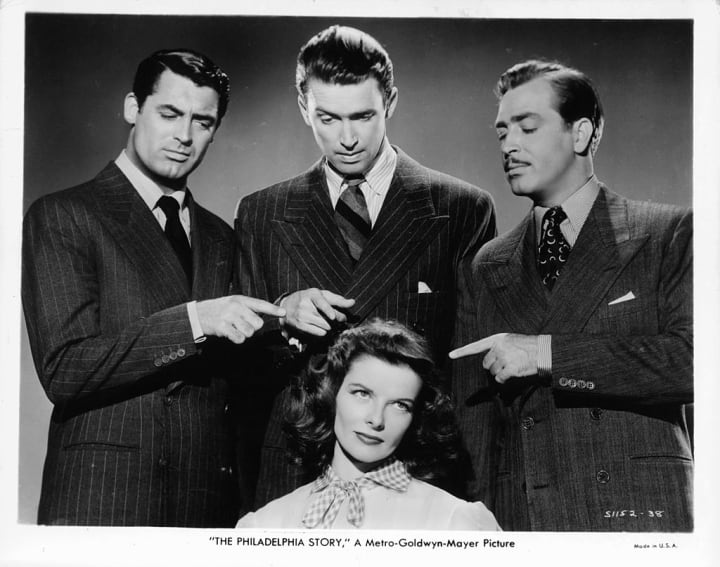
A strong comeback for Hepburn after her dark period of being part of the "Box Office Poison" list amongst other actresses who didn't generate enough profits with their picture in the late 1930s. Tsk Tsk, it was all about money for them. The film was adapted from an original play written by Philipp Barry, a playwright and a close friend of Hepburn's. The story of TPS was tailored to Hepburn and it was her vehicle to the top of the ladder once again and she remained up there till the end of her days. MGM sought to buy the rights to make the picture and was surprised that Katharine Hepburn owned the rights (with the helping hand of Howard Hughes). She agreed with many conditions: That she would pick the director, the actors and that she must play the leading lady. What a woman — a force to be reckoned with.
Let me just say that black and white films are not for everyone, it's an acquired taste really but you haven't seen real cinema if you haven't watched its foundations.
3) Some Like It Hot (1959) by Billy Wilder - Starring: Jack Lemmon, Tony Curtis, and Marilyn Monroe
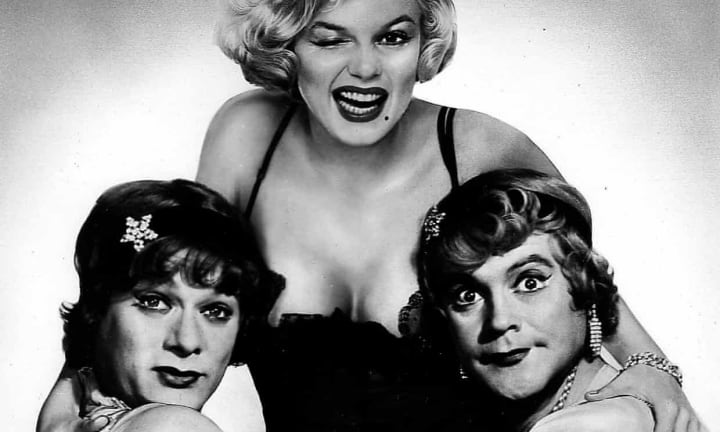
A film that never did once curdle and will resonate through the ages. I was amazed to witness the whip pan (when a camera transition consists of an abrupt whip to the side, left or right, jumping straight to a scene). So that's where Damien Chazelle got it from! SLIH is a non-stop entertainment that encompasses extraordinary cinematography (for its time) unwrinkled transitions action scenes. Billy Wilder immediately grabs you by the hand and doesn't let go till the end. This is one of my favourite screenplays to study and it's no surprise that it received an Academy Award nomination in 1960.
SLIH is about two speakeasy musicians, Gerry and Joe, who are struggling to make money when they're caught in a crossfire between two opposing mobs and are forced to flee 20's Chicago. As their choices narrowed they take on a gig with an all-female musician band where they meet our lovely blonde, Sugar Kane (Marilyn Monroe) and so the film's complex storytelling departs. A film full of joy and awesomely paired with avant-garde dialogue.
"You're a guy -- and why would a guy want to marry a guy?" "Security."
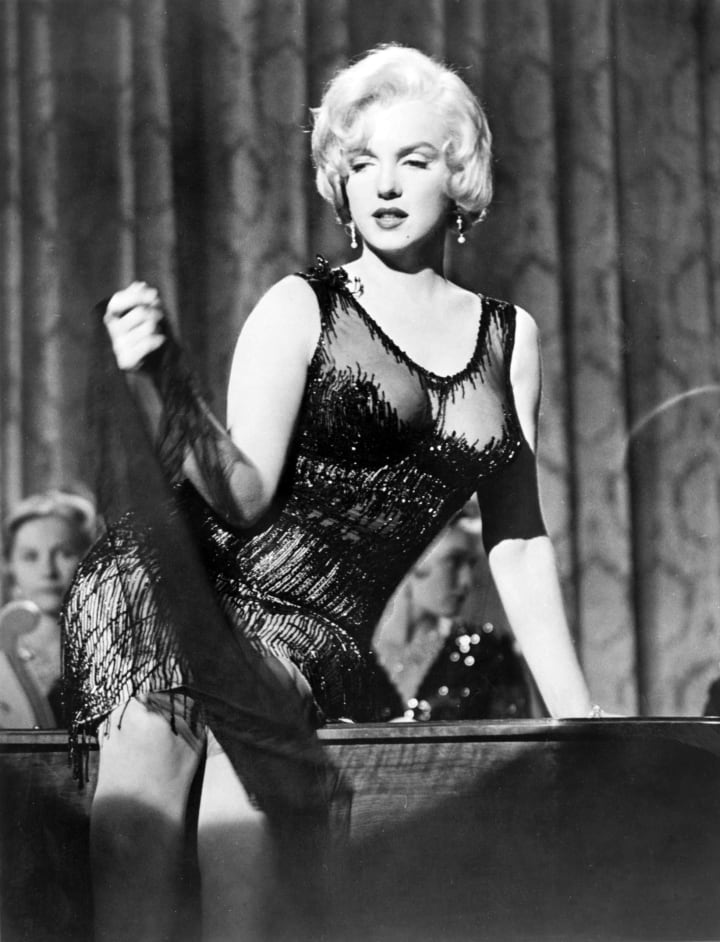
Marilyn Monroe incorporates charisma and naiveté and brews a lovely bright character that is compelling. Her "I Want To Be Loved By You" will make you love her. Overall, an uplifting rollercoaster ride that is guaranteed to put a smile on your face. When the title drops you'll be sure to get goosebumps.
"I always get the fuzzy end of the lollipop."
4) Psycho (1960) directed by Alfred Hitchcock - Starring Anthony Perkins, Janet Leigh, and Vera Miles
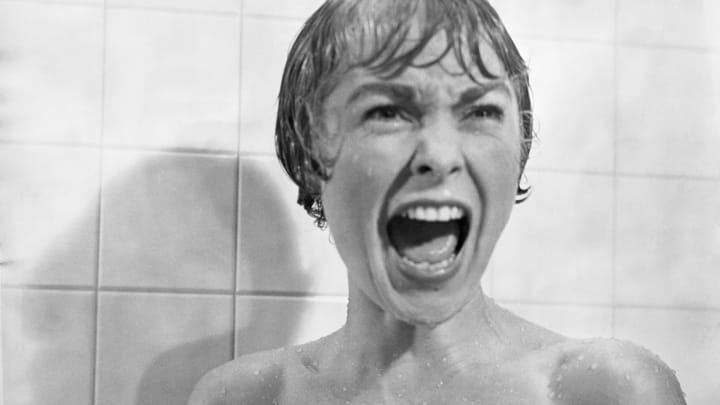
Psycho, one of the ancient columns of psych-thrillers and epitome camera manipulations. It is no surprise that the name Hitchcock has remained a household name all over the world and was and is the most studied director of classical cinema. In Psycho, he lets his audiences in with a special lens to witness voyeurism (we're all voyeurs really) with its first sequence. He makes us feel like we're a bunch of peeping toms.
Marion Crane (Janet Leigh), one of the Hitchcock blondes, dips town with a bag full of cash and stays at the famous Bates Motel. Norman Bates (Anthony Perkins) is introduced as the hotel manager and he welcomes her with a cold meal. All is fine until Marion Crane decides to take a shower. The most iconic scene in cinematic history. The smooth transitions from scene to scene are elevated by the jabbing sounds of the violin and pan zooms that accelerate your heart rate and then that signature zoom out of an eye. I honestly can go on and on about that scene but you have to see this masterpiece for yourself. Hitchcock makes you incredibly uncomfortable with his clever camera manipulation. If you're in for that sort of night then stream away.
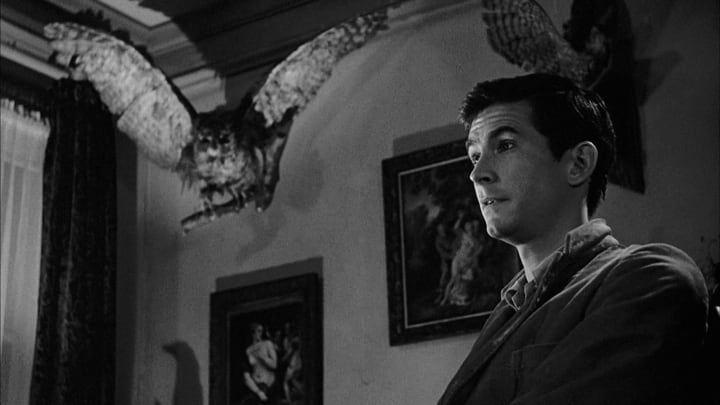
"We all go a little mad sometimes."
So kick off your feet and check out these cinema classics!

About the Creator
Maria Lacson
Actor and Independent Filmmaker residing in Toronto, Canada.
Keep reading
More stories from writers in Geeks and other communities.
Goodbye, Mr. Duvall
It is turning out to be an interesting year. I was in the middle of teaching a class when a pop-up appeared on the screen announcing the death of Mr. Robert Seldon Duvall (yes, that was his full name). I was in the middle of a discussion on the obsession we have with winning when it comes to sports (the Winter Olympics was a theme), and I felt as though things were coming full circle. We had already lost Gene Hackman last year, and along with that titan, it feels though one particular golden age has closed off to be replaced by...?
By Kendall Defoe 6 days ago in Geeks
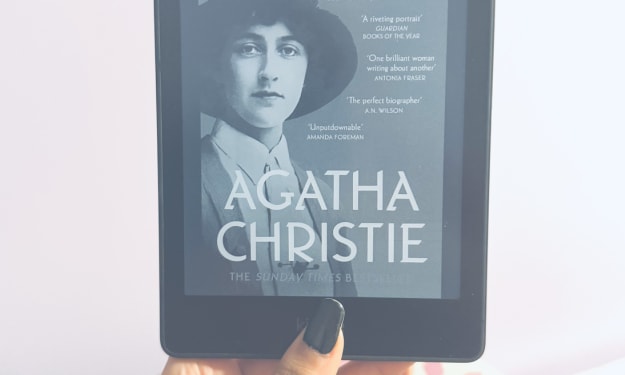
Book Review: "Agatha Christie" by Lucy Worsley (Pt.1)
This section covers the introduction all the way through to chapter 12. Well, perhaps you already know that recently I finished reading Jane Austen at Home by Lucy Worsley after finding it in the shop of the Jane Austen centre just after my birthday. Now, I have moved on to yet another Lucy Worsley biography, yet another well-researched and entertainingly written piece of some considerable detail. Agatha Christie proves so far, to be a wonderful read and, as we press on I hope it will continue to let me into the life and times of one of literature's greatest introverts.
By Annie Kapur2 days ago in Geeks
There's A Hole in My Bucket
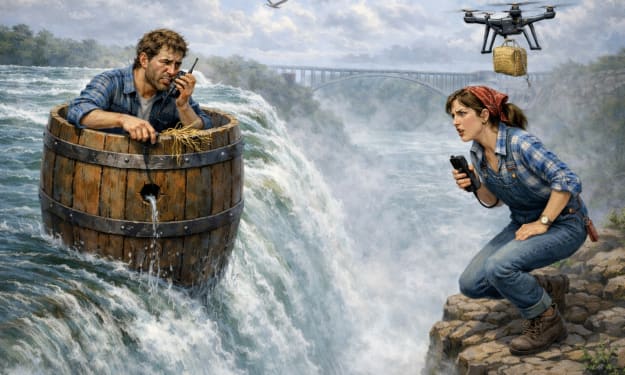
It’s a well-known fact that Liza Dufresne was always the brains in the family. She was the one who always came up with the brilliant schemes the Dufresne kids carried out when they were younger. Like when they tricked Mrs. Claybourn into paying for a trip to Disney World. Liza convinced her that their parents had been kidnapped and were being held for ransom for the total price of three tickets. In reality, they were away on a weekend getaway for their anniversary. When they returned, Liza told the Claybourns that they did not like to talk about the ordeal. Their parents never found out how they got the money. Mrs. Claybourn never found out that the Dufresne parents were never really in any danger.
By David E. Perry3 days ago in Fiction


Comments
There are no comments for this story
Be the first to respond and start the conversation.