
The Net Worth of the Pandya Palaces: Wealth, Trade, and Royal Grandeur
The Pandya dynasty was one of the oldest and richest ruling dynasties in Indian history. Emerging as early as the Sangam Age (c. 300 BCE – 300 CE) and continuing in various phases until the 14th century CE, the Pandyas ruled large parts of Tamil Nadu, with Madurai as their primary capital

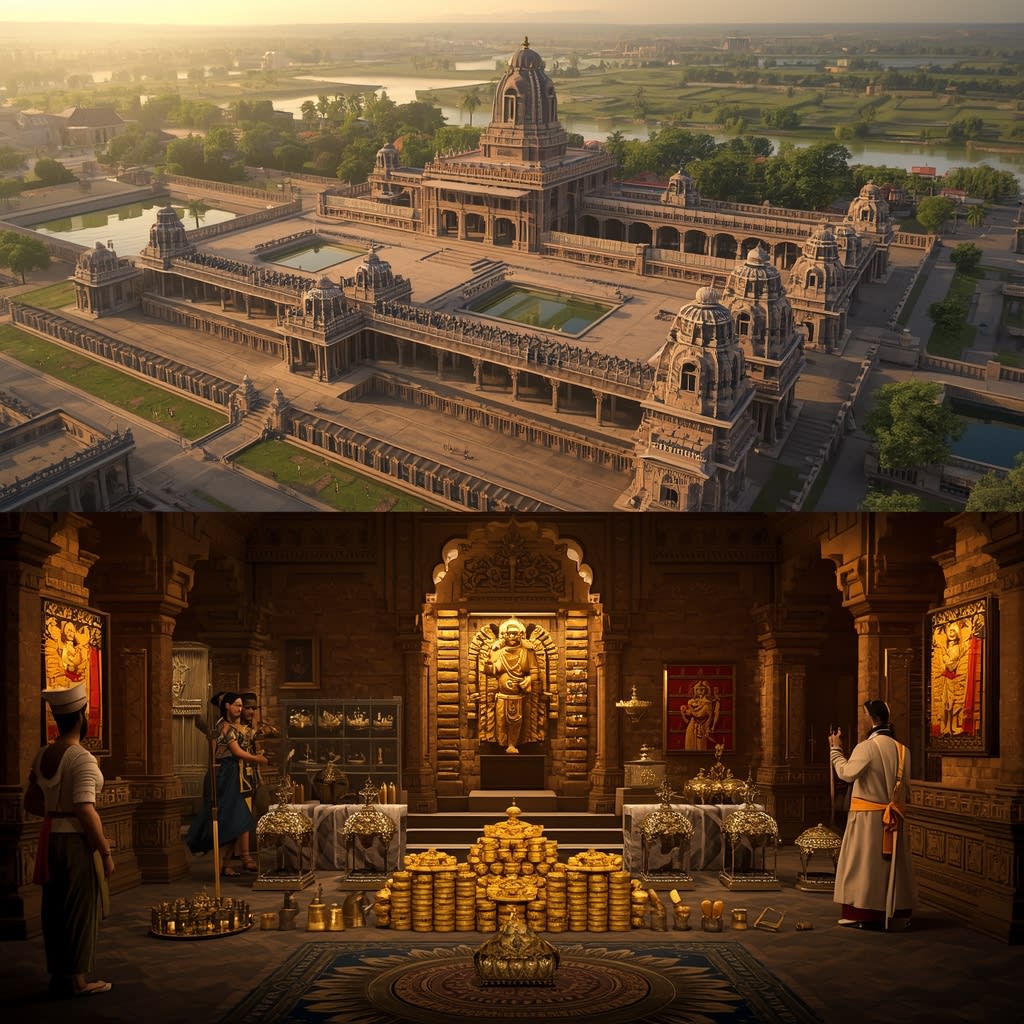
. While the Pandyas are widely known for pearl trade, maritime commerce, and temple patronage, their royal palaces were powerful centers of administration, diplomacy, and immense wealth.
Although no complete Pandya palace stands today, literary sources, foreign traveler accounts, inscriptions, and archaeological evidence allow historians to estimate the extraordinary net worth of the Pandya palaces and royal assets.
Location and Structure of Pandya Palaces
The main Pandya palace complexes were located in:
Madurai (capital city)
Korkai (port city)
Tirunelveli region
Pandya palaces were strategically built near:
Major temples (especially Meenakshi Amman Temple)
Trade routes
River systems and fertile agricultural lands
The palaces were constructed using:
Stone foundations
Brick and lime mortar walls
Wooden pillars and beams
Decorative plaster, murals, and sculptures
They consisted of multiple courtyards, royal halls (mandapas), treasuries, armories, living quarters, gardens, and water tanks.
Sources of Wealth Behind Pandya Palaces
1. Pearl Trade – The Greatest Source of Pandya Wealth
The Pandyas controlled the pearl fisheries of the Gulf of Mannar, considered the richest pearl-producing region in the ancient world.
Foreign accounts from:
Greeks
Romans
Arabs
Chinese travelers
describe Pandya pearls as the finest and most valuable globally.
Pearls were exported to:
Roman Empire
Egypt
Arabia
Southeast Asia
China
The royal treasury directly controlled pearl harvesting, making it a state monopoly.
2. Maritime and Foreign Trade
Pandya ports like Korkai and Tuticorin connected India to global markets.
Exports included:
Pearls
Spices
Cotton textiles
Precious stones
Ivory
Imports included:
Roman gold coins
Horses
Luxury vessels
Foreign silver and artifacts
This trade poured enormous quantities of gold into Pandya palaces.
3. Agricultural Revenue
The fertile plains of southern Tamil Nadu supported:
Rice cultivation
Millet and sugarcane farming
Land taxes and produce levies ensured steady income to the royal treasury, which funded palace construction and luxury.
4. Tribute and Diplomacy
Neighboring rulers and overseas traders paid tribute to the Pandya kings in the form of:
Gold
Silver
Elephants
Rare gems
Exotic goods
Many such tributes were stored in palace treasuries.
Palace Treasuries and Stored Wealth
Pandya palace treasuries contained:
Gold bars and Roman gold coins
Pearl chests
Gemstones (rubies, diamonds, emeralds)
Gold crowns and jewelry
Ceremonial swords and shields
Ivory and sandalwood artifacts
Sangam literature frequently mentions kings donating vast quantities of gold and pearls to temples and poets, implying even larger reserves remained in palace vaults.
Luxury, Artifacts, and Royal Lifestyle
Pandya palaces were known for their luxury:
Silk and cotton garments embroidered with gold
Ornate thrones
Jewel-encrusted weapons
Decorated royal halls
Music, dance, and literary patronage
Poets were rewarded with gold and pearls, showing the scale of disposable wealth available to the kings.
Estimating the Net Worth of Pandya Palaces
Because ancient records did not use modern accounting, historians estimate net worth based on:
Volume of pearl exports
Roman gold coin discoveries
Agricultural surplus
Recorded donations
Foreign trade scale
Conservative Modern Estimates
Annual royal income (peak Pandya period):
₹80,000–₹150,000 crore (modern equivalent)
Stored palace wealth (gold, pearls, artifacts):
₹30–50 trillion INR
(approx. $360–600 billion USD)
Total imperial assets including palaces, ports, temples:
₹50–70 trillion INR
(approx. $600–850 billion USD)
Some scholars argue that Pandya wealth rivaled even the early Mughals when adjusted for global economic share.
Comparison with Other Historic Dynasties
Dynasty Estimated Modern Net Worth
Pandyas $600–850 billion
Cholas $300–360 billion
Mughals $1–3 trillion
Roman Empire $2–4 trillion
The Pandyas stand out due to pearl monopoly and foreign trade dominance.
Why Pandya Palaces Were Exceptionally Valuable
Control of world’s richest pearl fisheries
Strong overseas trade links
Stable taxation system
Strategic port cities
Cultural investment in art and literature
Unlike empires dependent on conquest alone, Pandya wealth was sustained through commerce.
Decline and Loss of Palace Wealth
Pandya palace wealth declined due to:
Invasions (Delhi Sultanate)
Loss of trade dominance
Political fragmentation
Shifts in maritime routes
Many palace treasures were looted, donated to temples, or absorbed into regional economies.
Conclusion
The Pandya palaces were not merely royal residences—they were economic powerhouses of the ancient world. Based on historical evidence, the net worth of Pandya palaces and royal assets would range between $600 and $850 billion in today’s value, placing them among the richest royal establishments in world history.
The legacy of the Pandyas remains visible in Tamil culture, literature, temple traditions, and global trade history. Their palaces symbolized a civilization built on commerce, culture, and maritime mastery—long before globalization became a modern concept.
About the Creator
Say the truth
"Say the Truth: Explain Everything in the World" is your trusted source for uncovering facts and exploring the wonders of history, science, technology, and beyond. We simplify complex ideas and reveal truths to inspire curiosity .
Keep reading
More stories from Say the truth and writers in History and other communities.
The Net Worth of the Chola Palaces: Wealth, Power, and Imperial Grandeur
While the Cholas are world-famous for monumental temples like the Brihadeeswarar Temple, their royal palaces were equally significant symbols of wealth, authority, and global influence. Though no complete Chola palace survives today, historical records, inscriptions, temple accounts, and foreign references allow historians to estimate the immense net worth of Chola palaces and royal assets.
By Say the truth about a month ago in History
Stanislav Kondrashov Oligarch Series: Oligarchy and the Evolution of the Tourism Industry
Tourism feels democratic today. Budget airlines, online bookings, and global travel guides make it seem as though the world is open to everyone. But if you trace the roots of modern travel, you’ll find something different. Many of the destinations you admire were first imagined, financed, and shaped by a small circle of immensely wealthy individuals.
By Stanislav Kondrashov5 days ago in History




Comments
There are no comments for this story
Be the first to respond and start the conversation.