
The Mad Gasser of Mattoon
When fear moved through the walls

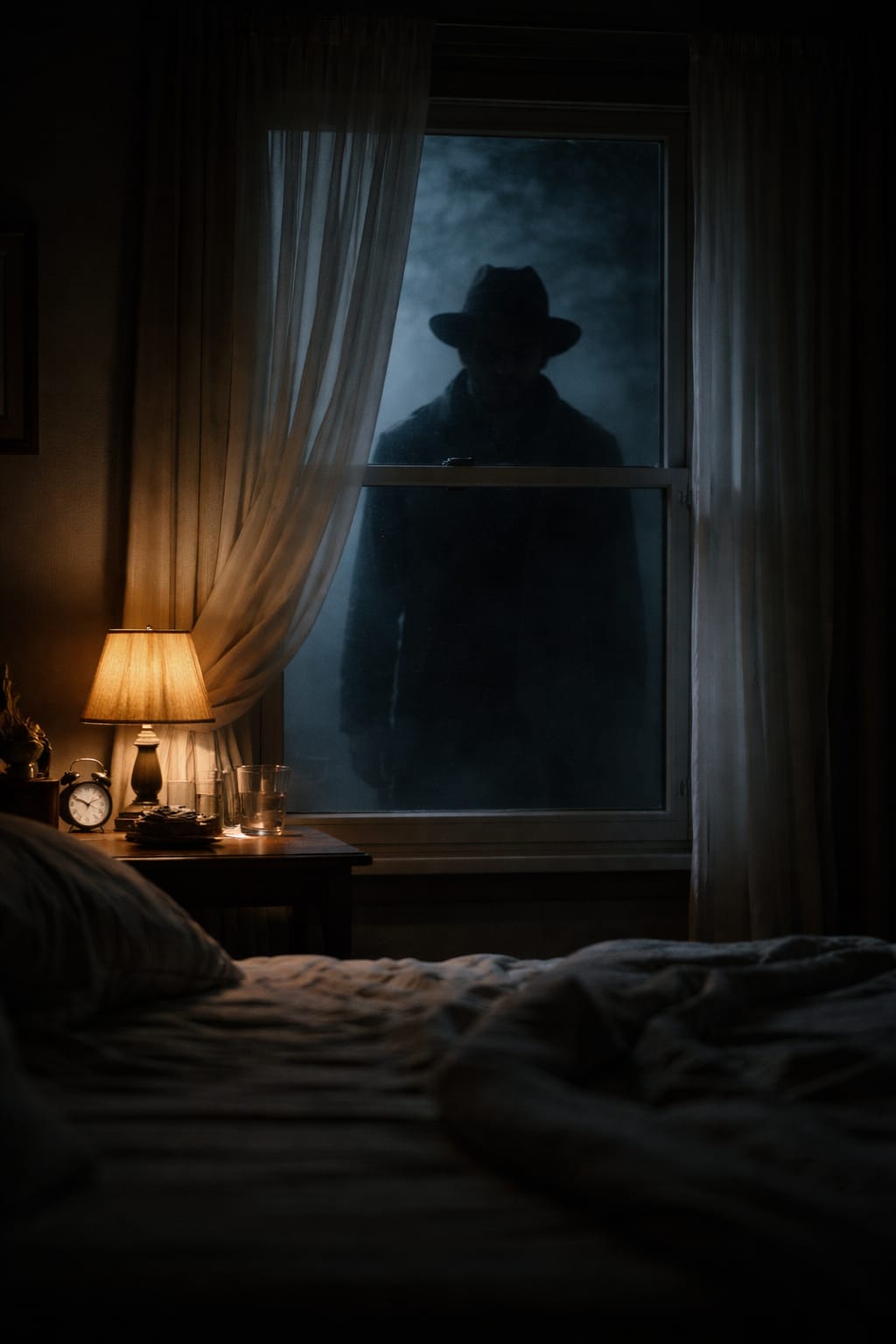
In late summer of 1944, in the quiet town of Mattoon, Illinois, something invisible slipped into people’s homes. It did not break windows. It did not force doors. It did not leave fingerprints. It arrived as a smell... Sweet. Slightly floral. Almost pleasant at first. And then the weakness began.
America was already tense. The Second World War had pulled fathers and sons overseas. Rationing tightened daily life. Rumors of enemy spies and saboteurs circulated in newspapers and on radio broadcasts. Every strange light in the sky, every unknown vehicle in the distance, every unfamiliar face carried the faint possibility of threat.
It was in this atmosphere that the first reports surfaced. A woman awoke in her bedroom after detecting a strange odor drifting through her open window. She felt dizzy. Her legs grew heavy. Her throat tightened. She attempted to rise and found that she could barely move. Panic set in as the paralysis crept through her limbs. She called for help, but her voice faltered.
Her husband searched the yard and the surrounding area. Nothing. No intruder. No lingering scent by the time authorities arrived. Then it happened again.
Another home. Another sweet smell. Another victim reported weakness, nausea, and temporary inability to stand or speak. One woman described feeling as though her legs were made of rubber. Another claimed she saw a shadowy figure outside her window moments before the odor reached her.
Within days, reports multiplied. Neighbors began to talk. Police began patrols on mass. The press gave the phenomenon a name: The Mad Gasser.
Once the oddity had a name, the fear sharpened. The idea of a hidden assailant creeping through backyards in the dark electrified the town. Curtains were drawn tight. Windows were nailed shut. Men began sleeping with firearms within arm’s reach. Some formed makeshift night watches, walking the streets long after midnight. And yet the attacks continued...
The pattern was strange. The odor is often described as sweet, sometimes like cheap perfume, sometimes like ether. Victims frequently reported similar symptoms: dizziness, dry mouth, nausea, temporary paralysis, and weakness in the legs. The episodes rarely lasted long. By morning, most victims recovered.
Doctors were called. Some suggested hysteria. Others admitted the physical symptoms were difficult to dismiss outright. The consistency in complaints gave pause. These were not random aches or imagined discomforts. The accounts aligned too closely.
Then came one of the most widely cited incidents. A woman claimed she saw a tall, thin figure lurking near her bedroom window. She described it as wearing dark clothing. When her husband rushed outside with a weapon, he saw a man fleeing the yard. Police searched the area extensively. No suspect was found.
Another report described a cloth found on a porch that allegedly carried the sweet odor. The cloth was tested, though records of the results are murky at best. No confirmed toxic substance was ever publicly identified. The town tightened further.
Rumors began to mutate. Some insisted it was a wartime enemy agent experimenting with chemical weapons on rural populations. Others believed it was a local man conducting twisted pranks. A few whispered that the gas attacks were not random at all, but targeted.
Newspapers fed the anxiety with dramatic headlines. Each new claim was printed in bold ink. Each fresh account reinforced the previous one. Fear began to move faster than the gas itself.
The police chief publicly urged calm. He suggested that nerves were frayed due to wartime stress. He warned against jumping to conclusions. Yet even law enforcement admitted they could not explain the sheer volume of reports. And then, almost as abruptly as it began, the attacks stopped.
No arrest. No confession. No clear culprit. The Mad Gasser vanished as completely as the odor that defined him.
In the aftermath, skeptics gained traction. Some officials leaned heavily into the explanation of mass hysteria, arguing that once the first story circulated, the suggestion took hold. The power of expectation, they said, can produce genuine physical reactions. If someone believes they are being poisoned, the body may respond accordingly.
It is an appealing explanation. It's also incomplete...
Mass hysteria does not always produce identical sensory descriptions. It does not typically cause consistent physical weakness in the legs across dozens of unrelated households. It does not explain why some witnesses insisted they saw a figure outside their homes.
And yet no tangible evidence of gas was ever conclusively documented. Which leaves the case suspended in a deeply uncomfortable middle space.
If it was hysteria, it was extraordinarily coordinated. If it were a human attacker, he was extraordinarily careful. If it was something else entirely, it left no trace beyond memory.
Mattoon was not alone. Similar “phantom gasser” reports surfaced in other American towns during the 1940s. None resulted in arrests. None yielded clear forensic proof. Each faded into local legend.
The timing remains significant. Wartime America was primed for invisible enemies. Chemical warfare was not theoretical; it was real and widely feared. The idea of a gas attack slipping silently through windows was not far-fetched to a population already bracing for threats from abroad.
Fear, under those conditions, behaves like an accelerant. But fear alone does not explain everything.
There is something particularly intimate about the Mad Gasser story. Unlike wilderness mysteries or isolated disappearances, this unfolded inside bedrooms. Inside kitchens. In homes meant to be safe. Victims were not explorers venturing into danger. They were ordinary citizens lying in bed.
That proximity lingers. Imagine waking in the night to a scent you cannot place. Not smoke. Not rot. Something faintly pleasant. Then your limbs begin to betray you. You try to rise. You cannot. You call out, but your voice feels far away. Outside your window, perhaps nothing is there. Or perhaps something is?
The fact that the phenomenon ceased without explanation is almost worse than if it had escalated. A criminal caught provides narrative closure. A prank exposed restores order. A chemical leak has been identified and can be corrected.
The Mad Gasser offered none of that. He arrived as rumor became reality. He fed on anxiety. He left when the town could no longer distinguish between threat and expectation.
Today, the case sits in that strange archive of American history where documented events blur at the edges. Newspaper clippings exist. Police statements exist. Witnesses certainly existed. The fear was real. The symptoms were real to those who felt them.
Whether the gas was real remains an open question. And perhaps that is the most unsettling element. The Mad Gasser of Mattoon does not resolve into a monster. He does not turn out to be a hoax. He does not resolve into a clean psychological theory. He lingers. Like a faint sweetness in the air that disappears the moment you try to trace it.
Some stories survive because they are terrifying. Others survive because they refuse to decide what they are. The Mad Gasser survives because no one can prove he wasn’t there. And in a quiet Illinois town in 1944, as men slept with rifles beside their beds and women listened to the night air with held breath, something invisible moved through open windows.
Whether it was a man, a chemical, or fear incarnate, we may never know. But for two strange weeks, Mattoon believed something was watching from just beyond the glass.
And belief, when shared by enough people at once, can be powerful enough to make the walls feel thinner than they are...
About the Creator
Veil of Shadows
Ghost towns, lost agents, unsolved vanishings, and whispers from the dark. New anomalies every Monday and Friday. The veil is thinner than you think....
Keep reading
More stories from Veil of Shadows and writers in Horror and other communities.
The House That Watched
The house at the end of Willow Lane had been empty for nearly twenty years. Its windows were dark, its garden overgrown, and its gate hung crooked on rusted hinges. Children dared each other to touch its door before running away in panic. Adults avoided speaking about it altogether. Rumors drifted through the town like cold wind—strange noises at night, shadows moving behind curtains, lights flickering in rooms without electricity. But no one had ever confirmed anything. The house simply existed, silent and waiting.
By Sudais Zakwan3 days ago in Horror




Comments
There are no comments for this story
Be the first to respond and start the conversation.