
Never Say No to Panda
panda character becoming a symbol of playful coercion in marketing history

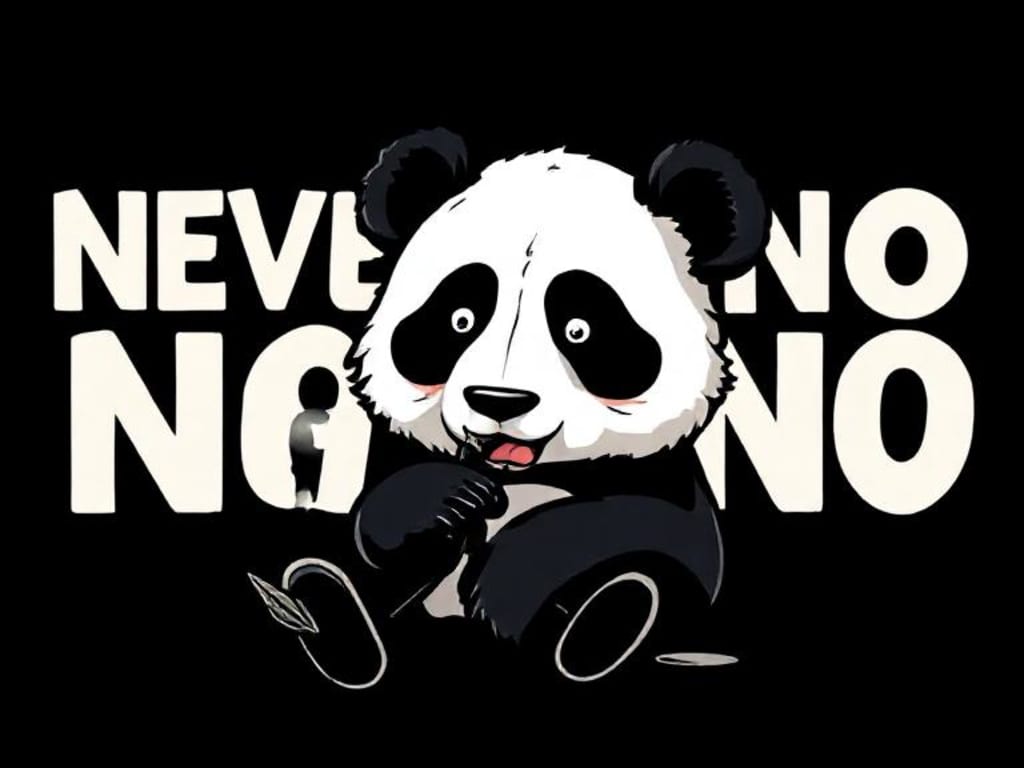
Never Say No to Panda is a viral advertising campaign launched in 2010 for Panda Cheese, a processed cheese product manufactured by the Egyptian company Arab Dairy. The series consists of three television commercials set in everyday locations—an office, a hospital, and a supermarket—where a person refuses an offer of Panda Cheese, prompting the sudden appearance of a giant, anthropomorphic panda that proceeds to wreak havoc until the cheese is accepted. Each ad concludes with the tagline "Never Say No to Panda," humorously portraying the mascot as an enforcer of irresistible dairy consumption.
The campaign was conceived by the Cairo-based agency Elephant (part of Advantage Marketing & Advertising), with creative directors and copywriters Ali Ali and Maged Nassar, and directed by Ali Ali. It originated from an idea inspired by the CEO of Arab Dairy's fondness for pandas after visiting the Berlin Zoo as well as Cadbury's drumming gorilla advertisement, leading to the unconventional concept of a cute animal turning menacing to promote the brand. Produced by The House Productions, the spots aired briefly on Egyptian television for one week before being pulled due to controversy, resulting in the dismissal of the company's entire marketing department. Despite the initial backlash, the ads quickly spread online, amassing over 500,000 YouTube views within weeks and collectively exceeding 100 million views as of 2025, inspiring thousands of memes, fan-made merchandise, and parodies worldwide. Recent discussions in 2025 underscore its ongoing cultural relevance in Egypt and beyond.
The campaign's cultural impact elevated Egyptian advertising on the global stage, earning prestigious accolades including two Grand Prix at the 2010 Dubai Lynx International Festival of Creativity, a Silver Lion in the Film category at the Cannes Lions International Festival of Creativity, and a Gold for Film at the Epica Awards. Its absurd humor and memorable mascot transformed Panda Cheese into a pop culture phenomenon, with the panda character becoming a symbol of playful coercion in marketing history.
Background
Panda Cheese Brand
Arab Dairy Products Company (Arab Dairy), an Egyptian joint-stock company established in September 1985, began production operations in 1990 following a license from the Egyptian government to manufacture dairy products. The company introduced its flagship Panda Cheese brand in 1991, initially as a range of processed triangle cheeses alongside mozzarella variants, expanding its portfolio to include white and processed cheeses known for their quality and accessibility.
Prior to 2010, Panda Cheese operated in Egypt's competitive dairy sector, which featured dominant players such as Juhayna and international brands like those from Lactalis. As one of the top 10 dairy companies in Egypt by the late 2000s and a dominant player with a popular brand, Arab Dairy maintained a strong regional presence through exports to the Middle East, Africa, and Europe, yet sought innovative campaigns to further enhance domestic awareness and market share.
Panda Cheese offers a variety of products including white cheese, processed cheese triangles, and mozzarella, catering to a wide range of consumer preferences with an emphasis on quality and heritage.
These pre-2010 dynamics positioned Panda as a leading player in the processed cheese segment, with the 2010 advertising initiative aimed at elevating its visibility amid ongoing market rivalry.
Campaign Development
The "Never Say No to Panda" campaign was conceptualized in late 2009 by the boutique agency Elephant Cairo (part of Advantage Marketing & Advertising) for Arab Dairy, the manufacturer of Panda Cheese, with the primary aim of launching during the 2010 Ramadan season to capitalize on heightened consumer activity. Founded that year by creatives Ali Ali and Maged Nassar, Elephant Cairo handled the full development, specializing in bold, humorous advertising. The timeline aligned with Ramadan's August-September window, allowing for pre-holiday production to address seasonal market dynamics in Egypt.
The concept originated from Arab Dairy CEO's fondness for pandas, inspired by a visit to the Berlin Zoo, which influenced the brand name and the idea of using a panda mascot. Strategic objectives centered on boosting brand awareness and market share amid competitive pressures on processed cheese products, using humor to foster memorability and drive sales during the festive period.[8] The campaign sought to position Panda Cheese as irresistible by leveraging unexpected scenarios that highlighted refusal's consequences, targeting urban Egyptian families and aiming for viral potential through television broadcasts. This approach countered consumer apathy by transforming a routine product into a cultural talking point, with initial planning emphasizing shareable content over traditional product features.
Key creative decisions revolved around selecting a giant panda as the enforcer mascot, drawing on the brand name and the CEO's inspiration to symbolize unyielding appeal through a stark contrast between the animal's inherent cuteness and aggressive enforcement of consumption. This choice amplified the core idea of irresistibility, where the panda intervenes in everyday refusal moments to underscore the cheese's quality-driven allure.[8] Writers Ali Ali and Maged Nassar crafted initial script outlines focused on absurd, escalating humor in refusal scenarios, such as ordinary people facing chaotic repercussions for declining the product, ensuring the narrative remained light-hearted yet pointed. Their contributions emphasized brevity and surprise, aligning with the 30-second TV format to maximize impact without delving into explicit product details.
The Commercials
Core Premise
The "Never Say No to Panda" campaign revolves around a central theme in which individuals in everyday situations are offered Panda Cheese but initially refuse it, triggering the sudden appearance of a giant anthropomorphic panda that responds with chaotic and destructive behavior until the person relents and consumes the product. This premise underscores the brand's positioning of its cheese as irresistibly high-quality, literally enforcing acceptance through the panda's aggressive interventions in mundane settings like offices, hospitals, or stores.
Recurring motifs throughout the series include the panda's intense, menacing stare directed at the refuser, followed by physical rampages such as smashing furniture or overturning objects to create escalating tension.
These actions culminate in the refuser yielding, eating the cheese, and the appearance of the campaign's tagline—"Never Say No to Panda"—delivered in Egyptian Arabic (with English subtitles in some versions), reinforcing the panda's unyielding demand.[13] Each commercial adheres to a signature structure, typically running 30 to 33 seconds, and concludes with the tagline over a shot of the product, emphasizing compliance and satisfaction.
The tone employs absurdist comedy that juxtaposes the panda's cute, cuddly appearance with elements of terror and mild violence, creating humor through the irony of a seemingly harmless mascot turning tyrannical over a simple refusal. Set against relatable Egyptian backdrops, this blend heightens the comedic effect by subverting expectations in ordinary scenarios. A key auditory element is the recurring use of Buddy Holly and The Picks' 1958 song "True Love Ways" as the soundtrack, which plays softly during the panda's stare and builds during the destruction, amplifying the ironic contrast between the romantic melody and the escalating mayhem.
Specific Advertisements
The "Never Say No to Panda" campaign consists of three primary television commercials that aired on Egyptian channels in May 2010, each centering on a refusal of Panda Cheese followed by the panda's disruptive response, set to Buddy Holly's "True Love Ways." These ads, produced in approximately 30-second formats, were primarily in Arabic with English subtitles in some online versions. Two variants of the supermarket ad exist, but all share the core settings of a supermarket, an office, and a hospital.
In the supermarket commercials, a store employee offers a free sample of Panda Cheese to a customer browsing the aisles, who declines. The panda suddenly appears, staring intensely before toppling shelves and scattering products across the floor in a chaotic rampage. One variant features a male customer politely declining due to lack of interest, while the other shows a female customer rejecting it because she has already eaten.
The office advertisement depicts a coworker offering to prepare a Panda Cheese sandwich for his colleague during a break, only for the recipient to refuse, stating he is not hungry. The panda intervenes by kicking over the refuser's chair, sending him tumbling and scattering office supplies in a comedic disruption to the workday routine.
In the hospital commercial, a nurse presents Panda Cheese to a bedridden patient as a snack, but he turns it down, explaining he lacks appetite. The panda responds by casually knocking the patient's television off its stand onto the floor, then yanking out his IV drip, resulting in a spray of blood and heightened mayhem in the ward.
Two additional commercials were produced but not aired on television: the birthday party ad, where a child guest declines Panda Cheese on cake, prompting the panda to hurl food items and initiate a messy fight among attendees; and the picnic ad, showing a mother offering her young son a piece of Panda Cheese while relaxing outdoors, but the child rejects it, leading the panda to squash the child's ball underfoot before chasing and tackling him amid the greenery. These unaired spots were later shared online, contributing to the campaign's viral extensions.
Production
Creative Team
The Never Say No to Panda campaign was created by Elephant Cairo, a boutique advertising agency founded in 2009 by Ali Ali and Maged Nassar, specializing in innovative work for the Egyptian market.As creative directors, Ali Ali and Maged Nassar also served as copywriters, developing the scripts that established the campaign's humorous premise of an irate panda enforcing cheese consumption.
Ali Ali, who directed all three commercials in his directorial debut, played a pivotal role in shaping the visual and narrative style, emphasizing a realistic yet aggressive portrayal of the panda to heighten comedic impact.[1] The production was handled by The House Productions in Egypt, with Hossam Fawzy as producer overseeing the shoot of five spots, three of which aired.
The team's collaborative process began with inspiration from Arab Dairy's CEO mentioning a zoo visit, prompting Ali Ali to question why previous Panda ads overlooked the brand's panda mascot. Facing a tight two-week deadline for the Ramadan season, Ali Ali and Maged Nassar brainstormed a single bold concept: a disruptive panda that punishes cheese refusals through absurd chaos, designed to capture Egyptian audiences' affinity for exaggerated humor during the holy month of feasting and family gatherings.[1] This approach drew on the agency's experience in crafting culturally resonant campaigns for local brands, ensuring the idea's simplicity and shareability.
Technical Aspects
The commercials in the "Never Say No to Panda" campaign were produced using a live-action filming style, employing practical effects with a costumed panda actor to portray the character's exaggerated movements and destructive antics.[1] The panda was performed by actor Ahmed Hafez Younis, with a realistic design featuring authentic texture, eyes, and nose, drawing inspiration from prior advertisements like Cadbury's Drumming Gorilla.[1] Filming took place over two days in real Egyptian locations, including Cairo supermarkets, offices, and hospitals, utilizing first-time actors selected for their intentionally awkward and unusual appearances to heighten the comedic tone.
Each advertisement adheres to a standard 30- to 33-second runtime, formatted for television broadcast in Egyptian Arabic to target local audiences during prime viewing slots. Visual effects were kept simple and practical, relying on physical props for scenes of destruction—such as smashed cars or overturned carts—combined with basic editing to amplify the humor through sudden, shocking panda interventions and a bear's hand adjusting product shots for emphasis. The production was shot on film and transferred to tape, resulting in a characteristically low-quality aesthetic that director Ali Ali later expressed interest in remastering to high definition.
Audio elements include the licensed track "True Love Ways" by Buddy Holly, selected spontaneously for its ironic contrast to the chaotic visuals and now indelibly associated with the campaign following approval from the songwriter's estate.[1] A voiceover delivers the tagline "Never Say No to Panda" in Egyptian Arabic at the conclusion of each spot, reinforcing the brand message without additional complex sound design.
The campaign was executed as a low-budget production, with director Ali Ali waiving his fees to helm the project as a novice, enabling completion within a tight two-week sign-off period in early 2010 ahead of its Ramadan release in May. This economical approach, handled by Elephant Cairo agency, prioritized creative efficiency over elaborate resources, yielding three aired commercials from five scripted ideas.
Reception and Impact
Viral Spread
The "Never Say No to Panda" commercials were first uploaded to YouTube in May 2010, with a popular compilation video following in September 2010 that quickly gained traction across the platform.[14] By late 2010, multiple uploads had amassed millions of views, driven by the ads' unexpected humor and rapid sharing on emerging social media networks. For instance, the supermarket-themed advertisement exceeded 40 million views by 2025.
Early media coverage amplified the campaign's visibility, with features highlighting its absurd appeal. AdWeek described the panda mascot's "manic-depressive" antics as a form of comedic madness in a December 2010 article, noting the vignettes' global resonance despite their Egyptian origins.[20] Similarly, ABC's Good Morning America showcased the ads as an internet sensation in a September 23, 2010, segment, emphasizing their viral potential.[14] Other outlets, including Foreign Policy and The Washington Note, covered the phenomenon in September 2010, praising the blend of cultural specificity and universal hilarity that propelled shares from the Middle East to Western audiences.
The spread accelerated through 2010-2011, fueled by social media platforms like Facebook and early Twitter, where users in the Arab world and beyond reposted clips for their shareable shock value. By October 2010, over 200 duplicate YouTube uploads existed, including a dozen surpassing 100,000 views each, while Tumblr GIFs under the "Never Say No to Panda" tag proliferated.[14] Peak popularity arrived in 2011, coinciding with widespread availability of English-subtitled versions that broadened accessibility and sparked remixes, parodies, and reaction videos, further boosting engagement metrics like shares and comments. The campaign's virality stemmed from its core absurdity—a cute panda enforcing compliance through chaos—making it highly meme-worthy and easy to disseminate without context.
Cultural Significance
The "Never Say No to Panda" campaign profoundly influenced Egyptian pop culture, becoming a household phrase synonymous with playful persuasion and frustration in everyday interactions, particularly amid economic pressures during the 2010s. In Egypt, the ads' absurd humor resonated deeply, embedding the slogan into local vernacular as a light-hearted way to coax agreement or express mock outrage, reflecting the chaotic energy of the era's internet generation. This local embedding transformed the campaign into a cultural touchstone, where references to the panda's tantrums evoke shared nostalgia and communal laughter in social settings.
Globally, the campaign transcended borders through its viral dissemination, spawning widespread memes such as "Never Say No to Panda" GIFs on platforms like Tenor and Reddit, which amplified its quirky appeal. Parodies emerged in Western media, including YouTube videos like "Kids React to Panda Cheese" that garnered millions of views, while fan recreations featured unofficial merchandise and tribute spots, including Japanese manga-inspired designs. These elements highlight the campaign's universal humor in depicting an aggressive mascot enforcing consumer choice, fostering a cult following that blurred lines between advertising and entertainment.
At its core, the series satirized consumer pressure and family dynamics within Middle Eastern contexts, portraying the panda's emotional outbursts as a hyperbolic critique of societal expectations around indulgence and refusal during familial or social gatherings. This thematic depth contributed to its enduring popularity, with nostalgia-driven posts resurfacing in the 2020s on social media, often celebrating its "unhinged" style in compilations of "cursed commercials." Long-term, the campaign has been referenced in advertising studies as a benchmark for viral success, illustrating how subversive humor can sustain cultural relevance over a decade.
Recognition
Advertising Awards
The "Never Say No to Panda" campaign achieved notable success at prestigious international advertising awards in 2010 and 2011, highlighting its innovative humor and production quality.
At the Dubai Lynx International Advertising Festival held in May 2010, the campaign secured two Grand Prix awards: one in the Film category and another in the Film Craft category for its technical execution.[23]
In June 2010, during the Cannes Lions International Festival of Creativity, it was honored with a Silver Lion in the Film category, recognizing the effectiveness of its narrative-driven spots in promoting the Panda Cheese brand.[24]
The Epica Awards, focused on creative excellence in advertising, awarded the campaign a Gold in the Film category under Dairy Products in 2010, praising its bold and memorable approach to consumer engagement.[25]
Among regional accolades in the Middle East, the campaign also received a Merit in the Consumer Television category at The One Show International Advertising Awards in 2011, further affirming its impact in the advertising landscape.
Industry Accolades
The "Never Say No to Panda" campaign received significant praise from advertising industry publications for its innovative use of humor and character-driven storytelling. In a 2010 AdWeek article, the spots were lauded for their "glorious stupidity and mayhem," highlighting the panda mascot's unexpected role in driving viral engagement through absurd, escalating antics.[20] Similarly, Shots Magazine's 2020 retrospective described the campaign as transforming a "cuddly bamboo-eater into a petty antagonist," crediting it with launching enduring memes and demonstrating the power of subversive mascot narratives in low-budget production.
The campaign's influence extends to advertising education and strategy, frequently cited in case studies on viral marketing for its success with minimal resources. For instance, analyses emphasize how the series achieved over 100 million YouTube views by leveraging shareable, humorous disruption rather than high production values, serving as a model for brands seeking organic online spread.[26] It has inspired subsequent mascot-driven efforts featuring "aggressive cute characters," such as those employing anthropomorphic animals in comedic, boundary-pushing scenarios to boost memorability and cultural penetration.
Post-launch coverage underscored its rapid ascent to internet phenomenon status, with ABC News featuring it on Good Morning America in September 2010 as a creepy panda that captivated global audiences.[14] By the mid-2020s, the ads appeared in retrospective "best ever" compilations, including Creative Bloq's 2024 list of top 2010s advertisements, recognizing their lasting impact on viral video trends. As of 2025, the campaign continues to be referenced in industry events, with director Ali Ali highlighting its legacy at the Cannes Lions Festival.
While predominantly celebrated, the campaign faced some critique for its depiction of mild violence, with observers noting the panda's retaliatory behaviors as potentially off-putting in more conservative markets.
About the Creator
HearthMen
#fiction #thrillier #stories #tragedy #suspense #lifereality


Comments
There are no comments for this story
Be the first to respond and start the conversation.