
Black Women in Fandom: Kat Monroe on One Direction, Taylor Swift, and Turning Fangirl Culture Into a Career
Black History Month Spotlight

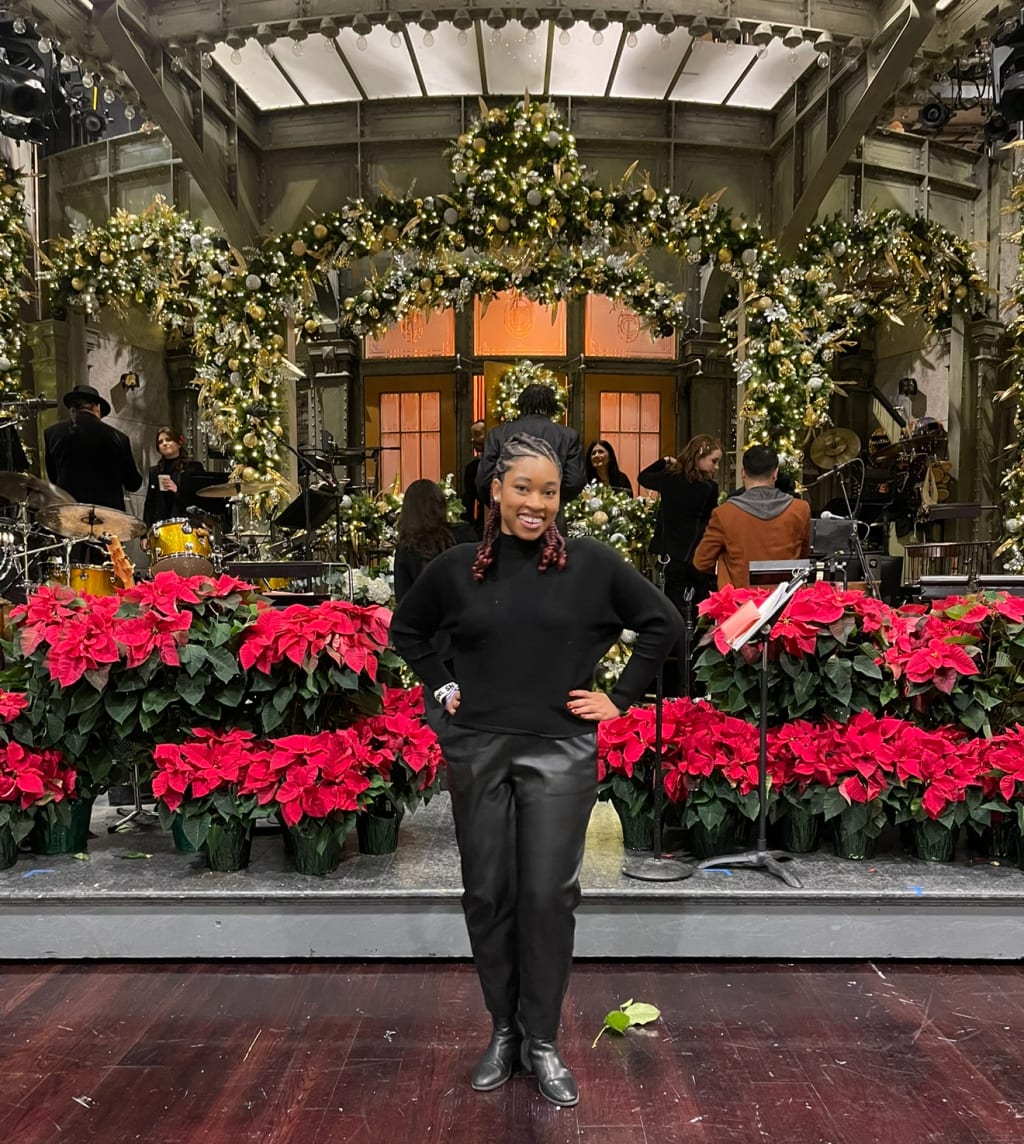
What if the very thing people told you to tone down became the foundation of your career?
In this edition of Black Women in Fandom, we spotlight Kat Monroe - journalist, NYU and Georgetown alumna, and founder of Fan Fave Media and Fangirl Forward whose lifelong love of pop culture helped shape her path in media and entertainment. From late-night television studios to nationally syndicated newsrooms, Kat never left behind the fan identity that first inspired her.
Her fandom journey started young - pulled in by a Nickelodeon loop of "What Makes You Beautiful" that she couldn't escape. That reluctant listen turned into a decade-plus connection to One Direction and its solo members, alongside deep fandom roots in Taylor Swift, Saturday Night Live, Marvel films, Broadway favorites like Moulin Rouge! The Musical and Hadestown, and even women's basketball through the WNBA.
But this story goes beyond playlists and premieres. Kat opens up about navigating fandom as a Black woman, confronting stereotypes about fangirls in professional spaces, and why she believes fandom is more than obsession, it's cultural literacy, marketing genius, and community-building in real time.
Because sometimes, being a fan isn't just a hobby. It's a blueprint.
What fandom (or fandoms) are you a part of?
Kat: I really love everything pop culture. I'm part of so many different fandom communities. In music, I'd say the biggest and most long-running fandoms I'm active in are One Direction (and their solo members) and Taylor Swift. In television, I've been really into the Saturday Night Live fandom. For film, I have my Marvel phases. Broadway is also a more niche but really fun fandom community I'm part of. My favorite shows are Moulin Rouge! and Hadestown. I've recently been getting into women's sports too - particularly basketball, so the WNBA and Unrivaled.
What TV series, film franchise, or universe pulled you into this fandom?
Kat: For my biggest fandom, One Direction, I discovered them thanks to Nickelodeon when I was in the fifth grade. For some reason, they would play the "What Makes You Beautiful" music video every single commercial break. I was honestly really annoyed by it and disliked it at first but eventually when I couldn't escape it, I gave in and ultimately fell in love.
What do you love most about being part of this fandom?
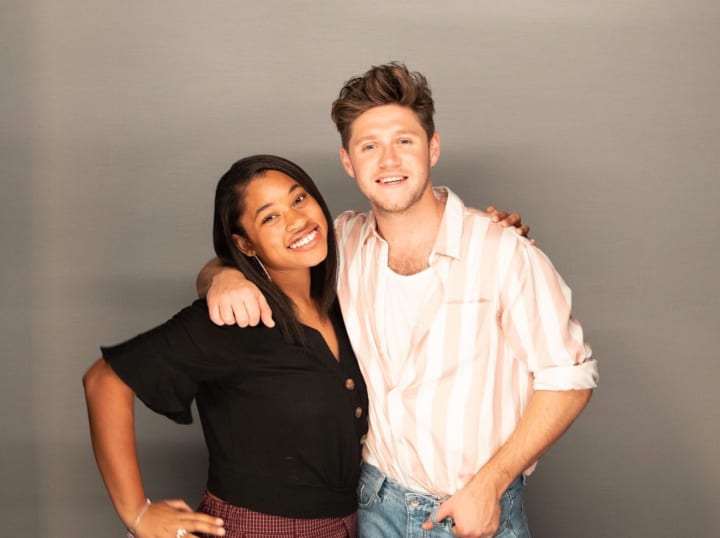
Kat: I love the shared history of it. A lot of us who are fans of the solo members of 1D have been around for over a decade. There are just so many memories and so much lore and nostalgia from when we were kids/teens that I love. With 1D, there's also this feeling that it's very "choose your own adventure." I do miss the band from time to time, especially because it was my childhood dream to see them all in concert together and I never got to. But watching a group split into individual identities as solo artists has been such a cool thing. Harry Styles makes completely different music from Niall Horan, who makes completely different music from Zayn. As a result, the fandoms feel different and the concerts have different energies, but in a lot of cases, the people still overlap. For example, I'm in a group chat with girls who all went to Styles' Harryween concerts at Madison Square Garden in 2021. Five years later, the chat is still very active. We do talk about Styles, but we also talked about Zayn's upcoming album and tour. I love how sometimes a smaller fandom can feel like part of a bigger community in ways like that.
How has your experience in fandom spaces been as a Black woman?
Kat: I can't say things have been terrible, but I do wish there was more diversity. Things were harder for me when I was younger. I grew up in a predominantly Black neighborhood and all of my friends were POC. I was the only girl who listened to artists like One Direction, Austin Mahone, and Shawn Mendes in middle school, and people teased me for always listening to "white girl music," which is so silly. I had to learn how to separate my identities, which was difficult, because in-person everyone looked like me but didn't share the same pop culture interests as me. But online, people shared the same interests, though it was hard finding others who looked like me. I can say now I have found more of that community, but it's still not uncommon for me to walk into a concert venue, especially a smaller one, and see no one in the crowd that looks like me. Luckily, I haven't experienced any instances of racism or hostility in those rooms, so I think what's important to me is that I feel welcomed, no matter who is around me.
Have you encountered any stereotypes or stigmas around fandom? If so, how do you think those can be challenged or eliminated?
Kat: I 100% have! As a fangirl who had a passion to work in the entertainment industry, I've firsthand felt a projection that we aren't capable of being serious or getting the work done. A few years ago, I was doing an interview for an internship, and the interviewer asked me who was a celebrity that I was a fan of. I told her Harry Styles, because I loved his music. But it was also a marketing internship, so I excitedly broke down his, then recent, Eroda campaign for "Adore You" and how I admired his team's intention in engaging fans with a digital scavenger hunt and creative worldbuilding. Unfortunately, she wasn't asking to learn more about my passion for communications. Her follow-up was: "We get a lot of celebrities in our studio, so if Harry Styles walked in, how would you react?" I was a bit shocked, but I explained exactly the truth, that I'd be there to get the work done, not fan-out. I ended up getting the internship, but that was the first time my internal fear - that being a fan meant I could be taken less seriously - felt validated. I thought I had to police my passion going forward.
I also think there's a stigma that fangirls are "too parasocial," obsessive, chronically online celebrity worshippers. We've lost the distinction between fan and stan, and everything is used synonymously. A lot of people, by definition, are fans, but feel the need to distance themselves from the label because of the stereotypes attached to it. Instead of admitting they're fans too, they position themselves as "not that type," and join in on criticizing fandom as a whole. When that happens, stigma reinforces itself - even though most of us are participating in it in some way. I believe fandom is a spectrum, and the vast majority of fans engage healthily and aren't causing harm. But a bad loud minority can cloud the reputation of everyone else. Fandom by definition, isn't toxic, but you do have to seek out the safe spaces.
It's difficult to completely eliminate something as deeply ingrained as stigma, but I think it's worth at least challenging now. It's a huge part of why I launched Fangirl Forward, to show how integral fangirls are to the world of pop culture, to help fans who dream of working in the industry to learn how they can do so, and to foster a more positive fandom community centered on joy over toxicity.
Fandom is actively changing things. We see it in the way studios now hire fan editors who once made trailers in their bedrooms, and in marketing campaigns that intentionally build worlds, inside jokes, and interactive drops because they understand fans are co-creators of culture. The industry may not always say it outright, but it increasingly relies on the instincts, literacy, and emotional intelligence that fandom builds. Stigma doesn't disappear overnight, but it weakens every time someone confidently claims their fandom as part of their professional story, or proves that fandom shaped the success of their campaign. The more we name the skills and articulate the value, the harder it becomes to reduce us to a stereotype.
What are some positives or meaningful moments you've experienced within fandom culture?
Kat: I was definitely on social media way too early (around age 11), but I joined at a time when there was a real monoculture energy online. When something big happened in your fandom, it would take over the Twitter trends. It made your fandom feel powerful, like you were part of something collective and strong. This was also back when celebrities were extremely active online, and everything just felt so lively. I remember "Pretty Little Liars" Tuesdays, for example, when the top trends would all be about the show, and it felt like everyone on the internet was watching together in real time. That type of shared experience was so common and felt incredible back then, but is unfortunately much rarer now.
Fandom also brought me friendships - some that started completely online and later became real-life connections, and others that began in person because we bonded over shared fandom interests. It gave me confidence during a time when I was still figuring myself out, and it even gave me direction in my career before I fully understood that's what was happening.
Why would you encourage others - especially Black women - to explore or join this fandom?
Kat: I would encourage others - especially Black women - to explore this fandom because you deserve to like what you like without feeling like you have to justify it. For a long time, I felt like loving a boy band didn't really fit with how people saw me, and that made me shrink parts of myself. But being part of the One Direction fandom taught me that joy doesn't have to make sense to anyone else to be valid. There's something really special about growing up listening to the same music artists as they evolve, and being able to share that experience with people who remember the same album drops, tour announcements, and inside jokes. Even when I didn't always see myself reflected in the crowd, I found some of the best connections I have in my life through group chats, online spaces, and long-standing friendships that are still active years later. I think Black women, like anyone else, deserve spaces where they can be loud about what they love. Plus, I've found that there are plenty of Black women in the Directioner space over the years, so you definitely won't be alone.
Follow Kat Monroe on social media: Instagram or LinkedIn
Follow Fangirl Forward newsletter and Instagram
About the Creator
Tammy Reese
Tammy is best known for her legendary interviews with Sharon Stone, Angela Bassett, Sigourney Weaver, Geena Davis, Morris Chestnut, Jeffrey Dean Morgan, Sheryl Lee Ralph, Laurence Fishburne, Omar Epps, Joseph Sikora, and more.
Keep reading
More stories from Tammy Reese and writers in Interview and other communities.
Dara Frazier's Not Every Woman Confronts the Weight Black Women Carry and the Freedom of Letting Go
Dara Frazier's Not Every Woman arrives with the kind of honesty that doesn't ask permission. It steps directly into the emotional lives of Black women. The exhaustion, the humor, the expectations, and the quiet places where we finally admit what we're tired of carrying. The film captures the conversations that happen when the world isn't watching, the ones where we confess that the invisible cape is slipping and that being "strong" has never been the whole story.
By Tammy Reese2 months ago in Interview
Part 2 Interview With Joe Patterson, Author Of Melanin Memoirs
This is my second interview with Joe Patterson. His 4th anniversary writing on Vocal will be in March 2026. He has one achievement on Vocal, The Other Foot. He has over 17,000 reads on Vocal since he started on Vocal in 2022. Joe Patterson is very creative poet and rapper. Joe is deep thinker and I feel it is reflected in his latest published book, Melanin Memoirs.
By Mariann Carroll5 days ago in Interview
Enzo Zelocchi and the Business of Cinema: Merging Performance, Production, and Brand Development
The modern film industry demands more than talent in front of the camera. Today’s entertainment landscape rewards individuals who understand not only performance, but also production strategy, financing structures, distribution models, and personal brand positioning. Enzo Zelocchi represents a category of film professionals who approach cinema not solely as an art form, but as a multifaceted business ecosystem.
By Brian Smith6 days ago in Interview
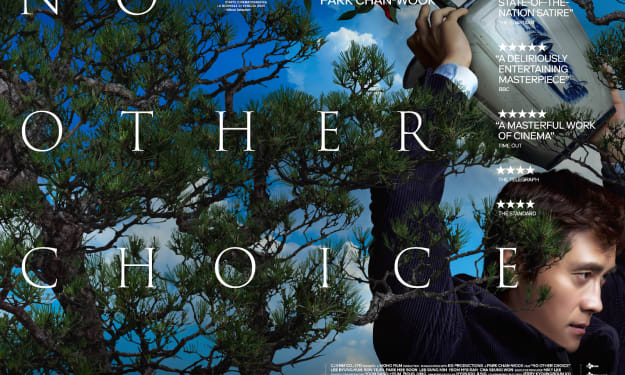
No Other Choice (2025)
It is only February, so other films may well surpass “No Other Choice”, but I think this is the best film I’ve seen so far this year. And that surprises me, because, it is a subtitled film and while I am pretentious enough to choose to watch foreign-language films, I was also very tired and that was an extra commitment from me. But more importantly, let me warn you, this film is gruesome and violent. There were times I had to turn away from the screen to avoid the worst of it (including some self-inflicted dentistry).
By Rachel Robbins5 days ago in Geeks


Comments