
AMD Stock Surges After Chip Deal With Meta. Too Bad About the Warrants.
A Landmark AI Partnership Lifts Shares—But Investor Dilution Concerns Temper the Celebration
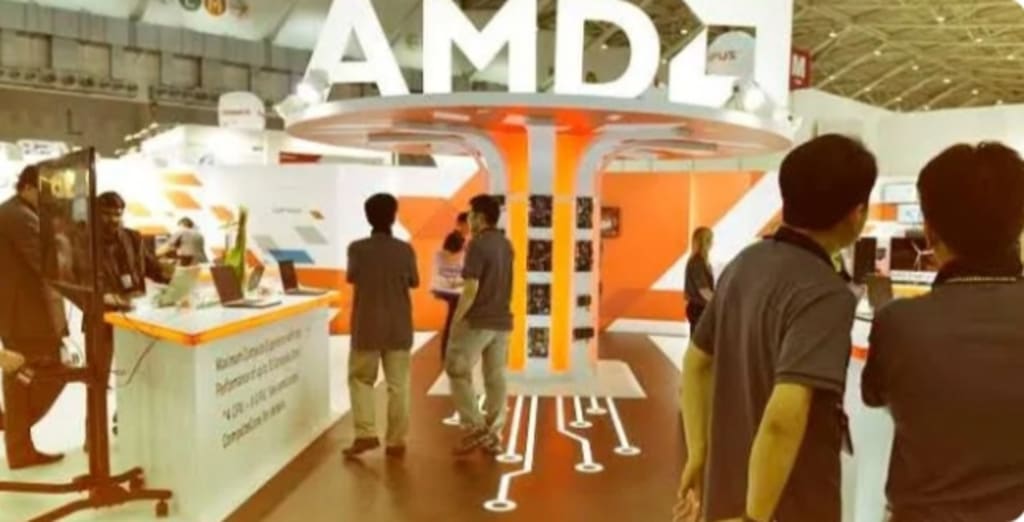
Wall Street loves a big artificial intelligence headline. So when Advanced Micro Devices (AMD) announced a major chip deal with Meta Platforms, investors responded swiftly. AMD’s stock surged as markets digested the implications: deeper penetration into AI infrastructure, validation of its data center roadmap, and a stronger competitive stance against industry heavyweight Nvidia.
But beneath the celebratory tone lies a more complicated reality. Alongside the chip supply agreement came warrants—financial instruments that could dilute existing shareholders if exercised. For long-term investors, the rally sparked both excitement and caution.
The AI Arms Race Intensifies
The global surge in artificial intelligence investment has transformed the semiconductor landscape. Data centers are racing to deploy high-performance GPUs and accelerators capable of training and running increasingly sophisticated AI models. Meta, heavily invested in generative AI and large language models, requires enormous computing power to support its ambitions.
For AMD, securing a supply agreement with Meta represents more than incremental revenue. It signals credibility. For years, Nvidia has dominated the AI accelerator market, particularly with its CUDA software ecosystem and H100 GPUs. AMD has worked aggressively to close the gap, introducing competitive hardware such as its Instinct series accelerators and expanding its ROCm software platform.
A partnership with a hyperscale technology company like Meta demonstrates that AMD’s products are gaining traction at the highest levels of cloud and AI infrastructure.
Why the Stock Surged
Investors interpreted the deal as a validation of AMD’s long-term AI strategy. Large-scale deployments by hyperscalers often lead to sustained demand, multi-year contracts, and ecosystem momentum. Even a modest increase in AI market share can translate into billions in potential revenue.
Moreover, the optics matter. In a market that often rewards perceived winners in emerging technologies, landing a high-profile client reinforces the narrative that AMD is becoming a serious challenger in AI silicon.
The announcement triggered a rally as traders priced in higher future earnings potential. AI remains one of the most powerful themes in equities, and companies positioned to supply critical infrastructure often benefit from premium valuations.
Enter the Warrants
However, the deal reportedly included warrants granted to Meta—essentially giving the company the right to purchase AMD shares at a predetermined price. Warrants are not uncommon in strategic partnerships, especially when a supplier seeks to secure long-term volume commitments.
From AMD’s perspective, issuing warrants can serve as an incentive mechanism. It aligns the customer’s interests with the supplier’s performance. If AMD succeeds and its stock appreciates, the warrants become valuable to Meta, strengthening the partnership bond.
But for existing shareholders, warrants raise a red flag: dilution.
When warrants are exercised, new shares are issued, increasing the total share count. This can reduce earnings per share (EPS), even if overall profits rise. In high-growth industries, dilution is often tolerated when it supports expansion. Still, it introduces complexity into valuation models.
Balancing Growth and Ownership
The central question for investors is whether the strategic benefits outweigh the dilution risk. If the AI chip deal results in sustained revenue growth, stronger margins, and enhanced competitive positioning, the net effect could be positive despite share issuance.
In fact, dilution tied to growth initiatives differs from dilution caused by operational weakness. When companies issue equity to cover losses, markets react negatively. When equity instruments are used to secure transformative partnerships, the calculus changes.
Nonetheless, sophisticated investors scrutinize the details: strike price, vesting conditions, total potential share issuance, and timing. The long-term impact depends on how these variables intersect with AMD’s growth trajectory.
Competitive Implications
The semiconductor industry is intensely competitive. Nvidia remains the dominant AI chip supplier, benefiting from both hardware leadership and a deeply entrenched software ecosystem. Other players, including Intel and emerging startups, are also vying for slices of the AI acceleration market.
AMD’s partnership with Meta strengthens its position in this competitive field. Large deployments create opportunities for software optimization, ecosystem development, and broader enterprise adoption. Success with one hyperscaler can influence others.
Additionally, diversified supply chains have become a priority for major tech firms. Relying on a single chip supplier introduces operational risk. By cultivating relationships with multiple vendors, companies like Meta enhance resilience. AMD stands to benefit from this strategic diversification trend.
Valuation Considerations
Following the stock surge, valuation becomes a focal point. AI enthusiasm has driven semiconductor multiples higher across the board. Investors must determine whether AMD’s projected earnings growth justifies its market capitalization, especially considering potential dilution from warrants.
Analysts typically model scenarios: base case growth, upside driven by expanded AI adoption, and downside risks tied to competition or slower deployment cycles. The inclusion of warrants complicates these projections but does not invalidate the broader growth thesis.
Market psychology also plays a role. Momentum-driven rallies can extend beyond fundamentals in the short term. Over time, however, execution determines sustainability.
Strategic Trade-Offs
From a corporate strategy standpoint, the decision to include warrants likely reflects calculated trade-offs. Securing a marquee AI customer can accelerate adoption, improve scale economics, and enhance long-term brand positioning. If the alternative were losing the contract to a competitor, the opportunity cost might have been far greater.
Companies operating in transformative technological cycles often prioritize market share over short-term dilution concerns. Establishing leadership during pivotal growth phases can create enduring advantages.
For AMD, the AI revolution represents such a phase.
The Bigger Picture
The deal underscores how central AI has become to the semiconductor narrative. Chips are no longer just components—they are foundational infrastructure for digital transformation. Companies capable of delivering high-performance, energy-efficient accelerators are positioned at the heart of this shift.
At the same time, financial engineering elements like warrants remind investors that growth rarely comes without complexity. Strategic partnerships frequently involve layered agreements designed to align incentives and manage risk.
Investor Takeaway
AMD’s stock surge following its chip deal with Meta reflects genuine strategic progress. The company has secured a high-profile customer in one of the fastest-growing segments of technology. That alone marks a meaningful achievement in its competitive evolution.
Yet the inclusion of warrants tempers the celebration. Dilution risk introduces nuance into what might otherwise be an unambiguously bullish story. Investors must weigh near-term share price enthusiasm against long-term capital structure implications.
In the end, the success of this partnership will hinge on execution. If AMD delivers competitive performance, scales production efficiently, and deepens its AI ecosystem, the benefits could outweigh the costs.
The market has cast its initial vote—with a rally. Now comes the harder part: proving that the growth story behind the surge is durable, profitable, and worth the trade-offs embedded in the fine print.
About the Creator
~ Fired ~
— Ai Intrusion ~ Are you Next ~ Is Ai Evolution after your job? — Few workplaces haven't been affected. Ai is in supermarkets, at doctors' offices, and even monitoring farms. I just can't think of anything this machine is not getting into, can you? For instance: Education ~ Law and Tech jobs will one day have a major influence or be taken over by these inanimate machines, with accuracy and vigor. From mechanics' diagnoses to a wide variety of everyday jobs, including fast food workers, with this input having the ability to cut their unnecessary work hours. I'm certain all of us have been touched by this with our short stories and colorful headings, have you? Even comments are very questionable 'Non-Robot' insertions.
By Jay Kantor24 days ago in Journal
UK Says ‘Nothing Is Off the Table’ in Response to US Tariffs
The United Kingdom has sent a clear message to Washington: when it comes to recent U.S. tariffs targeting British exports, “nothing is off the table.” This shift in tone signals a potential escalation in trade disputes between two historically close allies. With British businesses facing rising costs and uncertainty in transatlantic markets, London’s firm stance reflects growing frustration — and a willingness to defend its economic interests.
By Sajida Sikandara day ago in Journal



Comments
There are no comments for this story
Be the first to respond and start the conversation.