
Asia Stocks Fall as Rate Uncertainty, Iran Tensions Weigh; South Korea Outperforms
Markets Pause as Global Risks Take Center Stage

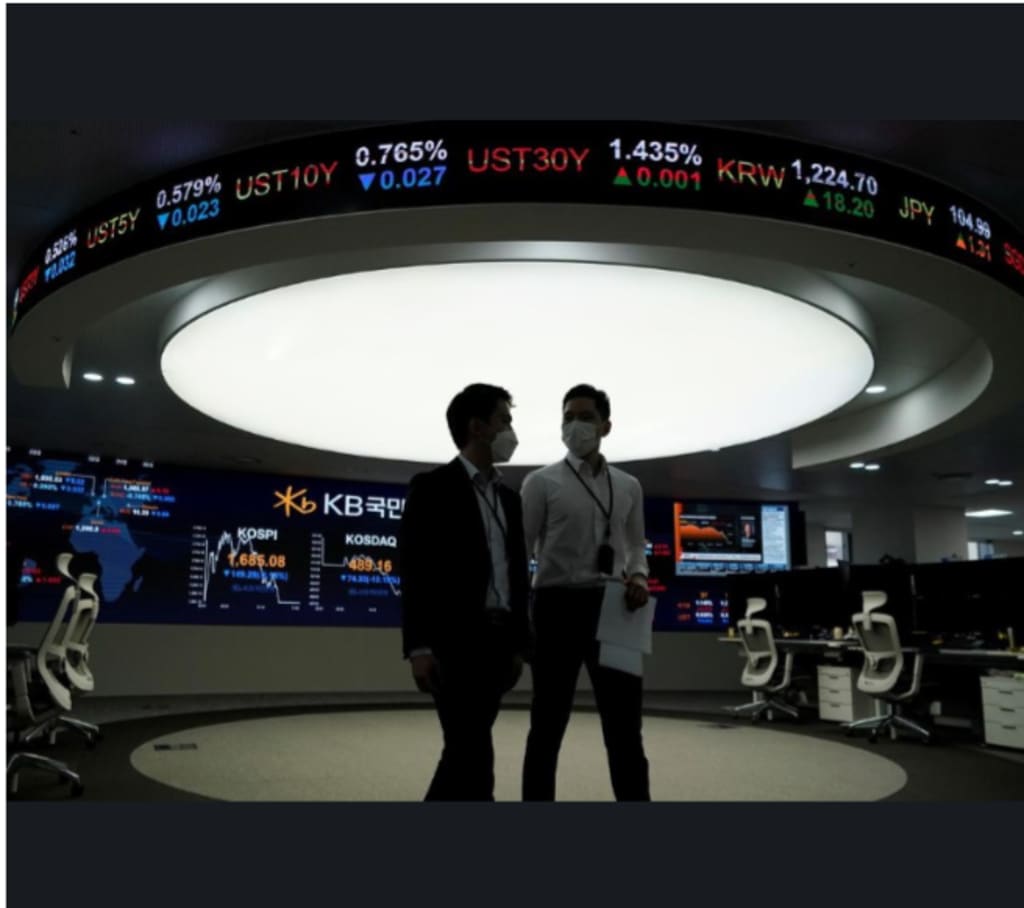
Asian stock markets slipped into negative territory as investors reacted to two powerful forces shaping global sentiment: uncertainty over future interest rate decisions and escalating tensions involving Iran. While most regional markets struggled to find direction, South Korea emerged as a rare bright spot, outperforming its peers on the back of strong technology and export-related stocks.
The mixed performance reflected a cautious mood among investors who are trying to balance geopolitical risks with economic data that could redefine monetary policy in the months ahead. With volatility rising, markets across Asia appeared reluctant to take bold positions.
Rate Uncertainty Dominates Investor Thinking
At the heart of the market’s hesitation is uncertainty about global interest rates, particularly the direction of policy in the United States. Investors are closely watching upcoming inflation and employment data for clues about whether the Federal Reserve will cut rates sooner than expected or maintain its tight stance to control inflation.
Higher interest rates typically reduce the appeal of stocks by making bonds and savings more attractive. They also increase borrowing costs for businesses, potentially slowing economic growth. This has made technology and growth stocks especially sensitive to shifts in expectations.
Asian markets, which are heavily influenced by US financial conditions, reflected this nervousness. Traders opted for safer positions, trimming exposure to riskier assets while waiting for clearer signals from central banks.
Iran Tensions Add to Global Anxiety
Geopolitical developments involving Iran added another layer of uncertainty. Rising tensions in the Middle East have raised concerns about potential disruptions to oil supply routes and global trade. Energy prices moved higher in response, benefiting some energy stocks but hurting transport and manufacturing sectors that rely on stable fuel costs.
Historically, Middle East instability has triggered risk-off behavior in global markets. Investors often move funds into safe-haven assets such as gold and government bonds during periods of heightened political tension. Recent sessions showed signs of this shift, with gold prices edging upward and bond yields softening in several countries.
For Asian economies that depend heavily on imported energy, the possibility of higher oil prices presents a significant challenge. Inflationary pressures could return just as central banks are attempting to stabilize growth.
Regional Markets Under Pressure
Major Asian indices posted modest declines as the cautious mood spread across the region. Markets in Japan, Hong Kong, and mainland China struggled amid concerns about global demand and weak domestic data. Export-driven economies were particularly sensitive to the prospect of prolonged high interest rates in the US, which could dampen consumer spending worldwide.
Technology shares, which had enjoyed a strong run earlier in the year, saw profit-taking as investors reassessed valuations. Financial stocks also faced pressure due to fluctuating bond yields and uncertainty about monetary policy paths.
Currency markets mirrored the anxiety. The US dollar strengthened slightly as investors sought stability, while several Asian currencies weakened in response to capital outflows.
South Korea Stands Out
Despite the broader regional downturn, South Korea managed to outperform. Its main stock index posted gains supported by strong performance in semiconductor and technology stocks. Optimism about global demand for chips and electronics helped lift investor confidence in the country’s export sector.
South Korea’s resilience also reflects expectations that domestic economic conditions may remain stable compared with some of its neighbors. The Bank of Korea has maintained a cautious but balanced approach to monetary policy, which has reassured markets about financial stability.
Additionally, renewed interest in artificial intelligence and high-tech manufacturing boosted shares of companies tied to innovation and global supply chains. This helped offset the broader regional weakness caused by geopolitical and rate-related concerns.
Safe Havens Gain Popularity
As equities wavered, investors showed increased interest in safe-haven assets. Gold prices rose modestly as fears over geopolitical escalation and economic uncertainty encouraged defensive strategies. Government bonds also saw increased demand, pushing yields lower in some markets.
This movement suggests that investors are prioritizing capital preservation over aggressive growth. Analysts note that when both geopolitical and monetary policy risks converge, markets often experience short-term volatility before finding a new equilibrium.
Corporate Earnings Take a Back Seat
Normally, company earnings reports would dominate market headlines. However, in the current environment, macroeconomic and geopolitical developments have overshadowed corporate fundamentals. Even strong earnings failed to lift some stocks, as broader uncertainty limited investor enthusiasm.
This highlights how interconnected today’s markets have become. Decisions made by central banks or developments in conflict zones can have more immediate impact on stock prices than business performance itself.
What Lies Ahead for Asian Markets?
Looking forward, much will depend on two critical factors: the direction of global interest rates and the evolution of tensions involving Iran. If upcoming US data suggests inflation is cooling, markets could rally on hopes of rate cuts. Conversely, stronger data may reinforce fears that borrowing costs will remain high for longer.
On the geopolitical front, any escalation could intensify risk aversion and push investors further into safe-haven assets. A de-escalation, however, would likely bring relief to energy markets and support equities.
For Asia, the outlook remains mixed. Economies with strong export sectors and stable domestic policies, such as South Korea, may continue to outperform. Others may struggle if global demand weakens and financial conditions tighten.
A Market in Waiting Mode
The current market environment can best be described as one of hesitation. Investors are caught between optimism about technological growth and anxiety about political instability and monetary tightening. This tug-of-war has left Asian stocks moving sideways or slightly lower, with few clear winners.
Until clarity emerges on interest rates and geopolitical risks, markets are likely to remain volatile. Short-term traders may continue to tread cautiously, while long-term investors will look for opportunities in fundamentally strong sectors.
Final Thoughts
Asia’s stock markets reflect a world grappling with uncertainty. Rate policy questions and Iran-related tensions have combined to weigh heavily on sentiment, pushing most markets lower. Yet South Korea’s outperformance shows that resilience is possible where strong industries and stable policies intersect.
For now, investors remain on edge, watching economic data releases and international developments closely. The next few weeks could prove decisive in shaping the region’s market direction. Until then, caution remains the dominant theme across Asian trading floors.
About the Creator
Sajida Sikandar
Hi, I’m Sajida Sikandar, a passionate blogger with 3 years of experience in crafting engaging and insightful content. Join me as I share my thoughts, stories, and ideas on a variety of topics that matter to you.
Keep reading
More stories from Sajida Sikandar and writers in Journal and other communities.
Stocks Waver With Mideast in Focus Before US Data: Markets Wrap
Global stock markets moved cautiously as investors weighed rising tensions in the Middle East against anticipation of key economic data from the United States. With geopolitical risks clouding sentiment and fresh inflation and employment figures on the horizon, traders opted for restraint rather than bold bets.
By Sajida Sikandarabout 11 hours ago in Journal




Comments
There are no comments for this story
Be the first to respond and start the conversation.