
Automated Feeding: The Next Farm Gold Rush
Inside the silent tech revolution reshaping farms, families, and food security worldwide
The Quiet Revolution in the Barn
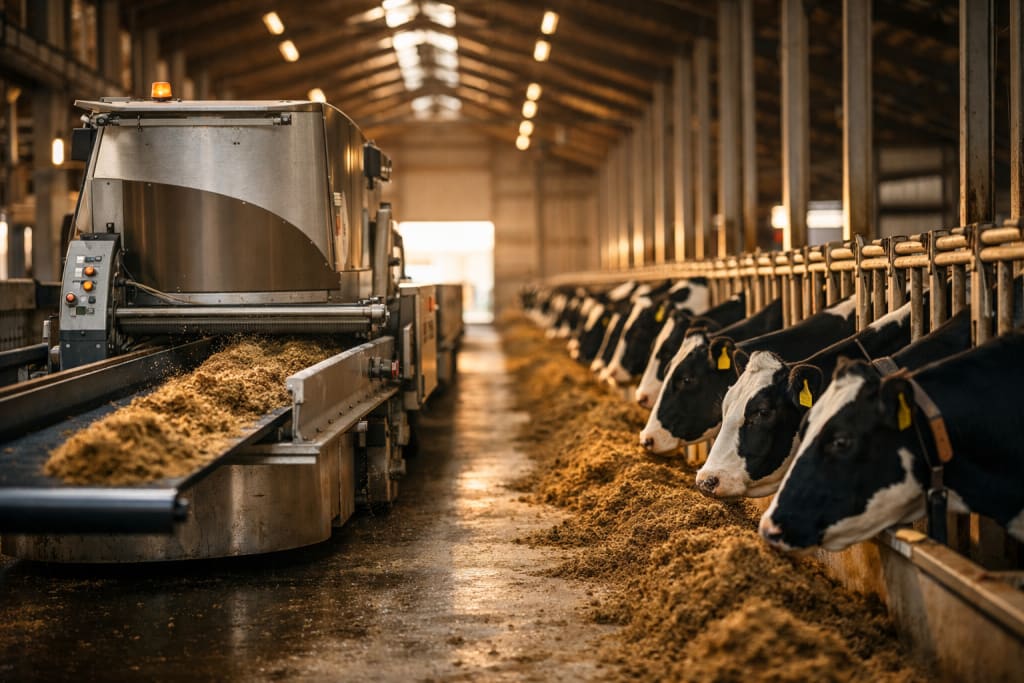
At 4:37 a.m., before the sun rises over a dairy farm, machines are already awake.
No boots crunch across gravel. No buckets clatter. Instead, a motor hums softly as a rail-mounted system glides past rows of cattle, dispensing precisely measured nutrition based on real-time data. The animals barely look up.
This isn’t science fiction. It’s happening right now — and it’s fueling a billion-dollar transformation.
According to Mordor Intelligence, the automated feeding systems market was valued at USD 6.68 billion in 2025 and is projected to grow from USD 7.22 billion in 2026 to USD 10.66 billion by 2031, registering a CAGR of 8.12% during the forecast period (2026–2031).
Behind those numbers is a bigger story: technology reshaping food production, labor, sustainability, and the future of farming itself.
The Market That’s Feeding Itself
When we talk about the automated feeding systems industry, we’re not just talking about machines. We’re talking about a shift in how humanity sustains itself.
For decades, feeding livestock meant manual labor — heavy lifting, repetitive tasks, strict schedules. But rising labor costs, workforce shortages, and the pressure to improve efficiency have pushed farms toward automation.
The automated feeding systems market size reflects this shift. At USD 6.68 billion in 2025, the industry has moved beyond experimentation. It’s scaling.
And the automated feeding systems market growth trajectory — reaching USD 10.66 billion by 2031 — signals something deeper:
Precision nutrition is becoming standard
Farms are embracing data-driven operations
Sustainability is no longer optional
Efficiency equals survival
Why the Growth?
The automated feeding systems market trends point toward several drivers:
Labor shortages: Fewer people entering agricultural work
- Operational efficiency: Reduced feed waste and optimized schedules
- Animal health monitoring: Integration with digital farm management systems
- Sustainability pressures: Better feed conversion ratios lower environmental impact
The market isn’t growing because it’s trendy. It’s growing because farms must evolve — or fall behind.
Zoom out for a moment.
Global food demand continues to rise. Urban populations expand. Climate conditions grow less predictable. Efficiency isn’t just about profit anymore — it’s about resilience.
The automated feeding systems market forecast suggests steady expansion through 2031, but behind that forecast lies a larger truth: automation helps stabilize food supply chains.
Here’s how:
- Consistency: Automated systems feed livestock at precise intervals, reducing stress and boosting productivity.
- Data optimization: Nutritional formulas adjust based on weight, production stage, and health indicators.
- Waste reduction: Measured dispensing minimizes overfeeding and resource loss.
Every percentage gain in feed efficiency has ripple effects across milk, meat, and egg production.
And that’s where the automated feeding systems market share becomes important. As adoption increases across dairy, poultry, and swine farms, the industry’s footprint expands into both developed and emerging agricultural economies.
Small and mid-sized farms, once hesitant, are beginning to explore scalable solutions. Automation is no longer exclusive to mega-farms. Modular systems make entry more accessible.
The Human Story Behind Automation
There’s a common fear: machines replace people.
But walk into a modern automated farm, and you’ll notice something different.
Farmers aren’t disappearing. They’re evolving.
Instead of spending hours manually distributing feed, they’re:
- Monitoring analytics dashboards
- Adjusting feeding algorithms
- Tracking herd health trends
- Making strategic decisions
The work shifts from physical strain to data management.
In many regions, younger generations are more willing to enter agriculture when technology is part of the equation. Automation transforms farming from backbreaking labor into a technologically sophisticated profession.
That cultural shift matters.
The automated feeding systems industry isn’t just installing hardware. It’s redefining what it means to work in agriculture in the 21st century.
Economics of Efficiency: Why the Numbers Matter
Let’s bring it back to the core data.
2025 valuation: USD 6.68 billion
2026 estimate: USD 7.22 billion
2031 projection: USD 10.66 billion
CAGR (2026–2031): 8.12%
Those figures from Mordor Intelligence show steady, sustainable expansion — not a speculative bubble.
An 8.12% CAGR indicates confidence, adoption, and long-term viability.
The growth of the automated feeding systems market mirrors broader agricultural digitization. Farms increasingly integrate:
- IoT sensors
- Predictive analytics
- Automated cleaning systems
- Climate-controlled housing
Feeding automation becomes one piece of a larger smart-farm ecosystem.
And as farms modernize, the automated feeding systems market share expands accordingly.
This isn’t a niche trend. It’s structural transformation.
What the Future Barn Looks Like
Imagine visiting a farm in 2031.
You won’t see chaotic feeding routines or unpredictable schedules. Instead, you’ll see:
- Centralized control panels
- Self-moving feed dispensers
- Data-driven feeding patterns
- Optimized nutritional blending
The automated feeding systems market forecast suggests continued expansion because global agriculture cannot afford inefficiency.
As climate variability intensifies, feed costs fluctuate. Precision becomes insurance.
The most compelling part? This technology doesn’t eliminate farmers — it empowers them.
Automation reduces burnout. It increases productivity. It enhances predictability.
In a world obsessed with AI in offices and robotics in factories, agriculture quietly advances in parallel.
Why This Story Matters to Everyone
You may never step inside a dairy barn. You might not own livestock. But you eat.
Every grocery shelf, every glass of milk, every carton of eggs connects back to systems like these.
The expansion of the automated feeding systems market size influences:
- Food prices
- Supply chain stability
- Environmental efficiency
- Rural economic resilience
This isn’t just an industry report statistic.
It’s the foundation of how billions are fed.
Dive Deeper
For a comprehensive analysis of market segmentation, regional outlook, and future projections, explore the full report on the automated feeding systems market by Mordor Intelligence.
The Bigger Question
Automation is reshaping farms just as dramatically as it’s reshaping cities.
But here’s the question that lingers:
If machines can feed the animals that feed us — what other “invisible” systems are already transforming your daily life without you even noticing?
Let’s talk in the comments. 👇
About the Creator
Keep reading
More stories from Andrew Hamilton and writers in Journal and other communities.
Who Really Gets the Credit? The $5.17B Shift
The Sale That No One Truly Owned The customer didn’t convert because of one ad. She saw a sponsored Instagram post on Monday. Read a blog on Wednesday. Watched a product demo on Friday. Clicked a retargeting ad the following week. Then finally searched the brand name and purchased.
By Andrew Hamiltona day ago in Journal
The Hidden Costs of Starting a Rehab Center You Should Prepare For
Introduction Launching a rehabilitation center is often framed as a mission-driven endeavor, yet beneath the altruistic surface lies a dense lattice of concealed expenses. These costs rarely appear in initial projections but exert persistent financial pressure over time. Understanding these fiscal undercurrents is essential for sustainable planning and prudent capitalization. From regulatory intricacies to human capital volatility, the true price of entry extends far beyond bricks and mortar.
By Fida Hassain4 days ago in Journal




Comments
There are no comments for this story
Be the first to respond and start the conversation.