
Chinese Shares Close Lower on Monday
Mainland markets retreat as investor caution weighs on equities.
Introduction
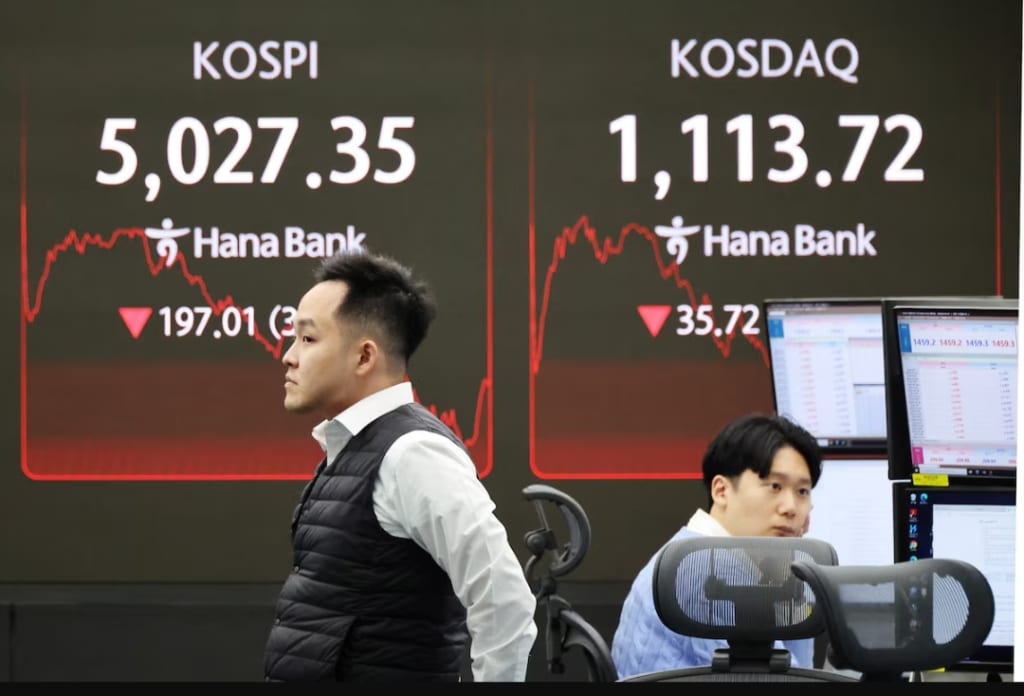
Chinese stock markets ended lower on Monday, extending recent weakness as investors turned cautious amid global market volatility and lingering economic concerns. Selling pressure was seen across major indexes, reflecting a broader risk-off mood that has affected Asian markets in recent sessions.
The decline highlights ongoing uncertainty surrounding China’s economic outlook, corporate earnings expectations, and global financial conditions. While long-term growth prospects remain intact for many investors, short-term sentiment continues to be fragile.
Major Indexes End in the Red
On Monday, all key mainland benchmarks closed lower:
The Shanghai Composite Index recorded notable losses, weighed down by broad-based selling.
The Shenzhen Component Index underperformed, reflecting pressure on industrial and growth-oriented stocks.
The ChiNext Index, which tracks smaller and technology-focused firms, also fell as investors moved away from higher-risk assets.
Trading activity remained active but showed signs of caution, with many investors choosing to reduce exposure rather than add new positions.
Sectors Under Pressure
The decline was widespread, though some sectors were hit harder than others.
Commodities and industrial stocks faced strong selling pressure, mirroring weakness in global raw material prices. Companies linked to metals, energy, and heavy manufacturing struggled as investors reassessed demand outlooks.
Technology and innovation shares also declined, with growth stocks particularly vulnerable during periods of uncertainty. Higher valuations and sensitivity to interest rate expectations made these stocks more susceptible to pullbacks.
Meanwhile, defensive sectors such as consumer staples and utilities showed relative resilience, with some stocks managing to limit losses or post modest gains.
Key Factors Behind the Market Decline
Several factors contributed to Monday’s lower close:
1. Global Market Volatility
Recent sharp movements in commodities, currencies, and precious metals have unsettled investors worldwide. Such volatility often leads to reduced risk appetite, particularly in equity markets.
2. Economic Growth Concerns
Mixed economic indicators have raised questions about the pace of China’s recovery. While some data points show stabilization, others suggest continued pressure on manufacturing and domestic demand.
3. Profit-Taking
After earlier gains in certain sectors, investors opted to lock in profits. This behavior is common during uncertain market phases and can accelerate declines when sentiment shifts.
Investor Sentiment Turns Cautious
Market psychology played a significant role in Monday’s session. Rather than reacting to a single event, investors appeared influenced by the accumulation of global and domestic uncertainties.
Many traders adopted a wait-and-see approach, preferring to preserve capital until clearer signals emerge regarding policy support, earnings trends, and economic momentum.
This cautious stance resulted in broad selling, even in stocks with relatively stable fundamentals.
What This Means for Investors
The latest pullback serves as a reminder that Chinese equities remain sensitive to both global developments and domestic signals. For investors, several considerations stand out:
Volatility may persist in the near term as markets react to economic data and policy expectations.
Sector rotation is likely, with defensive stocks attracting interest during uncertain periods.
Long-term investors may view pullbacks as opportunities, provided fundamentals remain sound.
Risk management and diversification remain key strategies during such market conditions.
Policy Expectations in Focus
Investors are also closely watching for signals from policymakers. Measures aimed at supporting growth, boosting confidence, or stabilizing key industries could help restore market sentiment.
Historically, Chinese markets have responded positively to clear policy guidance. Any indication of fiscal stimulus, regulatory easing, or targeted support could influence the direction of equities in coming sessions.
Outlook for Chinese Markets
While Monday’s decline reflects short-term caution, many analysts believe that Chinese equities still hold medium- to long-term potential. The country’s large domestic market, industrial base, and innovation capacity remain important drivers of growth.
However, near-term performance is likely to depend on:
Economic data releases
Corporate earnings results
Global financial market stability
Policy clarity and investor confidence
Until these factors align more positively, markets may continue to experience uneven trading.
Conclusion
Chinese shares closed lower on Monday as broad selling pressure, cautious investor sentiment, and global market volatility weighed on equities. Losses across major indexes underscored the fragile mood prevailing in markets, even as defensive sectors showed relative strength.
While the pullback reflects short-term uncertainty, it does not necessarily signal a deeper downturn. As investors monitor economic signals and policy developments, Chinese markets remain positioned between caution and opportunity in an evolving global landscape.
About the Creator
When Motivation Becomes a Turning Point
Why the Right Words Matter in Difficult Seasons Personal challenges often arrive quietly but leave a deep impact. Emotional exhaustion, career uncertainty, or personal loss can disrupt stability and erode confidence over time. In these moments, people are rarely searching for quick fixes. What they need most is reassurance, clarity, and a sense that forward movement is still possible.
By Dr. Stephen Swisher 4 days ago in Journal



Comments
There are no comments for this story
Be the first to respond and start the conversation.