
Data Center Switches: The Hidden Engine of the Internet
How data center switches quietly power AI, cloud growth, and the digital economy
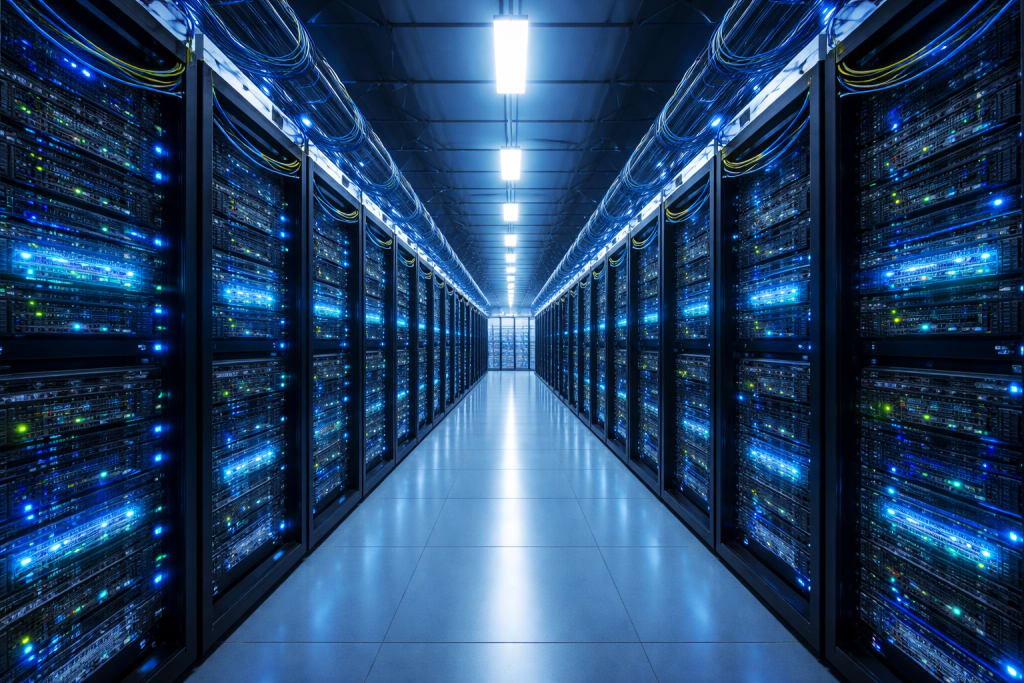
At 3 a.m., when cities sleep and screens glow quietly in dark rooms, something extraordinary is happening beneath the surface of the internet. Trillions of data packets are racing through invisible highways, switching directions in milliseconds, never colliding, never slowing. You don’t see it. You don’t hear it. But without it, the digital world would freeze.
This silent choreography is powered by data center switches—the connective tissue of the modern internet. As AI models grow hungrier, cloud platforms expand, and streaming becomes second nature, these switches are no longer background hardware. They are fast becoming strategic infrastructure, quietly shaping how the digital future scales.
Why Data Center Switches Suddenly Matter More Than Ever
A decade ago, data centers were mostly about storage and servers. Today, they’re about movement—how fast, how reliably, and how efficiently data flows. Every AI inference, every cloud backup, every financial transaction depends on split-second switching decisions.
This shift explains the accelerating momentum in the data center switches market. According to Mordor Intelligence, the data center market was valued at USD 17.93 billion in 2025 and is estimated to grow from USD 19.37 billion in 2026 to USD 28.53 billion by 2031, registering a CAGR of 8.05% during 2026–2031. That growth isn’t hype-driven; it reflects a structural change in how digital infrastructure is designed and prioritized.
The data center switches market size is expanding because networks are no longer peripheral—they are central. As workloads become east-west heavy (server-to-server traffic within data centers), switching performance directly determines user experience, latency, and cost efficiency.
From hyperscale cloud providers to enterprise data centers, switching capacity is now a competitive differentiator, not just a line item in an IT budget.
The Infrastructure Shift Reshaping the data center switches industry
Modern data centers look very different from their predecessors. Gone are rigid, hierarchical network architectures. In their place are flatter, scalable designs optimized for massive internal data movement.
This evolution is redefining the data center switches industry in three important ways:
- Higher port density and bandwidth needs: AI training clusters and cloud-native applications demand rapid data exchange across thousands of nodes.
- Operational efficiency over raw hardware: Switches are evaluated not just on speed, but on power consumption, automation compatibility, and long-term scalability.
- Strategic role in uptime and resilience: A single switching failure can ripple across services, making reliability mission-critical.
These forces are shaping the data center switches market trends, where buyers increasingly prioritize architectures that can scale smoothly without constant redesign. The result is a market focused less on incremental upgrades and more on future-ready infrastructure.
As a consequence, the data center switches market share landscape is becoming more strategic. Vendors aren’t just competing on specifications—they’re competing on ecosystem fit, deployment flexibility, and alignment with long-term data center roadmaps.
The Economics Behind data center switches market growth
Behind every market chart is a business reality. In this case, the reality is that data traffic is growing faster than almost any other digital metric—and networks must keep up.
The projected data center switches market growth reflects three intertwined pressures:
- Cloud expansion: Enterprises continue migrating workloads, increasing internal traffic density.
- AI and analytics: These workloads generate intense, continuous data exchange, pushing switches to their limits.
- Always-on digital services: Downtime is no longer acceptable; networks must be built for constant availability.
These factors explain why the data center switches market forecast shows sustained expansion rather than short-term spikes. The market’s CAGR of 8.05% signals steady, infrastructure-led growth—not cyclical demand.
Importantly, this growth is evergreen. As long as data volumes rise and digital services deepen, switching infrastructure remains a foundational requirement rather than an optional upgrade.
What the data center switches market really tells us about the future
Markets often act as mirrors. The trajectory of the data center switches industry reflects a broader truth: the future of technology isn’t just about smarter software—it’s about stronger, faster connections.
When we talk about cloud computing, AI, or digital transformation, we rarely talk about switches. Yet they quietly enable every promise those technologies make. Their expanding market size, evolving market trends, and resilient market growth point to a future where network intelligence becomes as important as compute power itself.
For readers tracking infrastructure, technology policy, or digital equity, this market also raises bigger questions. Who controls the backbone of the internet? How do scaling decisions today affect resilience tomorrow? And how prepared are data centers to support the next decade of digital demand?
Final Thought
The next time a video loads instantly or an AI response appears without delay, remember the quiet hardware making it possible. In a world obsessed with front-end innovation, data center switches remain the unsung force holding everything together.
Do you think network infrastructure gets enough attention compared to AI and cloud software—or is it still the most underestimated layer of the digital economy?
About the Creator
Keep reading
More stories from Andrew Hamilton and writers in Journal and other communities.
Is Adaptive Learning the Future of Education - or Its Reckoning?
The student stares at the screen, not bored—focused. The lesson isn’t moving too fast or dragging behind. It’s adjusting. Every click, pause, and wrong answer quietly reshapes what comes next. No raised hands. No red pen corrections. Just a learning system that seems to know.
By Andrew Hamilton3 days ago in Journal
~ Fired ~
— Ai Intrusion ~ Are you Next ~ Is Ai Evolution after your job? — Few workplaces haven't been affected. Ai is in supermarkets, at doctors' offices, and even monitoring farms. I just can't think of anything this machine is not getting into, can you? For instance: Education ~ Law and Tech jobs will one day have a major influence or be taken over by these inanimate machines, with accuracy and vigor. From mechanics' diagnoses to a wide variety of everyday jobs, including fast food workers, with this input having the ability to cut their unnecessary work hours. I'm certain all of us have been touched by this with our short stories and colorful headings, have you? Even comments are very questionable 'Non-Robot' insertions.
By Jay Kantor8 days ago in Journal




Comments
There are no comments for this story
Be the first to respond and start the conversation.