
Dr. Ioan Răzvan Șuteu: Romanian Veterinarians Rescue Injured and Abandoned Animals Across Wartime Ukraine
How do veterinarians rescue, treat, and rehome injured and abandoned animals across wartime Ukraine?

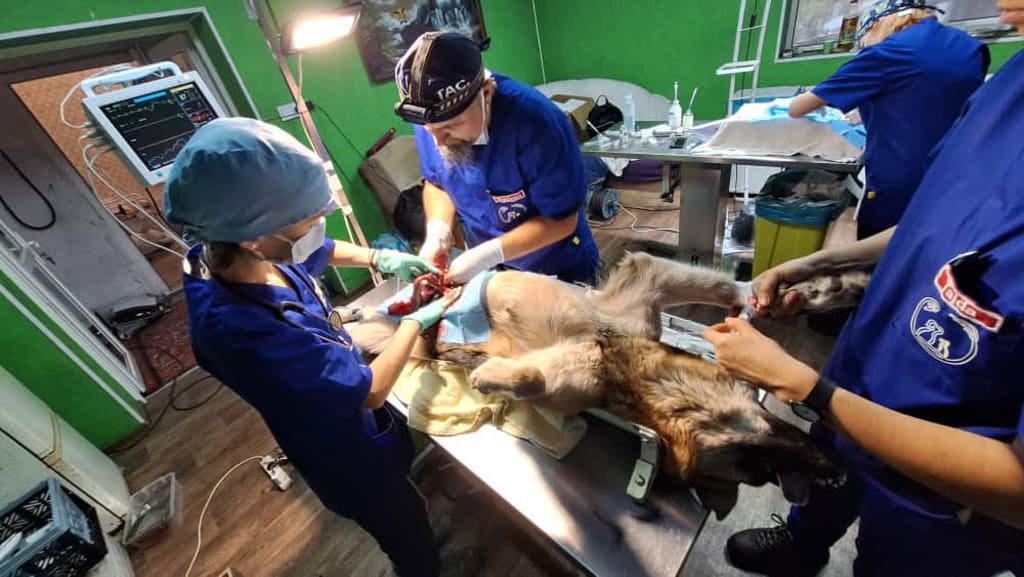
Dr. Ioan Răzvan Șuteu is a Romanian veterinary surgeon and founder of the Spay and Neuter for Hope Mobile Clinic. Since the full-scale invasion began in 2022, he has supported animals affected by the war in Ukraine, including early work at the Romania–Ukraine border, preparing documents so families could cross with pets. He joins periodic campaigns in multiple Ukrainian cities, operating on hundreds of animals. His primary focus is controlling stray dog and cat populations through spaying and neutering, while also treating war-related injuries. He collaborates with international networks, including World Wide Vets, and independent partners in the field on an ongoing basis.
Scott Douglas Jacobsen speaks with Dr. Ioan Răzvan Șuteu about the RoUa campaign and veterinary work in wartime Ukraine. Șuteu describes large-scale abandonment of animals during evacuations, injuries from gunfire and bombardment, and chronic harm from starvation and missing veterinary care. He explains how sedatives, tranquillizers, and gentle handling help hypervigilant animals, and he notes compassion fatigue among veterinarians, worsened by war and euthanasia decisions. He lists scarce emergency supplies, argues cash donations are often most useful, recalls border paperwork in 2022, and emphasizes coordination through World Wide Vets and independent partners supporting dogs and cats.
Scott Douglas Jacobsen: Let’s begin with the broader picture. How significant is the issue of stray, lost, or injured animals in wartime Ukraine? How serious is the problem?
Dr. Ioan Răzvan Șuteu: Animals also suffer the consequences of war. They may be abandoned, face food shortages, and receive less attention because people are focused on immediate human survival. In that sense, they can be among the first to suffer.
Based on what I have seen and what has been widely reported since the start of the full-scale invasion, large numbers of animals were left behind—especially early in the war, when many Ukrainians fled their homes. Some people could not take their animals with them due to practical difficulties with evacuation and cross-border travel, and some animals were left near border crossings.
In wartime, animals suffer too. As humans, we should do everything possible to reduce that suffering. That is part of what defines us.
Jacobsen: What common injuries do animals sustain in war?
Șuteu: Many are similar to human injuries. Animals can be shot, injured in shelling or bombardments, or harmed by other weapons and explosives. Even when they survive, many face longer-term suffering: starvation, lack of basic veterinary care, and untreated conditions that worsen because there is no one to care for them.
Many animals are still left behind without adequate food or care. I am not involved in animal rescue operations. I am a surgeon working to help keep the stray population under control through spaying and neutering—mostly dogs and cats. That is the main part of my work in Ukraine. I have also treated animals injured by the war, but my primary goal is to reduce the number of stray animals.
Jacobsen: How many animals die while you are caring for them?
Șuteu: I am not proud of it, but I have had very few casualties. I can count them on one hand since I have been working in Ukraine. I have not been there continuously; I travel from Romania for weekly campaigns. During that time, I have operated on hundreds of animals. I have not encountered major complications. The greatest risks arise with animals that are too weak or already seriously ill, as they are less able to tolerate surgery. Fortunately, I have not faced significant losses so far.
Jacobsen: When human beings experience psychological trauma, they can receive talk therapy or psychotherapy. Animals do not share language with us in that way. How do you work with animals that show hypervigilance or anxiety due to war?
Șuteu: You can recognize trauma in animals through their behaviour. Their eyes, posture, and body language reveal fear and stress. Addressing that is an important part of our work. Fortunately, veterinary medicine provides effective sedatives and tranquillizers that help animals remain calm and tolerate necessary procedures safely.
The most challenging part is gaining their trust. Humans understand they are suffering and often seek help. Animals do not interpret their experience that way. They may perceive anyone approaching them as a threat. For that reason, we must approach them with patience, calmness, and care, ensuring that treatment is carried out as gently and safely as possible.
Jacobsen: During war, medical workers who treat people—nurses, physicians, surgeons—often experience overwork, trauma, and burnout. Do veterinarians in wartime experience similar effects?
Șuteu: Veterinarians do not need to be in a war zone to experience psychological strain. Those deeply involved in animal care and committed to making a difference often experience professional fatigue and compassion fatigue. War intensifies that burden, making the work even more difficult.
Euthanasia, when necessary, is already emotionally taxing. Working in a war context adds another layer of stress. However, veterinarians who choose to work on the front line usually do so knowingly. Experience helps, and over time, the demands of the work become something you learn to carry. Even outside wartime, fatigue remains a serious challenge in the profession.
Jacobsen: On a personal note, why did you first enter the field of veterinary science and medicine, and why did you apply it to humanitarian work for animals during a war?
Șuteu: It is a difficult question for me. Many of my colleagues answer easily: they say they love animals and want to do good. For me, it is more complex.
I feel fulfilled being a veterinarian. I value the sense of purpose and the satisfaction of seeing the results of my work. Growing up in Romania, I witnessed many cases of animal mistreatment and abuse. These problems still exist. I knew I wanted to contribute to change—not only for animals, but for the relationship between animals and people.
I became involved in rescue work and shelter medicine in Romania. I also operate a mobile clinic, travelling from town to town with my own projects, helping low-income communities and addressing the needs of stray animals. I chose veterinary medicine because I want to serve as a bridge between people and animals, helping create a healthier relationship between them.
Jacobsen: What supplies are most needed for veterinarians treating animals in wartime, particularly those that are often in short supply? If people want to donate, what should they focus on?
Șuteu: The most critical supplies are those used in emergency medicine. These include gauze, intravenous cannulas, IV lines, fluids for fluid therapy, syringes, and other basic consumables required for stabilization and surgery. In many cases, the same types of emergency materials used in human medicine are also essential in veterinary care.
However, material donations are not always the most effective form of support. While we appreciate all goodwill, donated items are sometimes not what is urgently needed. Financial donations are generally more useful because they allow us to purchase exactly the supplies required at a given time and in the appropriate quantities.
Jacobsen: What are the most common animals that require assistance during the war?
Șuteu: I can speak primarily from my own experience in Ukraine. The majority of cases involve dogs and cats, as they are the animals most affected when people lose their homes or are forced to flee.
We have also assisted other animals, including donkeys, horses, swans, and sheep. In general, we treat any animal that remains with its owner or is brought to us for care.
Jacobsen: Do many veterinarians working during the war operate independently, or do they coordinate with larger networks?
Șuteu: Most veterinarians working in this context are connected to networks. Coordination is important because it enables people to identify critical areas that need help and mobilize resources efficiently. In my case, I was asked to assist by World Wide Vets, a large international veterinary organization, and I work under their umbrella during my missions. I also receive support from individual donors and independent associations. Veterinarians like me tend to be part of a broader community, and when assistance is needed, and we can go, we respond.
Jacobsen: How long have you been doing veterinary work related to the war?
Șuteu: I have been involved since the start of the full-scale invasion in 2022. In the early days, I worked at the border, helping families complete the necessary documentation so they could transport their animals from Ukraine into Romania.
Since then, I have participated in campaigns in various Ukrainian cities two or three times per year. I operate my own mobile clinic and have travelled with it to Ukraine. I have worked alongside colleagues from Scotland, Slovenia, and the United States. We are now part of an active international community supporting animals affected by the war.
Jacobsen: Any final thoughts based on today’s conversation?
Șuteu: Those interested in following my work can visit the Facebook page “Spay and Neuter for Hope Mobile Clinic.” My most recent campaign in Ukraine was conducted under the name ROUA, representing Romania and Ukraine, which also has a Facebook page documenting our activities. Information about upcoming missions can also be found through World Wide Vets.
Jacobsen: That concludes our discussion for now. Thank you for your time.
Șuteu: Thank you.
Scott Douglas Jacobsen is a blogger on Vocal with over 120 posts on the platform. He is the publisher of In-Sight Publishing (ISBN: 978–1–0692343) and the Editor-in-Chief of In-Sight: Interviews (ISSN: 2369–6885). He writes for The Good Men Project, International Policy Digest (ISSN: 2332–9416), The Humanist (Print: ISSN 0018–7399; Online: ISSN 2163–3576), Basic Income Earth Network (UK Registered Charity 1177066), A Further Inquiry, The Washington Outsider, The Rabble, and The Washington Outsider, and other media. He is a member in good standing of numerous media associations/organizations.
Image Credit: Dr. Ioan Răzvan Șuteu.
About the Creator
Scott Douglas Jacobsen
Scott Douglas Jacobsen is the publisher of In-Sight Publishing (ISBN: 978-1-0692343) and Editor-in-Chief of In-Sight: Interviews (ISSN: 2369-6885). He is a member in good standing of numerous media organizations.
Keep reading
More stories from Scott Douglas Jacobsen and writers in Journal and other communities.
Serhii Gromov, Ukraine’s Peace Museum in Kyiv: UN Peacekeeping History, and the Žepa Legacy Amid War
By Scott Douglas Jacobsen and Milana Olefirenko Bennett (Translator English-Ukrainian) Ukraine’s Peace Museum in Kyiv, founded by former UN peacekeeper Serhii Gromov, documents the country’s contributions to international peacekeeping missions since the early 1990s. Through personal archives, mission artifacts, flags, and correspondence, the museum highlights deployments in the former Yugoslavia, Sierra Leone, Liberia, Angola, and beyond. A central narrative focuses on the 1995 Žepa operation, which Ukrainian accounts credit with saving thousands of civilians. Operating during Russia’s ongoing invasion, the museum presents a paradox: a peace institution functioning in wartime. Its mission is both archival and aspirational, asserting Ukraine’s identity as a peace-contributing nation while enduring active conflict.
By Scott Douglas Jacobsen4 days ago in Journal
The Cave Part 6
If you have ever heard a tale about yourself that you cannot remember and doubtless think is made up, you will know how I felt when Tharkin related all that the eagle had seen of me before my memories were scattered. Of far distances and traveling companions that I did not recall, camping out under the stars and making our way to the mountains with deliberate purpose. The great bird had lost contact with my party once we entered the forests, and the seven other members were not seen again by him or his brethren since.
By Jamye Sharp5 days ago in Chapters


Comments
There are no comments for this story
Be the first to respond and start the conversation.