
Eight Muslim Nations, Including Pakistan, Condemn Israeli Move to Declare West Bank Land as State Property
Joint statement raises legal and diplomatic concerns over land designation in occupied territory

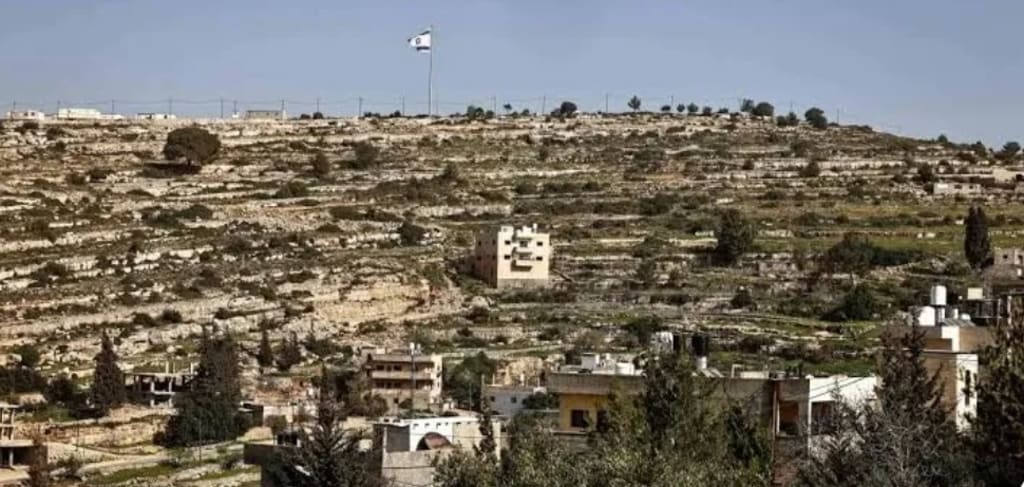
Regional Response to West Bank Land Designation
Eight Muslim-majority countries, including Pakistan, have issued a joint condemnation of Israel’s decision to declare parts of land in the West Bank as “state property.” The move has drawn criticism from governments across the region, who argue that it violates international law and undermines efforts toward a peaceful resolution of the Israeli-Palestinian conflict.
The statement reflects growing concern among several nations about developments in the occupied Palestinian territories. The governments involved described the decision as a unilateral action that could further destabilize an already tense region.
The Israeli Decision
Israeli authorities recently announced that a significant area of land in the West Bank would be classified as state property. According to Israeli officials, such designations are made under existing administrative procedures and legal frameworks used in the territory.
However, critics argue that these classifications often pave the way for settlement expansion. The West Bank, captured by Israel during the 1967 Six-Day War, remains at the center of the longstanding conflict between Israelis and Palestinians. Most of the international community considers the territory occupied land.
The declaration of land as state property has historically been a contentious issue because it can limit Palestinian access and development opportunities in affected areas.
Countries Involved in the Condemnation
Among the countries publicly condemning the move is Pakistan, which has consistently supported the Palestinian cause in international forums. Other Muslim-majority nations joined the statement, expressing solidarity with Palestinians and calling for adherence to international legal standards.
Pakistan’s Foreign Ministry stated that such actions threaten the viability of a two-state solution. The ministry emphasized that peace in the region requires respect for internationally recognized borders and agreements.
While the full list of participating nations varies in media reports, the coordinated statement signals a unified regional position on the issue.
International Law Concerns
The West Bank is widely regarded by the United Nations and much of the international community as occupied territory. Under international humanitarian law, particularly the Fourth Geneva Convention, occupying powers are restricted in how they administer land and transfer civilian populations into occupied areas.
Critics of Israel’s decision argue that designating land as state property may conflict with these legal standards. They say it risks further complicating negotiations aimed at establishing a Palestinian state alongside Israel.
Israel, however, disputes certain interpretations of international law as applied to the West Bank. Israeli officials maintain that some land classifications are based on historical and legal claims dating back decades.
Historical Background of the West Bank Dispute
The West Bank has been a focal point of the Israeli-Palestinian conflict for more than half a century. After the 1967 war, Israel took control of the territory, which had previously been administered by Jordan.
Since then, Israeli settlements have been established in various parts of the West Bank. These settlements are considered illegal under international law by most countries, though Israel disputes this characterization.
Peace negotiations over the years have sought to address borders, settlements, security, and the status of Jerusalem. However, talks have stalled repeatedly, and tensions remain high.
Reaction from Palestinian Authorities
Palestinian officials strongly criticized the land designation, describing it as an attempt to change the facts on the ground. They argue that such steps undermine trust and reduce the likelihood of future negotiations.
The Palestinian leadership has urged the international community to intervene and prevent further actions that could limit prospects for statehood. They emphasize that unilateral decisions complicate diplomatic efforts and fuel frustration among local communities.
Broader Diplomatic Implications
The condemnation by eight Muslim nations highlights the continued diplomatic sensitivity surrounding the Israeli-Palestinian conflict. Regional governments often view developments in the West Bank as having wider implications for Middle Eastern stability.
Diplomatic observers note that joint statements like this serve both symbolic and strategic purposes. They send a message of solidarity while also placing pressure on international institutions to respond.
The issue may also come up in discussions at the United Nations, where member states frequently debate settlement expansion and land policies in occupied territories.
The Two-State Solution Debate
The concept of a two-state solution envisions an independent Palestinian state existing alongside Israel. Many governments and international organizations continue to endorse this framework as the most viable path to lasting peace.
Critics of Israel’s land designation argue that expanding state property classifications reduces the land available for a future Palestinian state. They say such actions could make a negotiated solution more difficult.
Supporters of Israel’s policies often argue that security concerns and historical claims justify certain administrative measures in the West Bank. The debate remains deeply polarized.
Pakistan’s Position on the Conflict
Pakistan has long advocated for Palestinian self-determination and has consistently supported resolutions critical of Israeli settlement policies. The country does not maintain diplomatic relations with Israel and frequently raises the Palestinian issue in international forums.
In its latest statement, Pakistan reiterated its call for a peaceful resolution based on pre-1967 borders, with East Jerusalem as the capital of a future Palestinian state. This stance aligns with the broader position of many Muslim-majority countries.
Role of International Organizations
International organizations, including the United Nations, have repeatedly addressed settlement activity and land designation policies in the West Bank. Security Council and General Assembly resolutions have called for restraint and renewed negotiations.
However, enforcement mechanisms remain limited. Diplomatic efforts often depend on negotiations between the parties directly involved, as well as mediation by global powers.
The latest condemnation may renew calls for international engagement, though concrete outcomes remain uncertain.
Public and Regional Sentiment
Public opinion in many Muslim-majority countries strongly supports the Palestinian cause. Government statements often reflect domestic expectations for solidarity and advocacy.
In Israel, opinions on West Bank policies vary widely. Some political groups support settlement expansion, viewing it as essential to national security and historical claims. Others advocate for renewed peace talks and caution against steps that may isolate Israel internationally.
This divergence of views continues to shape political debate within the region.
Economic and Social Impact
Land designation decisions can have economic consequences for local communities. Restrictions on land use may affect agriculture, housing, and infrastructure development.
For Palestinians living in the West Bank, access to land is closely tied to livelihoods and long-term planning. International aid organizations have previously reported that administrative measures can complicate development projects.
The broader economic impact often depends on how such policies are implemented and whether they lead to further restrictions.
Looking Ahead
The condemnation by eight Muslim nations underscores the ongoing tension surrounding the West Bank. While statements of concern are not new, they highlight the enduring sensitivity of land and settlement issues in the conflict.
Future developments will likely depend on diplomatic engagement, domestic political decisions in Israel and Palestine, and the broader geopolitical climate. Renewed negotiations would require trust-building measures from all sides.
Conclusion
The joint condemnation by eight Muslim-majority nations, including Pakistan, reflects strong regional opposition to Israel’s decision to designate parts of the West Bank as state property. The move has raised concerns about international law, settlement expansion, and the viability of a two-state solution.
While Israel defends its administrative procedures, critics argue that unilateral actions risk further complicating an already fragile situation. The issue highlights the deep divisions and ongoing diplomatic challenges that define the Israeli-Palestinian conflict.
As international attention returns to developments in the West Bank, the path forward remains uncertain. What is clear is that land, sovereignty, and legal interpretations will continue to shape discussions about peace and stability in the region.
About the Creator
Saad
I’m Saad. I’m a passionate writer who loves exploring trending news topics, sharing insights, and keeping readers updated on what’s happening around the world.
How AI Identifies Radar and Communication Threats in Flight
Modern military aircraft operate in increasingly complex electronic environments where radar systems and hostile communications can expose mission intent or compromise safety. Artificial intelligence plays a critical role in helping aircraft detect, assess, and respond to these threats in real time, allowing aircrews to maintain situational awareness without distraction.
By Beckett Dowhan7 days ago in Journal



Comments (1)
So Sad. Hitler now rules in the land of the Jews. Sad.