
Galaxy AI vs. Apple Intelligence: The Battle to Control Your Next Digital Habit
Why AI ecosystems — not hardware — may decide the future of smartphones.
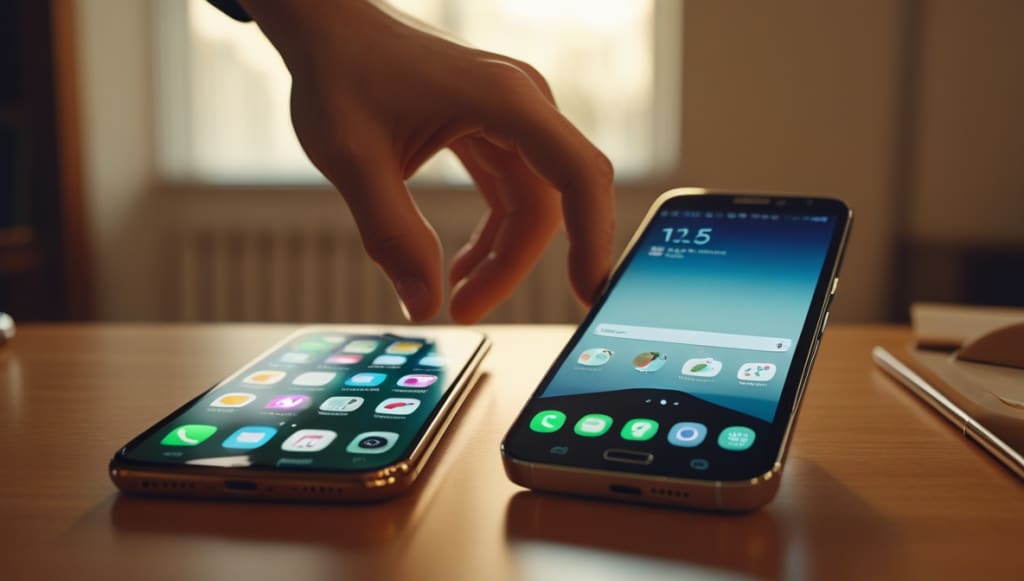
For a very long time, the competition among cellphones followed a familiar pattern.
Bigger screen sizes; better cameras; faster CPUs; sleeker designs.
Each next generation pledged more capacity with stylish glass and metal. Still, the competition shifted at one point—almost subtly and unobserved.
Apple and Samsung's principal competition now goes beyond devices.
It now focuses on user behavior.
Artificial intelligence is the instrument both businesses are employing.
Hardware loses its primacy
Premium phones now have plenty of features.
They travel rapidly. They are designed nicely. They provide round-the-clock use support. Their cameras match expert standards. The pictures are excellent. For the average consumer, hardware upgrades are usually incremental rather than revolutionary.
This scenario has inspired big tech companies to look at other ways of distinguishing themselves.
The most crucial factor right now is how the phone influences your conduct rather than its features.
Artificial intelligence has developed dramatically. It is evolving into the unseen power affecting all you do—including how you compose, look for information, schedule tasks, connect with others, and even your thoughts.
Now Galaxy AI and Apple Intelligence emerge.
Galaxy AI: Changing Behavior Through Convenience
Samsung’s approach to AI is bold, fast, and everywhere.
Galaxy AI is designed to integrate directly into daily actions — translating calls in real time, summarizing notes automatically, editing photos intelligently, reorganizing content, and assisting multitasking across apps.
The goal isn’t to impress you with intelligence.
It’s to remove friction.
You don’t ask Galaxy AI to help — it often anticipates the need. It suggests, adjusts, and enhances without demanding attention. Over time, this subtly trains users to rely on AI as a background partner.
Samsung isn’t just adding features. It’s shaping new habits:
- Let the phone summarize instead of reading.
- Let AI rewrite instead of revising.
- Let automation replace decision-making.
The more seamless it feels, the more users adapt their behavior around it.
Apple Intelligence: Control, Caution, and Trust
Apple’s AI strategy is noticeably different.
Apple Intelligence is built around restraint, privacy, and deliberate integration. Instead of flooding the system with AI features, Apple focuses on tightly controlled experiences that feel personal and safe.
AI assists with writing, organizing, searching, and understanding — but always within Apple’s ecosystem rules.
The message is clear:
AI should serve you, not observe you.
Apple’s greatest strength has always been trust. Users believe Apple protects their data, respects boundaries, and avoids reckless experimentation.
That trust gives Apple a powerful advantage — especially as AI becomes more intimate and more involved in daily life.
But caution comes at a cost.
While Samsung moves fast, Apple moves carefully. And in the race for habit formation, speed matters.
The Real Prize: Behavioral Lock-In
This battle isn’t about which AI is smarter.
It’s about which AI you stop thinking about.
The most successful AI will be the one users no longer notice — the one woven into routines so deeply that switching feels uncomfortable.
Once your phone:
- Predicts how you write
- Organizes how you think
- Suggests what you do next
…you’re no longer choosing features. You’re following patterns.
That’s the real lock-in.
Not hardware.
Not price.
Not brand loyalty.
Habit.
AI as the New Operating System of Life
What makes this moment different from past tech shifts is scope.
AI isn’t confined to one app or function. It touches communication, creativity, productivity, memory, and decision-making.
Your phone isn’t just a tool anymore.
It’s becoming a behavioral interface.
Galaxy AI leans into this by offering broad automation and adaptive intelligence across tasks.
Apple Intelligence counters with depth — fewer features, but deeply embedded into the system, guided by design philosophy rather than experimentation.
Both strategies aim for the same outcome:
Make the user dependent — comfortably, invisibly, willingly.
The Psychological Divide Between Users
This is where the rivalry becomes cultural.
Samsung users often embrace experimentation. They enjoy customization, flexibility, and rapid change. Galaxy AI fits naturally into that mindset — always evolving, always expanding.
Apple users tend to value consistency, clarity, and stability. Apple Intelligence reinforces that identity — AI that feels familiar, controlled, and respectful.
Neither approach is objectively better.
But each one shapes how users relate to technology — and how much autonomy they’re willing to surrender for convenience.
The Risks We’re Not Talking About Enough
As AI becomes more influential, the risks grow quietly.
When AI summarizes instead of reading, we may lose nuance.
When AI writes for us, our voice may soften.
When AI decides what matters, our curiosity may shrink.
The danger isn’t malicious intent.
It’s gradual dependence.
Both Samsung and Apple insist users remain in control — but control becomes harder to define when systems guide behavior rather than obey commands.
Invisible influence is still influence.
Who Is Winning Right Now?
Samsung appears to be leading right now.
Galaxy AI is transforming how people use their phones nowadays with its remarkable characteristics and audacious goals. It suggests that advancement is taking place.
Still, Apple is ahead planning.
Whether Apple Intelligence is regarded as beneficial rather than irritating and whether consumers continue to prefer reliability over innovation will determine its success.
The fight is still going on.
In many respects, it is still in its early stages.
The future is a pattern instead of a tool
Mobile phones changed our life ten years ago.
Artificial intelligence is currently altering our actions.
The phone you pick may somewhat affect you:
1. Your way of managing data
2. How frequently do you believe you think critically?
3. The quantity of work you do on daily household tasks
Apple Intelligence and Galaxy AI's fight goes beyond only market share.
They're battling to establish the pace of contemporary life.
The platform that naturally integrates flawlessly will be the victor.
Not by strength.
Through practice, however .
#Tech #AI #Smartphones #Apple #Samsung #DigitalHabits
About the Creator
Keep reading
More stories from Shahjahan Kabir Khan and writers in Journal and other communities.
When an Update Vanishes Overnight
Apple users are used to surprises—but not this kind. One day, iOS 18.7.3 was quietly expected as part of Apple’s usual rhythm of incremental updates. The next, it was gone. No rollout. No detailed explanation. Just silence—folded into the larger umbrella of iOS 26.2.
By Shahjahan Kabir Khan2 months ago in Journal
Assessing the Quality of Board Advisory Candidates
Introduction In today's rapidly evolving business landscape, the role of board advisors has become increasingly crucial. These individuals bring a wealth of experience, strategic insight, and industry knowledge that can significantly influence the direction and success of an organization. However, selecting the right board advisory candidates is a complex task that requires careful consideration and evaluation. The quality of these candidates can directly impact the effectiveness of the board and, ultimately, the organization’s performance. Therefore, understanding the key criteria for assessing board advisory candidates is essential for any company aiming to enhance its governance and strategic oversight. This article delves into the critical factors that should be considered when evaluating potential board advisors, providing a comprehensive guide to ensure that organizations make informed and strategic choices.
By Adrian Lawrence7 days ago in Journal
Writing About Writing: The Rainbow Trap
The good thing about living in modern times is that LGBTQ representation in media is increasing. Not just in niche and Independant media, either, but also in mainstream media. Books, movies, TV shows, comics... they're finally catching on that LGBTQ+ people form a significant part of their audience, and deserve to see themselves on screen and in fiction, not just as victims in documentaries and true crime shows.
By Natasja Rose7 days ago in Writers


Comments
There are no comments for this story
Be the first to respond and start the conversation.