
Global Crane Market Insights 2025 | Growth Trends, Case Studies & Industry Analysis
The global crane market hit USD 53.6B in 2024 and is set to reach USD 77.9B by 2033, growing at 3.82% CAGR, driven by construction demand, innovation, and industry expansion.

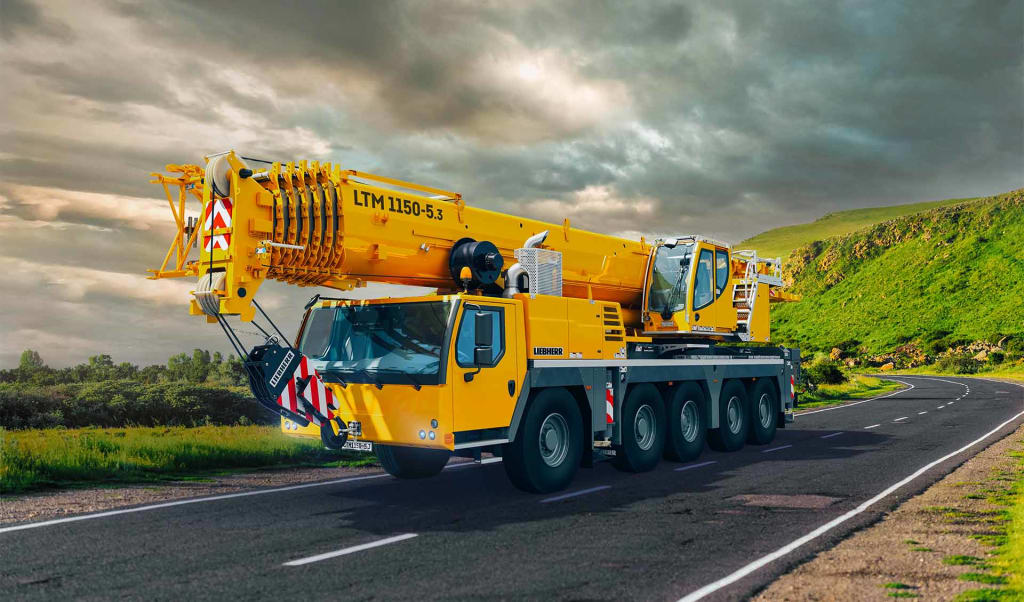
Market Overview:
According to IMARC Group's latest research publication, "Crane Market Size, Share, Trends and Forecast by Product Type, Application, and Region, 2025-2033", the global crane market size reached USD 53.6 Billion in 2024. Looking forward, IMARC Group expects the market to reach USD 77.9 Billion by 2033, exhibiting a growth rate (CAGR) of 3.82% during 2025-2033.
This detailed analysis primarily encompasses industry size, business trends, market share, key growth factors, and regional forecasts. The report offers a comprehensive overview and integrates research findings, market assessments, and data from different sources. It also includes pivotal market dynamics like drivers and challenges, while also highlighting growth opportunities, financial insights, technological improvements, emerging trends, and innovations. Besides this, the report provides regional market evaluation, along with a competitive landscape analysis.
How AI is Reshaping the Future of Crane Market
- Smart crane technology is revolutionizing construction site operations, with AI-powered load monitoring systems preventing overloading incidents by 90% while automated path planning reduces operation time by 25%, enabling construction projects to maintain strict safety standards while improving productivity across major infrastructure developments.
- Predictive maintenance algorithms are transforming equipment reliability, with IoT sensors monitoring over 200 operational parameters to predict component failures 3-4 weeks in advance, reducing unplanned downtime by 45% and maintenance costs by 30% while extending crane operational lifespan significantly.
- Computer vision systems are enhancing operator safety and precision, with AI-enabled cameras providing 360-degree awareness, automatic obstacle detection, and collision avoidance capabilities that reduce accidents by 75% while enabling remote operation capabilities for hazardous environments and complex lifting operations.
- Fleet management AI platforms are optimizing crane utilization across construction sites, with real-time tracking systems coordinating multiple crane operations, scheduling preventive maintenance, and allocating resources based on project demands, improving overall equipment effectiveness by 35% while reducing operational costs.
- Digital twin technology is enabling advanced simulation and training programs, with virtual crane operation environments providing risk-free training for operators while allowing project managers to optimize lifting sequences and identify potential safety hazards before actual construction begins.
Key Trends in the Crane Market
- Mobile cranes maintain market dominance, capturing approximately 70% of total market share due to superior versatility and mobility advantages that enable deployment across diverse construction projects, with all-terrain cranes particularly popular for infrastructure development requiring frequent repositioning and varied lifting capacities.
- Construction end-user segment leads market consumption, representing over 50% of crane demand as global infrastructure investment reaches record levels, with smart city development projects, high-rise residential construction, and transportation infrastructure requiring increasingly sophisticated lifting solutions and higher capacity equipment.
- Telescopic boom design gains significant popularity, offering operational flexibility and reduced setup time compared to lattice boom alternatives, with hydraulic telescoping capabilities enabling quick capacity adjustments and compact transportation while maintaining excellent lifting performance for urban construction projects.
- Mid-range capacity cranes (30-60 tons) experience strongest demand growth, providing optimal balance between lifting capability and operational flexibility for most commercial construction applications, while infrastructure projects increasingly require equipment capable of handling prefabricated components and modular construction elements.
- Asia Pacific region demonstrates exceptional market expansion, supported by massive infrastructure investment programs, rapid urbanization trends, and government initiatives promoting construction industry modernization, with China and India leading crane procurement for transportation, energy, and urban development projects.
Growth Factors in the Crane Market
- Infrastructure investment surge is driving unprecedented equipment demand, with global infrastructure spending exceeding $3 trillion annually and major economies launching massive transportation, energy, and urban development projects requiring advanced lifting capabilities, while emerging markets invest heavily in ports, airports, and manufacturing facilities.
- Construction industry modernization is accelerating crane technology adoption, with prefabricated and modular construction techniques requiring precise lifting capabilities, while green building initiatives demand equipment capable of installing solar panels, wind turbines, and energy-efficient building components at increasing heights and weights.
- Urban development density is creating specialized lifting requirements, with high-rise construction projects reaching new heights and requiring cranes capable of operating in confined spaces while maintaining safety standards, driving demand for innovative crane designs and advanced control systems in metropolitan areas.
- Energy sector transformation is generating new market opportunities, with renewable energy installation requiring specialized crane capabilities for wind turbine assembly, solar farm construction, and offshore platform development, while traditional oil and gas operations continue requiring heavy-lifting equipment for facility maintenance and expansion.
- Safety regulation enhancement is mandating advanced crane technologies, with stricter operational standards requiring AI-powered safety systems, operator certification programs, and digital monitoring capabilities, while insurance requirements favor technologically advanced equipment with proven safety records and reduced accident rates.
Ask analyst of customized report: https://www.imarcgroup.com/request?type=report&id=1077&flag=E
Leading Companies Operating in the Global Crane Market Industry:
- Liebherr Group
- Tadano Ltd.
- Terex Corporation
- Manitowoc Company Inc.
- Zoomlion Heavy Industry Science & Technology Co. Ltd.
- XCMG Group
- Sany Group Co. Ltd.
- Kobelco Construction Machinery Co. Ltd.
Crane Market Report Segmentation:
Breakup by Type:
- Mobile Cranes
- Fixed Cranes
Breakup by Design:
- Lattice Boom
- Telescopic Boom
Breakup by Capacity:
- Up to 30 Tons
- 30-60 Tons
- Above 60 Tons
Breakup by End User:
- Construction
- Mining
- Marine & Offshore
- Oil & Gas
- Others
Regional Insights:
- North America (United States, Canada)
- Asia Pacific (China, Japan, India, South Korea, Australia, Indonesia)
- Europe (Germany, France, United Kingdom, Italy, Spain, Russia)
- Latin America (Brazil, Mexico)
- Middle East and Africa
Recent News and Developments in Crane Market
- 2025: Liebherr unveiled its new LTM 1650-8.1 mobile crane featuring advanced AI-powered load moment indication system and automated rigging assistance, capable of lifting 700 tons while reducing setup time by 40% through intelligent boom positioning and outrigger deployment.
- 2025: Tadano announced strategic partnership with construction technology firm to develop fully autonomous crane operations for repetitive lifting tasks, targeting 30% productivity improvement in high-rise construction while maintaining enhanced safety standards through computer vision and machine learning.
- 2025: XCMG Group secured $850 million contract to supply 200 heavy-duty cranes for India's National Infrastructure Pipeline projects, including specialized equipment for metro rail construction and port development, demonstrating strong demand from emerging market infrastructure initiatives.
- 2024: Manitowoc launched its Grove GMK6450-1 all-terrain crane with industry-leading 450-ton lifting capacity and fuel-efficient Tier 4 Final engine technology, responding to growing demand for environmentally compliant equipment in European and North American markets.
Research Methodology:
The report employs a comprehensive research methodology, combining primary and secondary data sources to validate findings. It includes market assessments, surveys, expert opinions, and data triangulation techniques to ensure accuracy and reliability.
Note: If you require specific details, data, or insights that are not currently included in the scope of this report, we are happy to accommodate your request. As part of our customization service, we will gather and provide the additional information you need, tailored to your specific requirements. Please let us know your exact needs, and we will ensure the report is updated accordingly to meet your expectations.
About Us:
IMARC Group is a global management consulting firm that helps the world’s most ambitious changemakers to create a lasting impact. The company provide a comprehensive suite of market entry and expansion services. IMARC offerings include thorough market assessment, feasibility studies, company incorporation assistance, factory setup support, regulatory approvals and licensing navigation, branding, marketing and sales strategies, competitive landscape and benchmarking analyses, pricing and cost research, and procurement research.
Contact Us:
IMARC Group
134 N 4th St. Brooklyn, NY 11249, USA
Email: [email protected]
Tel No:(D) +91-120-433-0800
United States: +1-201-971-6302
About the Creator
Abhishek Dixit
I am content writer and blogger by profession
Keep reading
More stories from Abhishek Dixit and writers in Journal and other communities.
Dimethyl Ether Market: Growth, Trends, and Key Insights by 2033
Market Overview: According to IMARC Group's latest research publication, "Dimethyl Ether Market Size, Share, Trends and Forecast by Raw Material, Application, End-Use Industry, and Region, 2025-2033", the global dimethyl ether market size reached USD 7.22 Billion in 2024. Looking forward, IMARC Group expects the market to reach USD 15.73 Billion by 2033, exhibiting a growth rate (CAGR) of 8.09% during 2025-2033.
By Abhishek Dixit6 months ago in Journal
Ford Records Its Biggest Net Loss Since the 2008 Recession: A Deep Dive into the Auto Giant’s Financial Crisis
Ford Motor Company, one of the most iconic names in the global automotive industry, has reported its largest net loss since the 2008 financial crisis. The announcement has sparked serious discussion across financial markets, the auto sector, and among everyday consumers who have long trusted the blue oval brand.
By Ayesha Lashari5 days ago in Journal
from death into life
Young Aldin of Wiloh had never contemplated death. It was almost strange — so many around him had the tendency to obsess over it, to clamor and claw almost desperately at their own perceptions of the end to know death as much as they could: when it would come, why it would come, where it would take them when it did.
By angela hepworth7 days ago in Fiction




Comments
There are no comments for this story
Be the first to respond and start the conversation.