
Google Cloud Security AI Workbench Explained: Features and Benefits
Google Cloud Security AI Workbench


Cloud environments are getting more complex every year. Multi cloud deployments, containerized workloads, remote teams, and constant releases mean security teams are under serious pressure. Traditional tools still matter, but they struggle to keep up with the speed and scale of modern infrastructure.
That is where Google Cloud Security AI Workbench comes in. Built to combine artificial intelligence with cloud native security operations, it aims to help organizations detect threats faster, reduce manual workload, and strengthen overall protection.
In this article, we will break down what Google Cloud Security AI Workbench is, how it works, its core features, and the real benefits it brings to enterprises preparing for Cloud web security.
What Is Google Cloud Security AI Workbench?
Google Cloud Security AI Workbench is an AI driven security framework within Google Cloud that integrates machine learning, threat intelligence, and automated response into a centralized environment. It is designed to help security teams manage risks across workloads, applications, identities, and networks.
Rather than acting as just another dashboard, it functions as an intelligent assistant. It analyzes patterns, identifies anomalies, prioritizes alerts, and recommends or executes responses based on contextual awareness.
In simple terms, it shifts security from reactive monitoring to predictive defense.
Why AI Matters in Modern Cloud Security
Cloud systems generate massive amounts of logs and telemetry data. Security teams cannot manually analyze every signal. False positives overwhelm analysts, while real threats can slip through unnoticed.
AI changes this dynamic in three major ways:
- It processes huge volumes of data in real time.
- It identifies behavior based anomalies rather than relying only on known signatures.
- It learns from patterns and continuously improves detection accuracy.
As organizations plan for Cloud web security in 2026, AI is no longer optional. It is becoming foundational.
Core Features of Google Cloud Security AI Workbench
1. Intelligent Threat Detection
The platform uses advanced machine learning models to detect suspicious behavior across cloud workloads. Instead of relying solely on predefined rules, it analyzes behavioral baselines. If a service account suddenly accesses unusual data or a workload communicates with unknown endpoints, it flags the activity.
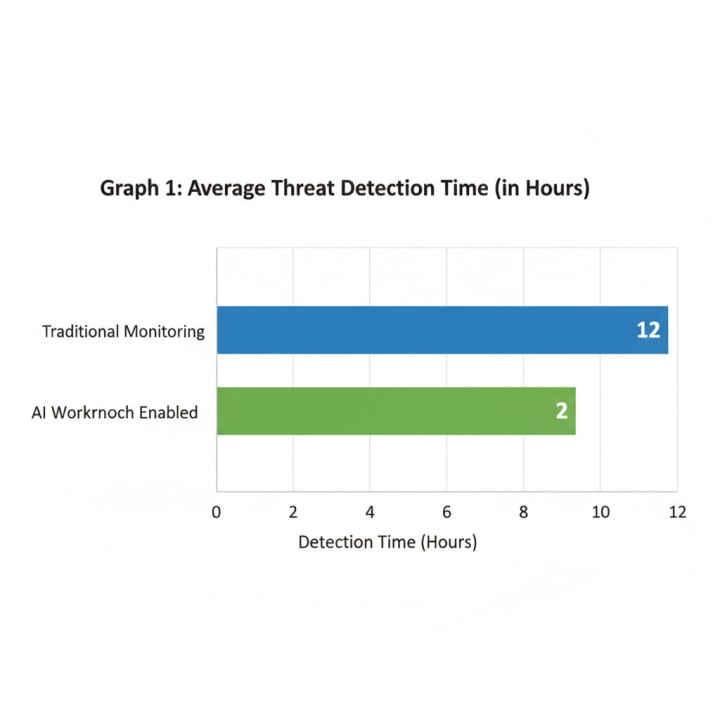
This significantly reduces blind spots that traditional rule based systems often miss.
2. Automated Incident Response
One of the strongest features is automated remediation. When a threat is confirmed, the system can:
- Isolate compromised workloads
- Revoke suspicious credentials
- Trigger predefined security workflows
- Notify relevant teams with contextual insights
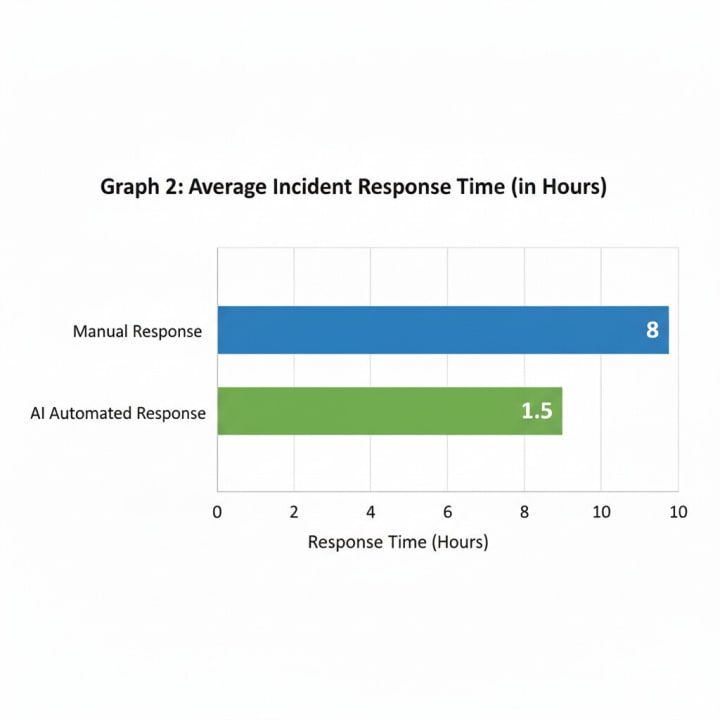
Automation reduces response time from hours to seconds. That speed can make the difference between minor disruption and major breach.
3. Risk Prioritization
Security teams often face alert fatigue. AI Workbench evaluates risk based on severity, context, exposure, and asset value. Instead of treating every alert equally, it ranks them intelligently.
For example, a vulnerability in a public facing production server will be prioritized over one in a non critical test environment.
This helps teams focus on what truly matters.
4. Identity and Access Monitoring
Misconfigured permissions are one of the leading causes of breaches in cloud environments. The AI Workbench continuously analyzes identity usage patterns.
If a user account suddenly escalates privileges or accesses data outside normal behavior, the system detects and flags it.
This supports a strong zero trust approach without requiring constant manual audits.
5. Multi Cloud Visibility
Many organizations operate across multiple cloud providers. Google Cloud Security AI Workbench integrates with broader security tools to provide centralized visibility.
That unified view is critical for maintaining consistent protection standards and preparing for Cloud web security in 2026, where hybrid and multi cloud strategies will be the norm.
6. Predictive Security Insights
Beyond real time alerts, the platform analyzes trends over time. It can identify recurring weak spots, misconfigurations, or policy gaps before they are exploited.
Predictive insights allow organizations to strengthen defenses proactively rather than responding only after incidents occur.
Key Benefits for Enterprises
Faster Detection and Response
Speed is everything in cybersecurity. AI Workbench reduces detection time by analyzing logs instantly and correlating events across services. Automated playbooks ensure that response actions happen immediately.
This minimizes damage and reduces operational downtime.
Reduced Human Error
Manual configuration mistakes, delayed responses, and overlooked alerts often cause security failures. By automating monitoring and remediation, the platform reduces dependency on constant human intervention.
While AI does not completely eliminate human involvement, it significantly lowers the risk of mistakes.
Improved Compliance and Governance
Regulatory requirements continue to tighten globally. AI Workbench provides detailed audit trails, policy enforcement, and compliance monitoring features.
Organizations can demonstrate stronger governance practices with centralized reporting and automated controls.
Cost Efficiency
Security incidents are expensive. Downtime, legal costs, reputation damage, and recovery efforts can quickly escalate. By preventing breaches and reducing operational overhead, AI driven tools improve long term cost efficiency.
Automation also means teams can scale protection without proportionally increasing staff.
Scalability for Growing Businesses
As companies expand, their cloud environments grow more complex. AI driven systems scale naturally because they are built to process large datasets.
This ensures consistent protection whether you are running ten workloads or ten thousand.
How It Supports Cloud Web Security in 2026
The future of Cloud web security in 2026 will revolve around three major pillars: automation, intelligence, and integration.
Google Cloud Security AI Workbench supports all three.
- Automation ensures immediate response to evolving threats.
- Intelligence provides context aware analysis instead of static rules.
- Integration connects identity management, threat detection, and compliance tools into one cohesive ecosystem.
By embedding AI directly into cloud infrastructure, Google is preparing organizations for a security landscape where attackers also use AI. Defense must be equally advanced.
Real World Use Case Example
Imagine an e commerce company running applications on Google Cloud. One evening, an attacker attempts to exploit a vulnerability in a containerized service.
Here is how AI Workbench could respond:
- Detect abnormal traffic patterns
- Identify unusual privilege escalation attempts
- Correlate activity with known threat indicators
- Automatically isolate the compromised container
- Alert the security team with a detailed timeline
Instead of discovering the breach days later, the organization contains it within minutes.
This proactive approach is exactly what enterprises need as cyber threats grow more sophisticated.
Limitations and Considerations
While powerful, AI driven security is not a magic solution.
- It requires proper configuration and integration.
- Security teams must still validate critical decisions.
- Continuous training and monitoring are necessary to maintain accuracy.
Organizations should treat AI Workbench as a force multiplier, not a replacement for human expertise.
Strong governance, skilled professionals, and clear security policies remain essential.
Final Thoughts
Cloud security is entering a new era. Manual monitoring and static rule sets cannot keep up with dynamic infrastructure and evolving threats.
Google Cloud Security AI Workbench represents a shift toward intelligent, automated, and predictive protection. It helps organizations detect threats faster, prioritize risks effectively, and reduce human error in complex environments.
As businesses prepare for Cloud web security in 2026, investing in AI driven security frameworks will likely become standard practice rather than a competitive advantage.
The goal is not just to respond to attacks, but to stay ahead of them.
FAQs
1. What is Google Cloud Security AI Workbench?
It is an AI driven security platform within Google Cloud that enhances threat detection, risk analysis, and automated incident response.
2. Does AI completely replace security teams?
No. It supports and augments security professionals but does not eliminate the need for human oversight.
3. How does it reduce false positives?
By analyzing behavioral patterns and contextual data, it filters out low risk alerts and prioritizes genuine threats.
4. Is it suitable for small businesses?
Yes, especially for companies scaling rapidly in the cloud. Automation helps smaller teams manage security more effectively.
5. How does it prepare organizations for Cloud web security in 2026?
It introduces automation, predictive analytics, and intelligent monitoring, which are expected to define next generation cloud security standards.
About the Creator
Scott Andery
Scott Andery is a Marketing Consultant and Writer. He has worked with different IT companies and he has 10+ years of experience in Digital Marketing.
Keep reading
More stories from Scott Andery and writers in Journal and other communities.
The Role of OpenAI in Business Innovation in 2026
By 2026, artificial intelligence is no longer an experimental add-on inside organizations. It has become infrastructure. Across industries, companies are building workflows, customer journeys, and product strategies around AI systems that generate content, automate analysis, assist decision-making, and accelerate execution. At the center of this shift is OpenAI, whose models and tools are shaping how businesses rethink productivity, creativity, and scale.
By Scott Andery4 days ago in Journal
Why I Felt Steadier Even Late in the Afternoon
Late afternoon used to be predictable. Around 3:30 or 4:00 p.m., something in me would dip. Not dramatically. Not enough to stop working. But enough to notice. My thoughts would slow slightly. My posture would collapse inward. I’d reread sentences more than once. Even conversations felt a little heavier to participate in.
By illumipure3 days ago in Journal
There's A Hole in My Bucket
It’s a well-known fact that Liza Dufresne was always the brains in the family. She was the one who always came up with the brilliant schemes the Dufresne kids carried out when they were younger. Like when they tricked Mrs. Claybourn into paying for a trip to Disney World. Liza convinced her that their parents had been kidnapped and were being held for ransom for the total price of three tickets. In reality, they were away on a weekend getaway for their anniversary. When they returned, Liza told the Claybourns that they did not like to talk about the ordeal. Their parents never found out how they got the money. Mrs. Claybourn never found out that the Dufresne parents were never really in any danger.
By David E. Perry2 days ago in Fiction




Comments
There are no comments for this story
Be the first to respond and start the conversation.