
How to Use the Semrush SEO Toolkit: Step-by-Step for Beginners
How to Use the Semrush SEO Toolkit: Step-by-Step for Beginners
This content is brought to you in partnership with Semrush. If you buy something through the links in this post, we may earn a commission from Semrush at no extra cost to you.
Building a digital presence isn’t simple. With the need to write content, keep pace with Google’s constant updates, and stay ahead of the competition, digital marketing often feels like a battle. I’ve been there—spending countless hours creating blog content that never ranked and making site changes based mostly on instinct.
What changed everything for me? The Semrush SEO Toolkit.
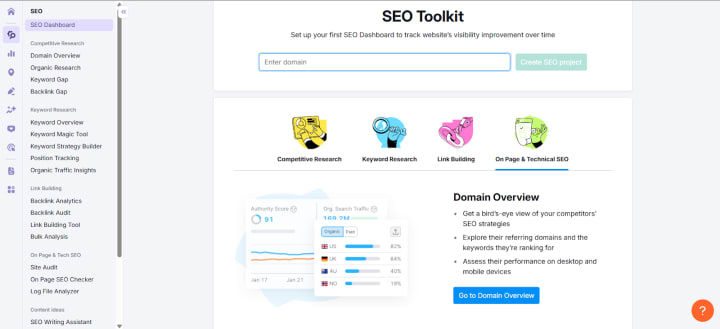
This comprehensive platform reshaped how I tackle SEO. Rather than switching between multiple tools and making guesses, I now rely on a structured, data-backed strategy. If you're new to SEO and searching for a dependable solution, this Semrush SEO Toolkit review will show you the exact steps I took to boost my site’s rankings and online visibility.
Step 1: Start with a Site Audit to Uncover Hidden Issues
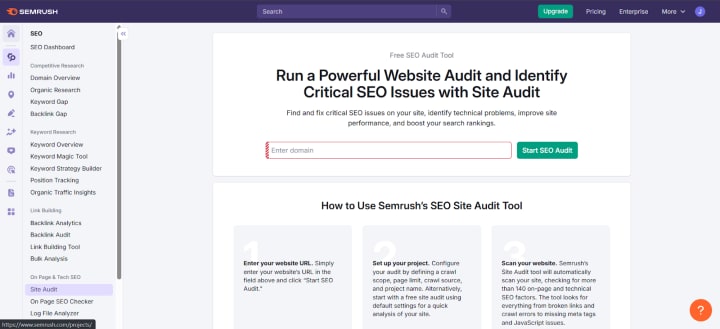
To begin, I ran a Site Audit. Think of this step as a comprehensive check-up for your entire website. Semrush crawled hundreds of pages and identified crucial problems that were silently dragging down my SEO, such as:
• Broken internal and external links
• Pages with slow load times
• Missing or duplicate meta descriptions and titles
• Mobile experience and usability errors
I had no idea how many small technical glitches were hurting my rankings. Once I addressed them, my site’s SEO foundation became much more solid. Page speed improved, user experience got better, and Google indexed my content more efficiently.
Tip: You can even set up recurring audits to stay ahead of future technical problems.
Step 2: Discover Real Search Intent Using the Keyword Magic Tool
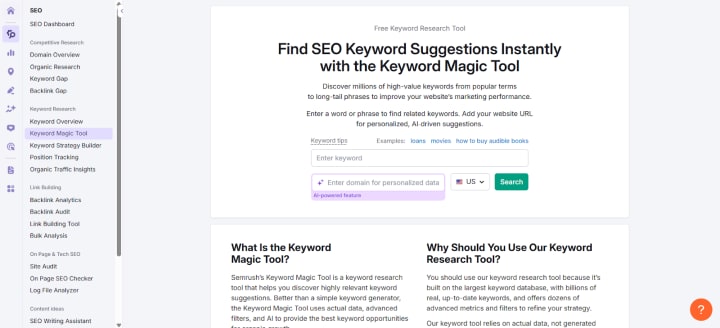
After resolving technical issues, I moved on to the Keyword Magic Tool—a standout feature in the Semrush suite. Rather than guessing blog topics, I let actual search data shape my approach. What I found was:
• High-volume keywords with surprisingly low competition
• Long-tail keyword phrases ideal for targeted blog content
• Question-based searches great for tutorials and how-to guides
• Related keyword variations that strengthened semantic relevance
This tool removed all the guesswork. Instead of writing content no one wanted, I focused on what users were actively searching for. The payoff? My organic traffic began rising consistently.
Step 3: Fine-Tune Every Page with the On-Page SEO Checker
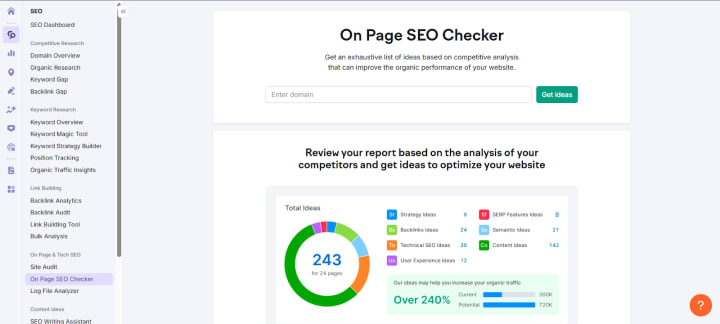
Publishing content wasn’t the end of the process. The On-Page SEO Checker helped refine each post for stronger performance. It reviewed my content and delivered practical, actionable suggestions such as:
• Naturally integrating secondary and related keywords
• Enhancing internal links to connect relevant posts
• Adjusting meta tags, titles, and headers for clarity and SEO
• Structuring content for better readability and engagement
These improvements built up fast. Within just a few weeks, multiple blog articles jumped from page 3 to the first page of search results.
Pro tip: This tool also includes competitive analysis, helping you learn from rivals and outperform them.
Step 4: Monitor Results with Position Tracking
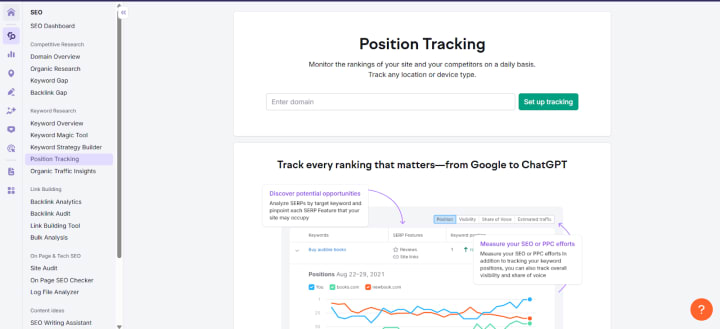
After optimizing and publishing, I needed to see how everything performed. That’s where Position Tracking came in. It allowed me to track my keyword rankings daily and provided insights like:
• Which specific keywords my site ranked for and at what position
• How those rankings changed from week to week
• What URLs were gaining visibility or slipping down
• How I measured up against my competitors for each keyword
Watching my rankings steadily improve was hugely encouraging. It confirmed that my strategy was working and helped me identify areas to improve further.
Why the Semrush SEO Toolkit Made a Difference for Me
What really sets Semrush apart isn’t just the rich data, it’s the methodical structure. Every tool in the SEO Toolkit tackles a specific challenge. Combined, they form a seamless workflow:
• Site Audit → Identify and fix critical website problems
• Keyword Magic Tool → Build a traffic-driving content plan
• On-Page SEO Checker → Perfect each page for visibility
• Position Tracking → Keep tabs on what’s working and what’s not
I wasn’t randomly “doing SEO” anymore, I was following a proven process.
Final Thoughts: Should You Try the Semrush SEO Toolkit?
If you want an SEO platform that’s beginner-friendly, complete, and results-oriented, Semrush is worth serious consideration. It’s more than just a tool, it’s a robust system that helped me grow a meaningful online presence.
Before using it, I was stuck in a cycle of guesswork and inconsistent outcomes. After adopting Semrush, I had a repeatable strategy, better workflow, and most importantly, real progress.
Ready to take control of your SEO? Try it for yourself: semrush.com
About the Creator
Keep reading
More stories from Aurang Zeb and writers in Journal and other communities.
From Liker Ig Free To Real Growth: How To Boost Your Instagram The Right Way
It’s pretty common to want more followers and likes on Instagram, especially when you see so many free apps that claim they can make it happen quickly. Things like “Liker IG Free” or auto-like bots look appealing because they seem to boost your numbers right away – overnight, even – and that can feel like progress when you’re trying to get your account out there. But those shortcuts don’t really give you anything solid.
By Aurang Zeb7 months ago in Journal
~ Fired ~
— Ai Intrusion ~ Are you Next ~ Is Ai Evolution after your job? — Few workplaces haven't been affected. Ai is in supermarkets, at doctors' offices, and even monitoring farms. I just can't think of anything this machine is not getting into, can you? For instance: Education ~ Law and Tech jobs will one day have a major influence or be taken over by these inanimate machines, with accuracy and vigor. From mechanics' diagnoses to a wide variety of everyday jobs, including fast food workers, with this input having the ability to cut their unnecessary work hours. I'm certain all of us have been touched by this with our short stories and colorful headings, have you? Even comments are very questionable 'Non-Robot' insertions.
By Jay Kantor8 days ago in Journal
The Angry Man in Your House
"If you grow up with an angry man in your house, there will always be an angry man in your house" This statement has caused plenty of controversy online, people say its a statement that blames victims while also undermining those who break traumatic cycles to form health relationships... but if I'm honest now that I'm in my 30s it makes more sense to me than ever, and I'd argue that its not just about fathers and uncles.
By S. A. Crawford2 days ago in Humans




Comments
There are no comments for this story
Be the first to respond and start the conversation.