
How Visibility Changed When Search Stopped Living in One Place
Understanding how modern audiences discover content beyond search engines

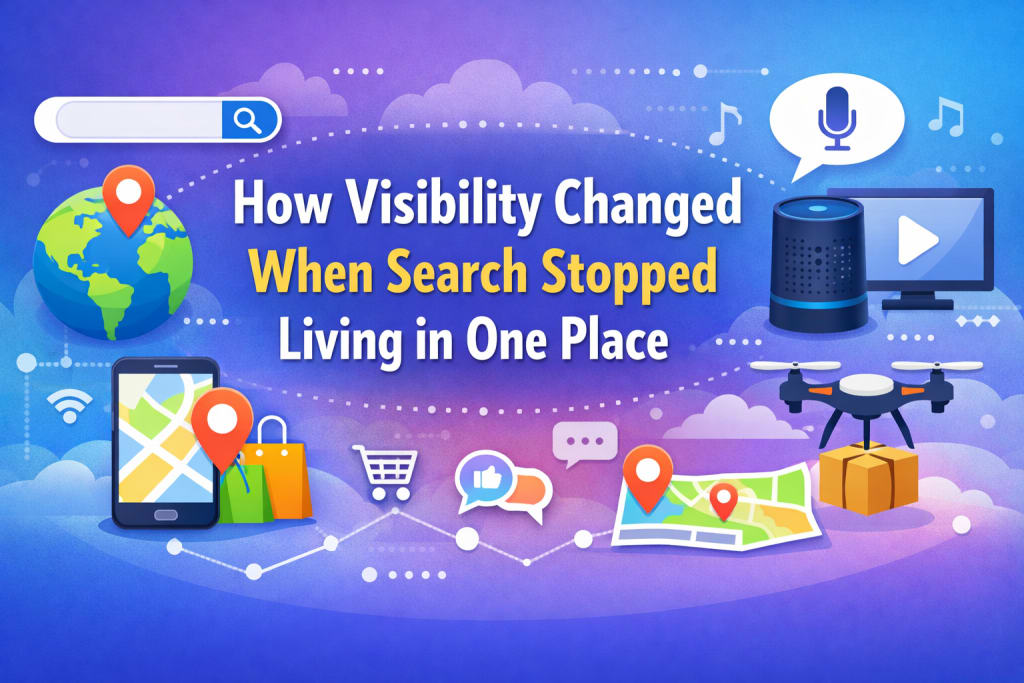
Search no longer looks the way it used to
There was a time when being visible online meant ranking on Google and calling it a day. If your website showed up on the first page, you had done your job well. That era is slowly fading. Today, people search in far more places than a traditional browser, often without even realizing they are searching at all.
Users now look for information on social media platforms, inside apps, through voice assistants, and across AI-powered tools. This shift has quietly transformed how content is discovered and consumed. As a result, a broader approach known as Search Everywhere Optimization has started gaining attention among marketers, writers, and creators.
The moment search behavior began to fragment
Search did not disappear from Google, but it expanded outward. People search YouTube when they want explanations, Instagram when they want inspiration, Reddit when they want honest opinions, and marketplaces when they are ready to buy. Even messaging apps and AI tools have become discovery channels.
This fragmentation changed the rules. Optimizing content for one platform alone is no longer enough. Visibility now depends on how well content travels across different environments while still making sense to the reader wherever it appears.
What Search Everywhere Optimization actually focuses on
Search Everywhere Optimization is not about replacing traditional SEO. It builds on it by recognizing that discovery happens across multiple touchpoints. The idea is simple but powerful. Content should be easy to find, understand, and trust no matter where a user encounters it.
This approach emphasizes adaptability. A strong piece of content should work as a long-form article, a summarized answer, a social discussion, or a voice-based response without losing its core message. Instead of chasing rankings, the focus shifts to relevance and presence.
Why intent matters more than placement
Modern algorithms care deeply about intent. They try to understand why someone is searching, not just what words they use. This is why content written purely for keywords often feels hollow and underperforms.
It encourages natural language and clear explanations. When content mirrors real human questions and delivers thoughtful answers, it performs better across platforms. This is especially important for voice search and AI-driven results, where conversational clarity matters more than technical optimization.
The role of format in discoverability
Different platforms reward different formats, and this plays a major role in how content is found. Long-form writing works well for deep understanding, while short videos and concise explanations thrive on social platforms. Audio content and visual storytelling also contribute to how information spreads.
Optimizing for search everywhere does not mean creating content randomly. It means understanding how a single idea can exist in multiple formats. When content is structured clearly and written with intention, it becomes easier to adapt without losing quality.
Authority is built through consistency, not tricks
In the past, authority was often associated with backlinks and technical signals. While those still matter, modern discovery relies heavily on trust and engagement. Platforms look at how users interact with content, whether they spend time reading it, and if they return for more.
Search Everywhere Optimization values consistency. When creators repeatedly publish helpful, honest, and well-explained content, they build recognition over time. This recognition translates into visibility across platforms without relying on shortcuts or manipulative tactics.
Preparing content for what comes next
Search technology will continue to evolve. AI summaries, personalized feeds, and predictive results are already shaping how information is delivered. In this environment, rigid strategies quickly become outdated.
A flexible mindset makes all the difference. Content written with clarity, empathy, and adaptability will always find ways to surface. Search Everywhere Optimization prepares creators for this future by focusing on how people actually behave, not how algorithms used to work.
Conclusion: Being present where attention already exists
Search is no longer confined to a single engine or device. It exists wherever people ask questions, seek recommendations, or explore ideas. Ignoring this reality limits reach and impact.
By embracing Search Everywhere Optimization, creators stop chasing visibility and start building it naturally. When content is designed to be useful everywhere, discovery becomes a byproduct rather than a struggle.
About the Creator
Anthony Rodgers
A writer exploring the intersection of IT, digital marketing, and AI, crafting insights on CRM, HubSpot, and web performance while making complex tech ideas easy to grasp.
Keep reading
More stories from Anthony Rodgers and writers in Journal and other communities.
Why CMS Web Development Became the Backbone of My Online Growth
I still remember the early days of managing my first website. Every small change felt like a task reserved for someone else. A missing comma, a broken page layout, or a simple text update would turn into an email thread, a delay, and unnecessary stress. That frustration pushed me to understand what truly powers modern websites, and that is when CMS web development entered my professional life in a very real way.
By Anthony Rodgers10 days ago in Journal
~ Fired ~
— Ai Intrusion ~ Are you Next ~ Is Ai Evolution after your job? — Few workplaces haven't been affected. Ai is in supermarkets, at doctors' offices, and even monitoring farms. I just can't think of anything this machine is not getting into, can you? For instance: Education ~ Law and Tech jobs will one day have a major influence or be taken over by these inanimate machines, with accuracy and vigor. From mechanics' diagnoses to a wide variety of everyday jobs, including fast food workers, with this input having the ability to cut their unnecessary work hours. I'm certain all of us have been touched by this with our short stories and colorful headings, have you? Even comments are very questionable 'Non-Robot' insertions.
By Jay Kantor6 days ago in Journal
The Ultimate Guide to Choosing the Best Grout Cleaner
Introduction Cleaning the bathroom and kitchen and all the tiled surfaces can be really tough. This is especially true when the grout starts to get dirty or moldy. Beautiful tiles can look really dull if the grout lines are not clean. So it is very important to find a good grout cleaner. This will help keep your home clean and healthy. In this guide we will talk about how to find the best grout cleaner for your tiles. We will also look at the difference between grout and caulk.. We will learn when you need to fix your grout.
By Alice Carry4 days ago in Journal
Writing About Writing: The Rainbow Trap
The good thing about living in modern times is that LGBTQ representation in media is increasing. Not just in niche and Independant media, either, but also in mainstream media. Books, movies, TV shows, comics... they're finally catching on that LGBTQ+ people form a significant part of their audience, and deserve to see themselves on screen and in fiction, not just as victims in documentaries and true crime shows.
By Natasja Rose3 days ago in Writers


Comments
There are no comments for this story
Be the first to respond and start the conversation.