
IMF chief says global inflation to fall, trade integration is needed
Easing price pressures offer cautious optimism, but global cooperation remains essential
IMF Chief Says Global Inflation to Fall, Trade Integration Is Needed
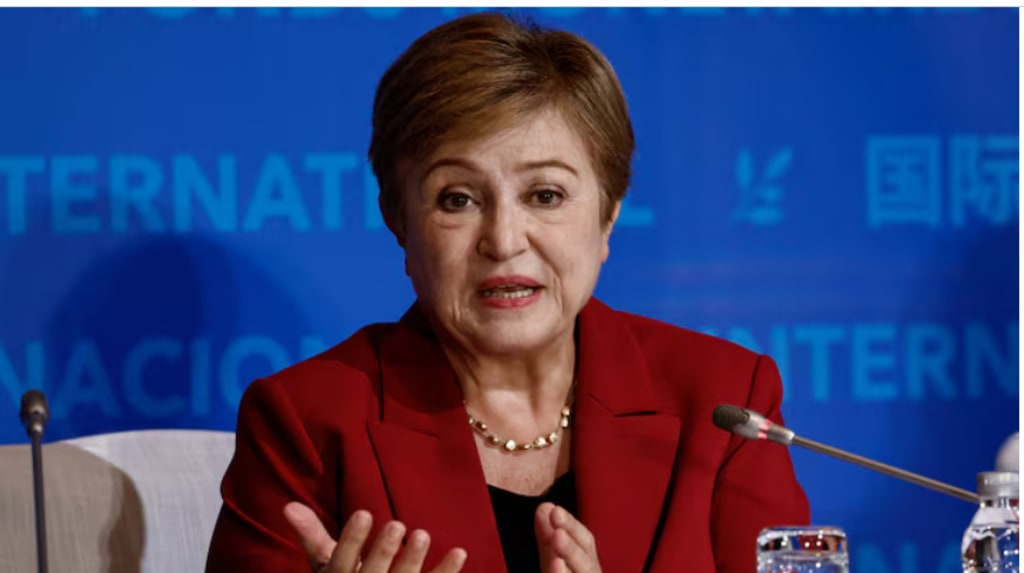
The global fight against inflation is showing signs of progress, according to the head of the International Monetary Fund (IMF), but the job is far from finished. IMF Managing Director Kristalina Georgieva recently stated that worldwide inflation is expected to continue declining, offering relief to households, businesses, and governments that have struggled with rising prices over the past several years. However, she emphasized that achieving lasting price stability will require deeper trade integration rather than economic fragmentation.
Her remarks come at a critical moment for the global economy, as policymakers attempt to balance inflation control with economic growth, while navigating geopolitical tensions and shifting trade alliances.
Inflation Is Cooling—but Unevenly
After peaking in many countries following the COVID-19 pandemic and the energy shocks triggered by geopolitical conflicts, inflation has begun to ease. Central banks across advanced and emerging economies aggressively raised interest rates to curb price pressures, and those measures are now producing results.
The IMF expects global inflation to trend downward as supply chains normalize, energy prices stabilize, and tighter monetary policy reduces excess demand. In advanced economies, inflation has slowed considerably from multi-decade highs, while several emerging markets that acted early to raise rates are already seeing improved price stability.
However, Georgieva cautioned that the decline in inflation is uneven. Some countries continue to face stubborn price pressures due to high food and energy costs, weak currencies, or fiscal imbalances. For low-income nations, inflation remains a serious threat to social stability, as rising living costs disproportionately affect vulnerable populations.
Why Trade Integration Matters
Beyond monetary policy, the IMF chief highlighted trade integration as a key factor in sustaining lower inflation. Global trade allows countries to specialize, increase efficiency, and access goods at lower costs. When trade flows smoothly, production becomes cheaper and more reliable, helping keep prices under control.
In recent years, however, global trade has faced growing obstacles. Trade wars, sanctions, geopolitical rivalries, and efforts to reshore or “friend-shore” supply chains have led to increased fragmentation. While these strategies are often justified on national security or political grounds, the IMF warns they can raise costs and fuel inflation over time.
Fragmented trade systems limit competition, reduce economies of scale, and create supply bottlenecks. According to Georgieva, reversing this trend through greater cooperation and openness could significantly enhance global economic resilience and price stability.
The Cost of Economic Fragmentation
The IMF has repeatedly warned that economic fragmentation could impose long-term costs on the global economy. Studies by the institution suggest that dividing the world into competing trade blocs could reduce global GDP and increase inflationary pressures, particularly in developing economies.
When countries restrict trade or rely on a narrow set of partners, they become more vulnerable to shocks. Natural disasters, political disputes, or logistical disruptions can quickly lead to shortages and price spikes. Broader trade integration, on the other hand, spreads risk and provides alternative supply routes when problems arise.
Georgieva stressed that cooperation does not mean ignoring national interests, but rather recognizing that interconnected economies benefit from shared stability and predictable rules.
Central Banks Still Face Tough Choices
Even as inflation declines, central banks are not expected to ease policy too quickly. Many remain cautious, wary of repeating past mistakes where inflation resurged after early rate cuts. The IMF supports a data-driven approach, urging policymakers to ensure inflation is firmly under control before shifting to more accommodative stances.
High interest rates, while effective at controlling inflation, also slow economic growth and raise borrowing costs. This is especially challenging for developing nations with high debt levels. Georgieva called for stronger international cooperation to help vulnerable countries manage debt and maintain financial stability during this transitional period.
Trade and Inflation in a Changing World
The global economy is undergoing structural changes, including the energy transition, digitalization, and demographic shifts. These forces will shape inflation dynamics in the years ahead. Trade integration can help economies adapt to these changes by enabling access to critical technologies, raw materials, and innovation.
For example, renewable energy technologies rely on globally distributed supply chains for minerals and components. Restricting trade in these areas could slow the transition and raise costs, undermining both climate goals and inflation control.
Similarly, digital trade and services offer new growth opportunities, particularly for emerging markets. Open and inclusive trade frameworks can help spread the benefits more widely, reducing inequality while supporting economic efficiency.
A Delicate Path Forward
The IMF chief’s message is cautiously optimistic. While global inflation is on a downward path, the work of policymakers is not done. Monetary discipline, fiscal responsibility, and structural reforms must continue in tandem with efforts to strengthen global trade ties.
Georgieva’s call for deeper trade integration serves as a reminder that inflation is not only a monetary phenomenon but also a structural one. How countries choose to cooperate—or isolate themselves—will play a significant role in shaping price stability and growth in the coming decade.
As inflation pressures ease, governments face a rare opportunity: to reinforce global cooperation, rebuild trust in multilateral institutions, and design trade systems that are both resilient and inclusive. Whether that opportunity is seized may determine how durable the current disinflation trend truly is.
About the Creator
Keep reading
More stories from muhmmed mairaj and writers in Journal and other communities.
Oil Slides Over 4% as Trump Signals Iran Talks, Easing Supply Shock Fears
Global oil prices dropped sharply, sliding more than 4%, after former U.S. President Donald Trump signaled the possibility of renewed talks with Iran. The statement immediately eased fears of a major supply shock in the global energy market, triggering a wave of selling across crude oil benchmarks. The move highlights how geopolitical signals—sometimes just a few words—can rapidly reshape market sentiment in an already volatile energy landscape.
By muhmmed mairajabout 4 hours ago in Journal
US, UK, EU, Australia and More to Meet to Discuss Critical Minerals Alliance
The United States, United Kingdom, European Union, Australia, and several other nations are set to meet in a high-level summit this month to discuss the formation of a Critical Minerals Alliance, a strategic initiative aimed at securing reliable supplies of essential raw materials. The talks highlight the growing importance of critical minerals—such as lithium, cobalt, nickel, rare earth elements, and graphite—in powering the global transition to clean energy, advanced electronics, and defense technologies.
By Salaar Jamaliabout 24 hours ago in Journal



Comments
There are no comments for this story
Be the first to respond and start the conversation.