
Iran–US Nuclear Talks in Geneva End Quickly, but Tensions Remain High
Four-hour meeting shows diplomacy continues, yet deep differences still stand between Tehran and Washington

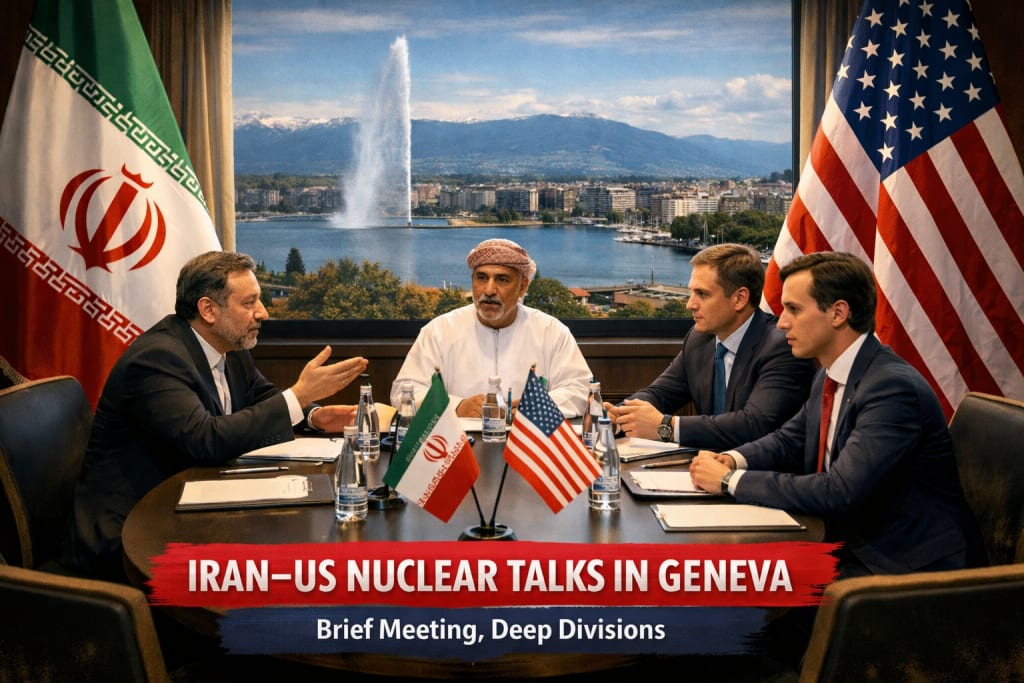
The second round of nuclear talks between Iran and the United States ended in Geneva after only four hours, showing both the urgency of the situation and the deep disagreements that still divide the two sides. Geneva hosted the indirect negotiations, which were mediated by Oman and focused on Iran’s nuclear program and the future of sanctions.
Although the meeting was short, it was an important step in ongoing diplomatic efforts to prevent further conflict in the Middle East.
A Short but Important Meeting
The four-hour session brought together Iranian and American delegations, though they did not meet face-to-face. Instead, messages were exchanged through Omani mediators. The talks focused on limiting Iran’s nuclear activities and restoring international monitoring.
Iran was represented by Foreign Minister Abbas Araghchi, while the U.S. delegation included envoy Steve Witkoff and adviser Jared Kushner.
Experts say the short length of the meeting does not mean failure. Instead, it suggests both sides are testing positions and focusing on technical details before moving forward.
Why These Talks Matter
The negotiations come at a critical moment. Tensions between Iran and the United States have increased due to military buildup, sanctions, and regional conflicts.
Both countries want to avoid war but disagree on key issues:
The U.S. wants strict limits on Iran’s nuclear program.
Iran demands the lifting of economic sanctions.
Iran insists its nuclear activities are peaceful.
Washington fears the program could lead to nuclear weapons.
Iran has said it is willing to discuss limits on enrichment if sanctions are eased, showing potential room for compromise.
The Nuclear Issue at the Center
The main issue remains uranium enrichment. Iran insists it has the right to enrich uranium for peaceful purposes under international law. The U.S. wants stronger monitoring and restrictions.
Iran has proposed diluting enriched uranium and allowing inspections but wants recognition of its enrichment rights and economic cooperation in return.
Meanwhile, the International Atomic Energy Agency plays a central role in monitoring nuclear activities and verifying compliance.
Sanctions and Economic Pressure
Sanctions remain a major point of conflict.
Iran’s economy has struggled under years of financial restrictions. Inflation, unemployment, and shortages have affected daily life. Tehran argues that sanctions punish ordinary people rather than political leaders.
Iran is seeking:
Removal of oil export restrictions
Access to global banking systems
Trade and investment opportunities
Iranian officials say serious negotiations must include sanctions relief.
Rising Military Tensions
The talks took place amid growing military tension in the region.
Iran recently held missile and naval drills near the Strait of Hormuz, a vital global oil route.At the same time, the United States increased its military presence in nearby waters.
These developments highlight the fragile situation and the risk of escalation if diplomacy fails.
Iran’s Supreme Leader Ali Khamenei warned that Iran would resist pressure and defend its sovereignty.
Diplomatic Efforts Continue
Despite tensions, both sides describe the talks as part of an ongoing process. The first round of negotiations earlier this month was seen as constructive and lasted longer.
This second meeting moved into technical discussions involving legal and economic experts, showing that negotiations are becoming more detailed and serious.
Diplomats believe future rounds may last longer and address broader issues.
What Happens Next?
Although no major breakthrough was announced, the talks did not collapse — a positive sign in itself.
Possible next steps include:
Continued technical discussions
Further meetings in Geneva or Muscat
Confidence-building measures
Limited sanctions relief proposals
Experts say progress will require trust, compromise, and patience.
A World Watching Closely
The outcome of these talks affects not only Iran and the United States but also global security and energy markets.
If negotiations succeed:
✔ Regional tensions could ease✔ Oil markets may stabilize✔ Economic recovery in Iran could begin
If talks fail:
✖ Risk of military conflict may increase✖ Energy prices could rise✖ Regional instability may worsen
Conclusion
The four-hour meeting in Geneva may have been brief, but it reflects a critical moment in international diplomacy. Both Iran and the United States face pressure at home and abroad, yet they continue to pursue dialogue rather than confrontation.
The path forward remains uncertain. Deep disagreements over sanctions, nuclear rights, and security concerns continue to block a final agreement. Still, the willingness to keep talking offers hope.
In a region shaped by decades of conflict and mistrust, even a short meeting can be a step toward peace.
The world now waits to see whether future talks will bring compromise — or deeper confrontation.
About the Creator
Keep reading
More stories from dua fatima and writers in Journal and other communities.
Nicolás Maduro: From Bus Driver to Venezuela’s Most Powerful Man
Nicolás Maduro is one of the most controversial leaders in modern Latin American history. His life story is unusual. He began as a working-class bus driver and trade union activist. Later, he became the chosen successor of Hugo Chávez, one of Venezuela’s most famous presidents. Today, Maduro is known around the world for leading a country in deep political and economic crisis and for facing strong pressure from the United States and other nations.
By dua fatima2 months ago in Journal
~ Fired ~
— Ai Intrusion ~ Are you Next ~ Is Ai Evolution after your job? — Few workplaces haven't been affected. Ai is in supermarkets, at doctors' offices, and even monitoring farms. I just can't think of anything this machine is not getting into, can you? For instance: Education ~ Law and Tech jobs will one day have a major influence or be taken over by these inanimate machines, with accuracy and vigor. From mechanics' diagnoses to a wide variety of everyday jobs, including fast food workers, with this input having the ability to cut their unnecessary work hours. I'm certain all of us have been touched by this with our short stories and colorful headings, have you? Even comments are very questionable 'Non-Robot' insertions.
By Jay Kantor17 days ago in Journal
'Till Death We Do Art
There would be nothing divine in this world without art. Nature may surpass the divine to all intents and purposes, but like everything it absorbs and is absorbed by, it remains here, stuck on the surface of this world, ever-present, physically bound to the universe.
By Avocado Nunzella BSc (Psych) -- M.A.P about 24 hours ago in Art



Comments
There are no comments for this story
Be the first to respond and start the conversation.