
Maayan Aviv: Jewish Leaders on Practicing Tzedakah as Justice, Dignity, and Repair
How does Maayan Aviv frame tzedakah as justice—linking dignity, accountability, and long-term trauma resilience in Jewish communal giving?

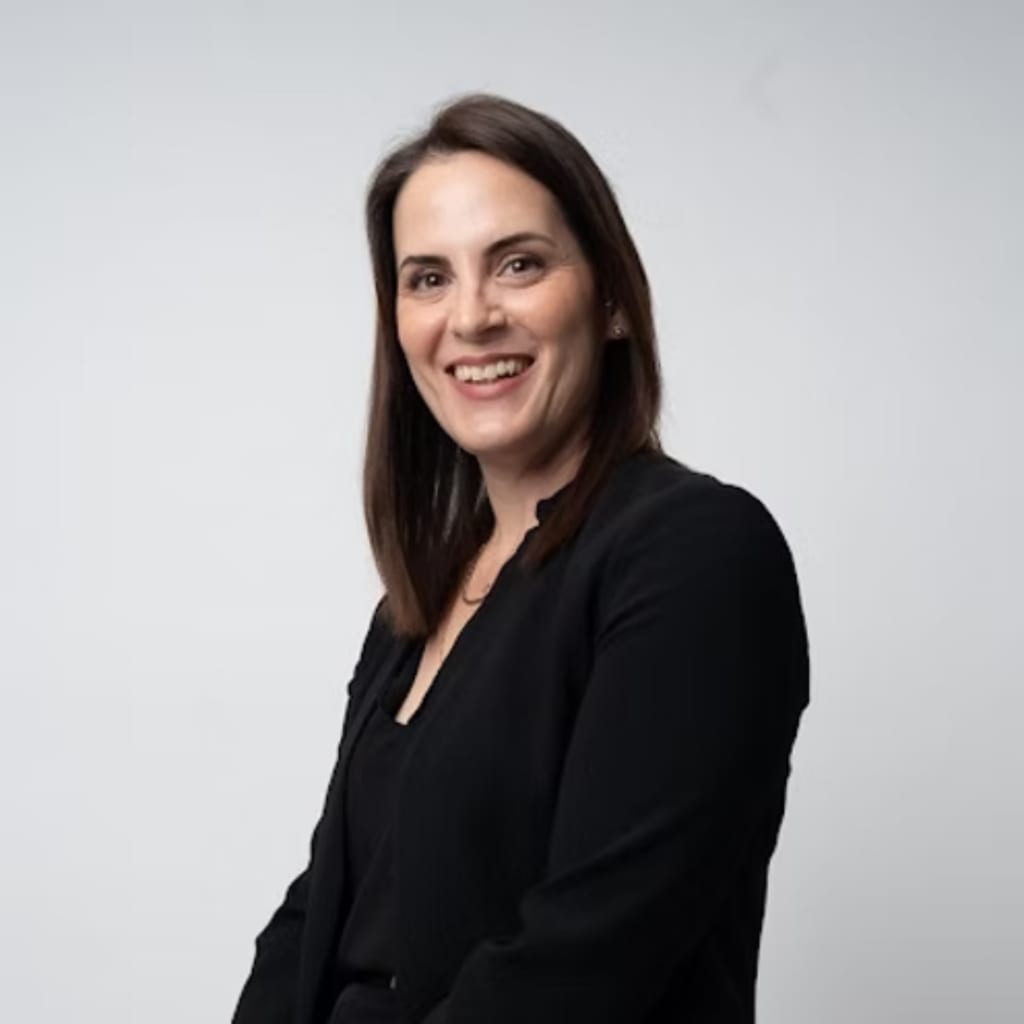
Maayan Aviv (she/her) is Executive Director and CEO of American Friends of NATAL, leading the organization since March 2023. Trained in international relations, she brings 15 years of nonprofit leadership across strategic planning, community partnerships, fundraising, donor stewardship, and mission-driven marketing. Aviv emphasizes collaboration that strengthens psychosocial resilience and healthier societies. Before joining AFN, she served as Executive Director of American Friends of ALYN Hospital, supporting pediatric rehabilitation initiatives. She is a public-facing spokesperson who links philanthropy, governance, and impact measurement to durable, dignified support for communities in daily practice.
In this interview, Scott Douglas Jacobsen speaks with Maayan Aviv, Executive Director and CEO of American Friends of NATAL, about tzedakah as justice rather than optional charity. Aviv argues that giving should aim at equality and equal opportunity, with justice emerging from the giver’s intent and choices. She adds that dignity requires more than money: donors should give “with a full heart,” while institutions must be transparent about impact and sufficiency. Aviv highlights proportional responsibility guided by communal leadership, distinguishes tzedakah from hands-on gemilut chasadim and tikkun olam, and stresses oversight so philanthropy does not become a tool of power.
Scott Douglas Jacobsen: What makes tzedakah “justice” rather than optional charity?
Maayan Aviv: Tzedakah, while it is focused on giving money, it’s really more than that. It creates justice or a great sense of equality by helping those that don’t have the means. When making a donation, people need to look at giving with an emphasis on equal opportunity. A person always has the choice to donate, it’s the intent that makes it just or not. Ultimately, justice comes from the giver because they are making the decision of where, when and how much to give.
Jacobsen: What does dignity require from givers and institutions beyond delivering funds?
Aviv: Beyond the transfer of funds, dignity demands a deeper commitment from both the giver and the institution. For the giver, dignity is found when the donation is made with a full heart. It should be done with a spirit of generosity. For the institution, dignity is rooted in transparency and the honesty to admit if the resources were sufficient. While a donation may be a singular event, the relationship must be over a lifetime. It’s important to invite the donor to lend their heart and hands to the mission too.
Jacobsen: How should Jewish communities decide proportional responsibility per person?
Aviv: Each individual should determine their contribution based on their own ability. When you are part of a community, the role of leadership is to suggest proportional allocations to specific, meaningful causes. For example, a synagogue might decide that supporting mental health in Israel is a core initiative for 2026. Their job is to educate the membership on the need and help them decide how to direct their support.
Many of the vital connections made with American Friends of Natal (AFN) came through community-selected groups specifically looking to fund trauma and mental health services.
Jacobsen: What are the lines, if any, between tzedakah, gemilut chasadim, and tikkun olam in daily communal work?
Aviv: What we are discussing here is that philanthropy isn’t always about money. It is about personal, hands-on service. This question essentially shows people that being a philanthropist means more than just writing a check.
All three forms of giving involve offering a piece of yourself for the greater good. I see a distinct difference: Tzedakah has traditionally centered on financial support, whereas other forms of service begin with the wellbeing of your local community and then extend globally. Gemilut chasadim and tikkun olam are often more hands-on.
For example, consider the different ways to support senior care: you can donate to a facility, you can visit a center to offer companionship, or you can volunteer your time directly with an elderly person. Each is a valid and vital way to give.
Jacobsen: What accountability norms prevent tzedakah funds from becoming a power tool?
Aviv: Oversight, procedures, policies and even when it’s tzedakah it still has to be regulated. Having a set of rules of how you collect the money, what is the intent, how are you using the money, how are you reporting? Making sure that decision making process is a procedure. Lay leaders, board of directors, families, trustees, people that are educated enough about the tzedakah to make a decision.
Even when the mission is tzedakah, the process must be governed by oversight, procedures, and clear policies. Regulation is not a burden; it is a necessity. This requires a formal set of rules defining how funds are collected, the specific intent behind the appeal, how the money is deployed, and the transparency of the reporting.
The decision-making process must be a standard procedure, led by a group of lay leaders, boards of directors, families, and trustees. These individuals who are educated enough about the tzedakah to make a decision. They need to be responsible to ensure that every decision is made with integrity.
Jacobsen: How do you balance emergency relief with longer term forms of self-sufficiency?
Aviv: Every philanthropic cause has its immediate, short term and long term needs. We also need to prepare for a “rainy day” as emergencies happen. The challenge is making sure that donors don’t just respond to a current crisis, but invest in the infrastructure that allows us to fight the fire when it breaks out.
A primary example of this is what Dr. Boaz Shalgi, NATAL’s Chief Psychologist, coined “Rolling Trauma.” Unlike traditional PTSD, which stems from a singular, isolated event, rolling trauma is continuous. In Israel, the trauma isn't a one-time crisis. It is an ongoing reality shaped by the October 7 attacks, persistent missile strikes, mass displacement, and collective grief. Like a snowball rolling down a hill, it collects new layers of trauma with every rotation, impacting both the individual and the community.
Philanthropy needs us to support the steady, daily work of mental health and trauma resilience. By funding the routine, we ensure that when a new emergency strikes, the table is already set, the experts are already in place, and the community is ready to respond.
Jacobsen: How should communities practice tzedakah while avoiding savior dynamics/complexes?
Aviv: A donor’s ego may not be something we can control. It’s about education and perspective that can hopefully be guided. Philanthropy attracts many different personalities and there will always be individuals who feel they are “saving the world.” To an extent, they are. While some donors are modest, others think they rule the world.
You can’t change these personalities. Even top-tier donors are searching for a specific feeling of impact, and as an institution, you have to navigate that. For instance, we might have one $100K donor who insists on total anonymity, while another $100K donor wants their name recognized everywhere for a year. At the end of the day, it’s about meeting donors where they are, ensuring they are recognized in the way they value most so they can give their gift with a full heart, and without regret.
Jacobsen: Is digital tzedakah much of a thing? If so, does it change the contemporary framing of ancient ethics?
Aviv: The role of digital tzedakah is growing. Being online helps people maintain their anonymity, which deepens the opportunity to truly know your donor. It’s a lot like digital dating: it is often easier for people to be vulnerable or explore an interest because they have the safety of their screens.
In philanthropy, this digital layer adds a new step to the 'getting to know you' process. It is an evolution that mirrors the business world. Things are moving in this direction because it makes the cause more accessible. By meeting donors online, we are moving towards the modern way people build trust and make commitments.
Jacobsen: Thank you very much for the opportunity and your time, Mayaan.
Scott Douglas Jacobsen is a blogger on Vocal with over 120 posts on the platform. He is the publisher of In-Sight Publishing (ISBN: 978–1–0692343) and the Editor-in-Chief of In-Sight: Interviews (ISSN: 2369–6885). He writes for The Good Men Project, International Policy Digest (ISSN: 2332–9416), The Humanist (Print: ISSN 0018–7399; Online: ISSN 2163–3576), Basic Income Earth Network (UK Registered Charity 1177066), A Further Inquiry, The Washington Outsider, The Rabble, and The Washington Outsider, and other media. He is a member in good standing of numerous media associations/organizations.
Image credit: Mayaan Aviv.
About the Creator
Scott Douglas Jacobsen
Scott Douglas Jacobsen is the publisher of In-Sight Publishing (ISBN: 978-1-0692343) and Editor-in-Chief of In-Sight: Interviews (ISSN: 2369-6885). He is a member in good standing of numerous media organizations.
Keep reading
More stories from Scott Douglas Jacobsen and writers in Journal and other communities.
Scott Silverman, Ed.D. on What Makes a Jewish Community—and How It Survives Conflict
Scott Silverman, EdD, is Dean of Noncredit & External Programs at Santa Monica College, where he leads adult education, workforce training, and community partnerships that broaden access beyond traditional credit pathways. He designs programs for older adults, career re-entry learners, and working professionals, pairing analytical forecasting with student development and engagement. A teacher and public speaker, he also mentors higher-education staff on program design, training, and service. Known for clear communication, he emphasizes in-person connection while using hybrid tools strategically. His career path was sparked by an early mentor in student affairs, turning curiosity into a commitment to community learning. Scott has been a Hebrew School teacher, youth group advisor and Hillel Director, and has been a co-founder and board member for several nonprofit organizations.
By Scott Douglas Jacobsen3 days ago in Journal
Venezuela’s Youth Take to the Streets: The First Big Protests Since Maduro’s Capture
Venezuela has entered a new chapter in its history. After years of political repression and strict controls, the people of this South American country are trying to find their voice again. In February 2026, for the first time since former President Nicolás Maduro was captured by U.S. forces, thousands of Venezuelans took part in peaceful protests. These demonstrations show both hope and uncertainty about Venezuela’s future.
By sehzeen fatimaabout 20 hours ago in Journal
The Missing Ingredient
The first time I saw her, she was wearing a velvety, red ribbon in her hair. She carried a small leather backpack everywhere. She searched the forest by turning stones, checking beneath shrubs, listening to the wind as if it might carry an answer.
By Imola Tóth4 days ago in Fiction


Comments
There are no comments for this story
Be the first to respond and start the conversation.