
Making a Hand-Stitched Wallet
by Nick Eisa
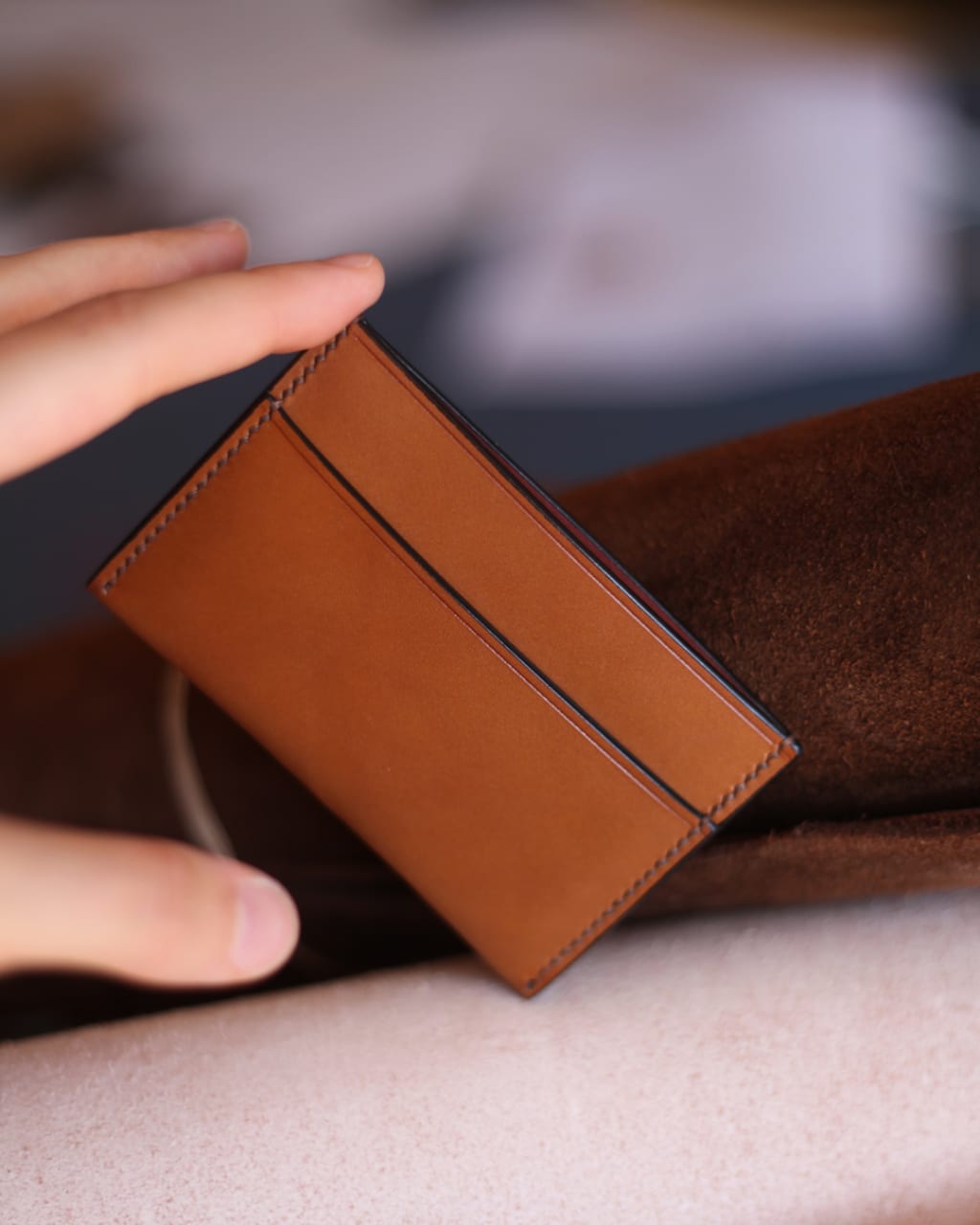
My day starts at 6am when I open the door to my leather workshop. The musky smell of shoe polish hangs in the air. My shelves are bending from the weight of shoes waiting to be worked on. As I sip on my cup of coffee I look over all the jobs that need to be done and start to make a plan for the day. Today I started by making a new bespoke wallet for one of my private customers.
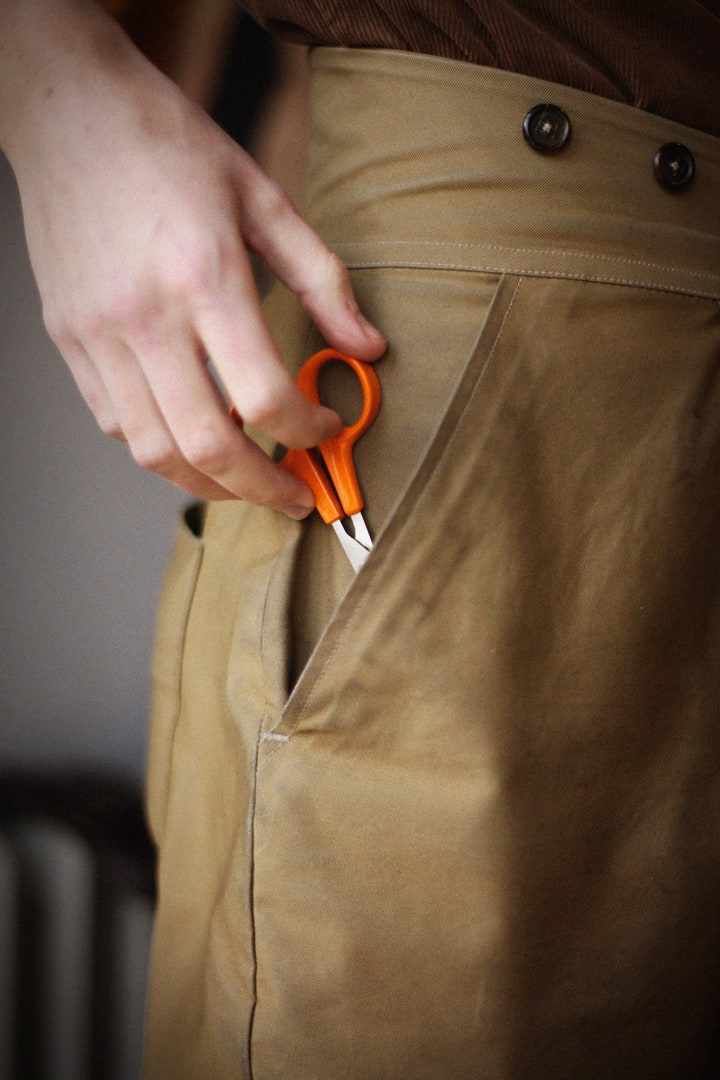
My grandmother was a seamstress, she taught me how to use my first sewing machine. And my grandfather was a carpenter, who left me a bounty of beautiful, one-of-a-kind tools I use to this day. Knives, hammers, pliers and chisels. They come in useful every day, as I never know what I’ll be working on next. When preparing my workbench I always make sure that I have my favourite pair of Fiskars with me. My wife who is a seamstress bought them for me years ago and since then I can not think of any other tool that could replace them. As my grandfather passed his tools onto me I hope to hand down my Fiskars someday.
Making a hand stitched wallet is a complex and time consuming task. It took me over 10 years to explore all the necessary techniques and master this craft. Being trained by one of the best leather makers in Royal Arcade in London exposed me to the strong heritage of traditional bespoke shoemaking in this country. I now have a healthy book of private clients and a catalogue of over 100 designs and patterns I’ve created.
Sharing my love of making has always been a big part of my practice. I’m at my happiest when friends come around and spend some time with me picking my brain about the world of leather. Teaching someone how to make a wallet, card holder or a pouch from scratch is a challenge, but it puts a smile on my face.
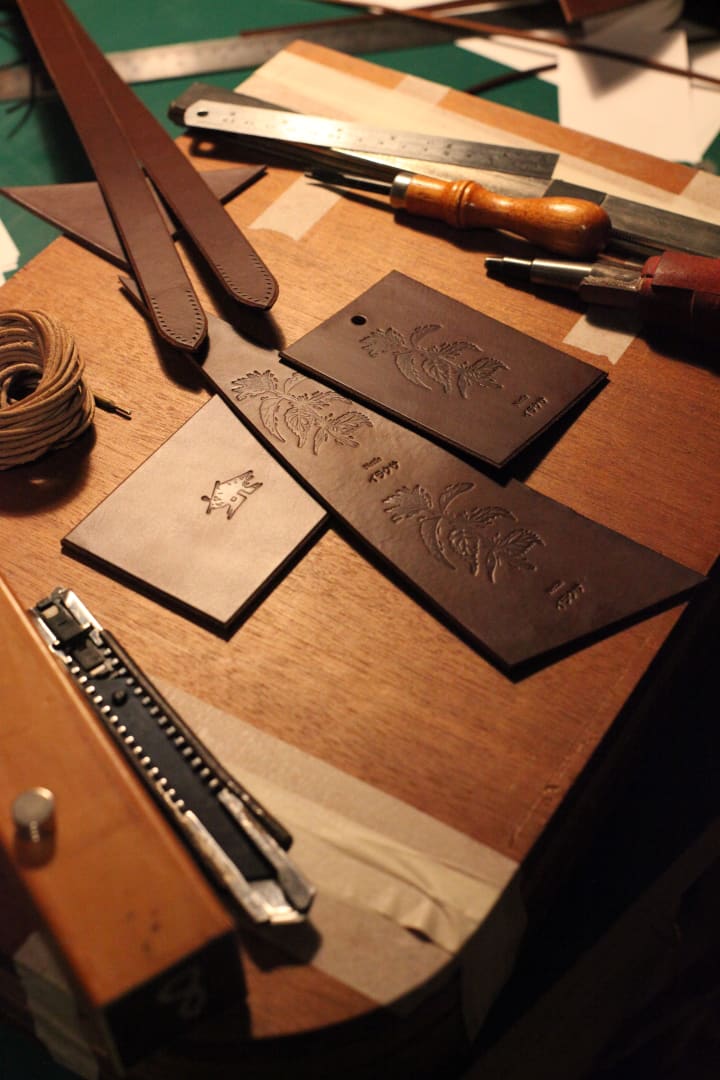
When creating the bespoke wallet I cut and punch everything by hand. Keeping myself focused and absorbed with the process is necessary. Esther, my collie accompanies me almost everyday, snoozing under my bench as I toil away. I lay every pattern piece on the table and decide on the best plan of action to make the wallet. After cutting, punching and skiving each component it is time to move onto stitching. Fiskars are very useful for trimming the loose threads. The tip of the scissors is so sharp I can get to the tightest corner and do my job accurately. To stitch I use waxed braided thread. All of these elements combined make my wallets some of the strongest and most luxurious products available on the market. When creating my wallets, quality is the number one priority. This is reflected in the tools I use such as my Fiskars scissors and the leathers I select. To see the process of hand stitching please have a look at the video attached to this article.
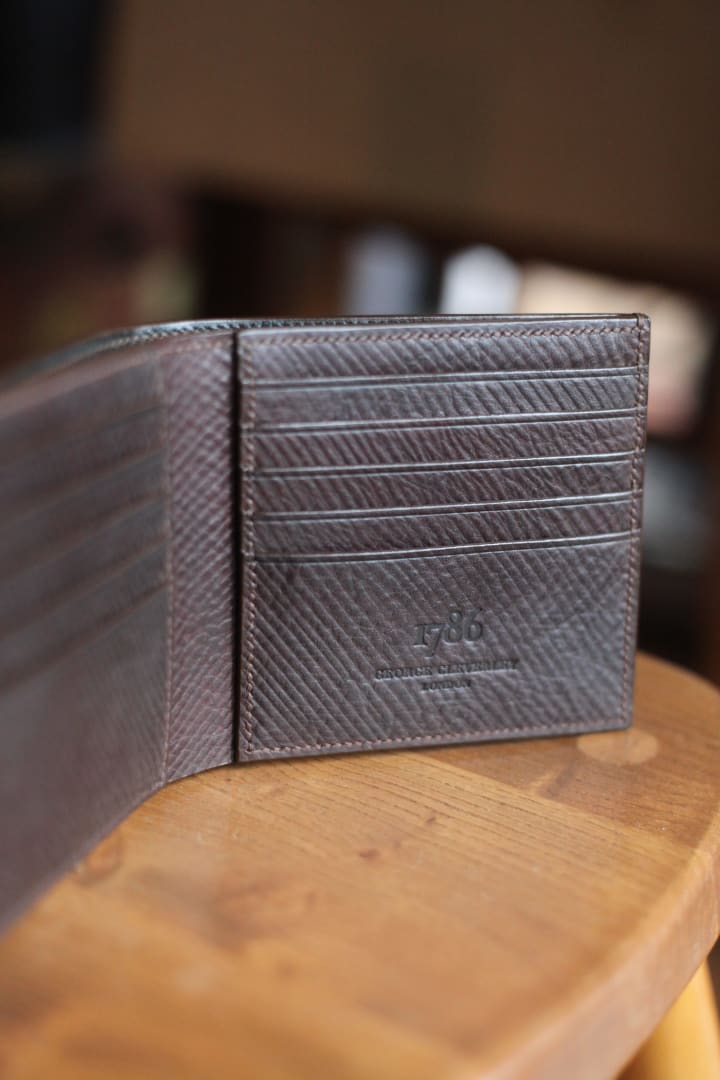
Once the wallet is stitched I trim off the excess leather. Keeping my work neat throughout this process makes the final outcome so much more beautiful and professional. To finish the edges I use thick water based edge paint. This is a time consuming and labour intensive process, as you have to paint the edge, let it dry, sand it back and repeat the process until the edge is smooth and rounded. I then polish the edges to give them a glossy finish. This is a signature for the highest standard of leather goods.
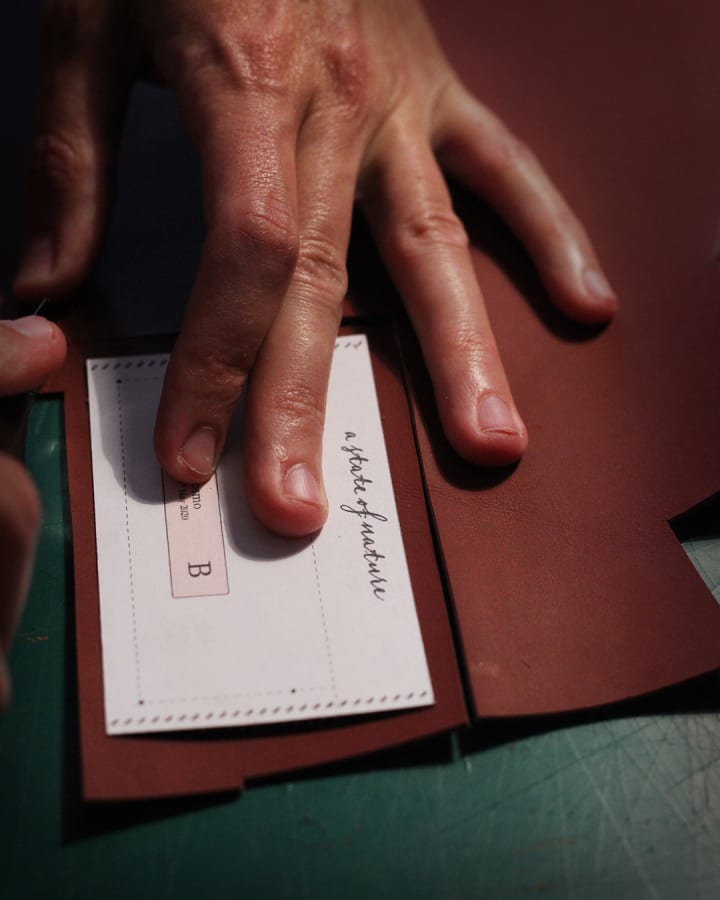
Taking care of the environment and working towards a better tomorrow has always been at the core of my business. Although leather is the result of a highly energy, water and chemically intensive process, I never buy new skins from the tannery. All my leather goods are made from off-cuts and dead stock leather. Because the pattern pieces of wallets are very small, it's usually possible to work between the defects and scratches on the leather to make use of as much of the skin as possible. But in my opinion, the most sustainable way to make products is to make an item that will never be thrown away. This is my greatest ambition and it's a dream I get closer to reaching every day.
Nick Eisa,
About the Creator
Keep reading
More stories from writers in Journal and other communities.
~ Fired ~
— Ai Intrusion ~ Are you Next ~ Is Ai Evolution after your job? — Few workplaces haven't been affected. Ai is in supermarkets, at doctors' offices, and even monitoring farms. I just can't think of anything this machine is not getting into, can you? For instance: Education ~ Law and Tech jobs will one day have a major influence or be taken over by these inanimate machines, with accuracy and vigor. From mechanics' diagnoses to a wide variety of everyday jobs, including fast food workers, with this input having the ability to cut their unnecessary work hours. I'm certain all of us have been touched by this with our short stories and colorful headings, have you? Even comments are very questionable 'Non-Robot' insertions.
By Jay Kantor5 days ago in Journal
New Hypersonic Missile for HIMARS Goes Into Production
Modern warfare is evolving more rapidly than ever before and the USA has been perceived as being behind China and Russia in the field of hypersonic missiles. Russia regularly uses the Kh-47M2 Kinzhal hypersonic air-launched missile against civilian targets in Ukraine. The demand for rapid response and long-range precision has never been higher as the arms race intensifies.
By James Marineroabout 2 hours ago in Journal



Comments
There are no comments for this story
Be the first to respond and start the conversation.