
Oil Falls 5% on US-Iran De-escalation
How easing tensions between Washington and Tehran sent crude prices tumbling — and what it means for markets and consumers

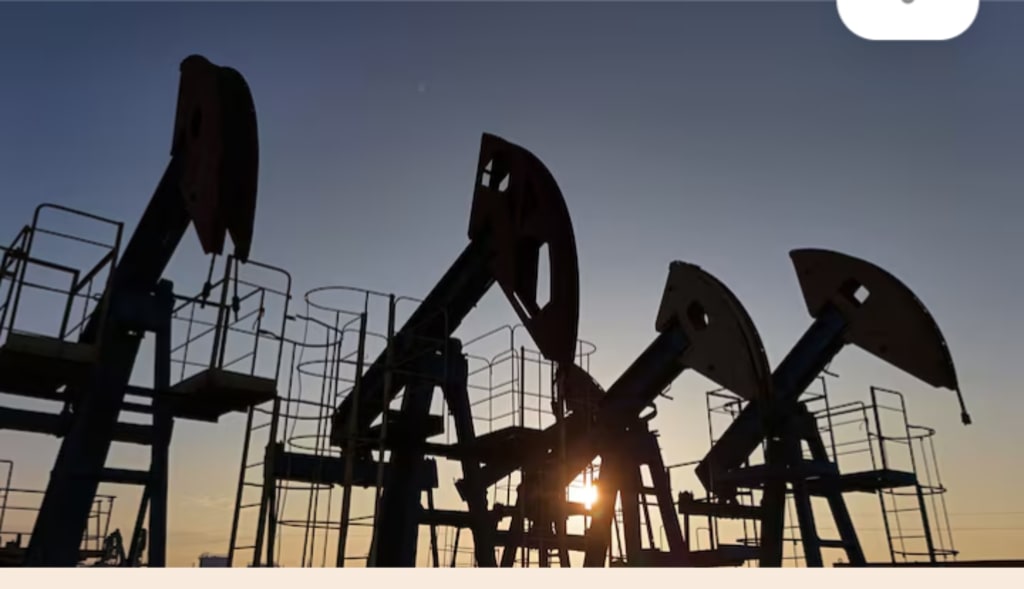
Oil prices took a sharp tumble on Monday, falling nearly 5% after signs of de-escalation between the U.S. and Iran eased fears of a major supply disruption in the Middle East. For traders, investors, and everyday consumers, this sudden drop offers both a lesson in how sensitive energy markets are to geopolitics — and a potential silver lining for fuel prices.
🌍 What Sparked the Sell-Off?
The market reaction came after U.S. President Donald Trump mentioned that Iran was “seriously talking” with Washington, suggesting tensions could cool instead of escalate. This announcement stripped away much of the geopolitical risk premium that had recently driven oil prices higher.
Here’s what happened in the markets:
Brent crude futures fell about 4.8%, settling near $66 per barrel
U.S. West Texas Intermediate (WTI) dropped roughly 5%, landing around $61–62 per barrel
Oil retreated from multi-month highs, undoing some of the gains made amid conflict fears
The swift move highlights just how reactive oil markets are to even hints of diplomacy.
🧠 Why US-Iran Tensions Matter to Oil
Iran plays a strategic role in global oil supply, both as a producer and because of its proximity to the Strait of Hormuz, a critical shipping lane for crude. Any threat — whether military or political — tends to push oil prices higher.
When tensions escalate:
Traders add a risk premium to prices
Oil can spike even without a physical supply disruption
When tensions ease, that premium evaporates quickly, as we saw on Monday. Traders quickly reassessed the risk and unwound positions taken during the rally.
📉 Other Factors Driving Prices Lower
While the U.S.-Iran situation was the main trigger, a few other factors contributed to the sell-off:
Stronger U.S. Dollar: Makes dollar-priced oil more expensive for international buyers
Commodity Market Weakness: Gold and other commodities also retreated, adding pressure to energy markets
OPEC+ Steady Production: The organization confirmed it would keep output levels unchanged, signaling supply won’t be tightened further
These combined factors reinforced the downward momentum, amplifying the nearly 5% drop.
📊 Implications for Markets and Consumers
🛢️ For Oil Markets
The sell-off underscores how fragile recent gains were. Much of the rise in prices over the past few weeks came from fear of supply disruption rather than actual shortages. The market is now returning to a level that reflects current supply-demand fundamentals.
💼 For Investors
Energy stocks reacted sharply, with equities in the sector sliding alongside crude. Traders are reminded that geopolitical events can trigger sudden, high-volatility movements in oil markets, requiring careful monitoring.
⛽ For Consumers
While lower crude prices don’t immediately translate into cheaper fuel at the pump, they reduce inflationary pressure on energy costs and could lead to lower retail prices over the coming weeks.
🌐 Oil’s Rollercoaster Ride
Oil prices have been volatile in recent months:
In January, crude surged due to fears of conflict in the Gulf
By early February, the narrative shifted toward diplomacy, reducing the risk premium
Traders quickly reacted, sending prices downward
This illustrates that oil isn’t just influenced by production or demand — geopolitics often dominates short-term price movements.
🔮 What’s Next?
Oil’s near-term direction depends on several key factors:
Progress in U.S.-Iran talks — any setbacks or breakthroughs could swing prices dramatically
OPEC+ output decisions — changes could add support or pressure
Global demand trends — economic growth, inflation, and energy demand will influence the market
Broader commodity sentiment — moves in currencies and other commodities often affect oil
For now, the decline serves as a reminder of just how sensitive oil is to geopolitical and macroeconomic signals.
✅ Key Takeaways
Oil prices fell nearly 5% after news of potential U.S.-Iran de-escalation
Brent and WTI benchmarks dropped back from multi-month highs
Other contributing factors included a stronger dollar, commodity sell-offs, and stable OPEC+ production
Consumers may eventually see slightly lower fuel costs, though retail prices lag crude movements
Markets remain highly sensitive to geopolitical developments, highlighting the volatile nature of oil trading
In short, while oil markets are volatile and reactive, diplomacy and geopolitics still play a starring role in shaping prices. For traders, investors, and everyday drivers alike, this recent drop is a reminder of how quickly the energy landscape can shift.
About the Creator
Sajida Sikandar
Hi, I’m Sajida Sikandar, a passionate blogger with 3 years of experience in crafting engaging and insightful content. Join me as I share my thoughts, stories, and ideas on a variety of topics that matter to you.
Keep reading
More stories from Sajida Sikandar and writers in Journal and other communities.
Disney’s Profit Wilts, Pulled Down by Movies and TV
Disney, the company synonymous with magical storytelling and blockbuster films, has recently reported weaker-than-expected profits, signaling turbulence in its core business of movies and television. After decades of dominating the entertainment industry, the House of Mouse is now grappling with challenges from underperforming theatrical releases, rising production costs, and the shifting landscape of streaming platforms.
By Sajida Sikandarabout 22 hours ago in Journal
~ Fired ~
— Ai Intrusion ~ Are you Next ~ Is Ai Evolution after your job? — Few workplaces haven't been affected. Ai is in supermarkets, at doctors' offices, and even monitoring farms. I just can't think of anything this machine is not getting into, can you? For instance: Education ~ Law and Tech jobs will one day have a major influence or be taken over by these inanimate machines, with accuracy and vigor. From mechanics' diagnoses to a wide variety of everyday jobs, including fast food workers, with this input having the ability to cut their unnecessary work hours. I'm certain all of us have been touched by this with our short stories and colorful headings, have you? Even comments are very questionable 'Non-Robot' insertions.
By Jay Kantor2 days ago in Journal
EU Set to Add Iran’s Guards to Terror List After France U-Turn
The European Union is poised to take one of its most significant diplomatic steps in years by moving to designate Iran’s Islamic Revolutionary Guard Corps (IRGC) as a terrorist organization — a decision that only days ago seemed unlikely due to political resistance, particularly from France. The shift in Paris’s stance has unlocked what many diplomats in Brussels describe as “a political green light” for the controversial measure, reflecting deepening concern in Europe over Iran’s internal repression and international conduct.
By Haque!Nawaz4 days ago in Journal



Comments
There are no comments for this story
Be the first to respond and start the conversation.