
People's Economy in Tbilisi
Observations on Saturday's markets

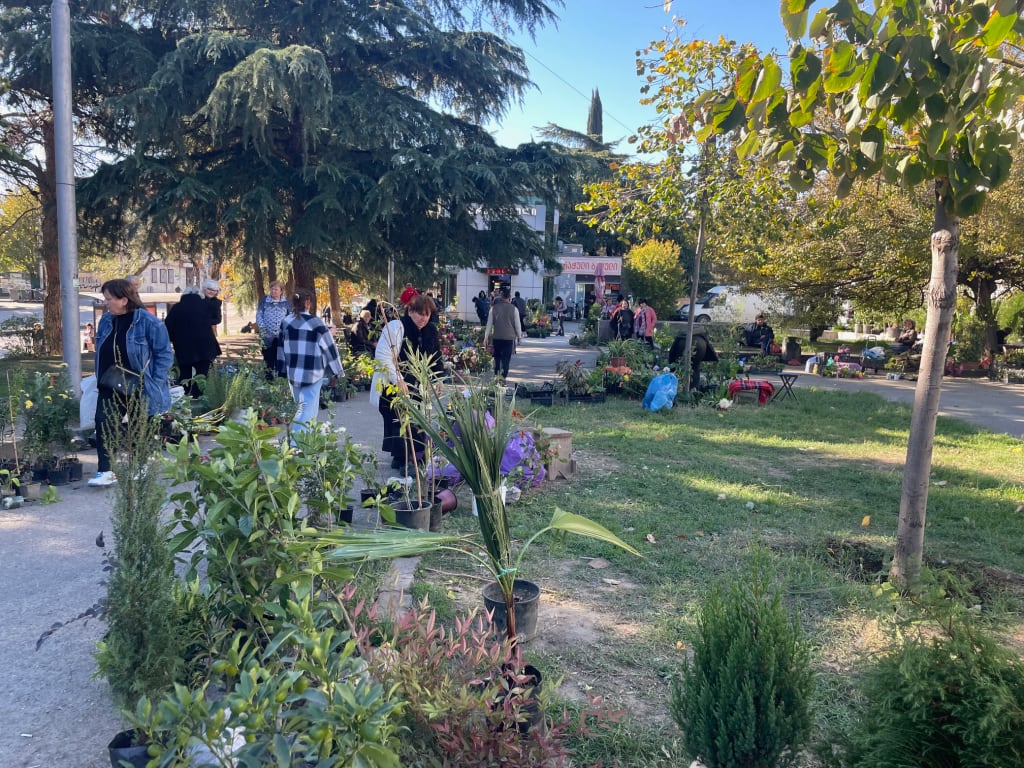
On Saturdays, Tbilisi turns into a large direct people-to-people market. Vendors from all over the nearby regions bring their fresh produce, mountain honey, plants, crafts and pottery to sell to the city dwellers.
Such spontaneous markets emerge in the squares and spaces near the metro stations. Thanks to the weekend traffic of people in the metro, the vendors have better chances of selling their goods faster. These markets usually operate from 10 am to about 3:30 pm, but successful vendors would start wrapping up at about 1:30-2 pm as they still have to hit the road home. Georgia is a relatively small country, comparable in size to South Carolina, Ireland or Lithuania, but a drive through its mountain roads still takes 3-4 hours. And it's getting dark earlier now, too.
So, yesterday I went to the Isani Metro station to pick up my next portion of mountain honey from a Telavi vendor (the town of Telavi is 95–130 km or 1.5–3 hours drive away, depending on which of the two roads you take - a longer and flatter one through the wine region or the shorter windier one through the mountains) who told me to come to Isani metro station for our honey-to-money exchange at noon.
I try to be never late, so I arrived there about quarter to 12. And oh what I treat I stumbled upon: In the square next to the metro station, which is usually just a small park for people to relax or meet up, there were all sorts of garden vendors, selling both outdoor and indoor plants as well as seeds, garden supplies, pots and small tools! I was as happy as a hog under an oak tree, just looking around and appreciating all the trees and flowers there for sale. I took the pictures for this story at about 2 pm, when I returned to Isani metro to have my watch fixed, so a lot of vendors were already packing up and leaving, but it was still pretty lively:
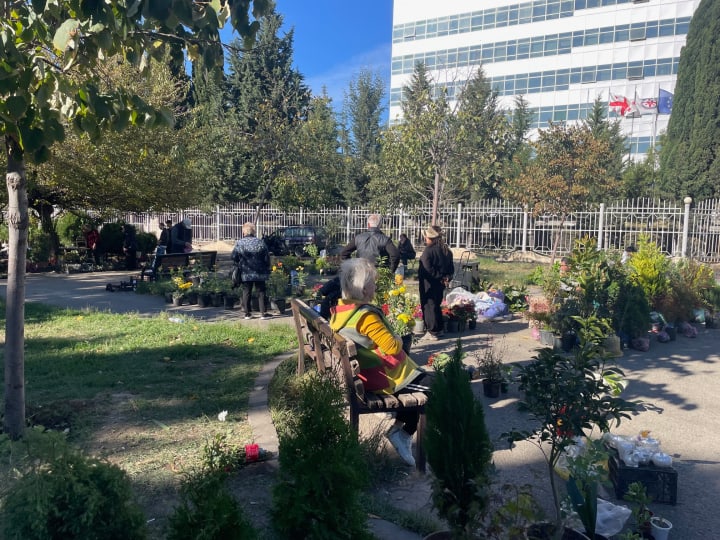
I come from the post Soviet space and know that such markets emerge as a way to stick it to the state that still is not able to secure decent living for its citizens. Also, as a way for the people to help each other out by buying home-made and home-grown stuff. Therefore I call it people's economy.
All transactions on such weekend markets are done in cash, although more digitally advanced vendors now accept payments through direct payment apps as well. No one declares this type of income in their tax returns and therefore it is really hard to estimate what percentage of the real economy the people's economy comprises.
But at least the state here in Georgia is smart enough not to crack down on small vendors by fining them for unauthorized sales or by simply kicking them out from public spaces like they do in Bishkek, Kyrgyzstan, which I witnessed with my own eyes too many times this summer. Or maybe the Georgian state is too busy cracking down on political dissent and arresting and rough-handling protestors. In any case, these weekend markets flourish here.
I bought a little flower to add to my home collection for 8 lari. I wish I could buy them all but my apartment has only so much space and light for the plants.
My Telavi honey supplier arrived at about 12:15, and I got a liter jar of beautiful amber honey from him and a whole uncut honeycomb in its original frame. The liter jar holds about 1.4 kilos of honey, and the honeycomb was about 1.6 kilos. I paid the total of 70 lari ($26) for this purchase, 45 for the honeycomb and 25 for the jar. Here's a picture of my purchases:
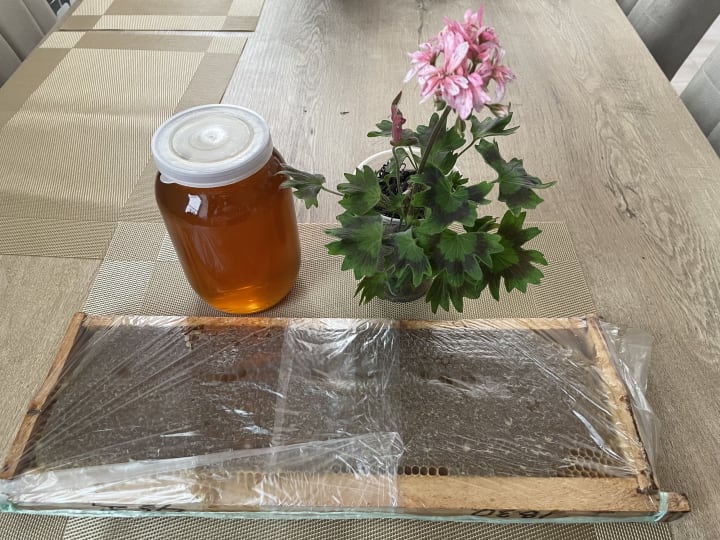
For comparison, at the grocery stores 200 grams of honey sell for anywhere between 11-30 lari, depending on the type and quality, while the 100-gram honeycombs are 10-20 lari. So I scored really big with this purchase, and my vendor was very happy as well and even took my empty jar from the honey I just finished. I hate to waste good glass jars and have no other use for them here.
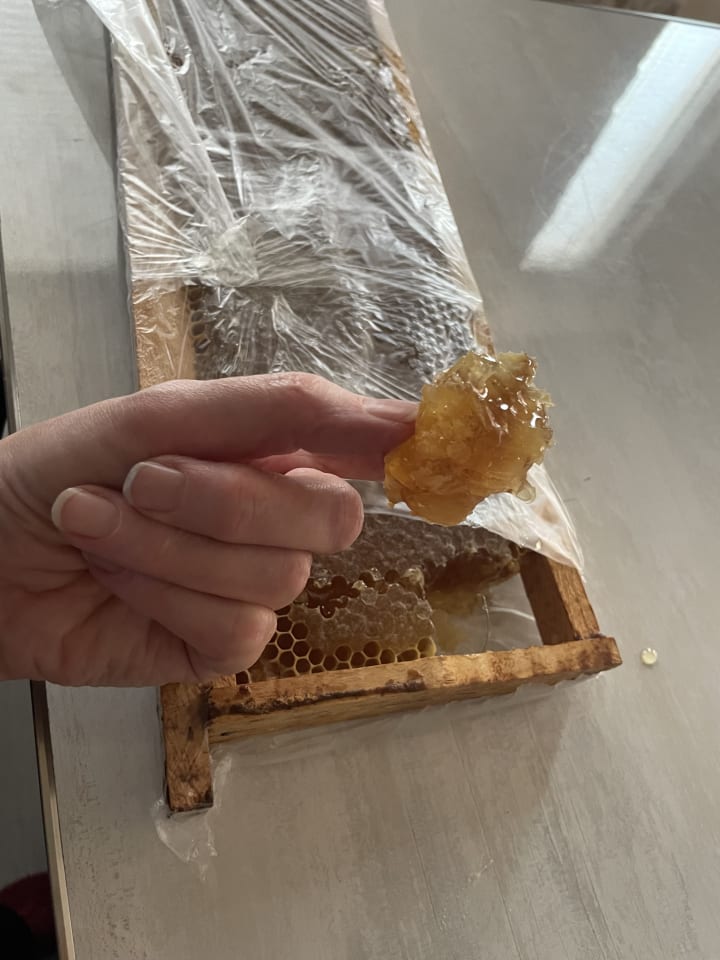
I am particularly happy about the honeycomb. I love chewing the wax because it is so good for your teeth and gums, and yesterday I had three bites like this one.
As I started to walk back home, I stopped by the fruit and vegetable vendor who was selling these beautiful large pomegranates. The pomegranate season here just started, and they still can be a hit or miss: either not completely ripe or too sour inside. The vendor assured me that they were both ripe and sweet, and I bought three for 10 lari.
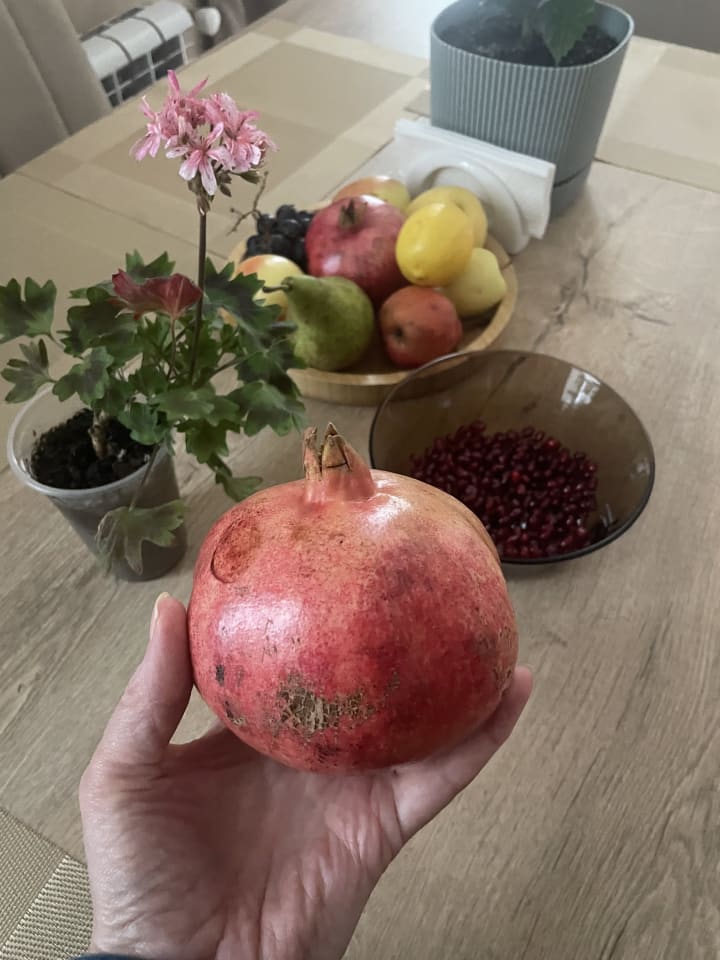
Of the two I cut yesterday, one had a lot of white underdeveloped seeds inside (so, not completely ripe yet) but both pomegranates were sweet. I'm going back there today to buy persimmon which is also now in season.
Oh, and last weekend I also went to a flea market that I forgot to write about. There's a famous Dry Bridge Flea Market right in the heart of Tbilisi, and it is mostly overpriced for tourists. The locals assured me that the flea market near the Samgori metro station is much better in terms of pricing and has pretty much everything as well. Oh boy, was I not disappointed when I went there! Definitely going back to buy some local handmade rugs, kitchen stuff and other trinkets. That market is permanent and operates every day, but still is a part of what I'd consider people's economy.
Thanks for stopping by, and I hope you enjoyed this little tour.
About the Creator
Lana V Lynx
Avid reader and occasional writer of satire and short fiction. For my own sanity and security, I write under a pen name. My books: Moscow Calling - 2017 and President & Psychiatrist
@lanalynx.bsky.social
Keep reading
More stories from Lana V Lynx and writers in Journal and other communities.
Ditched - Index
This index is just for my subscribers. I finished and published this long story or short novella of 6,000 words recently. I tried to link all previous parts of the story in the next one, so if you went along you shouldn't have been lost. This index is just put everything in one place.
By Lana V LynxExclusive • 4 months ago
Big Picture: This Week’s Stunning Images from the South
Every week, photographers and journalists bring us images that tell stories far beyond words. From vibrant city streets to serene natural landscapes, this week’s collection from the South offers a window into the lives, struggles, and celebrations of people in the region. Each photograph captures more than a moment — it conveys emotion, context, and perspective.
By Aarif Lashariabout 2 hours ago in Journal
One Unchecked Box
"Republished" because it was the only way to add the embed for the newly recorded audio version of this story due to the Top Story badge. Plus it serves as a nice, informal announcement of the podcast's revival for another season (go subscribe!):
By Stephen A. Roddewig6 days ago in Fiction



Comments (4)
I always enjoy reading about your adventures. This one was especially interesting. I love reading about local cultures. All your photos were just fantastic. The pomegranate, the honeycomb, the jar of honey, and the beautiful plant. All just really great.
I love it when you share stories and pictures about Tbilisi. You bought a honeycomb! Amazing read, Lana.
That honey looks heavenly. I love to eat honey in the comb and have never seen a whole one on sale. Great story about impromptu market.
I had no idea that chewing the wax was good for our teeth and gums. Is the wax edible?