
Seeing Beyond the Visible: A Complete Guide to Thermal Monoculars and Thermal Scopes
Exploring the technology, uses, and key differences of thermal monoculars and thermal scopes

Introduction
In recent years, advancements in imaging technology have allowed us to see the world in ways once thought impossible. Among these innovations, the thermal monocular and thermal scope have become indispensable tools—not just for hunters, but also for outdoor explorers, search-and-rescue teams, and even wildlife researchers. Unlike traditional optics that rely on visible light, thermal imaging devices detect heat signatures, offering vision in complete darkness, through smoke, fog, and other visual obstructions.
The demand for the best thermal monocular and best thermal scope is steadily rising as individuals seek reliable solutions for nighttime navigation, security, and precision shooting. But what makes these devices different, and how do they work? This article will explore their functions, applications, and key considerations for anyone interested in stepping into the world of thermal optics.
The Science Behind Thermal Imaging
At the heart of both thermal scopes and monoculars is the principle of infrared detection. Every object above absolute zero emits infrared radiation, invisible to the naked eye. Thermal optics convert this radiation into an image, allowing users to “see” heat.
Unlike night vision—which amplifies ambient light—thermal imaging works in total darkness. Whether you’re observing wildlife on a moonless night or locating a lost hiker in thick fog, thermal devices provide an unmatched advantage.
Thermal Monoculars: Compact Vision in the Dark
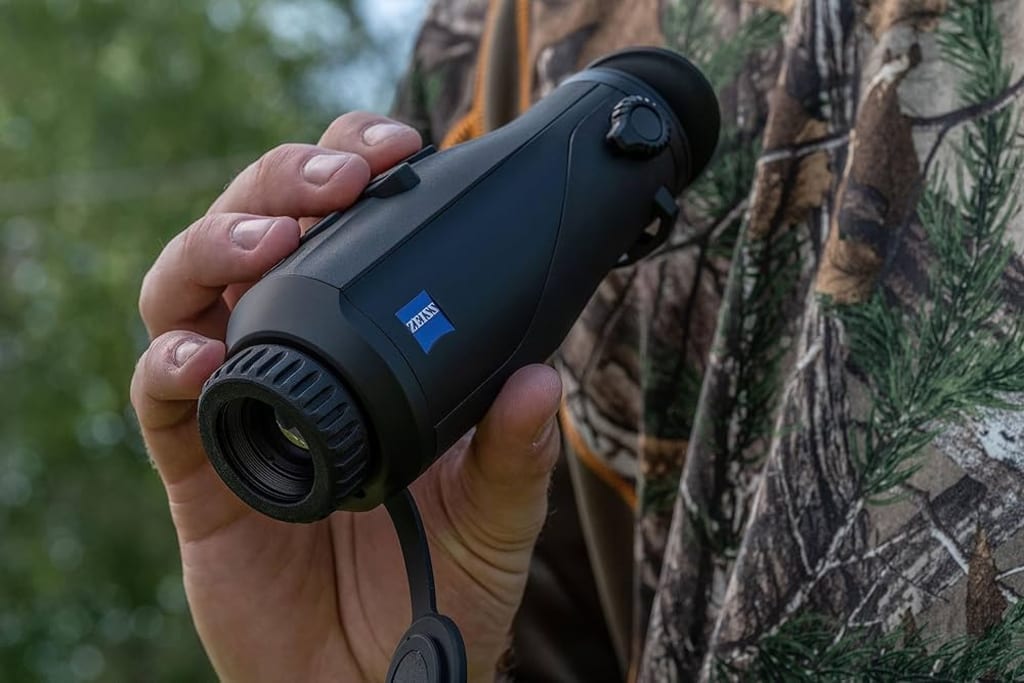
The thermal monocular is designed for portability and versatility. Resembling a small telescope, it can be used with one hand, making it ideal for quick scanning and mobility.
Applications of Thermal Monoculars
Wildlife Observation – Researchers and enthusiasts use monoculars to track nocturnal animals without disturbing their natural behaviors.
Search and Rescue – First responders rely on them to locate missing persons in challenging environments.
Security – Thermal monoculars can detect intruders in total darkness, far beyond the reach of regular flashlights or cameras.
Hunting – Hunters use monoculars to scout terrain and detect animals, ensuring ethical and efficient tracking.
When looking for the best thermal monocular, buyers should consider detection range, resolution, refresh rate, and battery life. Devices with higher resolution offer clearer images, while longer detection ranges extend usability in wide or rugged environments.
Thermal Scopes: Precision Meets Power
A thermal scope is an optical device mounted on firearms, designed to provide clear targeting in low-visibility conditions. Unlike monoculars, which are handheld, thermal scopes integrate aiming reticles and ballistic software for precision shooting.
Types of Thermal Scopes
Thermal Riflescopes: These are advanced systems that allow hunters and professionals to identify, track, and engage targets accurately at night.
Clip-On Thermal Devices: These attach to traditional scopes, offering thermal capabilities without replacing existing optics.
Applications of Thermal Scopes
Night Hunting – Hunters gain an advantage in spotting game hidden in brush or moving silently through darkness.
Military and Law Enforcement – Tactical units rely on thermal riflescopes for surveillance, perimeter defense, and precision in covert operations.
Wildlife Management – Conservation officers use them to monitor animal populations and prevent poaching.
The best thermal scope balances range, image clarity, durability, and user-friendly interface. With advancements in lightweight design and digital displays, today’s models are more accessible than ever.
Comparing Thermal Monoculars and Thermal Scopes
While both thermal monoculars and thermal scopes serve the purpose of detecting heat signatures, their roles and practical applications are quite different. A thermal monocular is typically lightweight and handheld, making it ideal for quick scanning, wildlife observation, search and rescue, or general security purposes. It is beginner-friendly, portable, and does not require the technical knowledge associated with firearms. In contrast, a thermal scope is mounted directly on a rifle and is designed for targeting and precision shooting. It integrates reticles and ballistic features that allow hunters, tactical professionals, and wildlife managers to engage targets accurately in low-visibility conditions. In short, the monocular excels at mobility and general observation, while the scope is built for accuracy and performance when paired with a weapon.
Choosing the Right Thermal Device
Selecting the best thermal monocular or best thermal scope depends on intended use. Here are some important factors:
Resolution – Higher pixel counts provide sharper, more detailed images.
Detection Range – Determines how far you can see heat signatures.
Refresh Rate – A higher refresh rate (50–60Hz) ensures smoother tracking of moving targets.
Battery Life – Essential for extended use in the field.
Durability – Weather resistance and shockproof design are vital for outdoor and tactical scenarios.
Websites like RIX Optics provide a variety of options tailored for different needs, from recreational explorers to professional users.
The Role of Thermal Imaging in Modern Society
The integration of thermal scopes and monoculars has extended far beyond recreational use. Today, they play an important role in:
Border Security – Monitoring vast landscapes at night.
Disaster Response – Locating survivors in collapsed structures.
Maritime Safety – Detecting vessels or people in dark waters.
Aviation – Pilots use thermal imaging to enhance visibility in low-light conditions.
This shows that thermal optics are not merely tools of convenience but essential instruments for safety, conservation, and security.
Ethical Considerations in Using Thermal Optics
While the best thermal monoculars and thermal rifle scopes bring undeniable benefits, they also raise ethical questions. For instance, in hunting, some jurisdictions restrict the use of thermal scopes to ensure fair chase and wildlife conservation. It’s important for users to respect local laws and practice responsible use.
Additionally, in surveillance, balancing security needs with personal privacy is a critical discussion. As thermal optics become more affordable and widespread, responsible ownership will be key.
Future of Thermal Imaging
As technology evolves, we can expect thermal devices to become smaller, more efficient, and increasingly affordable. Advances in sensor resolution and AI integration may soon allow for real-time object recognition, further expanding their applications.
In the near future, thermal optics may play a larger role in everyday tools, from automotive safety systems to wearable devices, making them part of our daily lives in ways we can only begin to imagine.
Conclusion
The thermal monocular and the thermal scope represent the cutting edge of night vision technology, enabling humans to see the unseen. Whether you are a hunter searching for the best thermal scope, a wildlife enthusiast seeking the best thermal monocular, or a professional working in security and rescue operations, these devices provide unmatched visibility and clarity.
As highlighted on RIX Optics, the range of thermal monoculars and thermal riflescopes continues to expand, offering solutions tailored to diverse needs. By understanding their differences, applications, and ethical implications, users can make informed decisions about which device best suits their goals.
In a world where visibility can mean safety, success, or survival, thermal imaging stands as one of the most transformative tools of our time.
About the Creator
Keep reading
More stories from charliesamuel and writers in Journal and other communities.
The Art of Transformation: Exploring the World of Car Wraps
Cars are more than just vehicles—they are extensions of identity, style, and creativity. Over the past decade, one of the most fascinating shifts in automotive culture has been the rise of the car wrap, a design medium that blends art, engineering, and personal expression. Where once a paint job was the only way to change a car’s appearance, today the vinyl wrap has opened up limitless possibilities, from subtle matte finishes to bold, attention-grabbing colors like candy red or bubblegum pink.
By charliesamuel6 months ago in Journal
~ Fired ~
— Ai Intrusion ~ Are you Next ~ Is Ai Evolution after your job? — Few workplaces haven't been affected. Ai is in supermarkets, at doctors' offices, and even monitoring farms. I just can't think of anything this machine is not getting into, can you? For instance: Education ~ Law and Tech jobs will one day have a major influence or be taken over by these inanimate machines, with accuracy and vigor. From mechanics' diagnoses to a wide variety of everyday jobs, including fast food workers, with this input having the ability to cut their unnecessary work hours. I'm certain all of us have been touched by this with our short stories and colorful headings, have you? Even comments are very questionable 'Non-Robot' insertions.
By Jay Kantor8 days ago in Journal
Gold and Silver Keep Spiraling After Market Meltdown
Gold and silver — long viewed as safe-haven assets — are continuing to slide sharply lower following one of the most dramatic market sell-offs in decades. Prices that recently hit record highs have been hit by a cascade of selling pressure, driven by shifting investor sentiment, macroeconomic signals, and technical triggers that have transformed what was a rally into a rout. � Business Insider Historic Declines: What’s Happened So Far Over the past several sessions: Gold prices plunged sharply, extending losses after a record sell-off last Friday. Spot gold slid again as markets opened, deepening the downturn in bullion prices. � Reuters Silver has been even more volatile, continuing to shed value after its worst one-day plunge since 1980, with spot prices remaining well below recent highs and heavy selling persisting. � Reuters Both metals suffered widespread declines as margin requirements were raised and forced liquidations kicked in, amplifying sell pressure across precious metals futures markets. � Reuters The sell-off has also hurt related sectors, with precious-metals mining stocks and ETFs falling sharply as investors reassess exposure to these commodities. � Financial Times Why the Sell-Off Is Happening 🔹 Policy and Macro Shock A key driver behind the sharp decline was the nomination of Kevin Warsh as the next Federal Reserve chair, which signaled to markets a potential shift toward a more hawkish monetary stance. This reduced expectations of aggressive rate cuts and bolstered the U.S. dollar — a bad combination for gold and silver, which are priced in dollars. � Business Insider 🔹 Strong U.S. Dollar and Rising Yields A stronger dollar tends to make commodities like bullion less attractive as hedge assets. Combined with stabilizing yields on Treasury notes, this drained some of the speculative fuel from precious metals’ rally. � Financial Times 🔹 Forced Liquidations and Margin Hikes Exchanges including CME Group raised margin requirements for gold and silver futures, forcing highly leveraged positions to unwind. The result was sweeping forced selling, which rapidly pushed prices lower. � Reuters 🔹 Profit-Taking After Record Highs Both metals had surged to record prices just days before the crash — gold near multi-year peaks and silver above previous historic levels. Some investors seized the opportunity to take profits, accelerating downward pressure. � Alex Lexington Market Reaction: What Traders Are Seeing Analysts and traders describe the current environment as very volatile: 📉 Gold — After a previous rally that boosted bullion to record elevations, gold has reversed direction, dipping into technical correction territory as selling momentum builds. 📉 Silver — Known for its greater volatility relative to gold, silver’s plunge has been particularly severe — historical data show this as one of the most abrupt sell-offs in decades. � fintool.com Market comments from traders reflect shock at how quickly leveraged positions were unwound, often via algorithmic and margin-triggered selling, rather than fundamental shifts in the metals’ underlying value. Some market observers compare the move to structural liquidations rather than simple profit-taking. � Reddit Are These Declines the End of the Rally? Though the drops have been dramatic, many analysts caution not to dismiss the longer-term structural factors that previously supported gold and silver, such as central bank buying, geopolitical uncertainty, and inflation hedging demand. While the short-term outlook is dominated by sell-offs and volatility, trends over months and years may still favor bullion under certain conditions — especially if economic uncertainty or macro risks resurface. � euronews Some market commentary suggests that what we’re seeing now could be more of a market reset or correction than a full reversal of the metals’ multi-year advance. � Philstar.com Impact Beyond Metals The metals crash has reverberated through broader markets: Mining stocks and related ETFs have been hit as investors flee from leveraged and sector-specific exposures. � Financial Times Broader commodity sentiment has turned cautious, with other industrial metals also sliding in response to the retraction in speculation. Equity markets have shown correlated volatility as risk sentiment shifts and investors reassess safe-haven allocations. What Investors Are Watching Next Experts suggest market watchers should monitor: 📌 Dollar strength and Fed signals — Continued confidence in the U.S. currency could keep pressure on dollar-denominated assets. 📌 Margin and leverage conditions — Further changes to futures exchange requirements could trigger more technical selling. 📌 Global macro risks — Any uptick in geopolitical instability or inflation concerns could revive safe-haven demand over time. Conclusion: A Volatile Chapter for Precious Metals After months of record-breaking rallies, gold and silver have experienced one of the most dramatic corrections in decades. The sell-off reflects a complex mix of macroeconomic expectations, technical market triggers, and forced liquidations — a sharp reminder of how sensitive precious metals markets can be to shifts in monetary policy sentiment and leveraged positioning. In the short run, investors are bracing for continued volatility. But whether this marks a sustained downturn or simply a recalibration within a longer-term precious metals bull market remains a topic of debate among analysts and traders alike.
By Zahid Hussain7 days ago in Journal



Comments
There are no comments for this story
Be the first to respond and start the conversation.