
Tensions and Talks: Navigating the Fragile Peace between Pakistan and India
Despite ongoing border skirmishes and political mistrust, both nations face growing pressure to prioritize dialogue over conflict

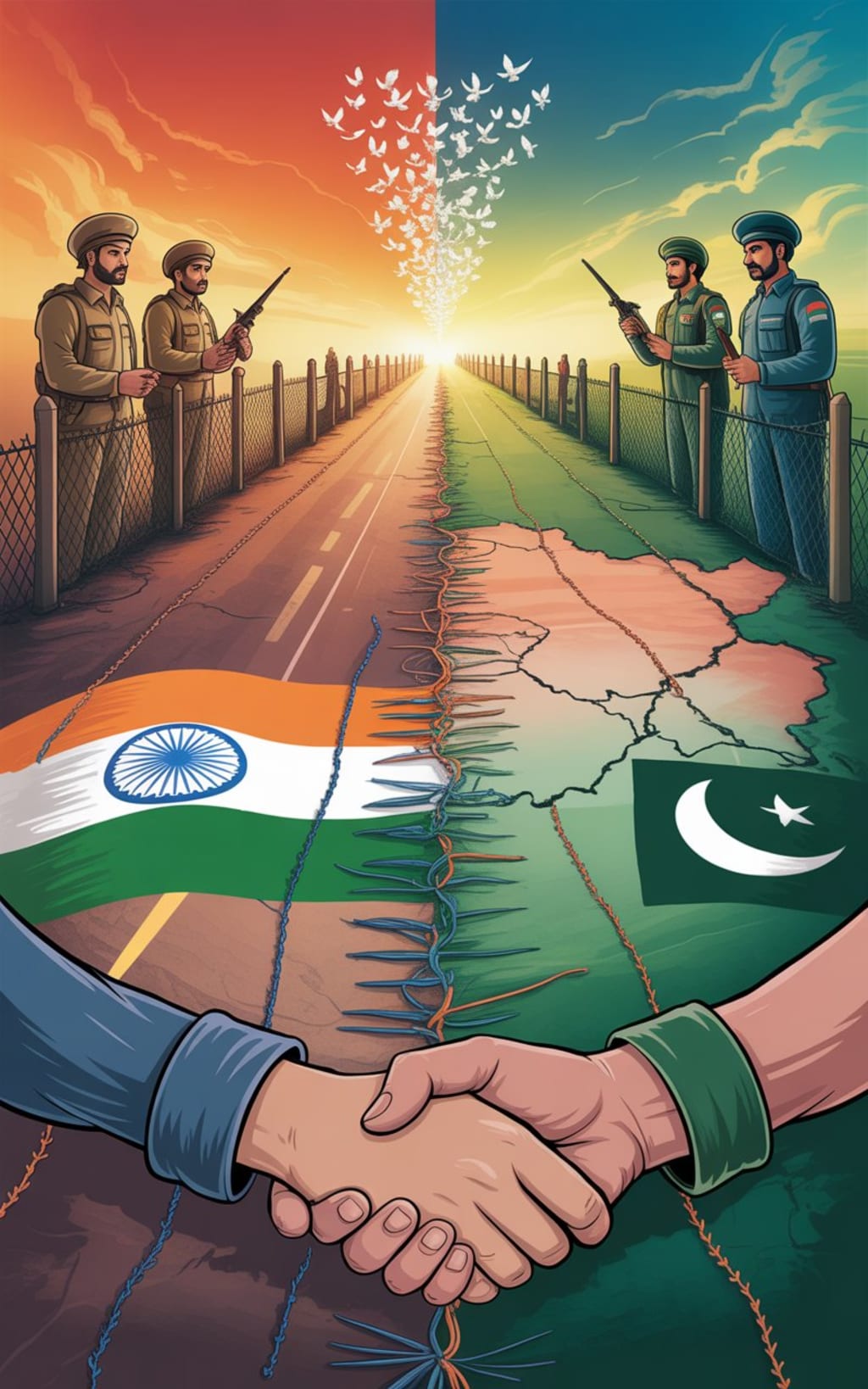
Tensions and Talks: Navigating the Fragile Peace Between Pakistan and India
The relationship between Pakistan and India has been one of the most complex and volatile in South Asia, shaped by a history of partition, wars, territorial disputes, and deeply entrenched mistrust. As of 2025, while hostilities continue to linger—especially in the contested region of Kashmir—there is a cautiously emerging narrative of dialogue and diplomacy, driven by shared challenges and global pressure for peace in a rapidly changing world.
Historical Tensions Resurfacing
At the heart of the India-Pakistan conflict lies the decades-old dispute over Jammu and Kashmir. Since the partition in 1947, both countries have fought multiple wars and engaged in countless skirmishes over the region. In recent years, incidents along the Line of Control (LoC) have spiked, with frequent ceasefire violations leading to military and civilian casualties. The situation remains especially volatile due to the nuclear capabilities of both nations, which significantly raises the stakes in any confrontation.
The revocation of Article 370 by India in 2019, which removed the special status of Jammu and Kashmir, was a turning point that deepened the divide between the two countries. Pakistan condemned the move and downgraded diplomatic ties. Since then, the diplomatic freeze has only deepened, with both nations engaging in tough rhetoric and closing many avenues of formal communication.
The Shift in 2025: Cautious Optimism Amidst Tension
However, despite these persistent tensions, 2025 has seen a subtle but noteworthy shift. Both countries face growing internal and external pressures that are pushing them toward exploring diplomatic options, even if informally.
On the domestic front, both India and Pakistan are grappling with economic slowdowns, inflation, and increasing demands from their populations for stability, jobs, and development. Youth in both countries, who make up a significant portion of the population, are more interested in opportunities than conflict. There's a growing voice among civil society, media, and even some political figures advocating for a shift in narrative—from animosity to coexistence.
Economic and Environmental Interdependence
Another significant driver of potential cooperation is economic necessity. Both countries have suffered setbacks due to disrupted trade, which was once thriving in sectors like textiles, agriculture, and pharmaceuticals. Quiet efforts by business communities to reopen bilateral trade routes have gained traction, although official responses remain cautious. Restoring trade could benefit both sides, especially at a time when global supply chains are shifting and regional trade is becoming more attractive.
Environmental issues are also playing a role in shifting priorities. The climate crisis has hit South Asia hard, with both countries facing severe floods, water scarcity, and extreme weather. The Indus Waters Treaty, which has survived even through times of war, remains a crucial tool for cooperation. Experts have urged both nations to expand on such frameworks to collaborate on climate resilience, water management, and disaster preparedness.
International Pressure and Strategic Shifts
On the global stage, the India-Pakistan rivalry continues to be viewed with concern, especially by countries and institutions that are invested in regional stability. The United Nations has repeatedly urged restraint and encouraged dialogue. At the same time, strategic shifts—such as India’s closer ties with the United States and Pakistan’s deepening relationship with China—have altered the diplomatic landscape. These changing alliances present new risks but also new avenues for mediation.
The Gulf countries, which maintain strong economic and political ties with both nations, have emerged as potential back-channel mediators. Their interest in South Asia’s stability is driven by trade, labor migration, and investment goals. In 2025, reports of discreet talks facilitated by neutral countries have surfaced, though neither Islamabad nor New Delhi has publicly confirmed them.
People-to-People Contact and Cultural Diplomacy
While official diplomacy remains limited, people-to-people contact has slowly regained momentum. Cultural diplomacy—through music, films, sports, and literature—continues to play a quiet but important role in softening public perceptions. Cricket matches between India and Pakistan continue to capture the imagination of millions, serving as a temporary bridge in times of strife.
Educational and academic exchanges, though limited, are also being explored. Online platforms have made it easier for scholars, students, and professionals to engage in discussions that promote mutual understanding. These exchanges are crucial in building a foundation for long-term peace.
The Road Ahead: Challenges and Opportunities
Despite these encouraging signs, significant challenges remain. Political will is the biggest obstacle. In both India and Pakistan, nationalist politics often capitalize on anti-neighbor rhetoric, particularly during election cycles. Misinformation, media sensationalism, and lack of trust continue to shape public opinion and restrict the space for diplomacy.
However, the potential rewards of peace are immense. A stable India-Pakistan relationship could unlock economic prosperity, enhance regional security, and allow both countries to focus on development rather than defense. The path forward must include confidence-building measures—such as restoring diplomatic missions, establishing crisis communication hotlines, and resuming structured bilateral talks.
International stakeholders can also play a constructive role by encouraging transparency, mediating tensions, and supporting joint initiatives in areas of mutual interest, like health, education, and climate.
Conclusion
In 2025, the relationship between Pakistan and India stands at a crossroads. While the shadows of history still loom large, shifting domestic priorities, economic interdependence, and international encouragement offer a narrow but real opportunity for a new chapter. Navigating this fragile peace will require vision, courage, and commitment—from leaders, institutions, and citizens alike. Only through sustained dialogue, trust-building, and cooperation can the two nations hope to turn conflict into coexistence and hostility into har
About the Creator
zohaib khan
Start writing..."Adventurer & storyteller | Exploring the world one vlog at a time | 200K+ YouTube subscribers | Collabs: GoPro, Airbnb | Let’s connect!"
Keep reading
More stories from zohaib khan and writers in Journal and other communities.
"Operation Sindoor and Bunyan ul Marsoos: A New Chapter in Indo-Pak Hostilities"
Flashpoint: India and Pakistan on the Brink Tourist Attack in Kashmir Sparks Military Escalation Between Nuclear Neighbors In one of the gravest escalations of India-Pakistan tensions in recent years, a deadly terrorist attack in Indian-administered Kashmir on April 22, 2025, has ignited a rapid sequence of military strikes, retaliations, and global concern. What began with the killing of 26 Indian tourists in Pahalgam has evolved into a dangerous cross-border confrontation, involving airstrikes, drone attacks, and heavy artillery fire, with both countries accusing each other of aggression.
By zohaib khan9 months ago in Journal
U.S. Dollar Rebound May Be Limited by Rate Cut Expectations and Federal Reserve Independence Concerns
After a strong run over the past two years, the U.S. dollar has shown signs of fatigue. While periodic rebounds continue to appear, many analysts believe these rallies may be short-lived. Two powerful forces are working against a sustained dollar recovery: growing expectations of Federal Reserve rate cuts and rising concerns over the long-term independence of the U.S. central bank. Together, these dynamics are reshaping global currency markets and challenging the dollar’s traditional safe-haven appeal.
By Ayesha Lashari6 days ago in Journal



Comments
There are no comments for this story
Be the first to respond and start the conversation.