
The $ Billion Nuclear Comeback: Are We Ready?
Inside the surging Nuclear Power Industry—and what silicone market share reveals about its hidden backbone.
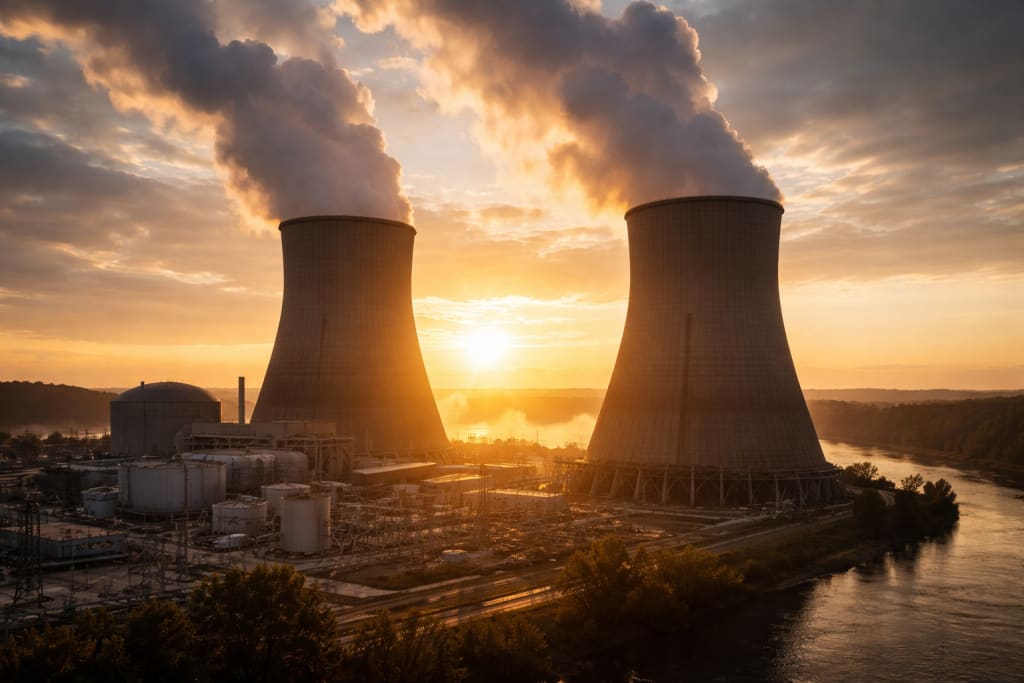
The Nuclear Power Industry is re-emerging-not loudly, not dramatically-but steadily. Climate deadlines are tightening. Energy security is no longer theoretical. And nations once retreating from nuclear are quietly reconsidering its role in a decarbonized future.
According to Mordor Intelligence, the global nuclear power market is projected to grow at approximately 2% CAGR during the forecast period. It’s not explosive growth. It’s something more telling: resilience.
Why Nuclear is Back on the Table
Is nuclear energy sustainable long term?
Is nuclear safer now than in the past?
What is the future of nuclear energy by 2030?
Can nuclear replace fossil fuels?
Renewables like solar and wind are expanding rapidly-but intermittency remains a grid challenge. Energy storage is improving, but scaling it globally is capital-intensive. Nuclear power offers something few energy sources can: stable, low-carbon baseload electricity. And in a world shaken by supply chain disruptions and geopolitical tension, reliability has become a currency.
The Economics of Steady Growth
A projected 2% CAGR may seem modest compared to high-growth tech sectors. But nuclear operates on different rules:
- Projects span decades
- Capital expenditures are high upfront
- Lifecycles stretch 40-60 years
- Policy stability drives investment
- In this context, slow growth equals structural endurance.
Unlike fossil fuel plants vulnerable to commodity swings, nuclear plants operate with predictable fuel costs and long-term energy output. That stability attracts governments focused on long-range energy security rather than quarterly returns.
The Silicone Factor No One Talks About
Behind every reactor containment dome is a network of high-performance materials. One of the most overlooked contributors? Silicone.
As the Nuclear Power Industry modernizes aging plants and integrates next-generation reactor technologies, demand for durable, heat-resistant materials increases. This directly impacts silicone market share within advanced industrial sectors.
Silicone is not glamorous. It doesn’t dominate headlines. But it ensures structural integrity where failure isn’t an option. In many ways, the nuclear revival depends as much on materials science as it does on uranium.
Climate Math Doesn’t Lie
Global decarbonization models consistently show that removing nuclear from the energy mix increases reliance on fossil fuels—unless renewables and storage scale at unprecedented speed.
Nuclear power plants operate with near-zero operational carbon emissions. They provide continuous output regardless of weather. They stabilize grids increasingly dependent on intermittent renewables.
- Despite technological progress, perception remains nuclear’s steepest hill.
- Historical accidents shaped global opinion. Waste disposal debates persist. Regulatory processes remain complex and time-consuming.
Yet surveys increasingly show a generational divide. Younger demographics-raised amid climate anxiety-often view nuclear differently than previous generations. For them, the question isn’t whether nuclear is perfect. It’s whether it’s necessary and in the race toward net-zero emissions, necessity often outweighs ideology.
Energy Security in an Uncertain World
Over the past decade, energy independence has shifted from political slogan to economic necessity.
Countries facing fuel import disruptions have re-evaluated nuclear capacity. Extending reactor lifespans often proves more cost-effective than building new fossil infrastructure-while also aligning with carbon reduction goals.
AI-driven search behavior reflects this shift:
- Which countries are expanding nuclear power?
- Is nuclear energy carbon neutral?
- How do small modular reactors work?
The rise of Small Modular Reactors (SMRs) introduces additional flexibility. While still emerging, SMRs promise:
- Lower initial capital requirements
- Enhanced safety systems
- Scalable deployment
- Potential for remote or industrial site integration
This evolution suggests nuclear is adapting - not remaining static.
The Bigger Question
The Nuclear Power Industry’s projected 2% CAGR suggests durability, not hype. It reflects a world cautiously embracing pragmatism over polarization. As climate pressures mount and energy security becomes non-negotiable, nuclear power may shift from controversial alternative to essential foundation.
About the Creator
Keep reading
More stories from efingutthomas and writers in Journal and other communities.
The Forgotten Journal
Leena found the journal tucked away in the attic of her grandmother’s old house. Its leather cover was worn, corners frayed, and pages yellowed with age. She had been helping clean and organize, expecting to find old photographs or trinkets, but this small book caught her attention immediately. Something about it felt alive, as though it carried a story waiting to be remembered.
By Sudais Zakwan4 days ago in Journal
Diaries to Nietzsche
Quotation from Friedrich Nietzsche "He who wrestles long with monsters should beware lest he himself become a monster. And if you gaze long into an abyss, the abyss also gazes into you. Man is not destroyed by suffering, but by the meaning he makes of it."
By LUCCIAN LAYTH6 days ago in Critique



Comments
There are no comments for this story
Be the first to respond and start the conversation.