
The Phantom of the Bosphorus
Chapter 2: The Fugitive of Heart
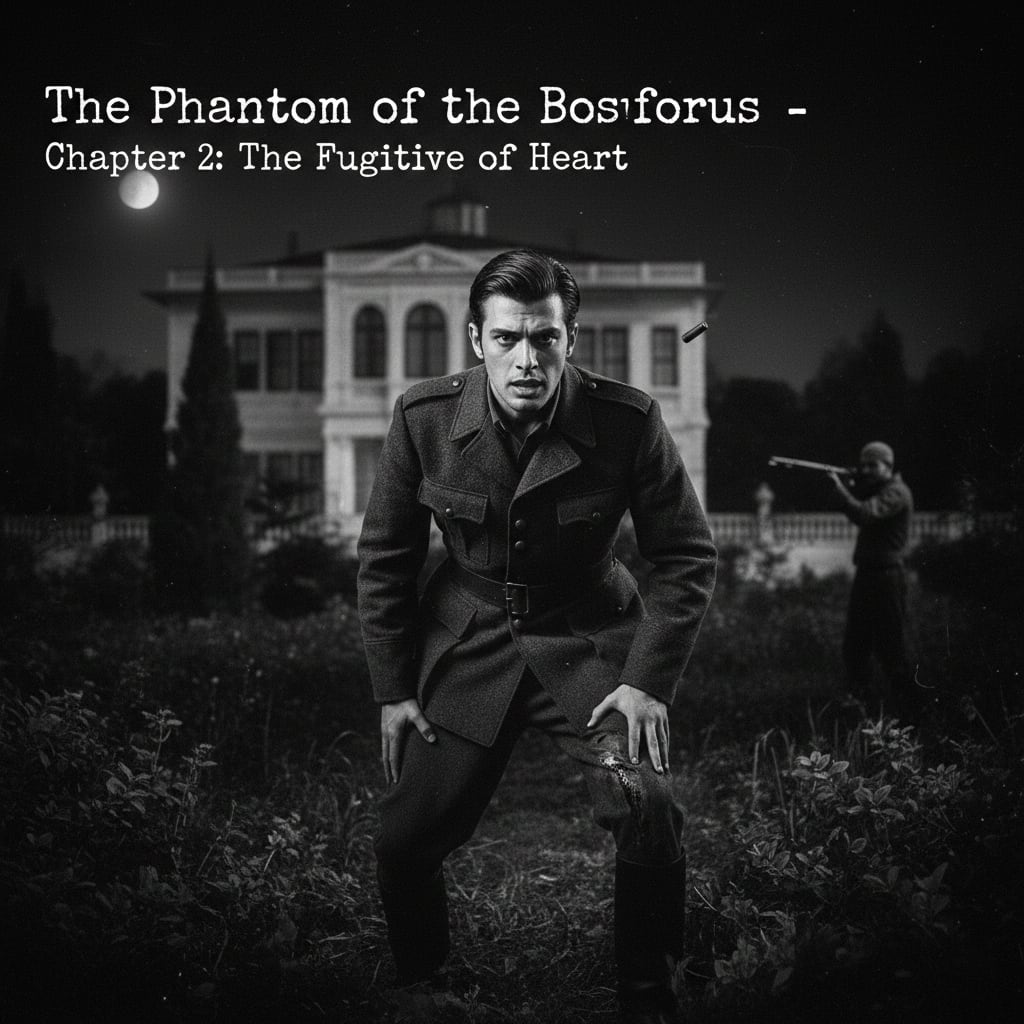
"They say a man runs because he is afraid. I ran because I was in love—to hold onto a life that was slipping through my fingers like sand. A soldier’s uniform couldn’t bind me; my heart was already bleeding for my fading wife."
The White Tulip of Kasımpaşa
My life had been a series of grays and blacks until that spring evening in Kasımpaşa. I was walking up a steep, narrow alley when I saw her. She was struggling with heavy bags of groceries, her breath visible in the cool evening air. Her name was Zeynep. She had eyes that held a peace I didn't know existed in this world. For the first time in my life, I reached out my hand not to pick a pocket or slip away a wallet, but to help.
Our romance was one of whispered promises in pastry shops and long walks by the sea. I told her I was a merchant, a man of honest trade who dealt in olive oil and spices. I had to lie; the truth was a shadow that would have withered her light. She believed me because she had a soul that saw the best in everyone. We married in a small ceremony, and for a few months, I felt human. I had a warm bed, a home that smelled of lavender, and a reason to wake up. But the past is a greedy creditor, and it was coming to collect.
The Deserter's Dilemma
Just two months into our marriage, the heavy boots of the military police shattered our peace. I was hauled away as a "deserter," a shadow from my past I thought I had outrun. I was sent to a cold, gray barrack, but the walls of the cell were nothing compared to the news that arrived in Zeynep’s first letter. She was ill. The "silent killer"—cancer—had found its way into her lungs.
The military prison was a calculated hell designed to break the spirit through systematic authority. But I wasn't just a soldier; I was a man with a dying wife who thought I was away on a profitable business trip. I had no money for the surgery, no way to pay the doctors. The "honest merchant" was a ghost, and the thief had to return. One midnight, I slipped past the sleeping guards and scaled the perimeter fence. I threw my uniform into the sea. I was no longer a soldier; I was a fugitive fueled by desperation.
The Night of the Crimson Moon
The plan for my return to the Yalıs was born of necessity, not strategy. I needed a massive amount of gold, and I needed it fast. My target was a magnificent mansion in Tarabya, owned by a wealthy diplomat who was known to be abroad. The moon was a deep, ominous crimson that night, casting long, distorted shadows over the Bosphorus.
I rowed my matte-black boat with a fury I had never felt before. 03:15 AM. The four-minute window. I scaled the garden wall, my muffled oars hidden in the bushes. Inside, the mansion was a treasure trove of antique vases and gold ornaments. I worked like a man possessed, filling my sacks with enough wealth to buy Zeynep years of life. But desperation makes a man loud. In my haste, a heavy silver tray slipped from my grip, hitting the marble floor with a deafening clang.
The Bullet That Changed Everything
I didn't wait to see who heard it. I grabbed the bags and sprinted toward the pier. But the mansion's aging watchman, a veteran of many nights, had already raised his rifle. "Halt!" he cried. I didn't stop. I jumped for the boat just as a flash of gunpowder lit up the dark garden.
A searing, white-hot pain exploded in my right leg. It felt as if a bolt of lightning had shattered my bone. I tumbled into the boat, the wood slick with my blood. I gritted my teeth, rowing with a primal strength I didn't know I possessed, as the searchlights began to dance on the water behind me. I escaped into the fog, but the cost was absolute.
A back-alley doctor stitched me up without asking for my name. "You’ll walk again, boy," he said, blowing smoke into the dim light. "But you’ll never run. That leg will be your permanent shadow." Zeynep never saw the gold. She passed away three weeks later, never knowing her "merchant husband" was the Phantom of the Bosphorus. Standing over her grave, leaning on a cane, I realized my life as a cat burglar was over. I couldn't climb, I couldn't run, and my heart was as broken as my leg. If I was to survive, I had to stop stealing things and start stealing souls. The era of "Topal Atik"—Atik the Limping—had begun.
About the Creator
Keep reading
More stories from Ercan Bilmez and writers in Journal and other communities.
Super Bowl LX Recap: A Team Called Hawks
Sixty. The Super Bowl turned 60! Still amazes me that this was the sixtieth Super Bowl played in NFL history. It seems like yesterday that I watched Super Bowl XXVII, the first SB I ever watched. The QB who won Super Bowl XXVII has since called a few SBs, and will call next year's game, but that's another story. Super Bowl LX took place at Levi's Stadium in Santa Clara, California, the home stadium of the San Francisco 49ers. However, it was one of their division foes who represented the NFC, as the Seattle Seahawks faced off against the New England Patriots.
By Clyde E. Dawkins5 days ago in Unbalanced



Comments
There are no comments for this story
Be the first to respond and start the conversation.