
The Senior Discount That’s Bankrupting America
How a Closing Biological Window Is Driving the $35 Trillion National Debt.

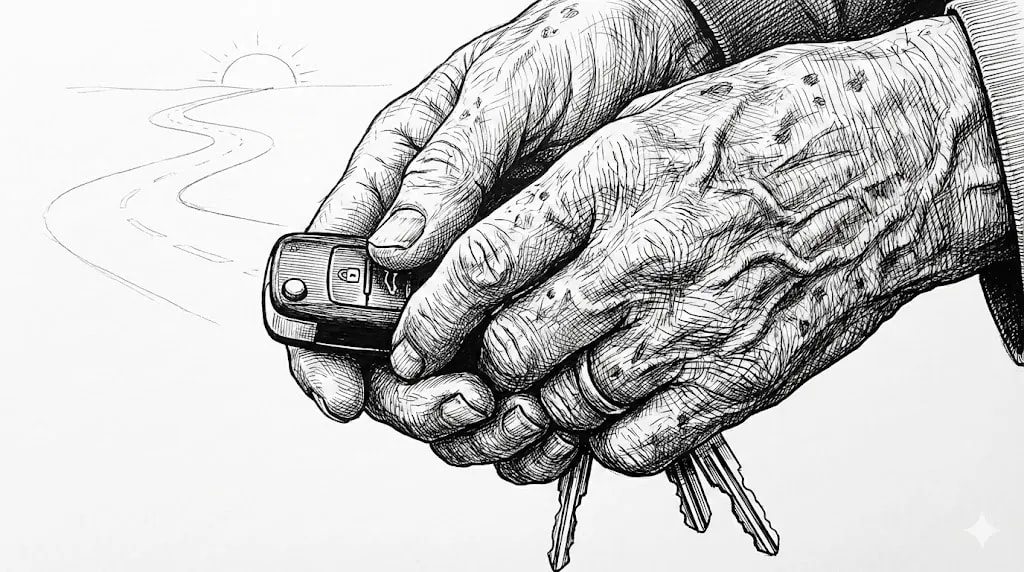
My grandmother was ninety-two when we finally took her car keys. This had nothing to do with politics or “ageism.” It was a cold, necessary deduction based on the fact that she had started treating curbs like suggestions and stop signs like optional street art.
We took the keys because the biological reality of her horizon no longer aligned with the safety of the neighborhood. She was livid. She genuinely believed her seven decades of “experience” behind the wheel outweighed her failing reflexes.
She was wrong. Reality is indifferent to your resume when you’re drifting into oncoming traffic.
We are watching this same brand of denial play out on the national stage, only with far higher stakes. Not long ago, the news cycle hummed with reports of Senator Mitch McConnell being hospitalized for “flu-like symptoms.” At 84, a bout of the influenza isn’t a minor setback; it’s a flashing yellow light for a body that has spent decades in the high-pressure cooker of the Capitol. Yet, much like my grandmother, the instinct isn’t to pull over — it’s to grip the wheel until the knuckles turn white.
Currently, in 2026, there are two dozen members of the U.S. Congress who are 80 or older. Even more telling? Thirteen of them are actively campaigning for re-election. We are currently being driven by a cohort of people who, by every law of biology and economics, will not be around to see the wreckage of the car they are currently redlining.
The Wisdom Trap
“But wait,” the skeptic argues, “don’t we want wisdom? Shouldn’t we value the steady hand of someone who has seen it all?”
It’s a seductive pitch. We’ve been conditioned to view longevity as a proxy for virtue — that a 30-year-old is “too green” and a 50-year-old is “too partisan,” but an 85-year-old is a “statesman.” We picture them as village elders sitting under an ancient oak, dispensing timeless truths.
However, there is a significant logical flaw in this Hallmark-card version of governance. In a world governed by cause and effect, incentives — not platitudes — are what actually move the needle.
The Logic of the Horizon
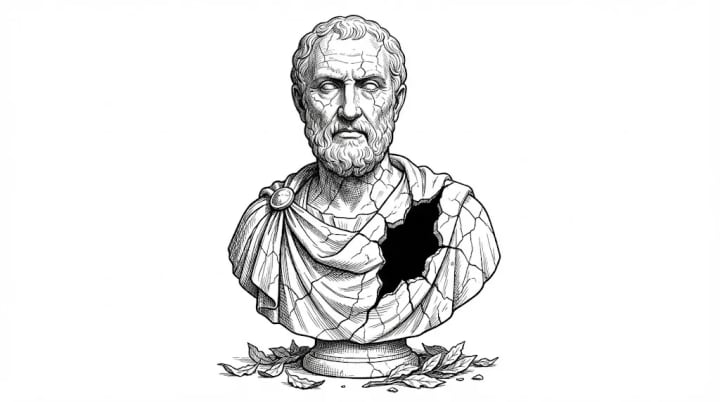
Every human action is a trade-off. You spend a dollar today because you value it more than the dollar (plus interest) you’d have tomorrow. This is Time Preference.
- Low Time Preference: You save. You build. You plant trees whose shade you will never sit in. You care about the Unseen — the future generations who will inherit either your assets or your debts.
- High Time Preference: You consume. You borrow. You live for the Seen — the immediate gratification of the present moment.
There is a brutal, biological truth here: As a person’s horizon nears its end, their natural time preference almost always shifts toward the immediate.
If you are 87 years old, the long-term fallout of a $35 trillion national debt is, quite literally, not your problem. You can vote for another “emergency” spending package, enjoy the temporary bump in your local polling, and effectively “liquidate” the future of a 20-year-old to pay for it.
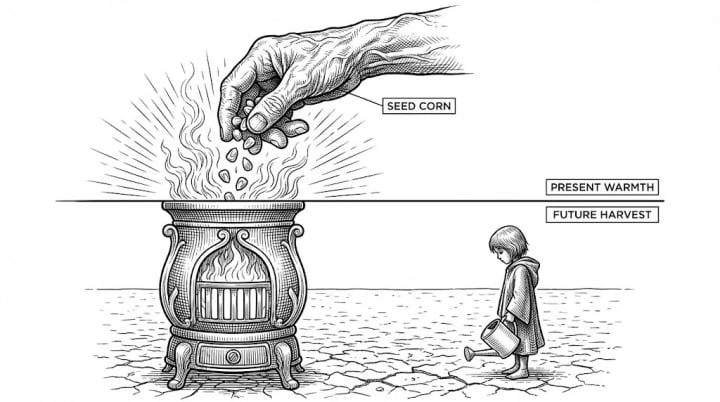
Logic suggests that a leader with a five-year horizon will always be more willing to “eat the seed corn” than one with a fifty-year horizon. They aren’t necessarily being “wise”; they are being rational actors within a closing window of time.
The Enemy: The Incumbency Machine
Why does this persist? Why do we keep handing the keys to people who can barely see over the dashboard?
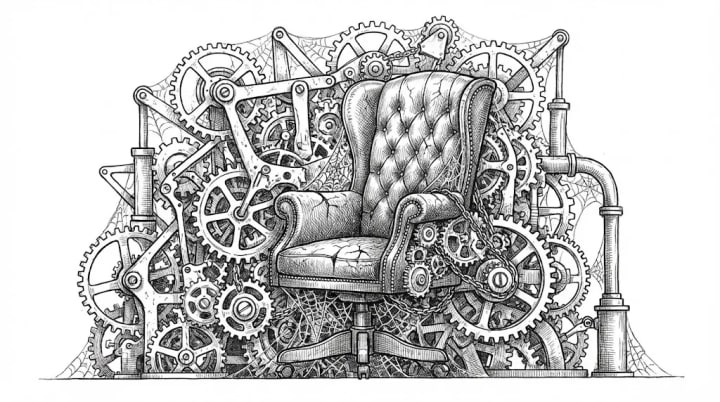
The problem isn’t “old people.” The enemy is the Incumbency Machine — a system designed to protect the status quo at the expense of reality.
- Seniority as Currency: In the halls of power, your “rank” is determined by how long you’ve occupied a leather chair. If your representative leaves, your district loses its “clout.” It’s a protection racket.
- Asset Liquidation: Career politicians stay in office to protect the very structures they built. They aren’t legislating for the future; they are defending their legacy (and their donors’ interests) against the inevitable market correction.
- The Information Barrier: By the time a politician reaches 85, they are often insulated by a “praetorian guard” of 25-year-old staffers who do the actual reading, writing, and thinking.
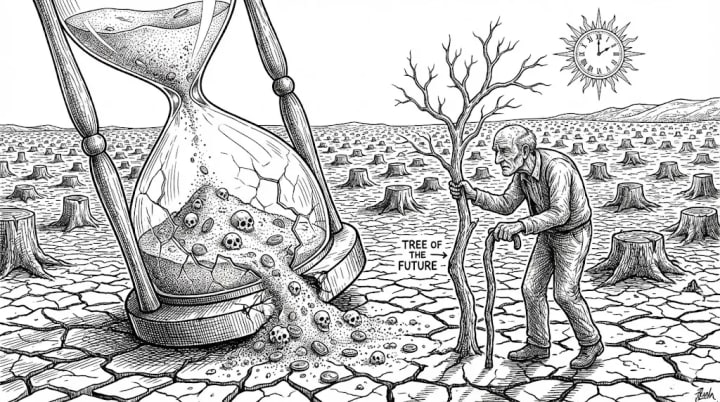
“A society grows great when old men plant trees in whose shade they shall never sit.”
Today, we have a Congress that is chopping down those same trees to keep the furnace running just long enough to finish their term.
The Tragedy of the Unseen
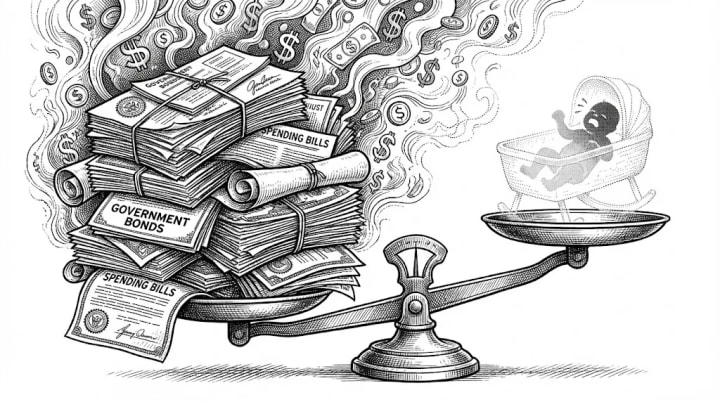
Look at the data. In this 2026 cycle, members of the “Silent Generation” are clutching their seats with an almost desperate intensity. While the media fixates on the “seen” drama — the hospitalizations, the gaffes, the physical frailty — the “unseen” tragedy is the massive transfer of wealth from the unborn to the elderly.
Every time an aging legislature votes to expand the money supply to fund current entitlements, it is effectively stealing the purchasing power of someone born in 2024. It is a form of intergenerational plunder. When you have no skin in the future, you have no incentive to protect the currency. You have no incentive to deregulate industries that will take twenty years to mature. You have no incentive to fix a Social Security system that won’t go bust until after your funeral.
The Reality Check: The 2026 Re-election Wave
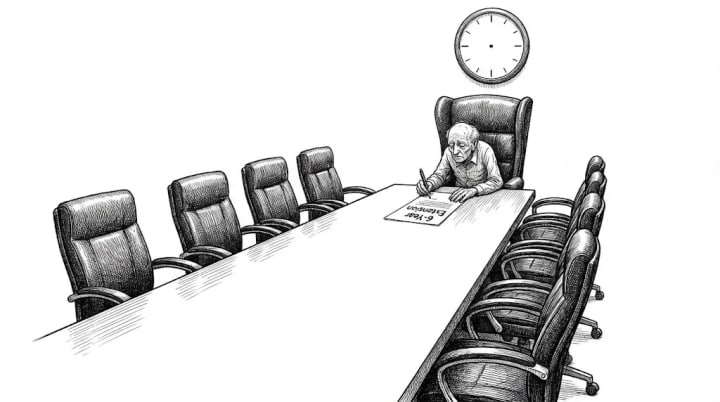
Consider the numbers. As of early 2026, 13 members of Congress aged 80+ are asking for another two-to-six-year contract.
In any other profession, this would be viewed as a total failure of succession planning. If a Fortune 500 CEO refused to step down at 82 while the company’s debt-to-equity ratio spiraled out of control, the board would have them out by lunch.
In politics, however, we call it “service.”
We’ve allowed the concept of “representation” to be replaced by “entitlement.” We treat these seats like hereditary fiefdoms. The result is a legislative body that is physically and mentally disconnected from the technological and economic realities of the 21st century. They are debating 1970s solutions for 2030s problems.
The Paradigm Shift: From “Statesmen” to “Liquidators”
The next time you see a headline about an 84-year-old Senator being hospitalized or announcing a “final” run for re-election, don’t think “What a dedicated public servant.”
Think: “What an efficient asset liquidator.”
They are there to ensure the bill for the last forty years of fiscal insanity doesn’t come due while they are still in the room. They are there to protect the Seen (their donors, their pensions, their legacy) while sacrificing the Unseen (your children’s wealth, your savings, and the future of the republic).
Logic demands a future-oriented leadership. If someone doesn’t have a biological stake in the year 2050, they should not be the ones determining the laws that will govern it. It’s time to take the keys — not out of malice, but out of a rational necessity for the survival of the neighborhood.
About the Creator
Cher Che
New media writer with 10 years in advertising, exploring how we see and make sense of the world. What we look at matters, but how we look matters more.
When the Path Becomes Invisible: My Journey Through the Fog
1. Life Feels Cloudy Sometimes, life doesn't give you a clear road. Instead, it gives you a thick fog. I’ve been there—where your dreams start to look cloudy and your goals feel out of reach. It’s like walking in a mist where you can't even see your own feet.
By Hazrat Umer7 days ago in Journal



Comments
There are no comments for this story
Be the first to respond and start the conversation.