
The Silent Revolution in Digital Packaging Printing
How smart printing is reshaping brands, boxes, and buying behavior
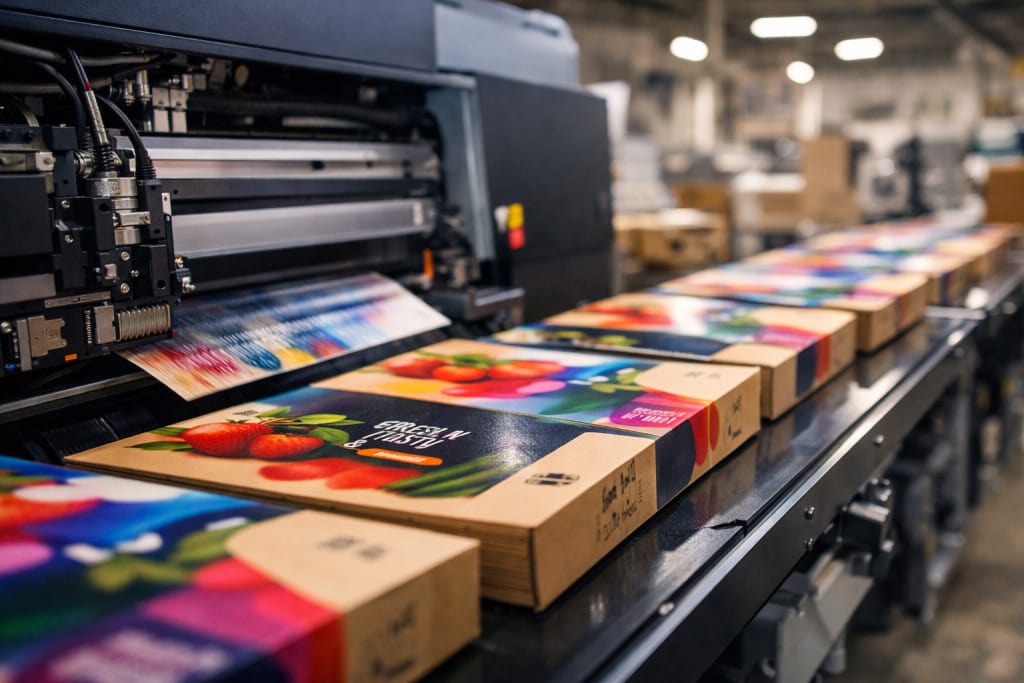
The box arrived before the product ever mattered.
It sat on the table—bright, textured, personal—carrying a brand story before anything inside was touched. No excess plastic. No wasted ink. Just precision, color, and intent. This wasn’t mass production. It was something smarter. Faster. Almost human.
What most people don’t realize is that packaging is no longer just a container—it’s a conversation. And behind that quiet shift is a powerful force reshaping how brands communicate at scale: the digital packaging printing market.
The moment packaging stopped being generic
For decades, packaging followed one rule: print millions or don’t print at all. Flexography and offset dominated because customization was expensive, slow, and inefficient. That era is ending.
Digital printing changed the equation.
Today, brands can personalize packaging in real time, print smaller batches without cost penalties, localize designs instantly, and respond to trends faster than social media cycles. This is why the digital packaging printing industry is no longer a niche—it’s a necessity.
According to Mordor Intelligence, the digital packaging printing market was valued at USD 34.01 billion in 2025 and is estimated to grow from USD 37.39 billion in 2026 to USD 60.07 billion by 2031, registering a CAGR of 9.95% during 2026–2031. That growth isn’t speculative—it’s behavioral.
Packaging has become part of the product experience.
Why brands are betting on pixels instead of plates
At its core, digital packaging printing removes friction. No plates. No long setup times. No forced minimum order quantities.
But the deeper reason brands are adopting it is emotional relevance.
Consumers want packaging that feels intentional. Limited editions. Regional languages. Seasonal artwork. QR codes that tell stories. Digital printing allows brands to test, adapt, and personalize without committing to waste.
This shift is directly influencing the digital packaging printing market size, as adoption expands across food & beverage, personal care, pharmaceuticals, and e-commerce—industries where packaging is both protection and persuasion.
Equally important is sustainability. Digital printing reduces ink waste, lowers energy consumption, and supports shorter production runs—key factors driving today’s eco-conscious brand strategies. These changes are now core digital packaging printing market trends, not optional enhancements.
How technology quietly reshaped the supply chain
Digital packaging printing didn’t just improve design—it rewired logistics.
Printers now sit closer to distribution hubs. Brands can localize packaging per region without maintaining massive inventories. Product launches happen faster because packaging is no longer the bottleneck.
This is why the digital packaging printing market share is steadily expanding against traditional printing methods. It’s not replacing them entirely—it’s outperforming them where agility matters.
Where the market is heading next
The future of packaging isn’t louder—it’s smarter.
As brands integrate AI-driven design, variable data printing, and smart packaging elements, digital printing becomes the foundation layer. Each package can carry unique information, track engagement, and adapt to customer behavior.
This evolution defines the digital packaging printing market forecast—not just higher revenue, but deeper brand-customer relationships. Packaging becomes measurable, interactive, and adaptive.
The human side of a technical market
What makes this market compelling isn’t machinery—it’s meaning.
A cereal box that speaks to kids differently in each country. A medicine package printed in local language overnight. A startup launching with premium packaging without ordering a million units.
These moments explain why the digital packaging printing industry isn’t driven by printers alone—it’s driven by people wanting relevance over repetition.
And as digital experiences dominate screens, physical packaging is becoming the last tactile brand touchpoint. That makes every printed surface matter.
Final thought
The next time you open a box and feel seen by its design, remember—this isn’t accidental. It’s the result of a market that chose adaptability over excess and storytelling over sameness.
As the digital packaging printing market growth accelerates, one question remains:
Will packaging in the future still be silent—or will it speak directly to you?
Drop your thoughts below.
About the Creator
Keep reading
More stories from Andrew Hamilton and writers in Journal and other communities.
Why the generative AI boom is rewriting the future of work
At 2 a.m., a marketing manager refreshes her screen—again. The campaign concept that once took weeks now appears in seconds: copy, visuals, even tone suggestions, assembled by a machine that never sleeps. Somewhere else, a developer watches code write itself. A designer sees images materialize from words.
By Andrew Hamiltona day ago in Journal
~ Fired ~
— Ai Intrusion ~ Are you Next ~ Is Ai Evolution after your job? — Few workplaces haven't been affected. Ai is in supermarkets, at doctors' offices, and even monitoring farms. I just can't think of anything this machine is not getting into, can you? For instance: Education ~ Law and Tech jobs will one day have a major influence or be taken over by these inanimate machines, with accuracy and vigor. From mechanics' diagnoses to a wide variety of everyday jobs, including fast food workers, with this input having the ability to cut their unnecessary work hours. I'm certain all of us have been touched by this with our short stories and colorful headings, have you? Even comments are very questionable 'Non-Robot' insertions.
By Jay Kantor4 days ago in Journal


Comments
There are no comments for this story
Be the first to respond and start the conversation.